From scattered to grounded in 21 days—practical methods for Muladhara activation
Reading time: 15 minutes
New to Root Chakra? Read our comprehensive guide: Why High Achievers Can’t sleep : The missing foundation in your success story is the Root (Muladhara) chakra to understand what Muladhara is, its origins, symbolism, and why it matters before diving into activation practices.

A meditation teacher in Kerala once told me: “Everyone wants to open their third eye. Nobody wants to heal their first chakra. Then they wonder why they see visions but can’t pay rent.”
The truth lands hard: spiritual bypassing—jumping to higher chakras while ignoring the foundation—creates more problems than it solves. You cannot build a house starting from the roof.
This guide provides everything you need to activate, maintain, and recognize balance in your Muladhara chakra, even with a demanding modern lifestyle.
Understanding Activation vs. Opening vs. Balancing
Before we begin, let’s clarify terminology:
- Activation: Awakening dormant energy in a chakra, bringing it online
- Opening: Removing blockages so energy flows freely
- Balancing: Ensuring the chakra isn’t overactive or deficient, but functioning optimally
- Cleansing: Clearing accumulated stagnant energy or trauma
For most people, root chakra work involves all four processes simultaneously. We’ll address each through integrated practices.
The Power of Beej Mantra: LAM
What is a Beej Mantra?
Beej (or bija) means “seed” in Sanskrit. Beej mantras are single-syllable sounds that carry the vibrational essence of each chakra. They’re not words with literal meaning but sonic tools that create resonance in specific energy centers.
LAM: The Root Chakra Seed Sound
Pronunciation: Pronounce it as “LUMM” (rhymes with “hum” but with an ‘L’)
- The ‘L’ sound is created with tongue touching the roof of the mouth
- The ‘A’ is pronounced like the ‘u’ in “sun”
- The ‘M’ creates a nasal resonance that should vibrate in your lower belly and pelvic floor

The Science Behind Sound Vibration
Modern research in cymatics (the study of visible sound vibration) shows that different frequencies create different geometric patterns in matter. Ancient yogis intuited this: specific sounds create resonance in specific body regions.
When you chant LAM correctly, you should feel a subtle vibration at the base of your spine. This isn’t mystical—it’s physics. The sound frequency stimulates nerve clusters and creates focused awareness in that area.
LAM Mantra Practice
Basic Practice (5-10 minutes daily)
- Sit comfortably with spine erect, on a cushion or chair
- Place your awareness at the base of your spine
- Take three deep breaths, settling into your body
- On the exhale, chant “LUMMMM” slowly, letting the ‘M’ vibrate for 5-7 seconds
- Feel the vibration resonate in your pelvic floor and lower belly
- Pause after each chant, observing any sensations
- Repeat 108 times (use a mala bead necklace to count) or for 10 minutes
Advanced Variation: Combine with visualization—see deep crimson red light glowing at your spine’s base as you chant.
Best time: Early morning (5-7 AM, Vata time in Ayurveda) or evening before bed
A Student’s Experience
Maya, a graphic designer from Bangalore, shared: “I was skeptical about chanting. It felt too ‘woo-woo.’ But my therapist suggested trying it for anxiety. The first week, nothing. The second week, I noticed I stopped clenching my jaw when I chanted. By week three, I started sleeping through the night for the first time in months. The vibration does something—I don’t need to understand it scientifically to feel the shift.”
Yoga Asanas for Muladhara Activation
Specific yoga poses stimulate the root chakra by engaging the pelvic floor, creating stability, and directing awareness to the body’s base.
1. Tadasana (Mountain Pose) – The Foundation

Duration: 3-5 minutes daily
This deceptively simple pose is the most powerful root chakra activator.
How to practice:
- Stand with feet hip-width apart, weight evenly distributed
- Press all four corners of each foot firmly into the ground
- Engage your thighs, lifting kneecaps slightly
- Lengthen tailbone toward the ground
- Roll shoulders back, arms by sides, palms facing forward
- Close your eyes and visualize roots growing from your feet deep into earth
Why it works: Creates active grounding, develops proprioception (body awareness in space), and establishes the foundational alignment for all other poses.
Mantra integration: Chant LAM silently while holding the pose.
2. Malasana (Garland Pose/Deep Squat)

Duration: 1-3 minutes, multiple times daily
Our ancestors squatted naturally. This position directly stimulates the pelvic floor and root chakra region.
How to practice:
- Stand with feet slightly wider than hip-width, toes pointing out
- Bend knees and lower hips toward the ground
- Keep heels down (use a folded blanket under heels if needed)
- Bring palms together at heart center, using elbows to gently press knees wider
- Lengthen spine, lift chest, soften pelvic floor
Why it works: Opens the hips, grounds energy downward, and creates awareness in the Muladhara region. This is how humans naturally rested for millennia—the body remembers.
Modern modification: Hold onto a door frame or sturdy furniture if balance is difficult.
3. Virabhadrasana I (Warrior I)
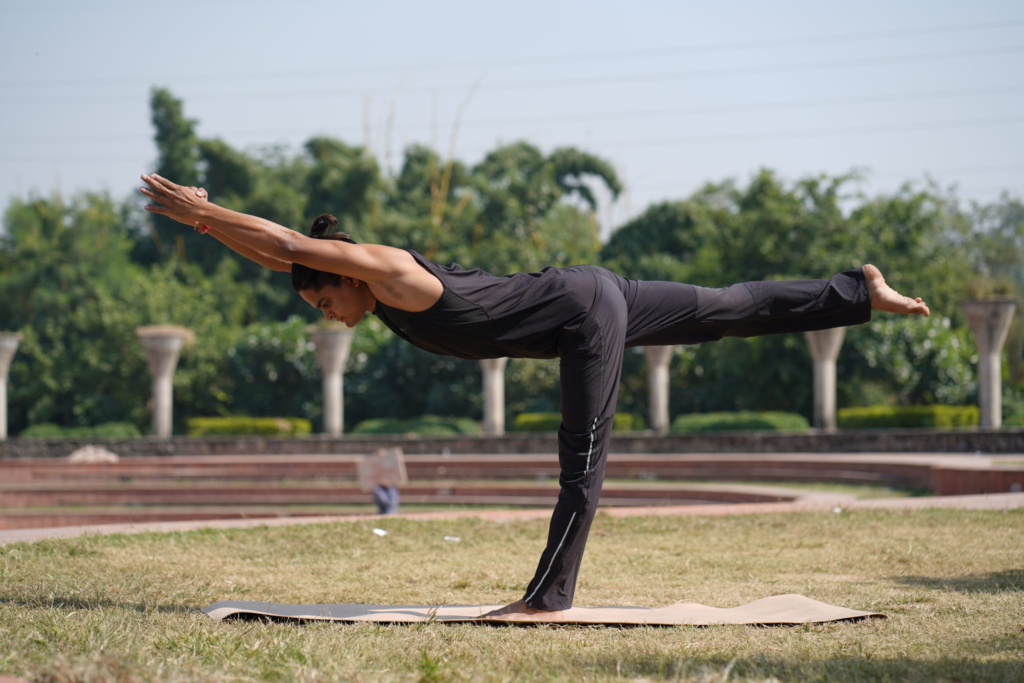
Duration: Hold 30-60 seconds each side, repeat 3 times
How to practice:
- From standing, step right foot back about 3-4 feet
- Turn right foot out 45 degrees, keep left foot forward
- Bend left knee to 90 degrees, knee over ankle
- Square hips forward
- Raise arms overhead, palms together or shoulder-width
- Press firmly through both feet, especially the back foot
- Feel rooted like a warrior ready for anything
Why it works: Creates dynamic stability—you’re rooted but powerful. The pose demands that energy move downward through the legs while rising upward through the spine.
4. Balasana (Child’s Pose) – Grounding Surrender
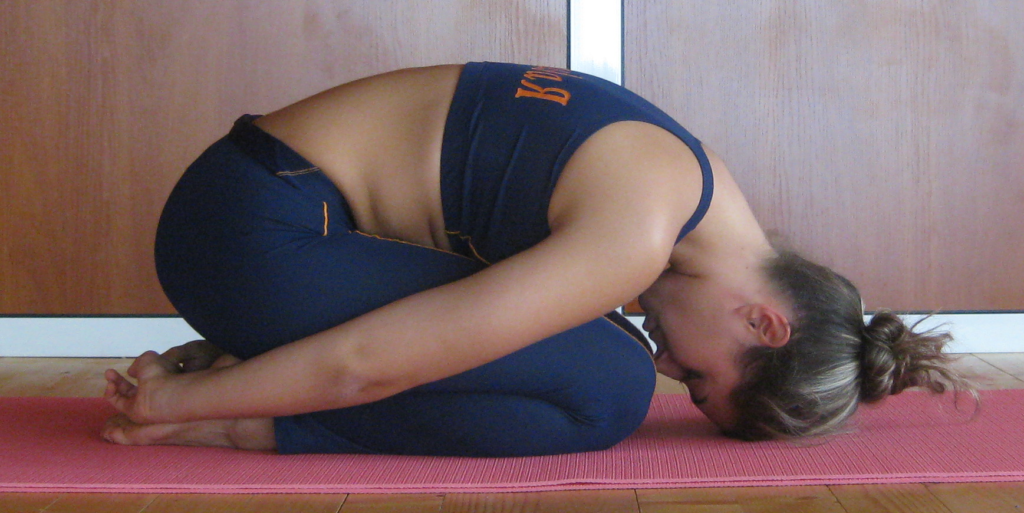
Duration: 3-5 minutes
How to practice:
- Kneel with big toes touching, knees apart
- Sit hips back toward heels
- Extend arms forward or rest by your sides
- Rest forehead on ground or a block
- Breathe into your lower back
Why it works: Creates safe containment. The forehead (third eye) touching earth literally grounds higher consciousness into root consciousness. This is rest as a form of rooting.
5. Setu Bandhasana (Bridge Pose)
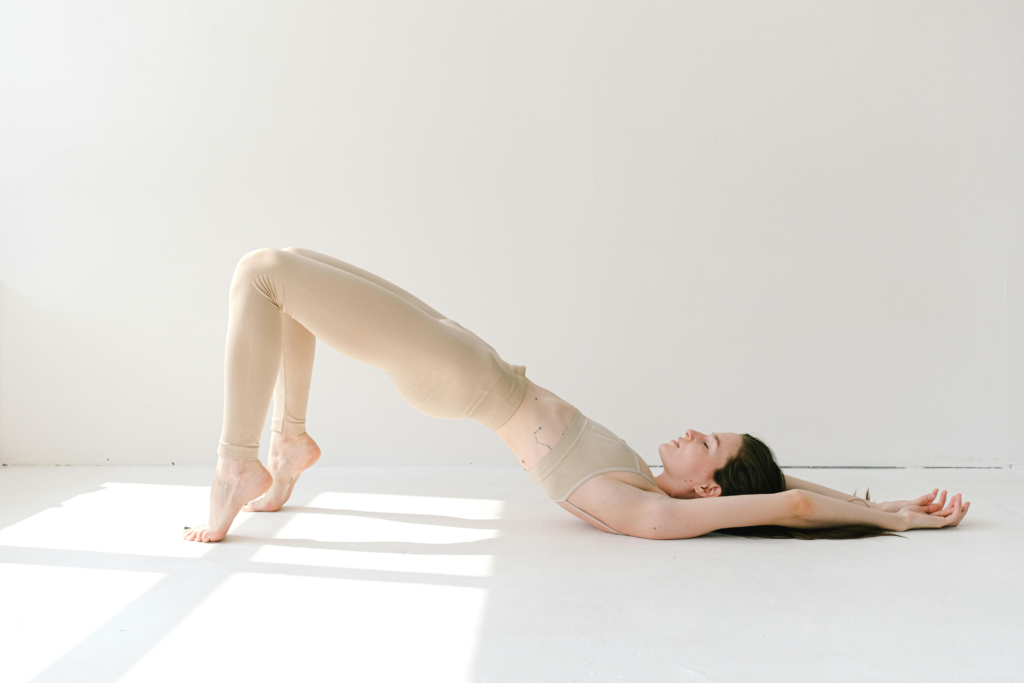
Duration: Hold 30-60 seconds, repeat 3-5 times
How to practice:
- Lie on back, knees bent, feet hip-width apart
- Press feet firmly into ground
- Lift hips toward sky
- Interlace fingers under your back
- Press shoulder blades together
- Engage glutes and thighs
Why it works: The pelvic lift while staying grounded through feet creates energy circulation through the root chakra region.
6. Shavasana (Corpse Pose) – Integrated Grounding

Duration: 10-15 minutes minimum
Never skip this. Shavasana isn’t “doing nothing”—it’s when the nervous system integrates everything practiced.
How to practice:
- Lie flat on back, legs slightly apart, arms away from body, palms up
- Consciously relax each body part from feet to head
- Feel the weight of your body surrendering to gravity
- Visualize yourself sinking into the earth, being held completely
- Stay for at least 10 minutes
Why it works: Teaches your nervous system that it’s safe to be still, to be vulnerable, to let the earth hold you. This is root chakra work at its most profound.
Complete 20-Minute Root Chakra Yoga Sequence
Morning or Evening Practice:
- Tadasana (Mountain Pose) – 2 minutes
- Malasana (Garland Pose) – 1 minute
- Virabhadrasana I (Warrior I) – 1 minute each side
- Malasana (return) – 30 seconds
- Setu Bandhasana (Bridge Pose) – 1 minute (repeat 3x)
- Balasana (Child’s Pose) – 2 minutes
- Shavasana (Corpse Pose) – 10 minutes
- End with LAM mantra – 3 minutes sitting
Do this sequence 4-5 times per week for optimal results.
“I don’t have time for hour-long meditations” is the most common obstacle I hear. Good news: you don’t need hours. You need consistency and integration.
The 5-5-5 Method (15 minutes daily)
Morning (5 minutes):
- Wake up, stand in Tadasana for 2 minutes while coffee brews
- Sit on floor for 3 minutes of LAM mantra chanting
Midday (5 minutes):
- During bathroom break or before lunch: 5 deep squats (Malasana) or barefoot standing
- While washing hands, visualize roots from feet into earth
Evening (5 minutes):
- Before bed: 3 minutes Bridge Pose
- 2 minutes sitting with feet on floor, feeling gravity
Total time: 15 minutes, integrated into existing routines
Micro-Practices for the Time-Starved
While commuting:
- Feel your feet on the floor/pedals
- Chant LAM silently
- Press sit bones into seat, feel supported
At your desk:
- Every hour: stand for 1 minute in Mountain Pose
- Press feet firmly into floor while working
- Keep a smooth red stone at your desk, hold it during stressful moments
During meals:
- Eat root vegetables (carrots, beets, potatoes, ginger) mindfully
- Place feet flat on floor while eating
- Notice food grounding you, becoming your body
Walking anywhere:
- Walk barefoot when possible
- Feel each footstep deliberately
- Imagine roots extending from feet with each step
Weekend Deep Practice (1-2 hours)
When you have more time:
- 20-minute yoga sequence (above)
- 15-minute LAM mantra practice
- 20-minute barefoot walk in nature
- 30-minute cooking meditation (preparing grounding foods)
- 15-minute journaling on safety and belonging
When to Move to the Next Chakra
This is crucial: do not rush to the second chakra (Svadhisthana) until Muladhara is stable.
Signs Your Root Chakra is Sufficiently Activated
You’re ready to work on the sacral chakra when you consistently experience:
Physical indicators:
- ✓ You sleep through the night regularly (5+ nights per week)
- ✓ Lower back pain has significantly reduced or disappeared
- ✓ You have steady, sustainable energy throughout the day
- ✓ Digestion and elimination are regular and comfortable
- ✓ You feel physically at home in your body
Emotional/Mental indicators:
- ✓ Anxiety has notably decreased; you feel calmer
- ✓ You can sit still for 10+ minutes without restlessness
- ✓ Financial decisions come from clarity, not panic
- ✓ You maintain routines without constant struggle
- ✓ You feel fundamentally safe, even when challenges arise
- ✓ You trust in life’s basic benevolence
Behavioral indicators:
- ✓ You follow through on commitments consistently
- ✓ You can be present during conversations without mental drifting
- ✓ You make decisions without excessive second-guessing
- ✓ You set and maintain healthy boundaries
Energy indicators:
- ✓ During meditation, you feel weighted, grounded, stable
- ✓ The color red feels nurturing rather than agitating
- ✓ You no longer feel like you’re “floating” through life
- ✓ You can drop awareness easily to the base of your spine
Timeline Expectations
Minimum time before moving on: 21-40 days of consistent practice
Most people need 6-12 weeks of dedicated root chakra work before experiencing stable activation. If you’ve experienced significant trauma, chronic anxiety, or rootlessness, expect 3-6 months.
Important: There’s no trophy for speed. The chakra system is cumulative—a weak foundation undermines everything built above it.
Swami Ananda from Rishikesh says: “Students ask me, ‘How long must I work on Muladhara?’ I answer: ‘How long do you want your house to stand? You don’t build the foundation once. You check it, maintain it, return to it. The root chakra isn’t a checkbox—it’s your lifelong ground.'”
How to Recognize Muladhara is Activated
Beyond the checklist above, activation has a distinct felt sense.
The Unmistakable Feeling
When Muladhara activates, people describe it as:
- “Like someone turned on gravity, but in a good way”
- “I finally feel like I live in my body instead of hovering around it”
- “Everything slowed down, but I got more done”
- “The floating, anxious feeling just… stopped”
- “I feel held by something larger than myself”
Physical Sensations During Activation
You might experience:
- Warmth at the base of spine
- Tingling in pelvic floor, legs, or feet
- Heaviness in hips and lower body (not fatigue—groundedness)
- Pulsing sensation in the perineum area
- Electrical feeling moving up from the tailbone
These sensations are temporary and indicate energy beginning to move. They’re not the goal—stability is.
Energy Shifts
Activated Muladhara creates:
- Slower, deeper breathing naturally
- Calmer thoughts without forcing
- Desire for routine and structure
- Attraction to earth colors (browns, deep reds, earth tones)
- Craving for grounding foods (roots, proteins, dense foods)
- Need for less external stimulation
- Deeper, more restful sleep
Optimal Times for Root Chakra Practice
Best Daily Timing
Early Morning (5:00-7:00 AM):
- Energy is naturally grounding (Vata time in Ayurveda)
- The world is quiet, fewer distractions
- Sets foundation for the entire day
- Best time for LAM mantra and yoga
Evening (6:00-8:00 PM):
- Second-best time
- Helps transition from work/activity to rest
- Prepares nervous system for sleep
- Good for grounding after a scattered day
Avoid:
- Right after eating (wait 2-3 hours)
- When severely overtired (you’ll fall asleep, not practice)
- During high stress (do brief grounding first, then practice)
Seasonal Considerations
Late Autumn/Winter (October-February):
- Earth energy naturally descends
- Easier to access grounding
- Ideal season for intensive root chakra work
Spring/Summer:
- Energy naturally rises
- Requires more deliberate grounding practice
- Good for maintaining established balance
Lunar Timing (Optional/Advanced)
New Moon:
- Beginning new practices
- Setting intentions for stability
Full Moon:
- Completion, integration
- Assessing progress
Waning Moon:
- Releasing blockages
- Cleansing practice
When to Cleanse or Re-do Root Chakra Work
Your root chakra needs attention and cleansing when:
Clear Warning Signs
Physical red flags:
- Sleep problems return after period of good sleep
- Lower back pain re-emerges
- Chronic fatigue despite rest
- Digestive issues return
- Weakened immunity (frequent illness)
Emotional red flags:
- Anxiety spikes without clear cause
- Feeling ungrounded, scattered, “floaty”
- Difficulty with basic routines
- Financial anxiety intensifies
- Loss of appetite or stress eating
- Inability to be present
Life circumstance triggers:
- Major move or relocation
- Job loss or career change
- Relationship ending
- Financial crisis
- Health crisis
- Death of loved one
- Any major life transition
Maintenance Cleansing Schedule
Even with activated Muladhara, cleanse:
Monthly:
- New moon day: One full yoga sequence + extended LAM practice
- Reassess your grounding practices
Seasonally (every 3 months):
- Full weekend dedicated to root chakra work
- Return to basics even if feeling stable
- Nature immersion (camping, hiking, gardening)
Annually:
- One-week intensive focusing on all root chakra practices
- Consider a grounding retreat
- Re-evaluate life foundations (home, work, relationships, finances)
Emergency Grounding Protocol
When you notice sudden destabilization (after trauma, shocking news, major disruption):
Immediate (Within 1 hour):
- Take off shoes, stand barefoot on earth/grass for 5 minutes
- Place hands on ground, breathe into belly
- Hold a heavy object (stone, book) in your lap
- Eat something dense and grounding (nuts, root vegetable)
That day:
- 20-minute root chakra yoga sequence
- 10-minute LAM mantra practice
- Hot bath with Epsom salt and essential oils (cedarwood, patchouli, vetiver)
- Sleep on floor or very firm surface if possible
That week:
- Daily double practice (morning and evening)
- Minimize stimulation (social media, news, caffeine)
- Maximum nature contact
- Bodywork if possible (massage, acupuncture focusing on legs/feet)
Dr. Meera Shah, integrative physician: “I recommend root chakra cleansing to patients after any medical procedure requiring anesthesia, after giving birth, or following any physical trauma. Anesthesia literally disconnects consciousness from body—you need to consciously reconnect. The practices aren’t mystical; they’re nervous system regulation through embodied awareness.”
The 21-Day Root Chakra Activation Protocol
For those wanting a structured program:
Week 1: Establishment
- Daily: 5 minutes LAM mantra morning, 5 minutes evening
- Daily: 10 minutes barefoot time
- 3x this week: Full 20-minute yoga sequence
- Practice: Eating one meal per day with full presence
- Journal: Note three moments daily when you felt grounded
Week 2: Deepening
- Daily: 10 minutes LAM mantra (one session)
- Daily: 15 minutes yoga (simplified sequence if needed)
- Daily: One meal entirely of grounding foods
- 3x this week: 20-minute nature walk, barefoot if possible
- Practice: Before bed, list three ways you felt supported today
Week 3: Integration
- Daily: Full 20-minute yoga + 10-minute LAM practice
- Daily: Notice all moments of groundedness throughout day
- 2x this week: Extended practice (45-60 minutes)
- Daily: Conscious evening routine (same time, same sequence)
- Assess: Use the checklist above to evaluate activation signs
After 21 days: Evaluate your experience. If signs of activation are present, maintain with 5-5-5 method. If not, continue protocol another 21 days—transformation takes the time it takes.
Common Mistakes to Avoid
1. Rushing the Process
The trap: “I’ve done root chakra work for two weeks; time to move on.” The truth: You wouldn’t build a house’s foundation for two weeks then declare it done. The root chakra is your life’s foundation.
2. Intellectual Understanding Without Embodied Practice
The trap: Reading about chakras, understanding the concepts, but not actually practicing. The truth: Root chakra activation is experiential, not intellectual. You must do the work, not just know about it.
3. Inconsistency
The trap: Intense practice for three days, then nothing for two weeks. The truth: Five minutes daily beats one hour weekly. The nervous system learns through repetition.
4. Spiritual Bypassing
The trap: “Root chakra work is too basic; I want to work on my third eye.” The truth: Without roots, the tree falls. Psychic opening without grounding causes psychological problems.
5. Ignoring the Body’s Wisdom
The trap: Forcing practices that feel wrong, following rigidly scheduled protocols when body says rest. The truth: Root chakra work requires listening to body’s feedback. Grounding includes respecting when you need stillness.
Advanced Practice: Living from Your Root
Once Muladhara is stable, the practice becomes your life:
- Decision-making: Feel into your body—does this choice create expansion or contraction in your root?
- Relationship: Notice which people make you feel safe and grounded vs. destabilized
- Work: Choose projects that feel stable and sustainable over exciting but unsustainable opportunities
- Environment: Live in spaces that feel physically safe and grounding
- Rhythm: Maintain routines that honor your body’s need for predictability
Root chakra mastery isn’t transcending the body—it’s becoming so fully embodied that consciousness and matter unite.
Your Foundation Awaits
The work ahead is simple but not easy. It requires showing up daily, being present in your body, honoring the earth element within you.
There will be days when chanting LAM feels pointless, when standing in Mountain Pose seems too basic, when you’d rather watch videos about astral projection than feel your feet on the ground.
On those days especially, remember: every spiritual tradition that has stood the test of time teaches one thing first—come home to your body, establish your foundation, learn to be here fully.
The heights you seek require roots you may not yet have. But you’re building them now, one breath, one chant, one moment of presence at a time.
Your foundation is calling. Will you answer?
Quick Reference Guide
Daily Minimum (15 minutes)
- 5 minutes: LAM mantra
- 5 minutes: Tadasana or Malasana
- 5 minutes: Conscious breathing, feet on floor
Weekly Minimum (2-3 hours)
- 4-5x: Full 20-minute yoga sequence
- 7x: Daily minimum practice
- 1x: Extended nature time (1+ hour)
Signs to Move to Next Chakra
- ✓ Stable sleep for 3+ weeks
- ✓ Consistent calm, reduced anxiety
- ✓ Physical groundedness felt daily
- ✓ Ability to sit still 10+ minutes
- ✓ Follow-through on commitments
Signs to Cleanse/Re-do
- Sleep disruption
- Anxiety return
- Floating/spacey feeling
- Major life change or trauma
- Loss of routine
Emergency Grounding
- Barefoot on earth (5 min)
- Hold heavy object
- Eat dense food
- Full yoga sequence + mantra
← Previous article: Understanding Root Chakra: Ancient Science Meets Modern Meditation