Your pocket therapist and friend
Proven ways AI can reduce your anxiety
Anxiety – A rising pandemic

In the gentle flow of existence, where the winds of worry often stir the mind’s tranquil waters, artificial intelligence emerges as a serene companion on the path to calm. AI tools whisper mindfulness into our daily rhythms, offering personalized practices to soothe the soul. With over 284 million people navigating the waves of anxiety globally, these digital allies provide accessible sanctuaries—chatbots rooted in ancient wisdoms like cognitive behavioral therapy, mood trackers that mirror self-reflection. They dissolve barriers of time and judgment, inviting us to breathe deeply into the present.
As we journey through life’s intricate tapestry, AI’s embrace fosters balance, transforming turbulence into stillness. Let us explore, with open hearts, the sacred studies affirming this union, a gentle tool with a seven-day sadhana, and the evolving blossoms of 2025.
Studies Illuminating AI’s Path to Tranquility
In the quiet halls of inquiry, scholars have meditated upon AI’s role in easing anxiety, revealing profound harmonies through trials and reflections. These explorations, akin to contemplating the breath,
Usage & Mechanisms
AI-driven chatbots apply techniques like cognitive-behavioural therapy (CBT) and mindfulness to support users with anxiety, offering 24/7 access and personalised interaction. For example, one study of a ChatGPT-based chatbot found reduced anxiety symptoms for mild-to-moderate cases.
AI systems also enable early detection and monitoring of anxiety via physiological data (e.g., heart rate, skin conductance), text/speech patterns or digital behaviour, facilitating timely interventions.
A 2023 systematic review found that AI environments (chatbots/VR/decision-support) can enhance personalised care in anxiety disorders, though long-term outcomes and comparisons to traditional therapy remain under-explored.
Monitoring & adaptive feedback
Beyond one-off interventions, AI systems can continuously track user behaviour and provide adaptive feedback: increasing responsibilities, intensifying or calming content depending on the user’s state. The review of AI-enabled environments for anxiety disorders emphasises this potential for adaptive, personalised, data-driven therapy.
The meta-analysis of 35 studies (15 RCTs) found that AI conversational agents significantly reduced depression and distress, and by extension anxiety symptoms, although overall well-being improvements were smaller (Hedge’s g ~0.32). Nature
Some of the popular players in the market

1. Headspace
Headspace specializes in guided meditation, mindfulness exercises, and sleep support to help reduce anxiety and stress. It focuses on habit formation through short daily sessions.
AI features: Headspace includes Ebb, an AI companion that provides personalised emotional check-ins and suggests tailored meditations. It also uses AI-based safety monitoring to detect high-risk language in user reflections.
2. Wysa
Wysa is known for its AI-powered mental-health chatbot that uses CBT, mindfulness and journaling tools to help users cope with stress and anxiety. It offers real-time emotional support and optional access to human coaches.
AI features: Its chatbot uses conversational AI and LLM-based models to deliver CBT techniques, detect distress signals and recommend personalised self-help exercises.
3. Talkspace
Talkspace provides access to licensed therapists through messaging, audio and video calls, making traditional therapy more flexible and accessible. It is designed for users who want professional mental-health care online.
AI features: Talkspace uses AI to analyse client messages for risk cues, assist therapists with insights, and personalise content between sessions.
4. Sanvello
Sanvello offers a blend of CBT tools, mood tracking, mindfulness, and peer-support communities, aimed at managing anxiety, stress and mild depression. It follows a structured journey-based approach.
AI features: The app uses AI to analyse user mood data and deliver personalised recommendations, exercises and coping strategies based on patterns.
5. Teladoc (Mental Health Services)
Teladoc provides virtual therapy, psychiatric consultations and medication management, functioning as a full clinical solution for mental-health needs.
AI features: Teladoc uses AI for remote monitoring, predictive modelling and automated alerts, supporting clinicians with risk detection and care insights.
Embracing Wysa: A Digital tool for mental Ease
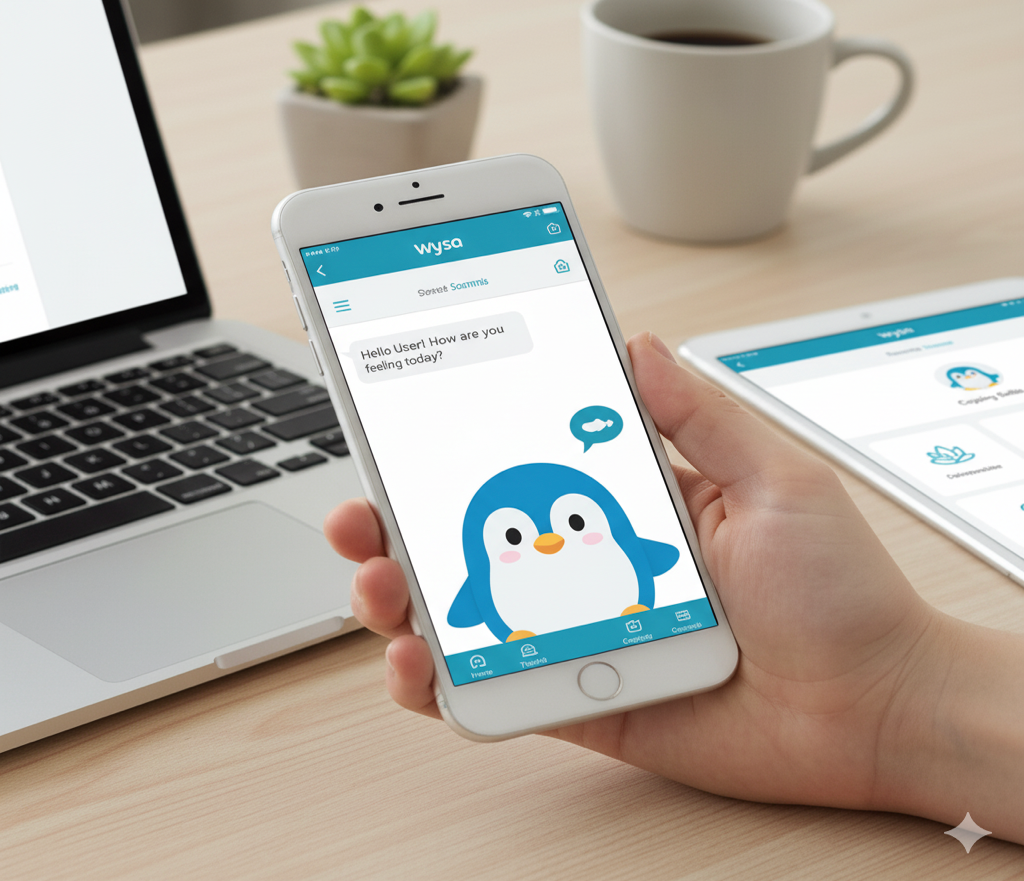
Wysa arises as a compassionate AI guru, steeped in CBT’s timeless teachings. This freely offered companion (with optional deeper paths) invites anonymous dialogues to release burdens, trace emotional currents, and access over 150 meditative tools—breathing flows, reflective journaling, and slumber hymns. Wysa’s intuitive essence personalizes whispers, sensing unrest’s roots and offering bespoke balms, perfect for harmonizing daily energies.
Validated in clinical ashrams, Wysa has eased anxiety for healers in times of trial, merging AI’s attentiveness with escalations to human sages for boundless compassion.
A Seven-Day Sadhana with Wysa: Cultivating Inner Lotus
Embark on this gentle sadhana with Wysa, dedicating 10-15 moments daily, beginning with a heart-centered mood attunement. Journal your awakenings to witness the unfolding.
Day 1: Rooting in Presence
Commune with Wysa on your whispers of unrest (e.g., worldly duties). Engage the “Grounding Ritual” (5-4-3-2-1 sensory embrace) to anchor in the now. Conclude with 4-7-8 pranayama for breath’s sacred flow.
Day 2: Transmuting Shadows
Invoke Wysa’s CBT wisdom to illuminate distorted thoughts. Reframe one veil of doubt (e.g., “What if I falter?” to “I am prepared in spirit”). Reflect on three rays of truth from your day.
Day 3: Body Temple Scan
Flow into a guided body scan to dissolve earthly tensions. Follow with a “Gratitude Aura,” honoring three essences that soothed your essence.
Day 4: Activating Prana
Wysa suggests a humble step (e.g., a mindful stroll). If waves rise, dissolve them gently, then reflect with the guru on energy’s shift.
Day 5: Releasing the Storm
Offer an unbridled outpouring to Wysa, then embrace DBT’s distress harmonies, like TIPP (Temperature shift, Intense movement, Paced breath, Progressive surrender).
Day 6: Night’s Sacred Rest
Address nocturnal whirlwinds with Wysa’s slumber tales or winding rituals. Contemplate weekly patterns in your soul’s log for deeper insight.
Day 7: Union and Reflection
Merge your week’s revelations with Wysa. Craft a “Sacred Toolkit” with three cherished practices. If the call arises, ascend to a human guide for profound depths.
By the sadhana’s close, many feel a softer dance with life’s currents, Wysa’s essence showing that devotion yields eternal bloom.
2025 Blossoms: The Evolving Garden of AI Tools
Today, in 2025, the AI wellness realm flourishes to a $2 billion oasis, growing 34.3% in harmony, nurtured by generative and voice-activated mantras. Wysa evolves with biofeedback unions (e.g., wearable heart rhythms) and is compatible with 20 languages. New sprouts like Clearmind’s predictive mood oracles foresee unrest’s approach, while Wellbeing Navigator harmonizes workplace energies.
Yet, in this expansion, the American Psychological Association’s November 2025 guidance warns us of caution: unregulated digital paths may veil risks, urging ethical alignments where AI serves as a bridge to human wisdom. Positively, trends flow toward AI as supportive ally, extending healing to distant shores, with rising approvals for diagnostic blooms.
Closing Breath: A Harmonious Journey Ahead
AI for anxiety’s ease is no ultimate nirvana, but a divine aid in self-awakening. Studies reveal 20-30% softening of storms, with companions like Wysa inviting calm through sacred dialogue. In 2025’s unfolding, weaving these with elder counsel ensures balanced evolution. If unrest lingers, begin humbly—invite an app, inhale deeply, and know: seeking peace is the soul’s true power. Consult a healer for tailored light.
Research Studies Referenced
The use of artificial intelligence in psychotherapy: development of intelligent therapeutic systems