The Untouched Sound: Opening Your Heart’s Secret Portal
How an ancient energy center holds the key to transcending your emotional patterns and discovering who you really are
The Space Between Breaths
You’ve felt it before, haven’t you? That moment when your chest expands with inexplicable warmth—when forgiveness arrives without effort, when compassion flows like water finding its level. You weren’t trying. You weren’t forcing. Something simply… opened.
What if you could access that state whenever you needed it?
The ancient yogis discovered this possibility thousands of years ago. They called it Anahata—the unstruck sound, the pure vibration that exists before anything touches anything else. Your heart chakra. The portal between who you think you are and who you actually are.
Where Heaven Meets Earth: The Origins of Anahata
Picture this: It’s sometime between 1500-500 BCE in the verdant valleys of ancient India. Sages sit in meditation, mapping the invisible highways of energy flowing through the human body. They’re not imagining these pathways—they’re experiencing them, documenting what happens when consciousness turns inward and discovers its own architecture.
These explorers of inner space identified seven primary energy centers, or chakras (literally “wheels” or “vortexes”), aligned along the spine. And there, right in the center—the fourth chakra, equidistant from the base and the crown—they found Anahata.
The name itself whispers its secret. Anahata means “unstruck,” “unhurt,” “unbeaten.” It refers to a sound that arises without two objects striking each other. In Vedic philosophy, this is Anahata Nad—the cosmic sound of the celestial realm, the vibration of pure consciousness itself.
Think about that for a moment. Every sound you’ve ever heard came from something hitting, rubbing, or vibrating against something else. Your voice: air striking vocal cords. Music: hammers hitting strings, air rushing through tubes, sticks beating drums. But Anahata represents something more primordial—the sound before the sound, the space where opposites meet without collision.
The Anatomy of the Heart’s Wisdom
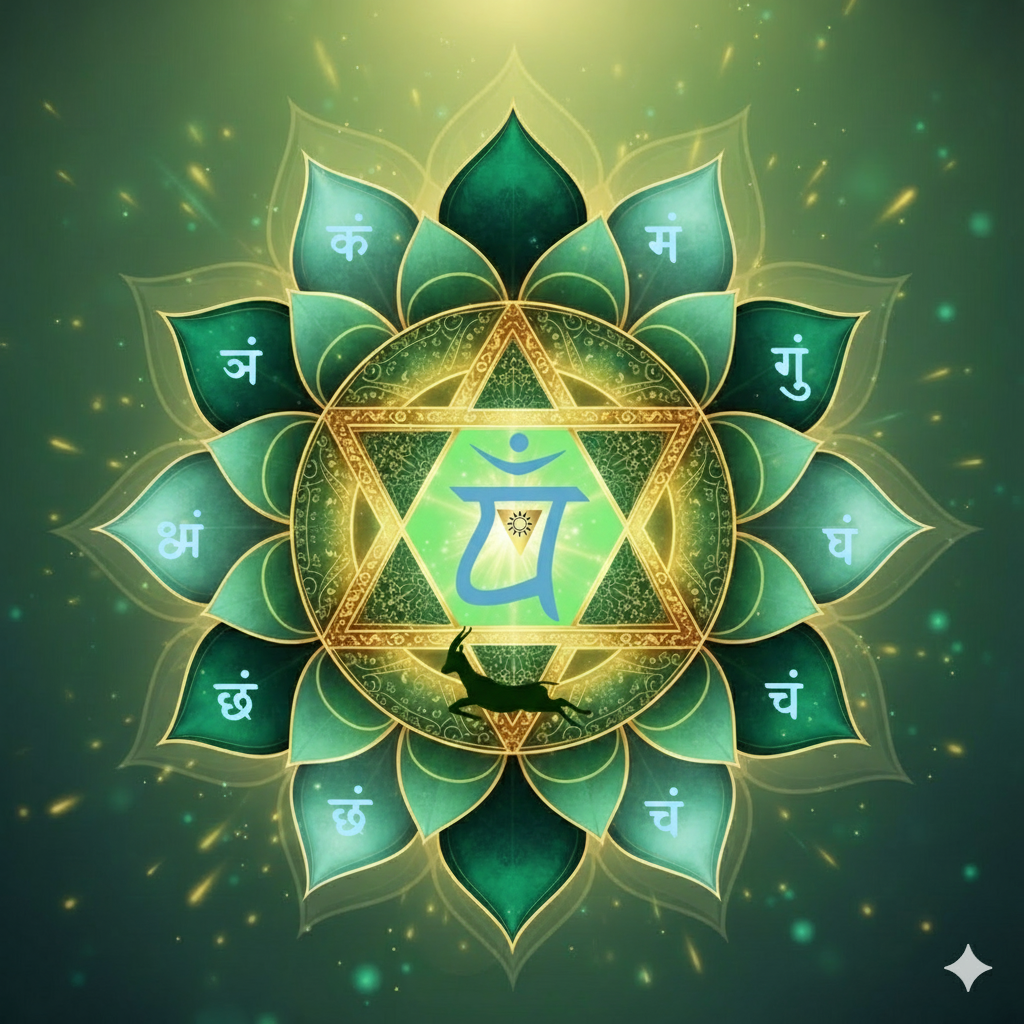
Traditional texts describe Anahata with stunning specificity. It sits at the center of your chest, near your physical heart, represented by a lotus flower with twelve petals. Within this lotus lies a smoky region where two triangles intersect, forming a six-pointed star—the shatkona.
This symbol isn’t arbitrary. The upward-pointing triangle represents Purusha (pure consciousness, the Divine masculine principle). The downward-pointing triangle represents Prakriti (nature, the Divine feminine principle). Their intersection? That’s you, standing at the meeting point of spirit descending into matter and matter ascending toward spirit.
The deity associated with Anahata is Vayu, the god of wind and breath—smoke-like, four-armed, riding an antelope. The animal connection is telling: like a deer, those who dwell in heart consciousness have innocent eyes, untouched by cynicism. The antelope, graceful and alert, navigates between worlds without losing its essence.
The seed mantra of this chakra is YAM, vibrating in the key that resonates with your heart’s frequency. Chant it sometime. Feel where it lands in your body.
Beyond Karma: The Revolutionary Promise of the Heart
Here’s where it gets interesting—and where your life might actually change.
According to yogic philosophy, the three chakras below Anahata (root, sacral, and solar plexus) keep you bound by karma and fate. In those lower centers, you’re driven by survival instincts, unconscious desires, and reactive patterns inherited from your past. You’re essentially on autopilot, repeating the same relationship dynamics, the same fears, the same self-sabotaging behaviors.
But at Anahata? Everything shifts.
At the heart chakra, you gain the ability to make decisions outside the realm of karma. You start choosing based on your higher self, not your unmet needs and emotional wounds. You “follow your heart” in the truest sense—not the impulsive heart that chases dopamine, but the wise heart that knows the difference between what you want and what you need, between craving and love.
This is why Anahata is called the gateway. It’s where your lower three chakras (dealing with the material, emotional, and personal power) meet your upper three (dealing with expression, intuition, and connection to the infinite). You’re the bridge. You’re the meeting point.
One moment, you’re standing in the world of separation, conflict, and either-or thinking. The next, you’re experiencing the world of integration, where seemingly opposite forces coexist without destroying each other. Without even touching.
A Modern Map: Your 90-Day Journey into Heart Consciousness
Enough philosophy. You want to know: How do you actually use this? How do you open Anahata in a world of traffic jams, work deadlines, toxic relationships, and existential anxiety?
The truth is, you can’t force the heart to open. But you can create conditions for it to unfold naturally. Here’s your roadmap.
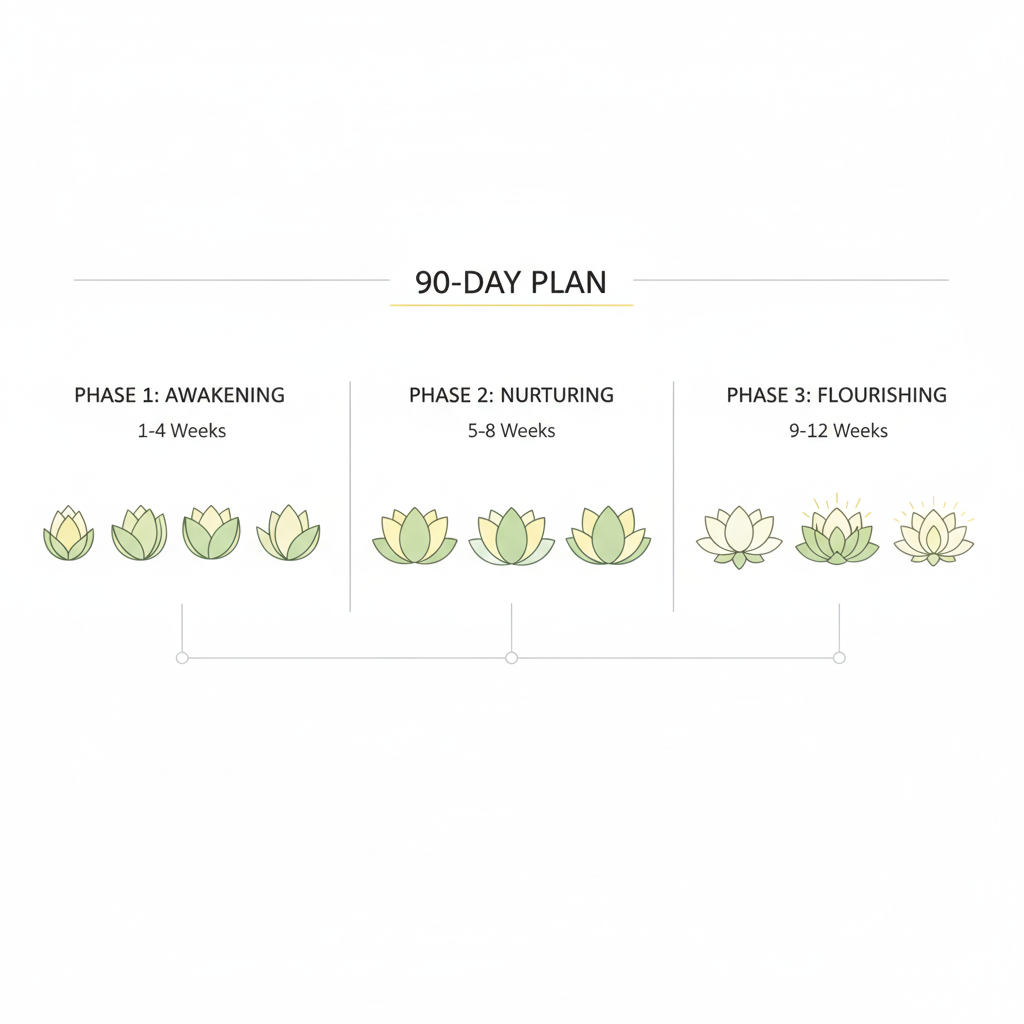
Month 1: Preparing the Ground (Weeks 1-4)
Week 1: The Awareness Audit
Before you change anything, simply notice. Where do you hold tension in your chest? When does your breathing become shallow? Pay attention to your physical heart region throughout the day.
- Morning practice: Place your hand on your heart for five minutes after waking. Just feel. No judgment, no analysis.
- Evening practice: Journal about one moment when you felt either open-hearted or closed-hearted today. What triggered it?
Week 2: The Breath Bridge
Your breath is the most direct access point to your heart chakra. Begin with pranayama (yogic breathing).
- Try this: Sit comfortably. Breathe in for a count of 4, hold for 4, breathe out for 6, hold empty for 2. Repeat for 10 minutes. The longer exhale activates your parasympathetic nervous system—the rest-and-digest mode that allows the heart to feel safe enough to open.
- Throughout the day: Pause every hour. Take three conscious breaths, imagining breathing directly into your heart center.
Week 3: The Forgiveness Practice
Nothing blocks Anahata faster than resentment. You don’t have to reconcile with anyone. You just have to stop carrying their weight in your chest.
- Daily practice: Write one resentment you’re holding. Then write: “I release you. I release me.” Burn the paper if you can.
- Walking meditation: As you walk, mentally say with each step: “I forgive” (inhale), “I release” (exhale).
Week 4: The Gratitude Gateway
Gratitude is the fastest way to shift from a closed heart to an open one. It’s not about toxic positivity—it’s about training your attention.
- Morning practice: Before checking your phone, list three things you’re grateful for. Make them specific and sensory. Not “my family,” but “the way my daughter laughs when she’s surprised.”
- Evening practice: Reflect on one difficulty you faced today. Find one thing about it you can be grateful for, even if it’s just “I survived it.”
Month 2: Deepening the Opening (Weeks 5-8)
Week 5: The Yoga Sequence
Physical practices that open the chest are crucial. Your body and energy are not separate.
- Daily practice (15-20 minutes):
- Cat-Cow Pose (5 minutes):
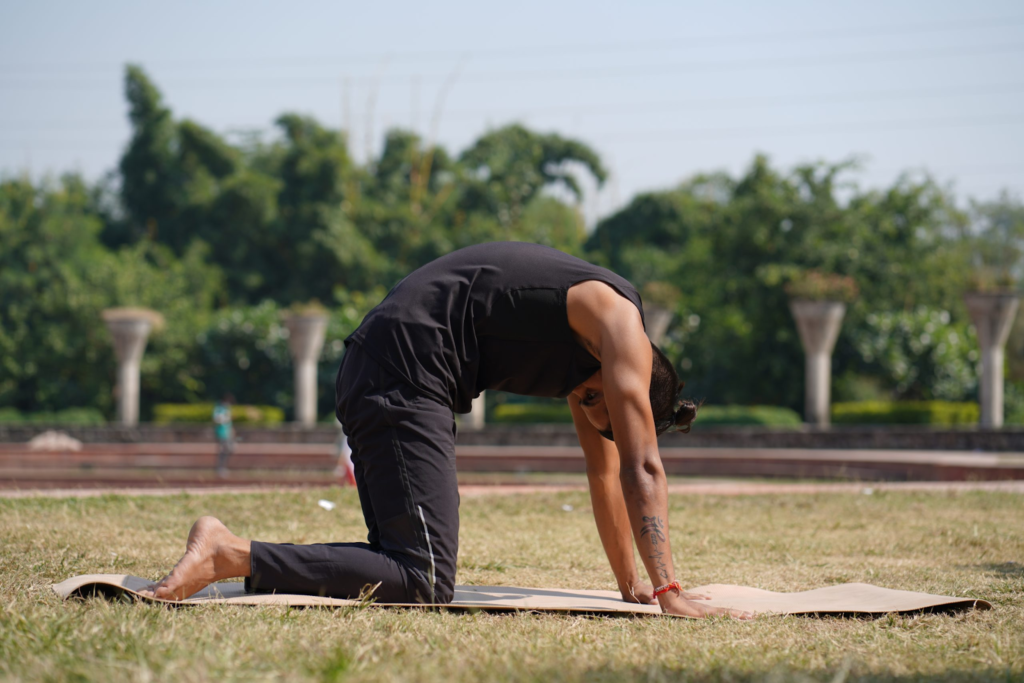
Warms the spine, connects breath to movement
- Cobra Pose (hold 5 breaths, repeat 3 times):
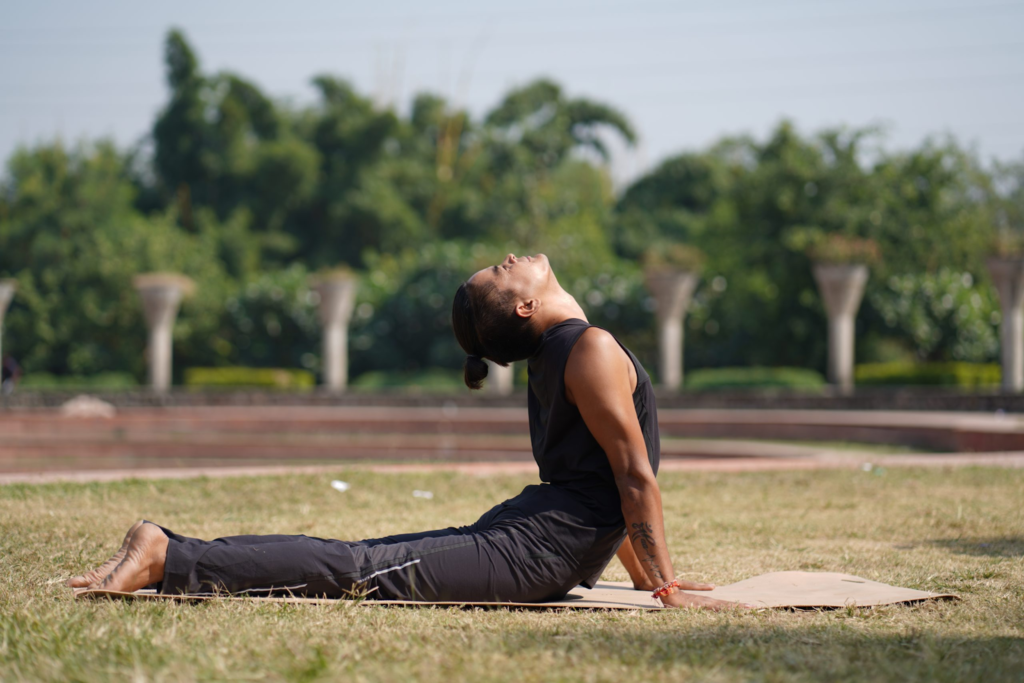
Opens the front heart
- Camel Pose (hold 3-5 breaths if comfortable):
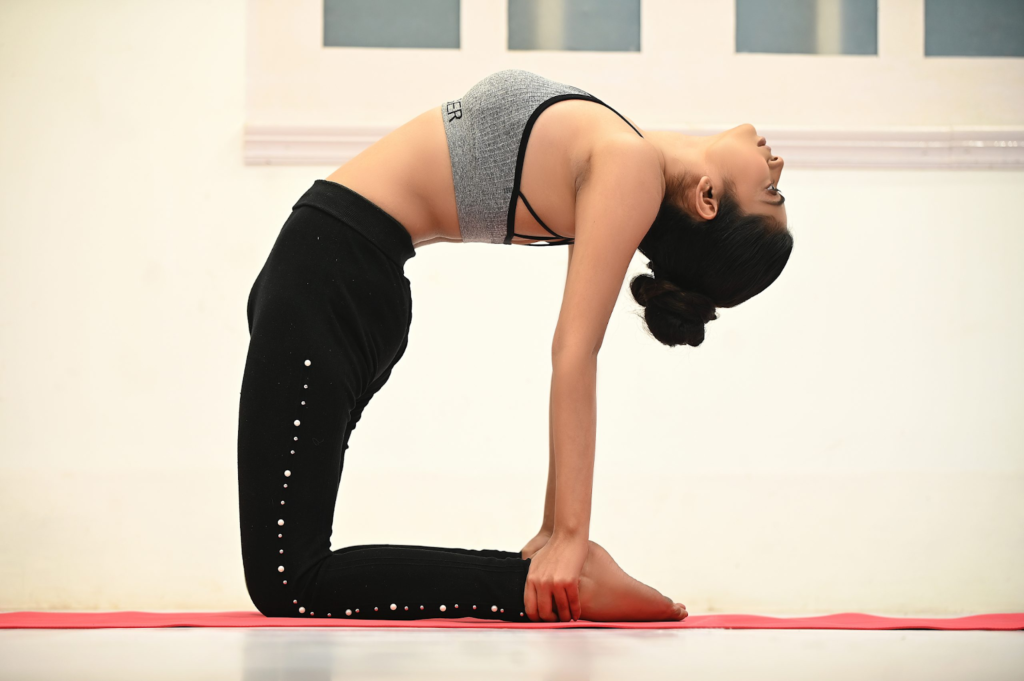
Deep heart opener
- Child’s Pose (5 minutes):
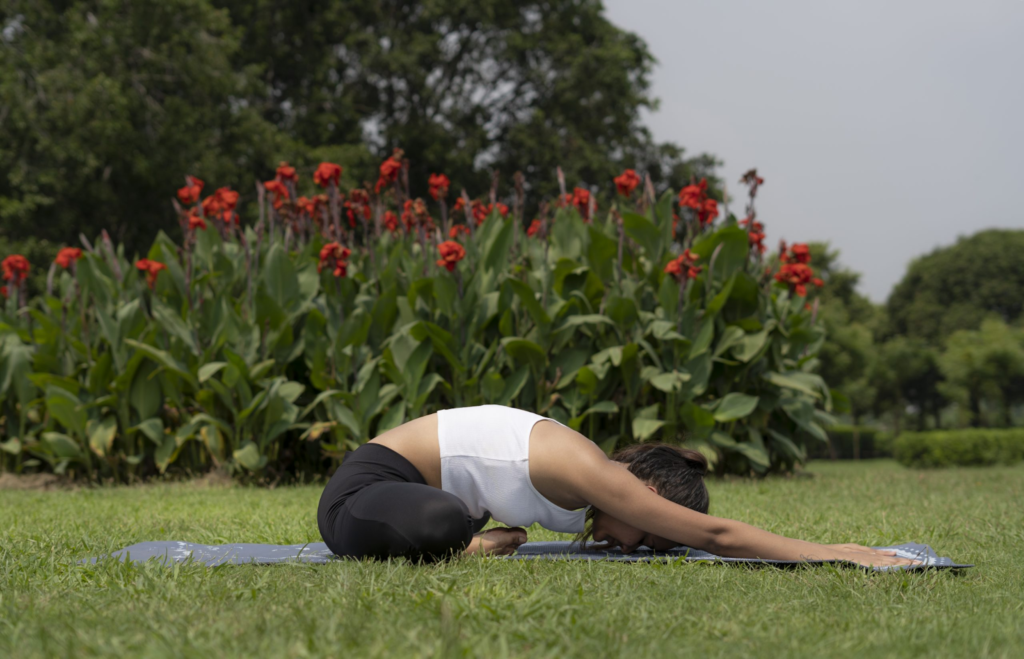
Integration, surrender
- Corpse Pose with hand on heart (5 minutes):
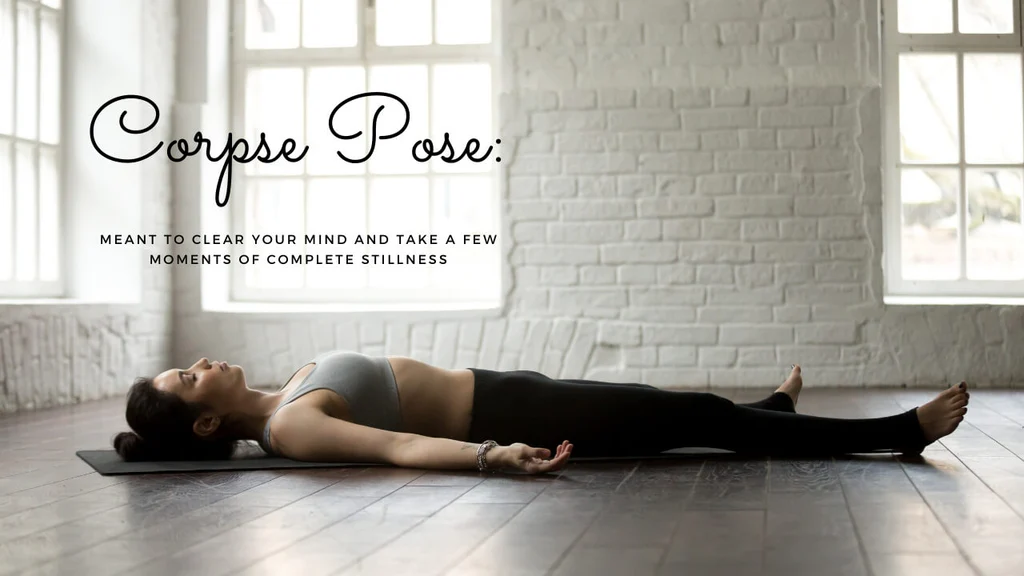
Embodied rest
Week 6: The Mantra Work
Sound vibration directly affects your energy centers. Time to work with YAM, the bija (seed) mantra of Anahata.
- Twice daily (morning and evening): Sit in meditation. Chant “YAM” 108 times (use mala beads if you have them). Feel the vibration in your chest.
- Silent variation: Throughout the day, mentally repeat “YAM” whenever you notice your heart closing (in conflict, fear, judgment).
Week 7: The Heart-Centered Decision Matrix
Start making one decision per day from your heart rather than your head or gut. Not recklessly—wisely.
- The practice: When facing a choice, close your eyes. Place your hand on your heart. Ask: “What wants to happen here?” Notice the first answer that arises without thought. That’s your heart speaking. (Your head will chime in approximately 0.3 seconds later with reasons why the heart is wrong. Noted.)
- Journal: Track these heart-based decisions and their outcomes.
Week 8: The Compassion Challenge
True heart opening extends beyond yourself. This week, practice metta (loving-kindness meditation), the Buddhist heart practice.
- Daily practice (10 minutes): Sit quietly. Repeat silently:
- “May I be happy. May I be healthy. May I be safe. May I live with ease.” (2 minutes)
- Then extend it to someone you love. (2 minutes)
- Then someone neutral (the barista, a neighbor). (2 minutes)
- Then someone difficult. (This is the real work.) (2 minutes)
- Finally, all beings everywhere. (2 minutes)
Month 3: Integration and Embodiment (Weeks 9-12)
Week 9: The Relationship Laboratory
Your relationships are where your heart work gets tested. Anahata is, after all, about connection.
- Daily practice: In every interaction, spend the first 30 seconds just feeling the other person’s humanity. Before you speak, before you judge, before you defend—just feel that they, like you, want to be happy and free from suffering.
- Difficult conversation protocol: Before entering a tough conversation, spend 5 minutes in meditation. Visualize green light (Anahata’s color) surrounding both you and the other person.
Week 10: The Service Offering
When the heart truly opens, it naturally moves toward service. Not martyrdom, not people-pleasing—genuine offering.
- This week: Commit one act of anonymous service. Not for recognition, not for feeling good about yourself, but as an expression of opened-heartedness. Let it be simple: pay for someone’s coffee, clean up litter in your neighborhood, send a letter to someone who shaped your life.
Week 11: The Silence Retreat
Book 24 hours for yourself. No phone, no conversation, no external stimulation. Just you and your heart.
- The practice: Spend the day in gentle meditation, walking in nature, journaling, and simply being present with whatever arises. Notice what your heart wants to tell you when the world finally shuts up.
Week 12: The Integration Ceremony
Mark your journey. Create a personal ritual to honor the opening of your heart.
- Suggestions: Write a letter to your heart. Create an altar with objects that represent heart qualities (a photo of someone you love, a green candle, fresh flowers). Make a playlist of songs that make your heart expand. Paint, dance, sing—whatever allows your heart to express itself.
Ongoing Practices (Beyond 90 Days)
- Daily non-negotiable: 10 minutes of heart-centered meditation
- Weekly check-in: Journal about heart openings and closings
- Monthly: Revisit your favorite practice from the 90 days and go deeper
- Quarterly: Attend a yoga class, sound bath, or heart-centered workshop to stay connected with community
The Heart Across Traditions: One Truth, Many Languages
What the yogis call Anahata, the world’s spiritual traditions have discovered in their own way. The vocabulary changes; the destination remains the same.
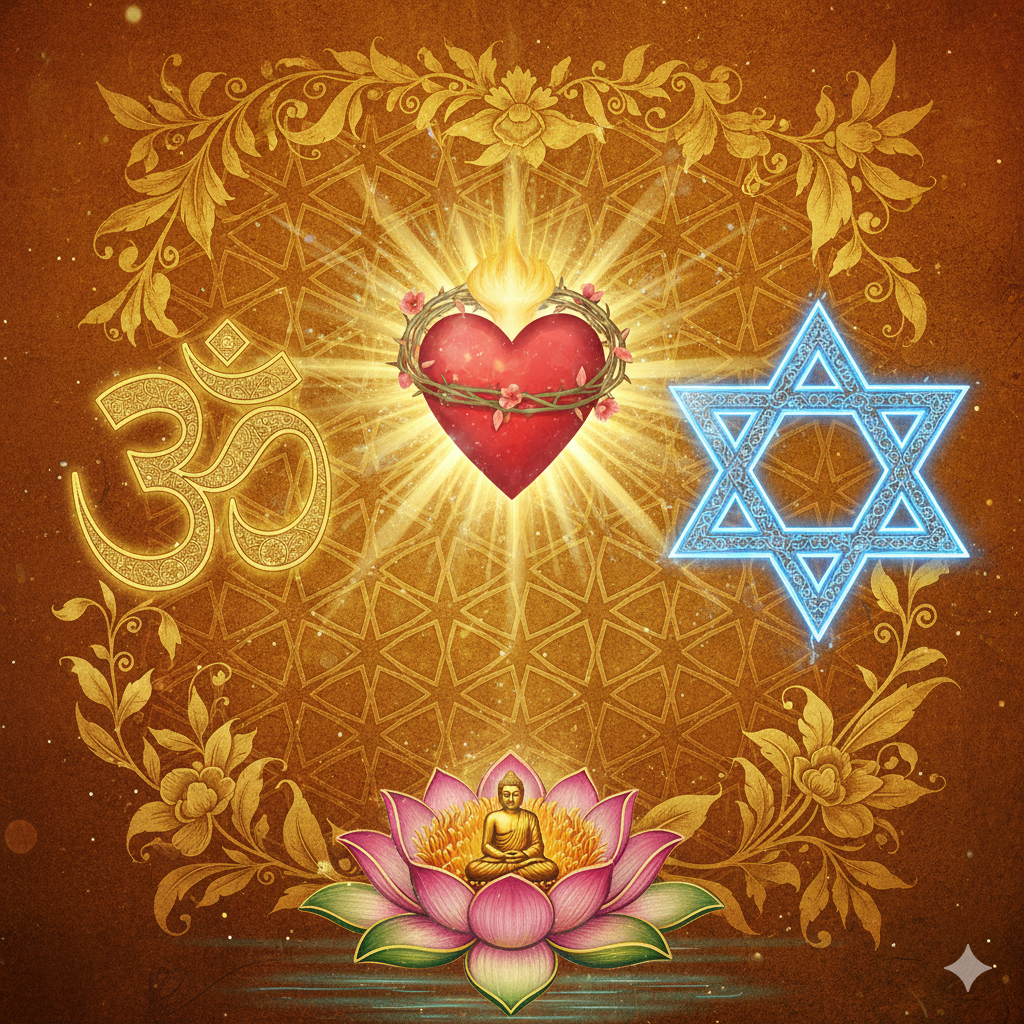
In Hinduism
Anahata is where bhakti (devotion) flowers. It’s the seat of the jivatman (individual soul) meeting the paramatman (universal soul). Hindu saints like Ramana Maharshi spoke of the “spiritual heart” (hridaya) located slightly to the right of the physical heart—a luminous cave where the Self dwells. When pilgrims place their hands on their hearts and say “I,” they’re pointing to this sacred space.
In Buddhism
The heart-mind (citta in Pali) is central to Buddhist practice. In Tibetan Buddhism, the heart wheel contains the “indestructible drop”—the point of consciousness that persists even through death and rebirth. The practice of metta bhavana (loving-kindness) is essentially a method for awakening the heart chakra, training the mind to radiate compassion in all directions.
Thich Nhat Hanh teaches “interbeing”—the recognition that nothing exists separately, that we’re all interconnected. This isn’t philosophy; it’s the direct experience of an opened heart chakra, where the illusion of separation dissolves.
In Christianity
The Sacred Heart of Jesus is one of Catholicism’s most powerful symbols—representing divine love, compassion, and suffering transformed. Christian mystics like Meister Eckhart wrote, “God is born in the Heart and the Heart is born in God.” The Desert Fathers practiced nepsis (guarding of the heart), a form of watchful awareness nearly identical to heart-centered meditation.
The Philokalia, the foundational text of Orthodox Christian mysticism, is entirely devoted to “bringing the mind down into the heart”—exactly what yogis mean by centering consciousness in Anahata.
In Sufism (Islamic Mysticism)
Sufis speak of Qalb (the spiritual heart) as the organ of divine perception. Like Anahata, they locate it slightly to the right of the physical heart. The Sufi path involves purifying the Qalb through dhikr (remembrance of God) until it becomes a polished mirror reflecting divine attributes.
In the Sufi system of Lataif-e-sitta (six subtleties), there are three heart centers arranged horizontally across the chest: Qalb (left), Ruh (right), and Sirr (center)—remarkably similar to the yogic understanding of the heart complex. The goal? To awaken “the eye of the heart,” the capacity to perceive spiritual reality directly.
Rumi, that intoxicated lover of God, wrote: “The heart is like a grain of corn / whose husk you must remove to see its truth.” Everything he taught—every whirling dance, every ecstatic poem—was an invitation into heart consciousness.
In Judaism
Kabbalistic tradition places the heart at the intersection of Tiferet (beauty, harmony, balance) on the Tree of Life—the sixth sefirah, which mediates between divine mercy and divine judgment, between giving and receiving. This is Anahata’s function exactly: integrating opposites, finding the third way.
The Jewish concept of lev (heart) appears over a thousand times in Hebrew scriptures, always as the seat of understanding, wisdom, and authentic relationship with the Divine.
The Thread That Connects
Across continents and centuries, mystics discovered the same truth: The heart is not just a muscle pumping blood. It’s a portal to transcendence, a bridge between the personal and the universal, a place where love ceases to be emotion and becomes your very nature.
They all discovered what happens when you stop living from your head or your gut and start living from your heart. They found that enlightenment isn’t about reaching some distant heaven—it’s about opening to what’s always been here, beating in your chest, waiting for you to notice.
What Science Says: The Research Behind the Heart
You might be thinking: “This all sounds beautiful, but is there any actual evidence?”
Fair question. Let’s talk science.
The Heart-Brain Connection
Dr. Valerie Hunt at UCLA conducted pioneering research in the 1980s, placing electrodes on participants’ bodies at chakra locations while they received energy healing. When she filtered out heart, muscle, and brain frequencies (below 250 Hz), she discovered unique waveforms between 500-20,000 Hz at chakra sites—and these corresponded precisely with colors reported by aura readers working with the same participants. The heart chakra region showed distinct electrical activity in the green spectrum.
Similarly, Dr. Hiroshi Motoyama’s experiments in Japan used sensitive photoelectric equipment to measure light emissions and electromagnetic frequencies at chakra points. When subjects concentrated on their heart chakra and indicated energy emission, the instruments recorded measurable changes—weak light generated in a light-proof room and high-frequency oscillations near the heart center.
Heart Coherence and Emotional States
The HeartMath Institute has spent decades researching “heart coherence”—the measurable state when your heart rhythm pattern becomes smooth and ordered. This state corresponds precisely with what traditional systems describe as an “open” or “balanced” heart chakra.
Their research shows that:
- Heart coherence improves cognitive function, emotional stability, and physical health
- The heart generates the strongest electromagnetic field in the body (5,000 times stronger than the brain’s)
- The heart sends more signals to the brain than vice versa, influencing perception, decision-making, and emotional processing
- Practices like gratitude, compassion, and focused breathing create measurable heart coherence
This isn’t woo-woo. It’s measurable physics.
The Gap Junction Theory
Dr. Richard Maxwell proposed a fascinating hypothesis connecting ancient chakra theory to modern physiology. He suggests that intercellular gap junctions—connections between cells that allow direct electrical and chemical communication—provide the physiological basis for the energy flows described in yoga.
High concentrations of gap junctions in specific areas (like the cardiac plexus near the heart) could generate the electrical conductance and radiant phenomena that practitioners subjectively experience as “chakra energy.” This theory offers a scientific framework for understanding why focused attention on these areas produces real, measurable effects.
The Mind-Body Integration Research
A 2013 study by Robert Beshara, published in the International Journal of Yoga, explored Anahata as a “bio-socio-psycho-spiritual model of consciousness.” The research demonstrated correlations between heart chakra awareness and improvements in emotional intelligence, social functioning, and sense of connection to something larger than oneself.
More recent research (2024) published in the International Journal of All Research Education and Scientific Methods examined the clinical importance of Anahata, finding that “negative emotions also influence unhealthy lifestyles such as poor diet, lack of exercise, and smoking by influencing the mind. These emotional imbalances, when chronic, can lead to physical responses such as increased heart rate, blood pressure, and inflammation, contributing to the genesis of heart diseases.”
In other words: Your emotional state affects your physical heart. Your heart chakra and your actual heart are not separate systems.
The Cautionary Note
Interestingly, research also validates traditional warnings about premature heart chakra work. Studies in psychiatric regression analysis suggest that opening higher chakras without proper preparation and integration can lead to psychological instability—which is exactly what yogic texts warned about centuries ago.
This isn’t a game. This is deep work. Approach it with respect.
The Sounds You’ll Start to Hear
Here’s what they don’t tell you in the yoga studio greeting card version of spirituality: When your heart truly opens, it’s not all bliss and rainbows.
You’ll start to hear things. Not voices (probably)—but sounds that were always there but that you couldn’t perceive before. The traditional texts call this the unstruck sound, the anahata nad.
Some people report hearing bells. Others, drums or flutes. Some hear the sound of wind moving through invisible spaces. You might begin to perceive—not intellectually understand, but actually hear—the language of birds, the voice of trees, the emotional frequency of other people’s hearts.
This is not metaphor.
One practitioner described it like this: “After months of practice, I started hearing this subtle humming sound, like the vibration of the universe itself. At first, I thought I had tinnitus. But it was different. It had intelligence. It responded to my attention. When I focused on it, it would grow stronger. When I opened my heart, it would become a symphony.”
The texts warn that without proper preparation, this opening can destabilize you. Hearing things that others don’t hear is, after all, a symptom of psychological imbalance. The difference is this: Are you being pulled into fragmentation, or are you becoming more whole? Is the world becoming smaller and more threatening, or larger and more interconnected?
Are you losing yourself, or finding yourself?
That’s the difference between an opened heart chakra and a broken mind.
The Life That Waits on the Other Side
So what actually happens when your heart opens? What changes?
Based on thousands of years of testimony and modern accounts:
You become less reactive. That person who used to trigger you? Still says the same things, but you notice space between their words and your response. You can choose.
Your relationships deepen. Not because people change, but because you stop relating to your projections of them and start meeting them as they actually are.
Synchronicities increase. Call it magic, call it the law of attraction, call it reticular activating system—you start noticing connections, meeting the right people at the right time, receiving what you need just as you need it.
Decision-making becomes clearer. You develop an internal compass that doesn’t contradict your logic but operates from a deeper knowing.
Physical health improves. Lower blood pressure, better sleep, reduced inflammation. Your body relaxes when your heart opens because it finally feels safe.
You become less afraid of death. When you experience yourself as something more than your individual story, the ending of that story loses its terror.
Compassion becomes involuntary. Not because you’re trying to be a good person, but because you can’t not feel the suffering and joy of others. The boundaries have become more porous.
Joy arrives without reason. Not because everything is perfect, but because something in you has touched something that exists prior to circumstance.
This isn’t spiritual bypassing. You’ll still feel anger, grief, fear. But you’ll feel them without being consumed by them. You’ll move through emotions rather than being stuck in them.
Your heart will break. Often. That’s what hearts do when they’re open. But it will be a breaking-open, not a breaking-apart.
Your Heart Is Already Open
Here’s the secret they usually save for the end of the spiritual path:
Your heart chakra isn’t blocked. It was never closed. Anahata doesn’t need to be awakened because it’s already awake, already vibrating, already emitting that unstruck sound.
What’s blocked is your awareness of it.
All the practices, all the breathwork, all the meditation, all the service—none of it creates an open heart. They just remove the obstacles to recognizing what was always already true.
You were born with an open heart. Watch any infant—they haven’t learned to close yet. Then life happened. Betrayals, losses, disappointments. You learned to armor up, to protect yourself, to not feel so much because feeling everything was too painful.
But underneath all that protection, your heart has been patiently beating, waiting for you to remember.
The work isn’t to become something you’re not. It’s to excavate what you’ve buried. It’s archeology, not construction.
Your heart knows how to love the way your lungs know how to breathe. You don’t have to teach it. You just have to stop suffocating it.
The Practice That Changes Everything
If you remember nothing else from this article, remember this one practice. It’s simple. It’s profound. It will change your life if you commit to it.
Every day, for just five minutes, sit quietly. Close your eyes. Place your hand on your heart.
Don’t try to feel anything. Don’t try to open anything. Don’t visualize green light or chant mantras or analyze your emotional blocks.
Just sit with your hand on your heart and ask: “What do you need me to know?”
Then listen.
Not for words, necessarily. Maybe just a sensation. Maybe an image. Maybe a memory. Maybe nothing at all.
Do this every day for 90 days.
Your heart has been trying to tell you something your whole life. Maybe it’s time to let it speak.
The Choice That’s Always Available
You stand at a crossroads. You’ve always stood here; you just didn’t know it.
To your left: the well-worn path of living from your head, your gut, your conditioned patterns. It’s familiar. It’s safe. It’s also slowly killing you.
To your right: the uncertain path of living from your heart. It’s vulnerable. It’s terrifying. It’s the only thing that will make you feel fully alive.
Behind you: everything you’ve been. All the ways you’ve armored and defended and protected yourself from feeling too much.
Ahead of you: everything you could become. A life lived from the center, from integration, from love.
And right here, right now, in the space between breaths, between heartbeats, in the pause before the next moment arrives—
Anahata waits.
The unstruck sound.
The place where opposites meet without collision.
The portal between who you think you are and who you actually are.
Your heart knows the way home.
Are you ready to follow?

Resources for Your Journey
Recommended Reading
- The Chakras by C.W. Leadbeater
- Eastern Body, Western Mind by Anodea Judith
- The Heart of Yoga by T.K.V. Desikachar
- The Spiritual Heart by Hridaya Yoga Center
Scientific Papers
- Beshara, R. (2013). “The chakra system as a bio-socio-psycho-spiritual model of consciousness: Anahata as heart-centered consciousness.” International Journal of Yoga – Philosophy, Psychology and Parapsychology, 1(1), 29-33.
- Maxwell, R. W. (2009). “The Physiological Foundation of Yoga Chakra Expression.” Zygon: Journal of Religion and Science, 44(4), 807-824.
- Clinical Importance of Anahata Chakra. (2024). International Journal of All Research Education and Scientific Methods, 12(8).
- Hunt, V. V. (1989). Infinite Mind: Science of the Human Vibrations of Consciousness. Malibu Publishing.
Websites
- HeartMath Institute (www.heartmath.org)
- Hridaya Yoga (www.hridaya-yoga.com)
- Isha Foundation – Sadhguru’s teachings on Anahata (www.isha.sadhguru.org)
The heart knows no distance. It speaks a language older than words. All you have to do is listen.