What developers do for software, you can do for your soul—a simple Sunday ritual that transforms chaos into clarity

You deploy code on Friday. Monday morning, users report bugs. Sound familiar?
Now imagine this: You navigate through your week—meetings, decisions, relationships, choices—and never pause to check what’s working. No logs. No debugging. No refactoring. Just continuous deployment into the chaos of living.
Most of us live this way. We’re running on legacy code we inherited at eighteen, patching problems with quick fixes, wondering why the same errors keep surfacing.
There’s another way.
The Power of Reflection: Your Personal Debugging Session
In 1985, NASA engineers faced a crisis. The Challenger disaster investigation revealed something profound: teams that practiced regular reflection sessions caught 40% more critical errors than those who didn’t. The practice wasn’t about dwelling on failure—it was about creating space to see clearly.
Research from Harvard Business School (Giada Di Stefano et al., 2014) found that employees who spent just 15 minutes at the end of the day reflecting on lessons learned performed 23% better on subsequent tasks than those who didn’t reflect. The kicker? It wasn’t the extra time that made the difference. It was the quality of attention.
Your life deserves the same rigor you’d give to production code. But here’s the paradox: the faster the world moves, the more essential it becomes to pause.
How Modern Life Hijacks Your Original Source Code
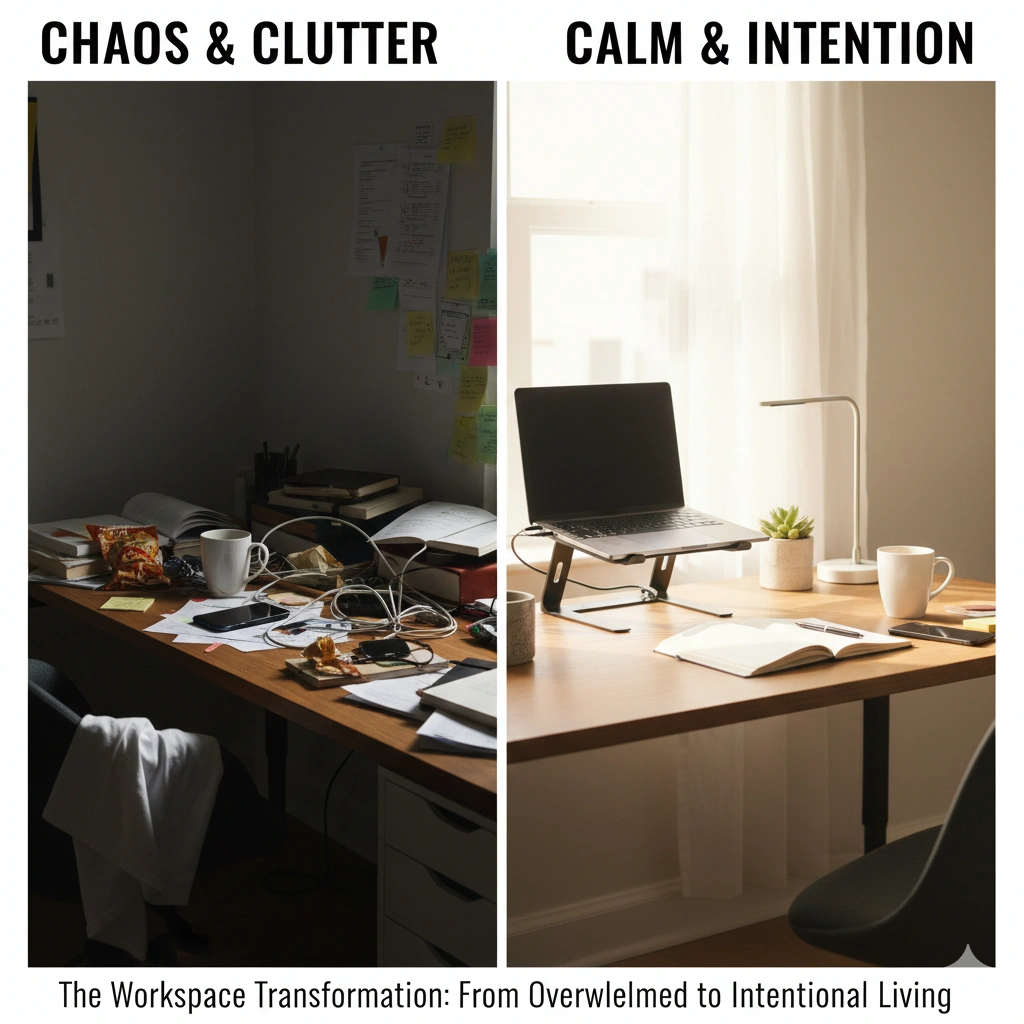
You were born with pristine source code. Curious. Present. Authentic. Then the world started pushing updates.
“Be productive.” “Stay busy.” “Hustle harder.” “Don’t stop moving.”
Before you knew it, your codebase looked nothing like the original. You’re running processes you never consciously installed—responding to emails at midnight, saying yes when you mean no, optimizing for metrics that don’t align with your values.
A client once told me he’d been working 80-hour weeks for three years. When I asked why, he paused. “I don’t actually know anymore,” he admitted. “It just became the default.”
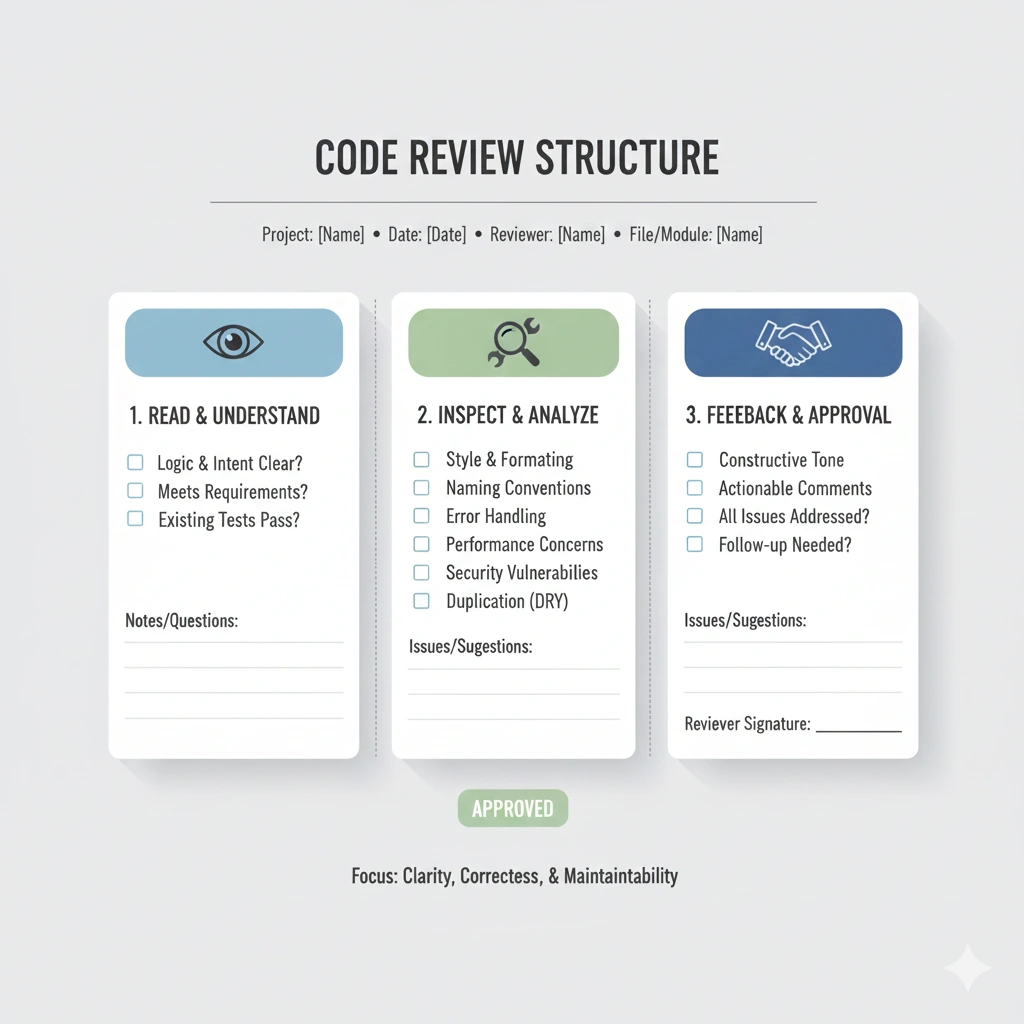
This is what happens without regular code reviews. Your life forks away from intention. You accumulate technical debt—resentments, misalignments, energy drains—until one day the whole system feels foreign.
Research published in Psychological Science (Killingsworth & Gilbert, 2010) revealed that people spend 47% of their waking hours thinking about something other than what they’re currently doing. Nearly half your life runs on autopilot, executing programs you didn’t write.
Weekly reflection is your commit to consciousness. It’s how you diff your intended path against your actual behavior. It’s how you remember who you meant to be.
Your Practical Weekly Code Review: A 15-Minute Protocol
Every Sunday, same time, same place. Treat it like a deployment you can’t skip.
Here’s your protocol:
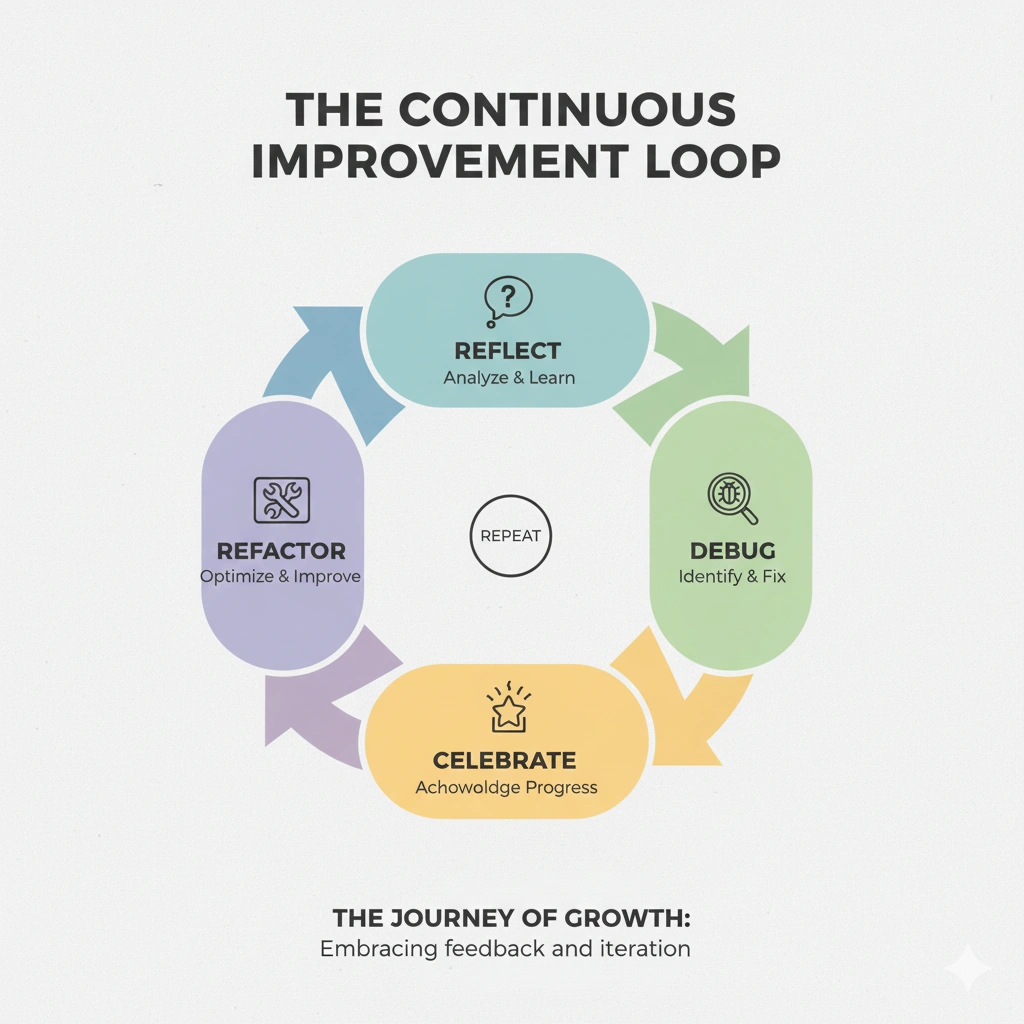
STAGE 1: LOAD THE WEEK (3 minutes)
Open your mental logs. Don’t judge, just retrieve.
- What happened this week?
- What conversations stood out?
- What decisions did you make?
- What felt aligned? What felt off?
Think of this as your stack trace. You’re not fixing anything yet—you’re just seeing what executed.
Example: “Monday I snapped at my partner before coffee. Wednesday I said no to that project that felt draining. Friday I stayed up until 2 AM scrolling.”
STAGE 2: RUN YOUR TESTS (4 minutes)
Now check against your core values—your test suite.
Ask yourself:
- Did I spend time on what matters to me?
- Was I present, or was I performing?
- Did my choices reflect who I want to become?
- Where did I leak energy into activities that don’t serve me?
Example: “I value deep work, but I fragmented my attention across twelve shallow tasks. I value presence, but I checked my phone during every conversation.”
STAGE 3: CELEBRATE THE GREEN BUILDS (3 minutes)
This is critical. Engineers celebrate successful deploys. You should too.
Write down three wins—moments where you showed up as your best self, no matter how small:
- “I took a walk instead of doom-scrolling.”
- “I admitted I was wrong in that team meeting.”
- “I cooked a real meal instead of ordering takeout.”
Research from the University of Pennsylvania (Seligman et al., 2005) shows that regular acknowledgment of positive experiences significantly increases long-term well-being and reduces depressive symptoms.
Your brain has a negativity bias—it’s optimized to scan for threats. Celebrating wins isn’t indulgence; it’s recalibration.
STAGE 4: DEBUG THE FAILURES (3 minutes)
Now for the bugs. Not to shame yourself, but to understand root causes.
Pick 1-2 moments where you veered off course:
- What triggered the behavior?
- What was the underlying need?
- What would the 2.0 version of this response look like?
Example: “I procrastinated on that proposal all week. Underneath was fear of rejection. Next time: break it into 15-minute chunks and start with the easiest section.”
Notice the language: not “I’m lazy,” but “I procrastinated because I felt fear.” You’re debugging the system, not condemning the programmer.
STAGE 5: PLAN YOUR REFACTOR (2 minutes)
Choose one—just ONE—intentional shift for next week.
Not ten goals. Not a complete system overhaul. One targeted refactor.
Examples:
- “This week: put phone in another room during dinner.”
- “This week: take three conscious breaths before responding to difficult emails.”
- “This week: say ‘let me think about it’ instead of auto-yes.”
Small patches, deployed consistently, compound into transformation.
Common Pitfalls: Why Your Code Review Fails
Pitfall 1: Turning It Into Self-Flagellation
Reflection isn’t punishment. If your review leaves you feeling worse, you’re doing it wrong. The goal is clarity, not shame.
One woman told me her Sunday reviews made her miserable. When I looked at her journal, every entry read like a prosecution: “Failed again. Still not good enough. Why can’t I get this right?”
That’s not debugging. That’s denial of service attacking yourself.
Shift the lens: you’re a compassionate engineer examining code, not a judge issuing verdicts.
Pitfall 2: Analysis Paralysis
Some people turn 15 minutes into three hours of existential spiral.
Reflection should clarify, not complicate. If you’re overthinking, set a timer. When it goes off, you’re done. Trust that your system will surface what needs attention.
Pitfall 3: Skipping the Celebration
You’ll want to rush past wins toward problems. Don’t.
Acknowledging what’s working isn’t arrogance—it’s fuel. It’s how you build momentum. It’s how you remember you’re not broken, just iterating.
Pitfall 4: Making It Performative
This isn’t content. You don’t need aesthetic journaling supplies or Instagram-worthy spreads.
A Google Doc works. Voice notes work. Scribbles on scrap paper work. What matters is honest engagement, not beautiful presentation.
The Compounding Power of Consistency
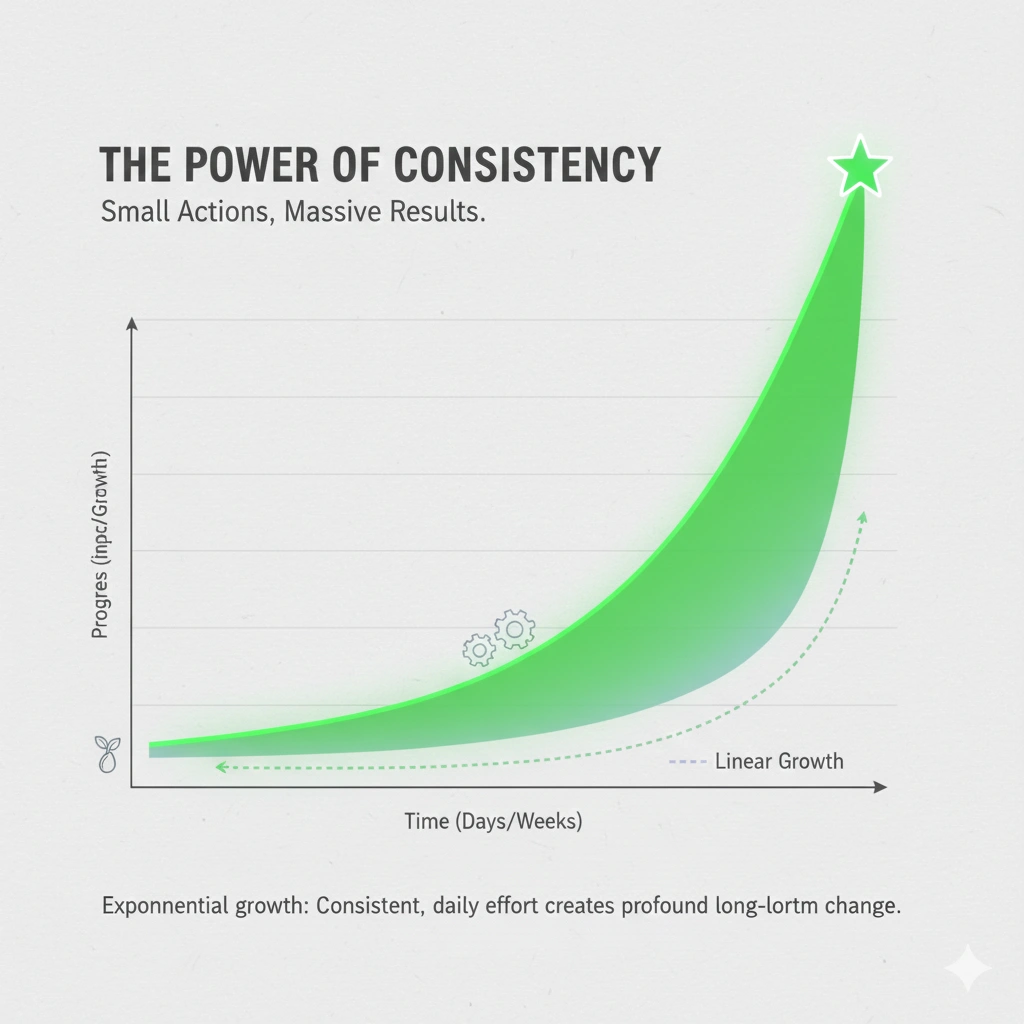
Here’s what nobody tells you about self-reflection: the magic isn’t in the individual sessions. It’s in the accumulation.
James Clear writes in Atomic Habits about the power of 1% improvements. If you get 1% better each week, you’re not 52% better at year’s end—you’re 67% better due to compounding.
But here’s the deeper truth: consistency creates identity shift.
The first few Sundays, you’re performing a practice. By week ten, you’re becoming someone who reflects. By week thirty, you can’t imagine living any other way.
A study published in the European Journal of Social Psychology (Lally et al., 2010) found it takes an average of 66 days for a behavior to become automatic. That’s just under ten weeks of Sunday reviews.
Ten weeks. Ten sessions of honest debugging. That’s the threshold between effort and effortlessness.
I started this practice four years ago. The first month felt forced. By month three, I looked forward to it. Now, when Sunday rolls around and I haven’t carved out my 15 minutes, something feels incomplete—like deploying code without running tests.
Your future self is the sum of the small course corrections you make today.
Your Codebase, Your Legacy

Here’s what I’ve learned from four years of weekly code reviews:
You’re not fixing yourself. You were never broken.
You’re remembering yourself. You’re cleaning up the cruft. You’re removing the dependencies you never needed. You’re refactoring toward alignment.
Software engineers know that the best code is often the result of regular maintenance, not dramatic rewrites. The same applies to your life.
Fifteen minutes every Sunday. That’s all.
No meditation retreats. No life coaches. No personality overhauls. Just you, your week, and an honest conversation.
You load what happened. You test against what matters. You celebrate what worked. You debug what didn’t. You choose one small refactor.
Then you close the laptop. You make tea. You step back into your week—slightly more aligned, slightly more aware, slightly more yourself.
The world will keep pushing updates. Notifications will keep firing. The default will always be chaos.
But you’ll have something most people never build: a regular commit to consciousness. A practice that says, “I’m not just running code anymore. I’m writing it.”
Your life is your codebase.
Time to start the review.
Start This Sunday
- Block 15 minutes on your calendar
- Find a quiet space
- Open a blank document or journal
- Ask yourself the five questions
- Write honestly
- Close and move on
That’s it. No perfection required. Just presence.
See you next week for build 2.0.
Research References:
- Di Stefano, G., Gino, F., Pisano, G., & Staats, B. (2014). “Learning by Thinking: How Reflection Aids Performance.” Harvard Business School Working Paper. https://www.hbs.edu/faculty/Pages/item.aspx?num=51988
- Killingsworth, M. A., & Gilbert, D. T. (2010). “A Wandering Mind Is an Unhappy Mind.” Science, 330(6006), 932. https://science.sciencemag.org/content/330/6006/932
- Seligman, M. E., Steen, T. A., Park, N., & Peterson, C. (2005). “Positive Psychology Progress: Empirical Validation of Interventions.” American Psychologist, 60(5), 410-421.
- Lally, P., van Jaarsveld, C. H. M., Potts, H. W. W., & Wardle, J. (2010). “How Are Habits Formed: Modelling Habit Formation in the Real World.” European Journal of Social Psychology, 40(6), 998-1009. https://onlinelibrary.wiley.com/doi/abs/10.1002/ejsp.674