
Ten directions, one you—here’s how to honor both your devotion and your limits when family expectations threaten to consume you

Your mother calls three times a day. Your teenager needs you to drop everything for another crisis. Your aging father insists you handle his medical appointments. Your partner needs more presence. Your toddler needs everything.
And you? You’re running on fumes, wondering when caring for everyone became code for abandoning yourself.
This is the crossroads every caregiver faces: how do you honor the people you love without disappearing in the process?
The answer isn’t working harder or sacrificing more. It’s learning something that sounds simple but feels revolutionary: mindful presence over constant availability.
What Is Mindful Parenting? Beyond Being Present

Mindful parenting isn’t about perfection. It’s not gentle-parenting-aesthetic-Instagram-posts or never raising your voice or always having the right answer.
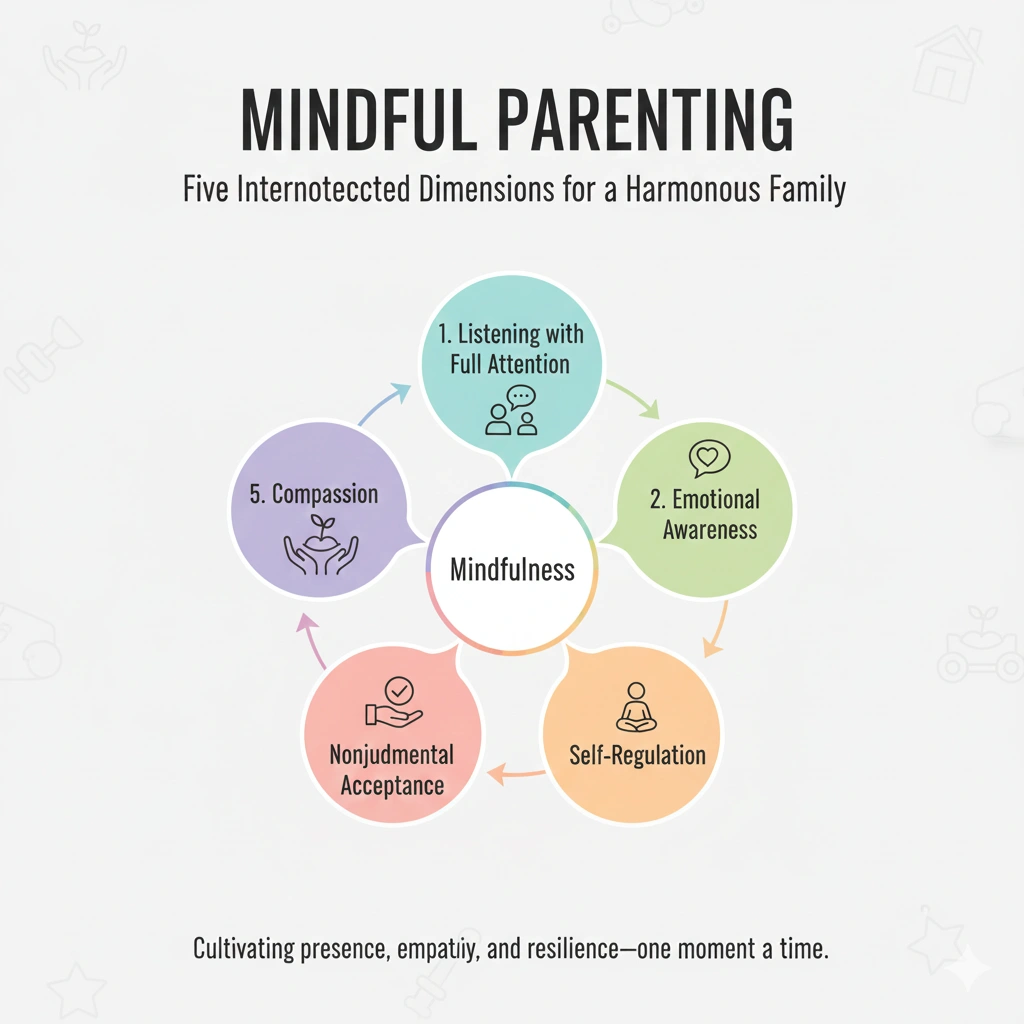
Research defines mindful parenting as intentionally bringing moment-to-moment awareness to the parent-child relationship through several key dimensions: listening with full attention, cultivating emotional awareness and self-regulation, and bringing compassionate nonjudgmental acceptance to parenting interactions.
In plain terms: it’s being here, now, with your child—even when “here” is messy, even when “now” is hard.
It means noticing when your stress is spilling onto your kid. Catching yourself before you snap. Choosing response over reaction. Acknowledging your limits instead of pretending they don’t exist.
A colleague—let’s call her Leah—described her breakthrough moment: “I was making dinner while my daughter tried to tell me about her day. I was nodding, but I wasn’t listening. She said, ‘Mom, you’re not even here.’ She was right. My body was in the kitchen, but my mind was running through tomorrow’s deadlines.”
That moment of recognition—when you realize you’re physically present but mentally absent—is where mindful parenting begins.
The Five Core Dimensions
Studies identify specific components of mindful parenting: listening with full attention during parent-child interactions, maintaining emotional awareness of both self and child, practicing self-regulation in parenting relationships, showing compassion toward self and child, and accepting situations with nonjudgmental awareness.
Listening with Full Attention: Not half-listening while scrolling your phone. Full stop, full presence.
Emotional Awareness: Noticing when you’re triggered, exhausted, or projecting your own anxiety onto your child.
Self-Regulation: Pausing between impulse and action. Creating space between feeling angry and acting angry.
Nonjudgmental Acceptance: Allowing your child (and yourself) to be imperfect without making it mean something catastrophic.
Compassion: Kindness toward both your child’s struggles and your own inadequacies.
This framework applies equally to parenting young children and caring for aging parents. The principles don’t change—only the context does.
The Research: Why Mindful Parenting Actually Matters
Before you dismiss this as soft, feel-good advice, consider what the science reveals.
Impact on Children’s Outcomes
Research demonstrates that youth with mothers who rated higher in mindful parenting showed better peer pressure resistance skills, fewer externalizing problems, and lower rates of initiating illicit substance use.
Studies show mindful parenting has positive associations with positive parenting practices like warmth and affection, and negative associations with hostile or ineffective discipline approaches.
Children raised by mindful parents demonstrate fewer behavioral problems, better emotional regulation, and stronger social skills. But perhaps more importantly, they develop healthier relationships with themselves.
Impact on Parents’ Well-being
Meta-analysis of multiple studies found that mindful parenting interventions produced moderate effects on overall parenting mindfulness scores and showed improvements in parental psychological wellbeing and interpersonal relationships.
In controlled studies comparing mindfulness groups to control groups, parenting stress reduced significantly, with measurable improvements in youth psychological functioning including reductions in externalizing behaviors and cognitive outcomes.
Translation: when you practice mindful parenting, everyone benefits—including you.
The Mechanism
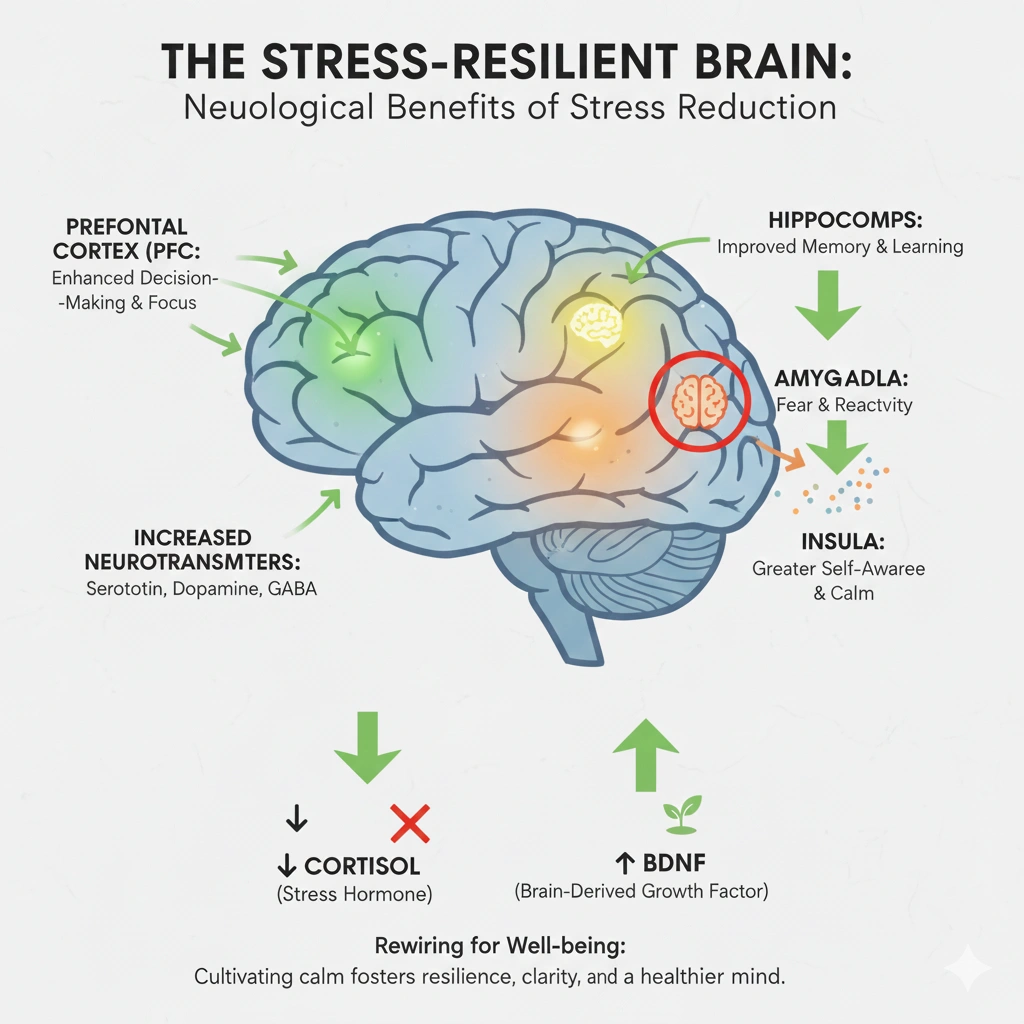
Why does it work? Because dispositional mindfulness can be enhanced through mindfulness-based interventions, and naturally mindful individuals report higher levels of emotional self-awareness, compassion, and life satisfaction.
You’re not just changing behaviors. You’re rewiring how you relate to stress, how you process emotions, and how you show up in relationships.
Managing Family Expectations: When Everyone Wants Everything
Here’s the thing nobody tells you about family caregiving: the expectations are infinite, but you are not.
Leah’s situation escalated when her father’s health declined. Suddenly she was parenting two kids, managing her father’s medical care, supporting her overwhelmed mother, and trying to maintain her career. Her siblings lived across the country and offered advice but no actual help.
“I was drowning,” she said. “Everyone had opinions about what I should do, but nobody was offering to do it themselves.”
The Cultural Context
Research on family caregiving across cultures reveals significant variation in expectations. Studies confirm that Hispanic, Asian, European-American, and African-American cultures provide substantial care for elderly parents and are much less likely to seek formal caregiving support, with caregiving roles being expected parts of life passed down generationally.
For many people, saying no to family feels like cultural betrayal. The phrase “family is family, and you take care of each other regardless” becomes a prison.
But here’s the uncomfortable truth: martyrdom isn’t love. Exhausting yourself doesn’t prove devotion. Burning out doesn’t honor anyone.
The Guilt Trap
Research shows that 53% of family caregivers feel they had no choice in taking on their caregiving role, creating significant guilt for those who choose not to provide care or who need to set limits.
Guilt whispers: “If you were a good daughter, you’d do more. If you were a better parent, you wouldn’t need breaks. If you really cared, you’d never say no.”
Guilt lies.
Real love includes limits. Real care requires sustainability. Real devotion acknowledges that you can’t pour from an empty vessel.

Drawing Boundaries: The Practice of Sacred Limits
Boundaries aren’t walls. They’re not rejection. They’re the framework that makes sustained love possible.
What Boundaries Actually Are
Boundaries are guidelines on how you want to be treated, what you’re willing to do, and how you want others to behave around you—essential for preventing caregiver burnout and maintaining mutual, respectful, supportive relationships.
Without boundaries:
- You say yes when you mean no
- You resent the people you’re helping
- You exhaust yourself trying to meet impossible demands
- You model unhealthy relationship patterns to your children
- You eventually collapse
With boundaries:
- You sustain your capacity to care
- You demonstrate self-respect to your children
- You create space for others to step up
- You preserve relationships instead of destroying them through resentment
How to Draw Boundaries Mindfully
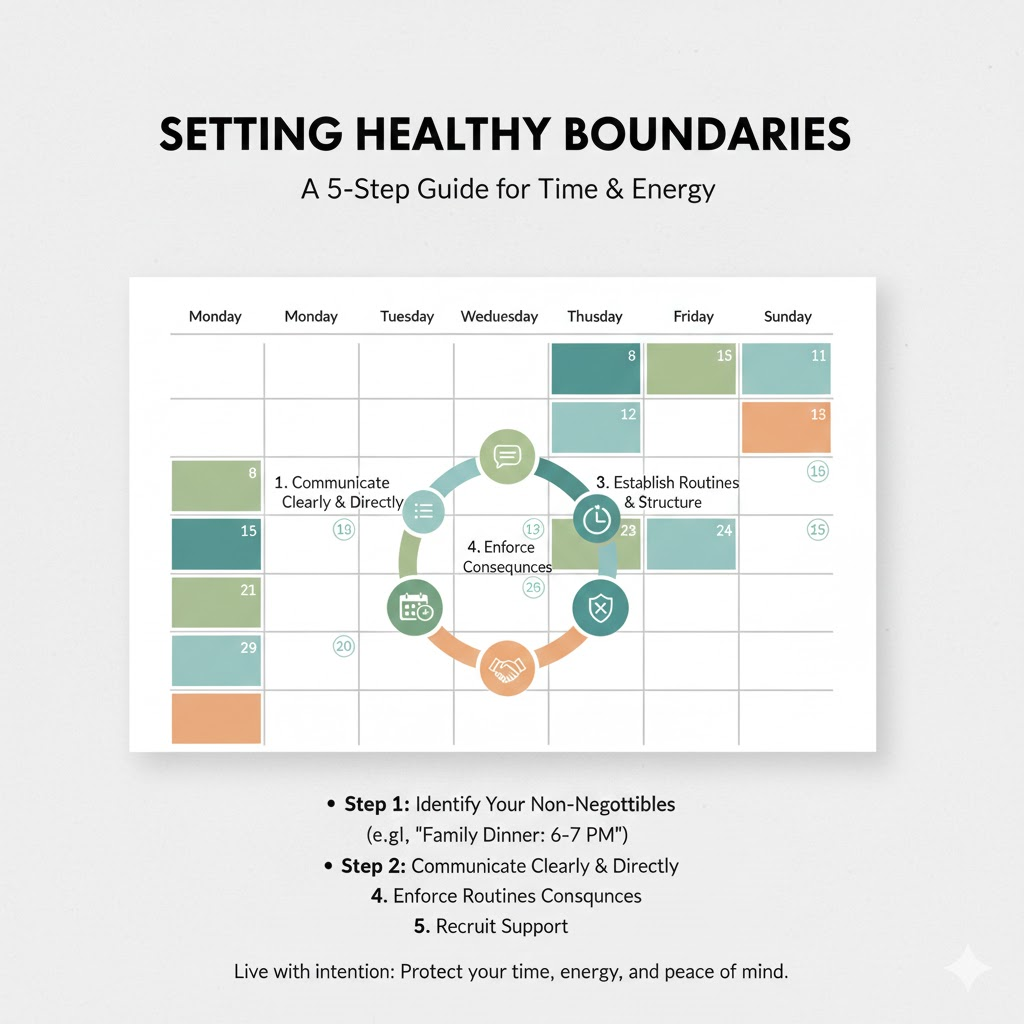
Step 1: Identify Your Non-Negotiables
What are the absolute limits you need to function? Not what you think you should need—what you actually need.
Examples:
- “I need eight hours of sleep to be functional”
- “I need one evening per week completely unscheduled”
- “I need my lunch break to actually eat lunch”
- “I need childcare help twice a week”
Write these down. They’re not selfish—they’re survival requirements.
Step 2: Communicate Clearly and Directly
When explaining boundaries, being direct and explicit about what you’re willing to tolerate and what you aren’t is essential—dropping hints or being passive-aggressive leads to anger and defensiveness.
Not: “Well, I’m pretty busy, so maybe…”
Instead: “I can visit Dad on Tuesdays from 3-5pm. I’m not available other days this week.”
Not: “I guess I could try to make that work…”
Instead: “No, that doesn’t work for me.”
Practice saying “no” as a complete sentence. It doesn’t require justification.
Step 3: Establish Routines and Structure
Creating schedules with clear parameters helps minimize tension and burnout, such as setting specific outing times or establishing daily call windows rather than accepting constant interruptions.
If your parent calls constantly during work hours, establish a daily check-in time. Give them a notepad to write down non-urgent questions. Explain that calls outside the scheduled time signal emergencies.
Step 4: Enforce Consequences When Boundaries Are Violated
When boundaries are crossed, consequences must follow—not as punishment, but as reminders that the behavior crossed a line, such as stepping back from the caregiving situation or reducing time spent.
If your mother ignores your stated availability and shows up unannounced repeatedly, you don’t answer the door. If your adult child expects you to solve every crisis immediately, you let the call go to voicemail and return it at your convenience.
This feels harsh. It isn’t. It’s teaching people how to respect you.
Step 5: Recruit Support
When discussing limitations with elderly parents, bringing a list of alternatives for their care—such as professional caregivers, other family members, or eldercare services—helps address fears about future care.
You don’t have to do it all yourself. Professional caregivers exist. Other family members can contribute. Adult day programs provide respite. Long-term care facilities aren’t abandonment—they’re specialized support.
Leah finally hired a part-time caregiver for her father and enrolled him in an adult day program three days a week. “I felt guilty at first,” she admitted. “But then I realized he was actually happier. He had social interaction, activities, and professional care. And I could breathe again.”
How to Be Heard: Speaking Your Truth in Family Systems
Drawing boundaries is one thing. Getting your family to respect them is another.
Why Your Voice Gets Lost
Family systems develop patterns over decades. You’ve been the accommodating one, the problem-solver, the person who manages everything. Your family is comfortable with that dynamic.
When you try to change it, they resist. Not because they’re malicious, but because change is uncomfortable.
Strategies for Being Heard
1. Choose Your Timing Wisely
Don’t try to establish boundaries in the middle of a crisis. Wait for a calm moment when emotions aren’t running high.
2. Use “I” Statements, Not Accusations
Not: “You always demand too much from me.”
Instead: “I’m feeling overwhelmed and need to make some changes to how I’m managing my time and energy.”
3. Be Specific and Concrete
Vague boundaries get ignored. Specific ones get respected (or at least acknowledged).
Not: “I need more space.”
Instead: “I can help with Dad’s appointments on Tuesdays. Other days, you’ll need to arrange transportation.”
4. Repeat Without Escalating
The first time you state a boundary, people might ignore it, hoping you don’t mean it. Repeat it calmly, consistently, without getting defensive or emotional.
“As I mentioned, I’m not available that day.”
“I understand you’d prefer otherwise, and my answer is still no.”
5. Get Professional Support If Needed
Having a mental health counselor involved for either or both parties can be beneficial, as can joint therapy sessions that clarify boundaries in a safe space when met with unflinching resistance.
Family therapy isn’t failure. It’s bringing in a neutral third party to help navigate difficult conversations.
6. Let Go of the Need for Approval
This is the hardest part. Your family might not like your boundaries. They might be disappointed, frustrated, or angry.
You have to be okay with that.
The technique of detaching with love—creating emotional distance from another’s actions while maintaining care—was initially established for families dealing with addiction but applies to any contentious relationship where maintaining boundaries is essential for psychological health.
You can love someone and still have limits. You can disappoint someone and still be a good person. You can prioritize your well-being and still care deeply.
The Integration: Daily Practices for Mindful Family Navigation
Theory is useless without practice. Here’s how to build these principles into your actual life.
Morning Intention (2 minutes)
Before the demands begin, set your intention:
“Today, I will notice when I’m moving from response to reaction.”
“Today, I will pause before saying yes to anything.”
“Today, I will honor at least one of my own needs.”
Mindful Check-ins (Throughout the day)
When your child asks for something, pause. What do they need? What do you need? Is there a solution that honors both?
When your parent calls, breathe first. Are you answering from obligation or genuine availability?
When you feel resentment building, stop. What boundary is being violated? What needs to be addressed?
Evening Reflection (5 minutes)
- Where did I honor my boundaries today?
- Where did I abandon myself?
- What do I need to do differently tomorrow?
Weekly Boundary Review (15 minutes)
Every Sunday, assess:
- What’s working?
- What’s draining me?
- What boundary needs to be clarified or reinforced?
- What support do I need to request?
Monthly Family Meeting
If you’re managing complex family care, institute a monthly family meeting where expectations, schedules, and responsibilities get clarified. This prevents the constant negotiation that drains everyone.

Common Mistakes That Keep You Trapped
Mistake 1: Believing You’re Responsible for Everyone’s Happiness
You’re not. Your children’s emotional regulation is important, but you can’t feel their feelings for them. Your parents’ comfort matters, but you can’t prevent all their discomfort.
Your job is to provide love, support, and appropriate care—not to eliminate all difficulty from their lives.
Mistake 2: Waiting Until You’re Burnt Out to Set Boundaries
Boundaries work best when established proactively, not reactively. Don’t wait until you’re on the edge of collapse.
Mistake 3: Over-Explaining Your No
“No” doesn’t require a dissertation. The more you explain, the more you signal that your boundary is negotiable.
Mistake 4: Expecting Immediate Acceptance
Actions speak louder than words—adult children need to reinforce and follow through with boundaries when parents push against them, and while it can be exhausting to constantly remind them, boundaries won’t stick if you don’t honor them consistently.
Your family will test your boundaries. Stand firm. They’ll learn you mean it.
Mistake 5: Sacrificing Self-Care as Proof of Love
When caregivers consistently neglect their own needs, they become more on-edge, snippy, burnt out and resentful—feeling exhausted, being cranky, feeling resentful are all indicators that downtime is needed.
Self-care isn’t selfish. It’s what makes sustained caregiving possible.
Conclusion: Love That Includes You
Three years after implementing boundaries, Leah described her transformed life:
“My relationship with my kids is better because I’m actually present when I’m with them. My dad is thriving in his day program. My mother finally stepped up to coordinate with my siblings. And I sleep through the night again.”
She paused, then added: “I used to think boundaries meant I loved my family less. I was wrong. Boundaries mean I love them sustainably.”
That’s the shift: from unsustainable martyrdom to sustainable devotion.
Your family doesn’t need you to be everything. They need you to be present, consistent, and available—which is only possible when you’re not constantly depleted.
Mindful parenting and caregiving aren’t about doing more. They’re about being more intentional with what you’re already doing. About quality over quantity. Presence over performance. Boundaries over burnout.
You can love your family deeply and still have limits.
You can be devoted and still say no.
You can be present and still need space.
You can honor their needs and your own.
This isn’t selfish. This is sustainable.
This is love that includes everyone—even you.
Begin Here
Right now, identify one boundary you need to establish. Just one.
Write it down:
“I need [specific thing] to function well.”
“I can provide [specific help] on [specific schedule].”
“I am no longer available for [specific demand].”
Then communicate it. Clearly. Kindly. Firmly.
Your family might not like it immediately. That’s okay.
You’re not asking permission to have needs. You’re acknowledging reality.
And reality is this: you matter too.
The pull in ten directions doesn’t stop. But you can stop trying to be in all ten places at once.
Choose presence where you are. Set boundaries where you aren’t. Trust that both are acts of love.
Your family needs your limits as much as they need your love.
Both make the relationship sustainable.
Start today.
Your Mindful Family Practice Checklist:
□ Identify one non-negotiable boundary you need
□ Communicate it clearly to relevant family members
□ Establish a schedule with clear availability windows
□ Practice saying “no” without explanation
□ Set up one regular self-care commitment
□ Check in with yourself daily about boundary violations
□ Recruit at least one additional source of support
□ Release guilt about having limits
Final Truth:
Love without boundaries consumes everyone involved.
Love with boundaries sustains everyone it touches.
Your family doesn’t need your martyrdom. They need your presence.
And presence is only possible when you’re not running on empty.
Set the boundary. Honor the limit. Trust that love includes you too.
Research References:
- Duncan, L. G., Coatsworth, J. D., & Greenberg, M. T. (2009). “A model of mindful parenting: Implications for parent-child relationships and prevention research.” Clinical Child and Family Psychology Review, 12(3), 255-270. https://pmc.ncbi.nlm.nih.gov/articles/PMC2730447/
- Ahemaitijiang, N., Fang, H., Ren, Y., Han, Z. R., & Singh, N. N. (2021). “A review of mindful parenting.” SAGE Open. https://journals.sagepub.com/doi/full/10.1177/18344909211037016
- Corthorn, C., & Milicic, N. (2016). “Mindfulness and future directions in parenting research and practice.” Journal of Family Studies. https://www.tandfonline.com/doi/full/10.1080/24721735.2021.1961114
- Shorey, S., & Ng, E. D. (2021). “The efficacy of mindful parenting interventions: A systematic review and meta-analysis.” International Journal of Nursing Studies, 121, 103996. https://www.sciencedirect.com/science/article/abs/pii/S0020748921001437
- Burgdorf, V., Szabó, M., & Abbott, M. J. (2019). “The effect of mindfulness interventions for parents on parenting stress and youth psychological outcomes: A systematic review and meta-analysis.” Frontiers in Psychology, 10, 1336. https://www.frontiersin.org/journals/psychology/articles/10.3389/fpsyg.2019.01336/full
- Coatsworth, J. D., Duncan, L. G., Nix, R. L., et al. (2018). “Changes in mindful parenting: Associations with changes in parenting, parent-youth relationship quality, and youth behavior.” Journal of the Society for Social Work and Research, 9(4). https://www.journals.uchicago.edu/doi/full/10.1086/701148
- Bögels, S. M., & Restifo, K. (2014). Mindful Parenting: A Guide for Mental Health Practitioners. Referenced in PMC studies. https://pmc.ncbi.nlm.nih.gov/articles/PMC10066963/
- Mera, S., Zimmer-Gembeck, M. J., & Conlon, E. G. (2023). “Emerging adults’ experience of mindful parenting.” SAGE Open. https://journals.sagepub.com/doi/full/10.1177/21676968231185888
- Parent, J., McKee, L. G., Rough, J. N., & Forehand, R. (2016). “The association of parent mindfulness with parenting and youth psychopathology across three developmental stages.” Journal of Abnormal Child Psychology, 44(1), 191-202.
- Yue, L., Cui, N., Golfenshtein, N., et al. (2022). “The protective role of mindful parenting against child maltreatment and aggressive behavior.” Child and Adolescent Psychiatry and Mental Health, 16(1), 72. https://capmh.biomedcentral.com/articles/10.1186/s13034-022-00507-5
- MeetCaregivers. (2022). “Setting boundaries with parents for family caregivers.” https://meetcaregivers.com/setting-boundaries-with-difficult-elderly-parents/
- Wilson, P. D. (2021). “Setting boundaries with difficult elderly parents.” The Caring Generation. https://pameladwilson.com/setting-boundaries-with-difficult-elderly-parents-the-caring-generation-radio-program/
- AgingCare. (2020). “Detaching with love: Setting boundaries with difficult elderly parents.” https://www.agingcare.com/articles/setting-boundaries-with-parents-who-are-abusive-142804.htm
- Care.com. (2023). “How do I set boundaries with my aging parents?” https://www.care.com/c/setting-boundaries-with-aging-parents/
- Leff, B., & Wolff, J. L. (2021). “Challenges and approaches to involving family caregivers in primary care.” PMC. https://pmc.ncbi.nlm.nih.gov/articles/PMC8160020/
- Russell, T. (2025). “When aging parents expect too much: How to set boundaries.” Care.com. https://www.care.com/c/setting-boundaries-with-needy-aging-parents/
- University of Kentucky Human Resources. (2022). “Setting boundaries as a caregiver is important for you and them.” https://hr.uky.edu/news/2022-03-02/setting-boundaries-caregiver-important-you-and-them
AARP. (2025). “How to set boundaries as a family caregiver.” https://www.aarp.org/caregiving/basics/caregiver-boundaries/