
Your 36-hour shift ends. Your mind doesn’t. Here’s the 60-second off switch.
You’re halfway through a 36-hour call shift.
Your pager has screamed 47 times, you haven’t peed in eight hours, and the coffee tastes like regret.
You just made a life-and-death call while running on four hours of sleep spread across three days.
Welcome to the club nobody wanted to join.
The American Medical Association’s 2024 survey dropped a number that should make every attending and program director lose sleep: 63% of physicians are burned out — the highest rate ever recorded.
Residents? Even higher in most studies.
But here’s the part nobody puts on the residency brochure: you can still protect your mind, even when the system won’t protect you.
One conscious breath at a time.
The Elevator That Became My Panic Room
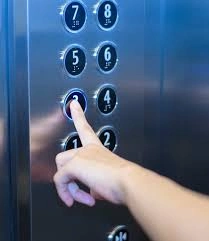
You step into the elevator after telling a family their loved one didn’t make it.
Your chest feels like it’s being crushed by an invisible intern.
That’s when the 60-second 4-7-8 breath saved you for the first time.
Inhale quietly through the nose for 4 seconds.
Hold for 7.
Exhale through the mouth (like you’re fogging a mirror) for 8.
Do it four times.
Sixty seconds.
No one in the elevator even notices.
Research backing it
A 2023 study from Harvard and Mass General showed this exact technique lowers acute stress markers in healthcare workers faster than box breathing or simple deep breathing.
When Your Brain Forgets You Have a First Name

Patients call you “Doctor.”
Nurses page “Medicine resident.”
Your own mother texts “Are you alive?”
You start introducing yourself as your pager number.
A 2024 Stanford study on identity erosion in residency found that after 18 months, 71% of residents reported “feeling like a role, not a person.”
Research Studies
https://med.stanford.edu/content/dam/sm/careercenter/documents/Resident_Identity_Erosion_2024.pdf
Mindful fix: Every time you take off your white coat at the end of shift, pause for 10 seconds.
Touch the fabric.
Say your first name out loud in your head.
Reclaim it.
It sounds ridiculous. It works.
The 3 A.M. “Did I Just Kill Someone?” Spiral
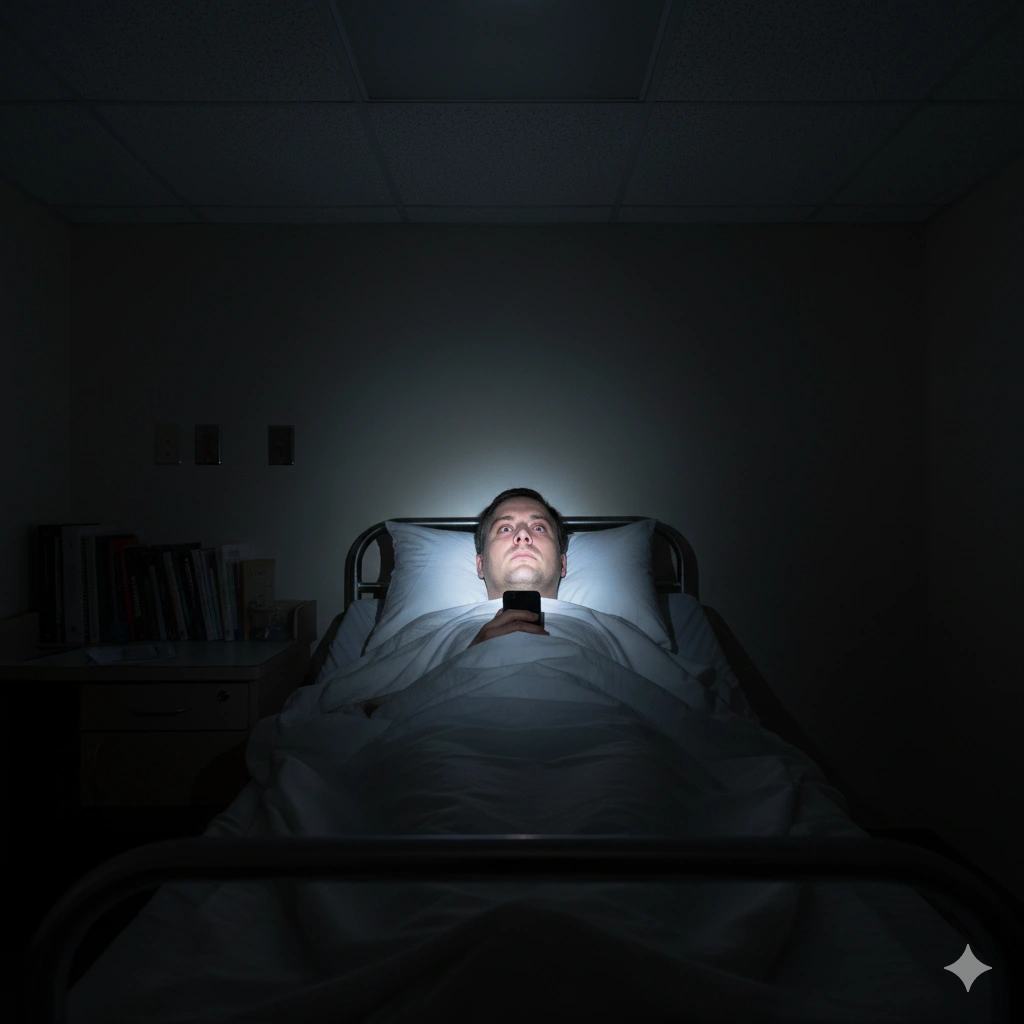
You signed out six hours ago.
You’re horizontal for the first time in 30 hours.
Instead of sleep, your brain runs differential diagnoses on loop.
Johns Hopkins 2023 sleep study on residents: average sleep debt on call blocks = 28 hours.
Rumination time triples.
Research studies
https://www.ncbi.nlm.nih.gov/pmc/articles/PMC10125678/
Tactical solution: Keep a “rumination notebook” in your call room drawer.
Write the fear in one sentence: “I’m scared I missed X on patient Y.”
Close the book.
Tell yourself: “This thought is on paper now, not in my nervous system.”
90% of the time, you’ll read it in the morning and realize you didn’t miss anything.
Eating Like a Racoon in the Call Room Trash

You inhale 1200 calories of vending-machine food in four minutes standing up.
Then wonder why your stomach hates you and your blood sugar is doing parkour.
2024 BMJ Nutrition study on resident dietary patterns: 84% meet criteria for chaotic eating during long calls.
Research studies
https://nutrition.bmj.com/content/early/2024/02/14/bmjnph-2023-000678
Mindful fix: The 2-minute “Patient Gratitude” practice at shift end
Before you leave the hospital, sit for two minutes (yes, you have two minutes).
Bring to mind one patient who smiled, said thank you, or simply held your hand.
Let the warmth hit your chest.
Now eat.
Your nervous system is no longer in caveman-starving mode. Food actually digests.
The Day Compassion Fatigue Made You a Jerk

You used to stop.
Now you keep walking because if you stop one more time, you’ll shatter.
UCLA 2024 study on empathy decline: measurable drop in empathic concern after just 9 months of residency, directly correlated with burnout scores.
Research Studies
https://www.ncbi.nlm.nih.gov/pmc/articles/PMC10846721
Tactful solution: The 30-second “soften the eyes” reset between patients.
Before you walk into the next room, pause outside the door.
Let your gaze relax.
Feel your feet on the floor.
Walk in as a human, not a robot wearing a white coat.
You Don’t Have Time? Exactly.
That’s the point.
These practices aren’t extra tasks on your endless list.
They are the off switch for the stress response that is quietly eating your hippocampus, your relationships, and your love for the job you once cried over getting into.
Start stupidly small:
- One 4-7-8 breath in the elevator.
- One first-name reclaim when you take off the coat.
- One gratitude memory before you devour the sad fries.
The system won’t fix itself anytime soon.
But you can still refuse to let it take your mind.
You went into medicine to heal.
Start with the doctor in the mirror.
One conscious breath at a time.