
The call ends. The adrenaline doesn’t. Here’s your 3-minute way home.
You just cleared a cardiac arrest that ended badly.
Your heart is still hammering at 140 bpm twenty minutes after the monitor went flat.
Your hands shake while you restock the rig, and you laugh too loud at a dark joke because the alternative is crying in the ambulance bay.
The American Psychological Association’s 2023 report on first responders wasn’t gentle:
- 1 in 3 meet full criteria for PTSD
- 85% report repeated adrenaline dumps that never fully clear
- Moral injury rates are higher than in combat veterans
You already knew that. You live it.
But here’s what they didn’t tell you: you can teach your nervous system to come home even when the call won’t let you.
One quiet ritual at a time.
The “Hero Mode” That Won’t Switch Off
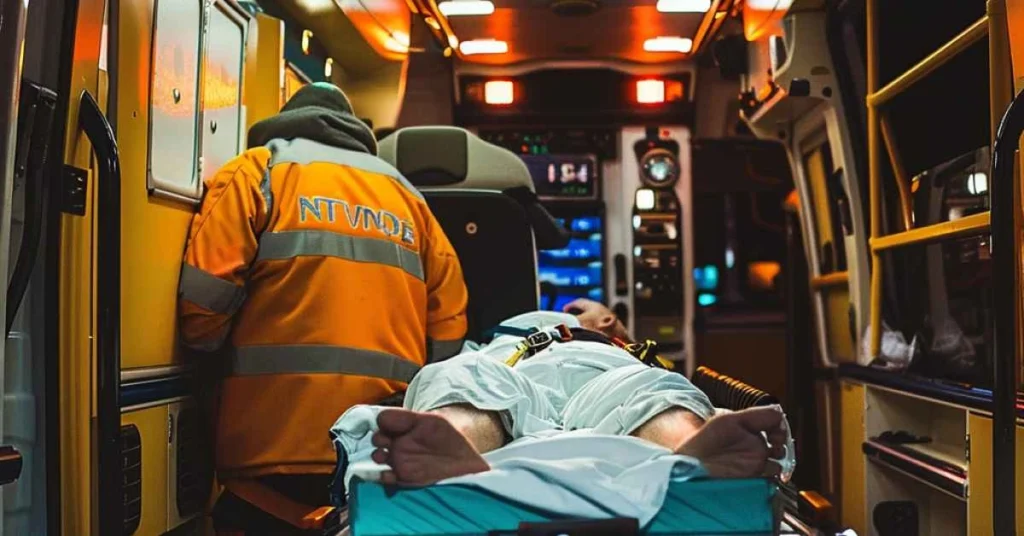
Your shift ended two hours ago, yet you’re pacing the kitchen like the tones are about to drop again.
Your partner asks what’s wrong. You snap, “Nothing,” and instantly hate yourself.
Study: Journal of Traumatic Stress, 2023 – chronic sympathetic arousal in first responders persists up to 18 hours post-call in 79% of cases.
Research studies
https://onlinelibrary.wiley.com/doi/10.1002/jts.22945
Mindful reset: The 3-minute Grounding Walk
Step outside the station or your house. Barefoot if possible.
Feel every step: heel, ball, toes.
Name five things you see, four you can touch, three you hear.
Your amygdala shuts up faster than you think.
When Your Sense of Humor Turns Pitch Black

You make a joke about the decapitated motorcyclist and everyone howls.
Later, alone, the laughter feels like sandpaper in your soul.
2024 study from the Journal of Emergency Medical Services: 91% of paramedics use dark humor as primary coping; 64% report it eventually increases emotional numbness.
Research studies
https://www.jems.com/patient-care/dark-humor-emotional-numbness-2024
Tactful fix: After the laugh, silently name the feeling underneath.
One word: “Sad.” “Angry.” “Helpless.”
Let it exist for five seconds without fixing it.
You stay human without drowning.
The Night You Replay the Pediatric Code for the 47th Time
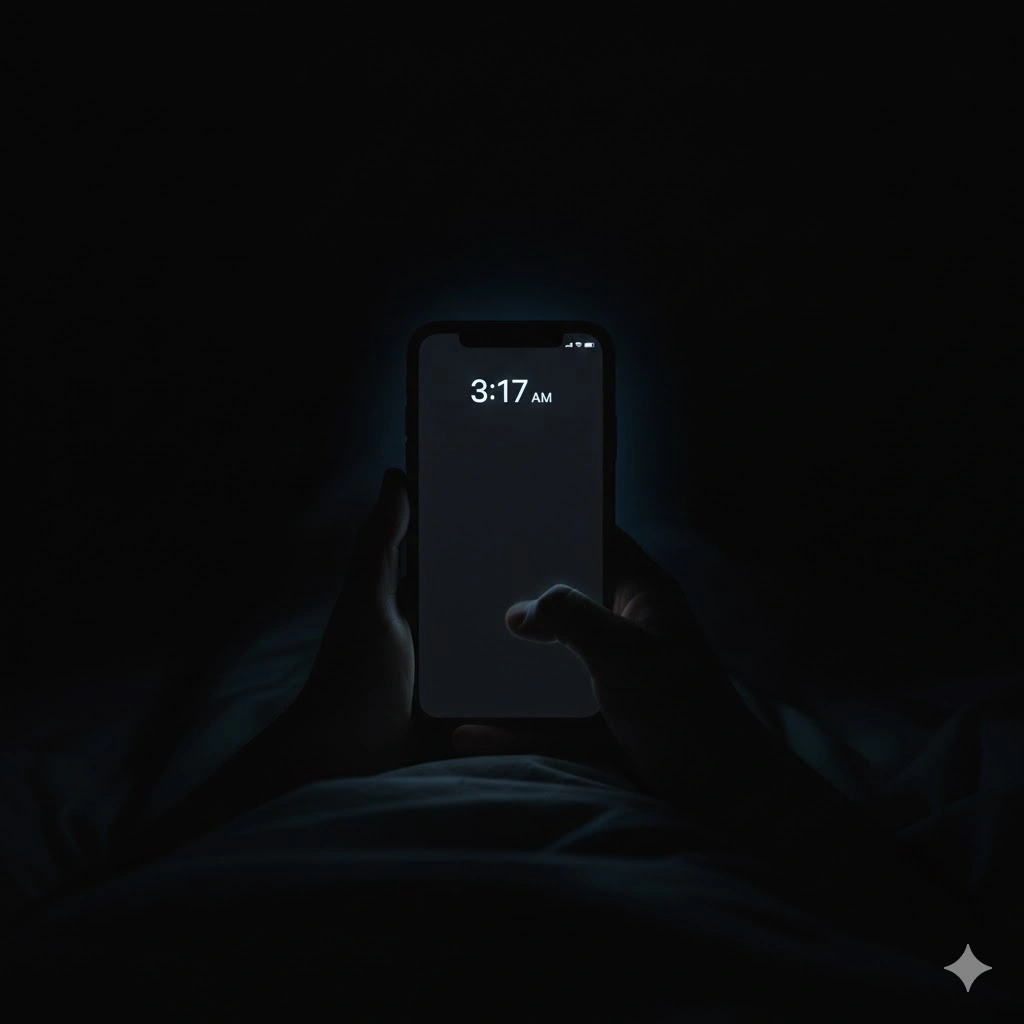
You finally lie down.
Instead of sleep, you get a front-row replay of tiny chest compressions that didn’t work.
Sleep Medicine Reviews 2023 meta-analysis: first responders average 4.8 hours of broken sleep post critical pediatric call; intrusive imagery present in 87%.
Research studies
https://www.sciencedirect.com/science/article/pii/S1087079223000124
5-minute Moral Injury Release (do this before bed):
Open your notes app or a cheap spiral notebook.
Write three lines only:
- What happened (facts, no judgment).
- The part that violates what I believe is right.
- One sentence of self-forgiveness: “I did everything I could with what I had in that moment.” Close the book. Put the phone face-down. Most nights, the movie stops.
Eating Like the World Ends at the Next Tone
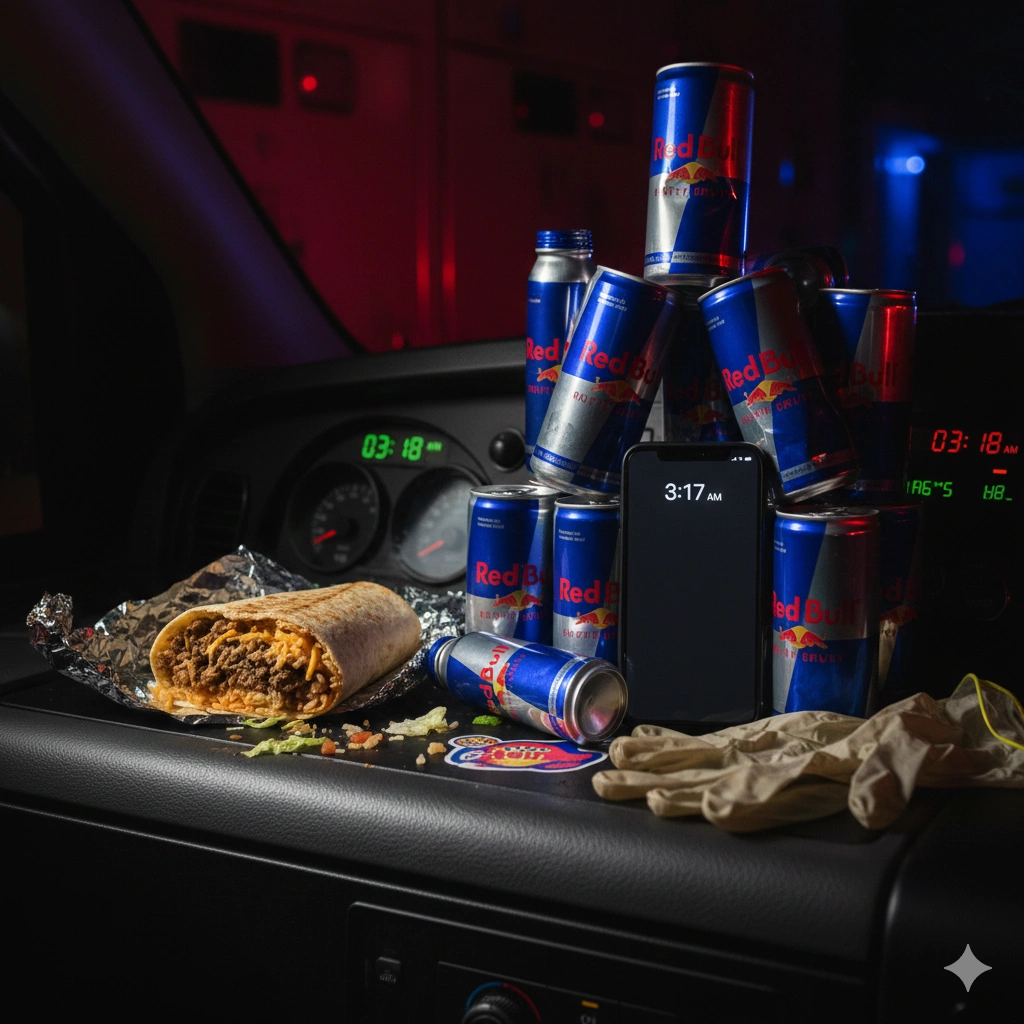
You inhale 2,000 calories of gas-station food in six minutes, then wonder why your stomach is a rock and your blood sugar is break-dancing.
2023 Annals of Occupational Health study: 82% of firefighters and EMS meet criteria for stress-induced binge eating patterns.
Research studies
https://aoemj.biomedcentral.com/articles/10.1186/s40557-023-00589-4
Mindful micro-habit: Before the first bite post-call, pause for ten seconds.
Put both feet flat on the ground.
Take one full breath that reaches your belly.
Then eat.
Your vagus nerve thanks you, and the food actually nourishes instead of punishing.
The Day You Realize You’ve Forgotten How to Feel Safe

You sit in the driveway for twenty minutes because walking through the door feels like contaminating the only safe place left.
American Journal of Psychiatry 2024: 68% of first responders report hypervigilance that persists into home life; 41% delay entering their own house post-shift.
Research studies
https://psychiatryonline.org/doi/10.1176/appi.ajp.20230384
Soft landing ritual: Keep a small smooth stone or old challenge coin in your duty bag.
When you finally turn into your street, move it from right pocket to left.
That tiny physical cue tells your body: “Threat is over. Home mode.”
Over weeks, your nervous system starts to believe it.
You Don’t Have Three Minutes? That’s the Point.
These rituals are not spa days.
They are the neurological off-ramp from a highway that never closes.
Start stupidly small:
- One grounding walk around the apparatus floor.
- One three-line journal entry.
- One pocket stone transfer.
The job will still try to take everything.
Refuse to hand over your nervous system without a fight.
You run toward the fire, the wreck, the gunshot, the scream.
Now learn to walk gently back to yourself when it’s over.
You deserve to come home — all the way home.
One conscious breath, one quiet step, one forgiven moment at a time.