
You gave everything. Now you’re empty. Here’s how to refill—quietly, gently.
It’s 3 AM. You’re awake again—not because you chose to be, but because your father needs repositioning in bed, or your special-needs child is having a difficult night, or your aging mother has forgotten where she is and is frightened. You move through the darkness on autopilot, muscles responding to needs that never seem to end. Tomorrow you have work, bills to pay, your own health appointments you’ve been postponing for six months. But right now, none of that matters. Right now, someone needs more caring than your own problems.
And somewhere in the quiet space between exhaustion and duty, you wonder: When did I disappear?
Welcome to caregiver fatigue—the invisible epidemic affecting millions who are supporting aging parents or special-needs family members without disappearing themselves. Except most of us are disappearing, piece by piece, day by day, until we no longer recognize the person staring back from the mirror.
The Numbers Tell a Story You Already Know in Your Bones
Recent research paints a stark picture of caregiver reality. According to AARP’s 2023 mental health study, half of caregivers reported that caregiving increased their emotional stress levels, while more than one-third experienced heightened physical stress. But these numbers only hint at the deeper truth: approximately 4 in 10 caregivers rarely or never feel relaxed.
Let that sink in. Nearly half of all caregivers exist in a state of perpetual tension—a baseline of stress that never fully releases, even during brief moments of rest.
The caregiving population has surged dramatically. Studies show that roughly 63 million Americans now provide family caregiving, representing about 1 in 4 American adults. Among these caregivers, many spend an average of over 20 hours weekly on caregiving tasks—essentially working an unpaid part-time job on top of their regular employment and personal responsibilities.
Research indicates that between 40% to 70% of family caregivers report clinical symptoms of depression. Even more troubling, about 23% of family caregivers report that caregiving has negatively affected their physical health. These aren’t just statistics—they’re warning signs of a system that asks individuals to carry impossible loads without adequate support.
The financial burden compounds the emotional one. Research shows that caregivers spend an average of approximately $7,242 annually out of their own pockets—representing about 26% of their income—on caregiving expenses. Some caregivers report depleting their short-term or long-term savings entirely.
Five Daily Battles: The Reality Behind the “Labor of Love”
1. “The Invisible Workday That Never Clocks Out”
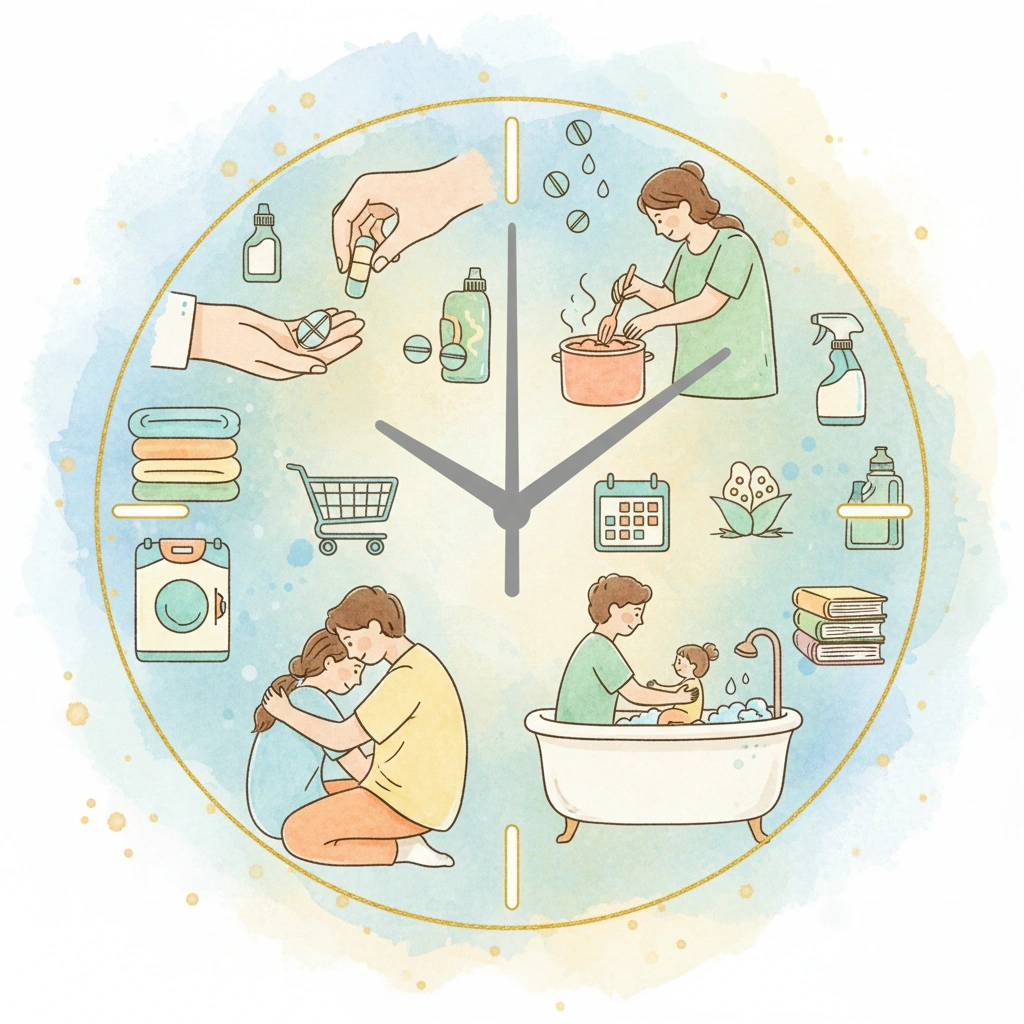
You finish your actual paid job at 5 PM, but your real work is just beginning. There’s dinner to prepare that accommodates medical restrictions, medications to organize and administer, doctor’s appointments to schedule, insurance companies to battle, medical equipment to maintain, and the endless cycle of bathing, dressing, feeding, and repositioning. Each task seems small individually, but together they form an unrelenting wave that crashes over you daily.
Data reveals that family caregivers providing more than 21 hours of care weekly face significantly higher difficulty, especially when economic pressures like inflation intensify costs. Many caregivers juggle full-time employment alongside these responsibilities, creating a reality where “downtime” becomes a foreign concept.
The exhaustion isn’t just physical—it’s existential. You’re awake, but you’re not really living. You’re moving, but you’re not progressing toward any personal goals. You’re breathing, but you’re not flourishing.
The Zen Approach
Accept that traditional work-life balance doesn’t apply to your situation—and that’s okay. Instead, practice “micro-renewals”—tiny moments of restoration scattered throughout your day. While preparing breakfast, take three conscious breaths. While waiting for medications to be swallowed, close your eyes and notice the sensation of your feet on the floor. While your loved one sleeps, sit for just two minutes doing absolutely nothing. These aren’t solutions, but they’re survival strategies. They won’t eliminate the workload, but they’ll help you remain present within it rather than disappearing beneath it.
2. “The Guilt Casino: Where You Always Lose No Matter Which Way You Bet”
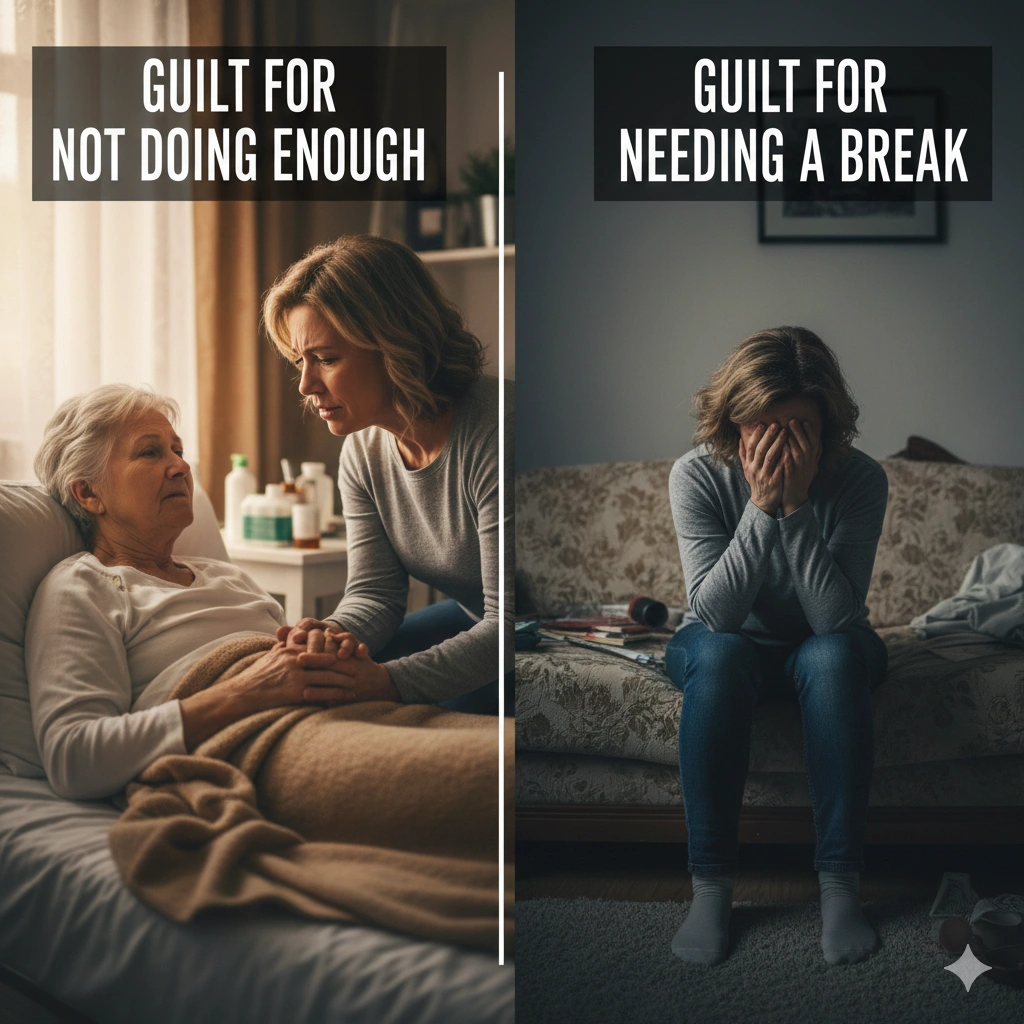
You hire a home health aide for four hours so you can attend your own medical appointment, and you feel guilty for “abandoning” your loved one. You cancel the appointment to stay home, and you feel guilty for neglecting your own health. You snap at your care recipient out of exhaustion, and the guilt is crushing. You remain endlessly patient despite being depleted, and you resent yourself for resenting the situation. The guilt follows you everywhere—when you’re present and when you’re absent, when you give more and when you finally say no.
Research on caregiver mental health confirms what you already feel. Manipulation through guilt is common, with statements like “after all I’ve done for you” or “if you really loved me, you would…” designed to control caregiver behavior. Mental health experts note that when these guilt messages successfully influence your choices, the issue often stems from your own struggle with boundaries rather than the statement itself.
The particularly cruel irony: the more you care, the more guilt you experience. The people who feel no guilt are those who’ve already checked out emotionally—and you’re not one of them, or you wouldn’t be reading this.
The Zen Approach
Guilt is not a reliable moral compass—it’s often a symptom of unrealistic expectations colliding with human limitations. Try this daily practice: each evening, write down one moment from the day where guilt arose. Then ask yourself, “What would I tell my closest friend if they felt this guilt in this situation?” The compassion you’d extend to others—extend that to yourself. Recognize that feeling guilty doesn’t mean you’ve done something wrong; it often means you’re trying to do something impossible. Release the expectation of perfect caregiving. Aim instead for sustainable caregiving, which requires honest acknowledgment of your limits.
3. “The Relationship Paradox: Closest Distance, Furthest Apart”
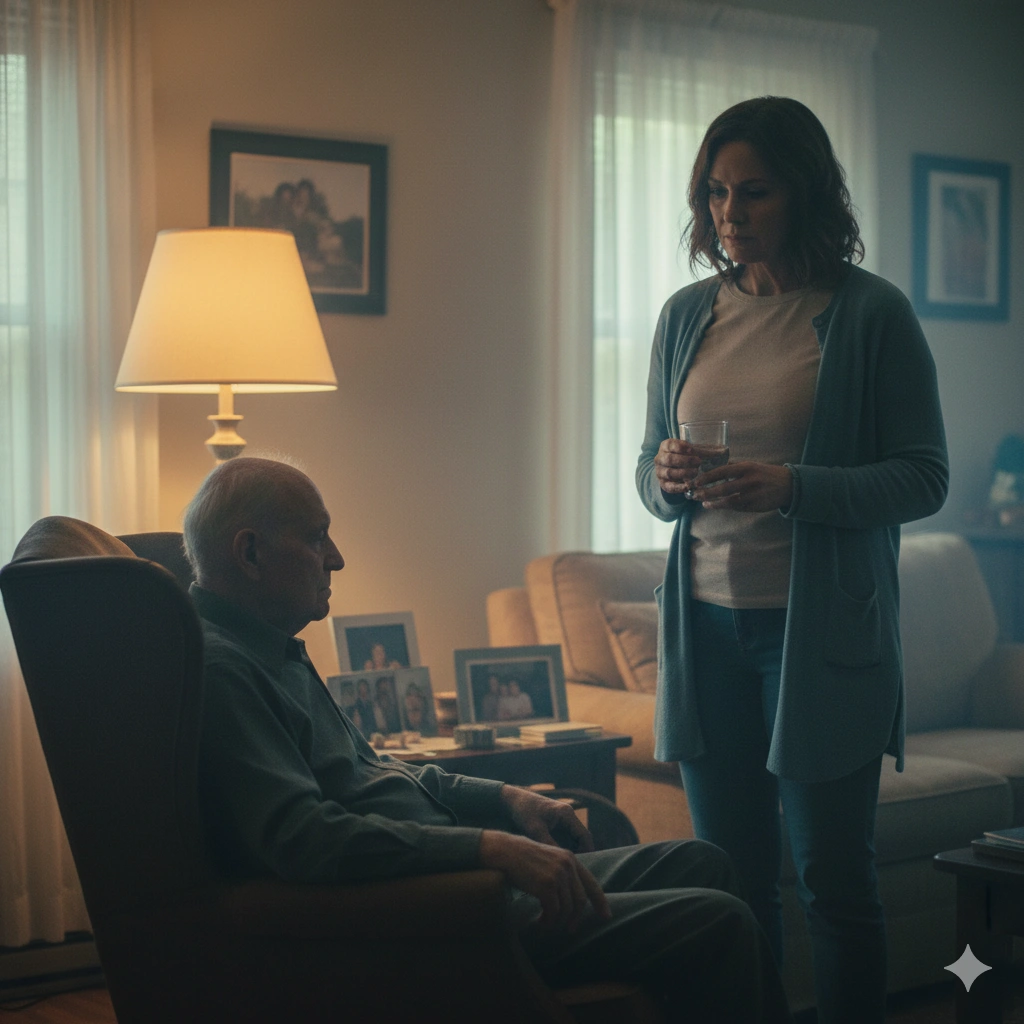
You spend more time with your care recipient than anyone else in your life, yet you’ve never felt more isolated. Your friends don’t understand what you’re going through—they suggest “just take a vacation” or “hire someone” as if these solutions were simple or affordable. Your siblings disappear or offer unsolicited criticism without actual help. Your romantic relationship strains under the weight of exhaustion and perpetual unavailability. Even your relationship with the person you’re caring for transforms—what was once parent-child or spouse-partner becomes caregiver-patient, fundamentally altering the connection you once shared.
Research indicates that approximately 40% of caregivers report feeling alone, despite being constantly surrounded by others. Studies show female caregivers and younger caregivers under 35 experience higher levels of emotional stress and anxiety compared to their counterparts.
You’re lonely in a room full of people because caregiving creates a unique isolation that’s difficult for non-caregivers to comprehend. You’re physically present but emotionally unreachable, simultaneously needed and unseen.
The Zen Approach: Acknowledge that your relationships will change during this season—and that’s neither good nor bad, it simply is. For distant relationships, set realistic expectations. Not everyone will understand, and that’s acceptable. Seek connection with other caregivers through support groups (online or in-person) where your experience is immediately understood without explanation. For close relationships affected by caregiving, practice what therapists call “connection moments”—brief, quality interactions rather than quantity time. A genuine five-minute conversation with your partner where you’re fully present matters more than an hour spent together while you’re mentally reviewing tomorrow’s medical appointments. For your relationship with your care recipient, grieve the shift while honoring what remains. You can love someone deeply while mourning the way your relationship used to be.
4. “The Medical Marathon with No Finish Line in Sight”

You’ve become an unpaid nurse, medical coordinator, insurance specialist, and advocate—roles requiring skills you never trained for but must perform flawlessly. You manage complex medication schedules, monitor subtle changes in condition, interpret medical jargon, navigate insurance denials, coordinate multiple specialists who don’t communicate with each other, and make decisions with insufficient information about someone else’s life and body. The medical system assumes you’re competent at all of this while simultaneously treating you as an obstacle to efficiency.
Studies note that approximately 60% of caregivers assist with medical or nursing tasks—responsibilities that increasingly fall to family members as hospital stays shorten and professional home health support remains expensive or unavailable. The complexity of these tasks has intensified, with caregivers managing conditions that would have required hospitalization in previous decades.
You research conditions and treatments online, trying to bridge gaps in the fragmented healthcare system. You become an expert in diseases you never wanted to know existed. You advocate fiercely in medical appointments while your own health concerns remain unaddressed.
The Zen Approach
Accept that you cannot become a medical professional overnight, nor should you try. Do the best you can with the information and resources available, then release perfectionism. Keep a simple, centralized medical binder or digital document with essential information: current medications, allergies, recent test results, questions for doctors. When you feel overwhelmed by medical decisions, remember that you’re making the best choice possible with current knowledge—and that’s enough.
Create a medical support team if possible: identify one nurse or social worker you trust who can answer questions between appointments. Join condition-specific online communities where experienced caregivers share practical wisdom. Most importantly, advocate for yourself in medical settings: “I need you to explain this in plain language,” “I need written instructions,” “I need time to decide.” You’re not stupid for being overwhelmed—the system is overwhelming.
5. “The Future You’re Not Allowed to Plan: When Life Gets Suspended Indefinitely”
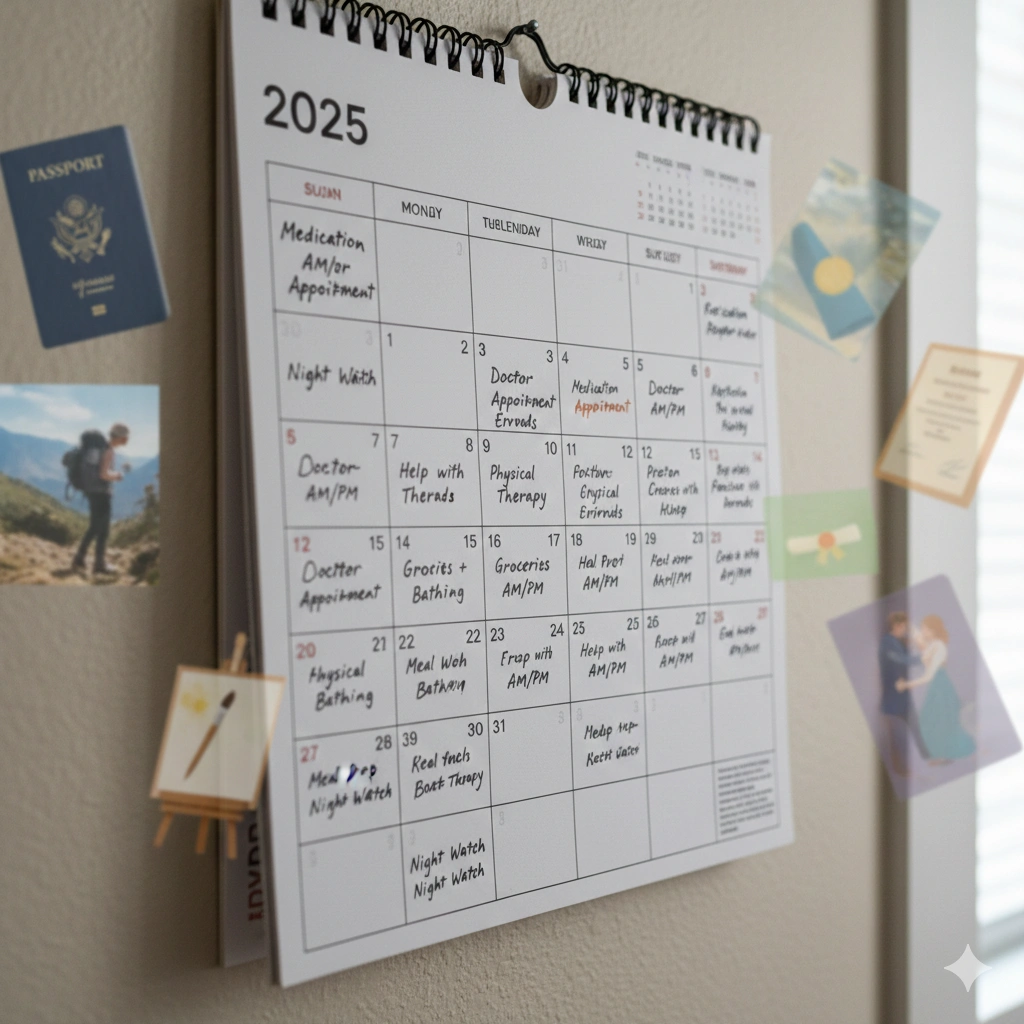
Your friends are planning vacations, advancing careers, pursuing hobbies, building savings, and making long-term plans. You’re planning how to get through next Tuesday. Career advancement becomes impossible when you’re constantly leaving work early for emergencies or taking prolonged leaves. Retirement savings deplete instead of growing. Travel requires so much medical coordination that it’s easier to stay home. Your own aging feels accelerated—physically and emotionally exhausted in ways that add years to your experience.
The research supports this reality. Studies show that among working caregivers, 27% have shifted from full-time to part-time work or reduced hours, 16% have turned down promotions, 16% stopped working entirely for periods, and 13% changed employers to accommodate caregiving responsibilities. These career impacts have long-term financial consequences that extend far beyond the immediate caregiving period.
The uncertainty is perhaps the most difficult aspect. Some caregiving journeys last months; others span decades. You exist in perpetual limbo, unable to make plans because tomorrow might bring a crisis that changes everything.
The Zen Approach
Embrace uncertainty as your current reality rather than fighting against it. This doesn’t mean abandoning all personal goals—it means redefining what goals look like during this season. Instead of “I’ll take that dream job in five years,” try “I’ll identify one small skill I can develop in 15-minute increments this month.” Instead of “I’ll travel when this is over,” consider “I’ll find beauty in my immediate surroundings this week.” Practice what Buddhist teachers call “being where your feet are”—fully inhabiting this moment rather than constantly yearning for a different phase of life.
That doesn’t mean you won’t plan for the future; it means you won’t sacrifice the present moment to anxiety about an unknowable timeline. Keep one personal dream alive in some tiny form—a hobby practiced in 10-minute sessions, a creative project advanced one sentence at a time, a friendship maintained through brief texts. These threads of “you” matter, not because they’ll dramatically change your situation, but because they remind you that you still exist as a person beyond your caregiver role.
What Research Reveals About the Crisis We’re Living Through
The academic research on caregiver burnout validates the lived experience that caregivers have known all along: this system is breaking people.
Research on loving-kindness and compassion meditation suggests these practices can significantly reduce stress and negative emotions while increasing positive affect. Studies demonstrate that loving-kindness meditation participants experienced steady increases in daily positive emotions including joy, gratitude, and contentment, alongside reduced depressive symptoms. These practices may be particularly valuable for caregivers dealing with long-term responsibilities and relationship challenges.
Additional research shows that metta meditation can reduce compassion fatigue—a specific type of burnout affecting those in caregiving roles. One study of nurses found that daily practice of loving-kindness meditation for just one month significantly reduced compassion fatigue levels.
Studies on caregiver self-efficacy indicate that a caregiver’s belief in their ability to contribute effectively to patient care correlates with better outcomes for both the caregiver and care recipient. However, many caregivers struggle with confidence in their abilities, particularly when managing complex medical conditions.
Research on boundary-setting reveals that caregivers who establish clear boundaries experience less resentment, frustration, and fatigue. Mental health professionals emphasize that boundaries aren’t selfish—they’re essential for sustainable caregiving and protect both the caregiver and the care recipient.
Mindful Practices: Small Acts of Radical Self-Preservation
Here are evidence-based practices specifically designed for caregivers—practices that acknowledge you don’t have endless time or energy, but you desperately need moments of restoration.
The 5-Minute “Caregiver Metta” (Kindness to Self First)
This practice adapts traditional loving-kindness meditation specifically for caregivers, with emphasis on directing compassion toward yourself before extending it to others. Research shows that loving-kindness meditation effectively reduces stress and increases positive emotions, with benefits accumulating over time.
Find a quiet space where you won’t be interrupted for five minutes (even a locked bathroom works). Sit comfortably or lie down. Close your eyes or soften your gaze.
Begin by bringing one hand to your heart. Feel the warmth of your own touch. Take three slow, deep breaths.
Now, slowly repeat these phrases to yourself, allowing each one to sink in before moving to the next:
“May I be safe from harm.”
“May I be healthy in body and mind.”
“May I find moments of peace today.”
“May I treat myself with the same compassion I show others.”
Repeat this cycle three times, each time feeling the words rather than just saying them. If emotions arise—tears, anger, grief, relief—allow them. This practice isn’t about feeling good immediately; it’s about acknowledging your own humanity and worthiness of care.
After the third cycle, take three more deep breaths. Before opening your eyes, set a simple intention: “Today, I will notice one moment to be kind to myself.”
The beauty of metta practice is its flexibility. Research indicates that even brief practices create measurable benefits. You can modify the phrases to resonate with your specific situation or extend the practice to include your care recipient and others—but always, always begin with yourself first. You cannot pour from an empty vessel.
Daily 1-Minute “Boundary Affirmation”
Research on self-affirmation shows that regularly affirming your values and needs can reduce stress and improve decision-making. Boundary affirmations help caregivers maintain their sense of self and protect against resentment and burnout.
Choose one affirmation from the list below (or create your own) to repeat each morning and evening. Stand or sit somewhere you can see your reflection if possible. Look yourself in the eyes. Say the affirmation aloud three times with intention:
- “I deserve rest, and rest makes me a better caregiver.”
- “Saying no to unreasonable demands protects my ability to say yes to what truly matters.”
- “I am enough, exactly as I am, even when I’m not doing enough.”
- “My needs are as important as the needs of the person I care for.”
- “I take responsibility for my boundaries by noticing my limits and advocating for myself.”
- “I release guilt about taking care of myself. Self-care is not selfish.”
- “I am strong enough to ask for help when I need it.”
- “The quality of my caregiving improves when I honor my own wellbeing.”
After saying your chosen affirmation three times, take one deep breath and place your hand over your heart. Notice how it feels to claim your right to boundaries and self-care.
The key to boundary affirmations is consistency rather than perfection. Missing a day doesn’t negate progress. What matters is the gradual internalization of these truths—that your needs matter, that you’re allowed to have limits, and that sustainable caregiving requires protecting your own wellbeing.
Other Quick Practices Worth Implementing
The 2-Minute Body Scan: When you feel tension rising, pause wherever you are. Starting with your feet, mentally scan upward through your body, noticing areas of tightness without trying to change them. Simply acknowledging physical stress often releases some of it.
The 3-Minute “Permission Slip” Practice: Write yourself a literal permission slip on paper: “I, [your name], have permission to [rest/cry/feel angry/take a break/be imperfect] today.” Sign it. Post it somewhere visible. Refer to it when guilt strikes.
The 90-Second Emotional Reset: Research shows that emotions physiologically peak and begin to subside within 90 seconds if we don’t fuel them with additional thoughts. When overwhelmed, set a timer for 90 seconds. Breathe. Let the emotion move through you without resisting or amplifying it.
The 10-Minute Weekly “Future Self” Check-in: Once weekly, spend 10 minutes journaling or speaking aloud to your future self—the person you’ll be when caregiving ends. What do you want them to know you did for yourself during this time? This practice helps maintain perspective and prevents complete loss of personal identity.
The Path Forward: Redefining Strength
Here’s what the inspirational quotes and well-meaning advice won’t tell you: sustainable caregiving isn’t about becoming stronger, more patient, or more selfless. It’s about accepting that you’re human, with human limitations, and that those limitations are not character flaws.
The caregiving crisis exists not because individual caregivers aren’t trying hard enough, but because society expects unpaid family members to provide skilled nursing care, case management, emotional support, and financial assistance with minimal systemic support. You’re not failing—the system is failing you.
But while we advocate for better policies, support systems, and resources (and we must continue that advocacy), you still need to survive today. Tomorrow. Next week.
Sustainable caregiving requires releasing the myth of the endlessly patient, selfless caregiver who never breaks, never needs anything, and finds complete fulfillment in service alone. That person doesn’t exist. That standard is impossible.
Research on caregiver outcomes consistently shows that caregivers who maintain boundaries, practice self-compassion, seek support, and prioritize their own basic needs provide better care over longer periods than those who attempt to be selfless martyrs.
You are allowed to feel tired. You are allowed to feel resentful sometimes. You are allowed to wish things were different. You are allowed to need help. You are allowed to take breaks. You are allowed to exist as a complete person with needs, not just as a function serving someone else’s needs.
The most radical act of caregiving isn’t sacrificing yourself completely—it’s learning to preserve yourself while still showing up for someone you love.
Conclusion: You Are Still Here
It’s 3 AM again. You’re awake. You’re needed. But before you move through the darkness to respond to that need, take three conscious breaths.
You are not just a caregiver. You are a complete human being who is currently serving in a caregiving role. Those are not the same thing.
You matter. Not because of what you do for others, but because you exist. Your wellbeing matters. Your mental health matters. Your physical health matters. Your dreams, though dormant, still matter. Your future, though uncertain, still matters.
The person you’re caring for needs you—but they need you whole more than they need you perfect. They need you present more than they need you exhausted. They need you functional more than they need you sacrificed.
You cannot pour from an empty vessel. This isn’t selfishness; it’s physics.
So take the breaks when you can. Accept the help when it’s offered. Lower the standards that are crushing you. Cry when you need to. Laugh when you can. Feel the difficult emotions without shame. Seek support without apology.
Practice the small mindfulness exercises in this article. They won’t solve the systemic problems of inadequate caregiving support, but they might help you remain connected to yourself while navigating an impossible situation.
Set boundaries, even small ones. Say no, even to people you love. Ask for help, even when it’s uncomfortable. Prioritize your own health appointments, even when scheduling feels impossible.
Most importantly, remember this: You are doing something extraordinarily difficult with inadequate resources and support. The fact that you’re struggling doesn’t mean you’re failing—it means you’re human.
Caregiving may be temporary or it may be long-term. Either way, there will be a day when this intensive caregiving period ends. When that day comes, you want to still recognize the person you’ve become. You want to still have a self to return to.
You’re not disappearing. You’re still here. You’re reading these words, which means some part of you is fighting to remain visible.
Research Resources
- AARP Mental Health Study 2023: https://www.aarp.org/caregiving/health/info-2023/report-caregiver-mental-health.html
- Caregiver Burnout Statistics: https://www.aplaceformom.com/senior-living-data/articles/caregiver-burnout-statistics
- AARP Working Caregivers Report 2023: https://press.aarp.org/2024-5-16-US-Workforce-Report-70-Caregivers-Difficulty-Balancing-Career-Caregiving-Responsibilities
- Loving-Kindness Meditation Research: https://pmc.ncbi.nlm.nih.gov/articles/PMC3176989/
- Metta Meditation Benefits Study: https://positivepsychology.com/loving-kindness-meditation/