The kiasu pressure starts at 7 — mindful parenting and self-compassion
Imagine being seven years old and already attending daily tuition classes. By age ten, your week includes school from 8 AM to 2 PM, followed by Chinese tuition on Monday, Math enrichment on Tuesday, Science tuition on Wednesday, English comprehension on Thursday, and exam preparation workshops on weekends. You’re twelve years old, and your PSLE score will determine not just which secondary school you attend, but—according to everyone around you—your entire future.
Welcome to Singapore’s education system, where approximately 80% of students attend tuition, with more than half starting before age ten. Where the word “kiasu”—fear of losing out—has become so embedded in the national psyche that in a 2012 survey of 2,000 residents, over 50% selected it as the defining trait of Singaporean society.
And the numbers reveal what this cultural fear costs: 86% of Singaporean students worry about poor grades compared to the OECD average of 66%. A staggering 76% feel anxious about tests even when well-prepared, versus 55% globally. One in three youth aged 10-18 report symptoms of depression, anxiety, and stress—largely linked to academic pressure.
This isn’t just about a challenging education system. This is about a generation of children learning that their worth is measured in test scores before they’ve even discovered who they are.
Research Reference
MOE Singapore Parliamentary Reply on PSLE Mental Wellbeing
Five Daily Struggles of Singapore’s Young Achievers
1. “The Tuition Treadmill” — When Childhood Becomes a Series of Classrooms
The Reality
School ends at 2 PM, but your day is far from over. By 3 PM, you’re at Math tuition. By 5 PM, it’s Science enrichment. By 7 PM, you finally get home for dinner. At 8 PM, homework begins—both from school and from your tuition centres. Sleep comes around midnight, if you’re lucky.
Singapore households spent $1.4 billion on tuition in 2017, averaging $400-500 per month per child. When MOE removed mid-year examinations to reduce stress, anxious parents immediately turned to tuition centres that created mock mid-year exams. The system tried to give children breathing room; parents filled that room with more assessment.
You’re not just getting an education—you’re being trained in a fear-based learning model where “not doing extra” equals “falling behind.” Your friends aren’t playmates; they’re benchmarks. Every Saturday isn’t rest; it’s exam preparation workshop day.
The Toll
Chronic fatigue becomes your baseline. Burnout isn’t something that might happen in your twenties—it’s already happening at twelve. You lose touch with intrinsic curiosity because learning has been weaponized as competition. Play, creativity, unstructured time—these aren’t luxuries you can’t afford; they’re necessities your schedule has eliminated.
Mindful Solutions
- 2-Minute “Tuition Break” Practice: Before each tuition session, sit in the waiting area or outside the centre. Close your eyes. Take three deep breaths, counting to 4 on the inhale, holding for 2, exhaling for 6. Say internally: “I am learning because I’m curious, not because I’m afraid. This class is information, not my identity.” This brief reset prevents the accumulation of anxiety across multiple classes.
- Sacred “white space” scheduling: Parents, protect one weekday afternoon and one full Sunday per month as completely unscheduled. No tuition, no enrichment, no structured activities. Let your child experience boredom—it’s where creativity lives.
- Weekly “joy mapping”: Every Sunday evening, ask your child to list three moments from the past week that brought genuine joy (not achievement, not praise—actual happiness). If they struggle to name three, that’s diagnostic information about their quality of life.
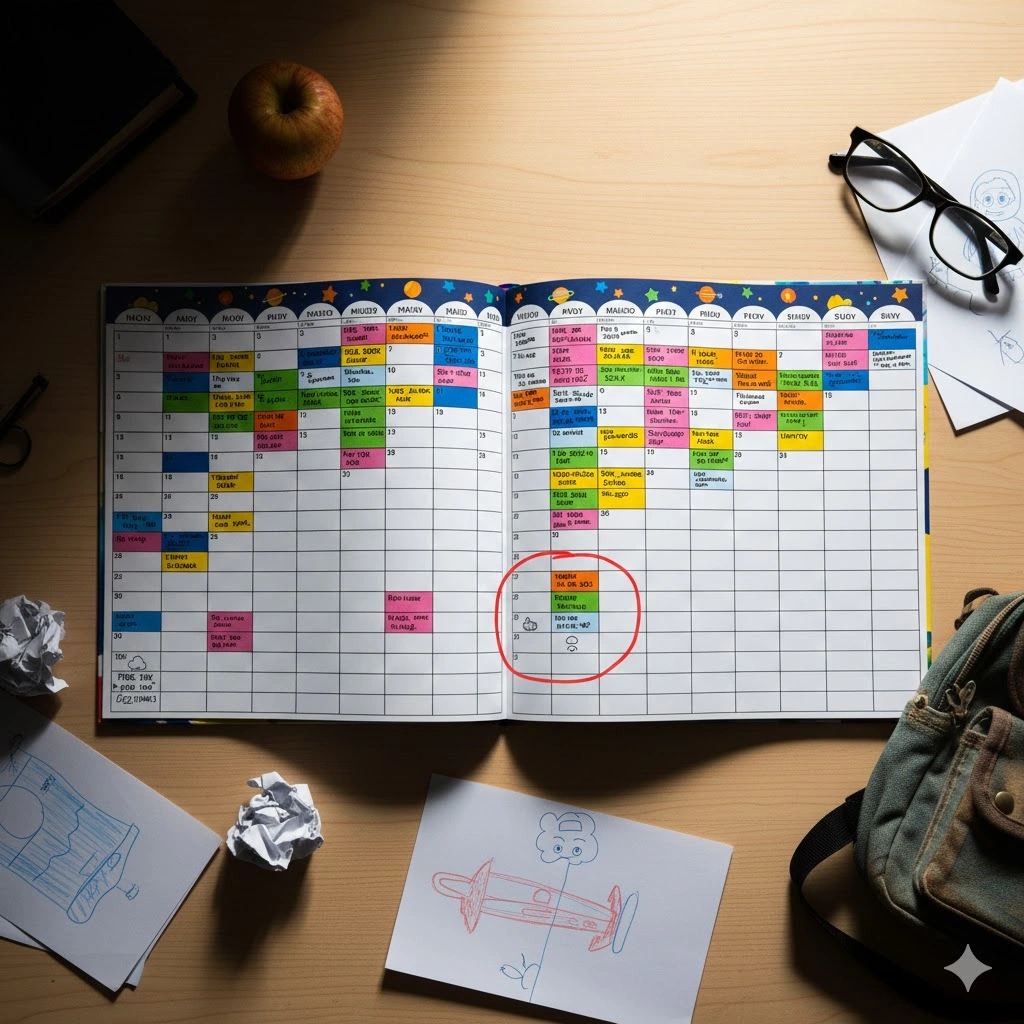
Tuition Culture in Singapore: A Growing Phenomenon
2. “The Score-Based Self-Worth Equation” — When You Are What You Achieve
The Reality: In a 2024 CNA survey, 99% of parents said good grades were important, with 64% viewing good scores as a stepping stone to a good future or career. The message is clear: your value is quantifiable, and the metric is your PSLE score.
You internalize this early. When relatives ask at Chinese New Year gatherings, the first question isn’t “What do you enjoy learning?” but “What’s your exam score?” When your neighbor’s child scores higher, you watch your parents’ faces fall slightly—that microsecond of disappointment that says you’re not quite enough.
Research shows this creates “perceived academic conditional positive regard” (PACPR)—you learn that parental love, attention, and approval are conditional on academic performance. You don’t just fear failing exams; you fear losing your parents’ affection.
The Toll
Achievement becomes your only lens for self-evaluation. Hobbies must be “productive.” Rest feels like betrayal. You develop what psychologists call an “achievement-focused mindset” that’s closely associated with depression among young adults. Your identity becomes so fused with performance that asking “who am I?” outside of grades produces terrifying silence.
Mindful Solutions
- 4-Minute “Kiasu Release” Visualization: Sit comfortably with eyes closed. Imagine the fear of losing out as a heavy backpack you’ve been carrying. Visualize setting it down—not throwing it away (that’s not realistic in Singapore’s culture), just setting it down for four minutes. Breathe into the lightness. Picture yourself at 25, looking back. What matters more: your PSLE score or the kindness you showed yourself during difficult times? Breathe into that truth.
- “Intrinsic worth” daily reminder: Parents, every morning before school, tell your child one specific thing you appreciate about them that has nothing to do with academics: “I love how you’re kind to your younger sibling,” “I noticed how curious you are about insects,” “Your sense of humor brings joy to our family.” This builds neural pathways of worth independent of achievement.
- Reframe “success”: When your child brings home results—good or bad—respond first with: “Did you learn something interesting?” before addressing the grade. This gradually shifts the focus from performance to growth.

Research Reference
The Impact of Fear of Losing Out (FoLO) on College Students
3. “The Comparison Conveyor Belt” — When Everyone Else’s Child Becomes Your Measuring Stick
The Reality
Singapore’s education system operates on meritocracy—success based on individual merit and hard work. But in practice, meritocracy becomes a sorting mechanism where you’re constantly ranked, compared, and measured against peers.
Your primary school posts class rankings. Your tuition centre displays top performers’ photos. At family gatherings, achievements are currency: “My daughter scored 268 for PSLE,” “My son is in the Gifted Education Programme,” “My child is taking Higher Chinese in Primary 3.”
The kiasu culture doesn’t just affect you—it affects every parent around you, creating an arms race where no one can unilaterally disarm. One mother’s decision to reduce tuition becomes everyone else’s opportunity to gain advantage. The prisoner’s dilemma, played out in childhood.
The Toll
You learn to view peers as threats rather than collaborators. Friendship becomes strategic. You develop hypervigilance around others’ achievements—each classmate’s success feels like your personal failure. Empathy erodes because celebrating others’ wins means acknowledging your comparative position. Loneliness becomes profound even when you’re never alone.
Mindful Solutions
- “Compassionate witnessing” practice: When you hear about another student’s achievement and feel the comparison sting, pause. Place your hand on your heart. Say internally: “Their success doesn’t diminish mine. We’re all doing our best in a difficult system. I wish them well.” This interrupts the automatic threat response that comparison triggers.
- Create “comparison-free zones”: Parents, establish family rules: no discussing other children’s grades at home, no asking your child how they ranked compared to classmates. Focus conversations on personal growth: “Did you improve from last time?” not “How did others do?”
- Celebrate effort diversity: Notice and praise when your child helps a struggling classmate, shares notes, or celebrates a friend’s success. These prosocial behaviors counter the competitive conditioning and build healthier relationship patterns.

Research Reference
Parental Involution: Behind Singapore’s Academic Stress
4. “The Meritocracy Myth” — When ‘Fair’ Doesn’t Mean ‘Equal’
The Reality
Singapore’s education system proudly proclaims meritocracy: work hard, achieve results, succeed. But meritocracy assumes equal starting points, and that assumption crumbles under scrutiny.
Wealthier families spend $500+ monthly on tuition, enrichment classes, and exam preparation. Children from lower-income families rely solely on school instruction. By PSLE, the performance gap isn’t just about individual merit—it’s about accumulated access to resources. Yet both groups are judged by the same exam, as if they had identical advantages.
You’re told “everyone has equal opportunity,” but you see classmates with private tutors, overseas educational trips, and well-connected parents securing internships. The system calls this meritocracy; you experience it as a rigged game where starting position matters more than anyone admits.
The Toll
If you’re from a well-resourced family, you internalize that your advantages are “earned” rather than inherited, developing a dangerous lack of empathy for those with less. If you’re from a less-resourced family, you internalize that your struggles mean you’re not working hard enough, developing shame rather than structural awareness. Either way, the myth harms everyone.
Mindful Solutions
- Critical awareness education: Parents, have honest conversations with your children about privilege and resources. “We’re fortunate to afford tuition—not everyone can. That’s not because we’re better, but because we have more resources. Let’s be grateful and generous, not superior.”
- Gratitude with humility: When your child achieves something, celebrate it while acknowledging the support system: “You worked hard, AND you had help from tutors, AND you have a quiet space to study. Many students work just as hard with fewer resources.” This builds both confidence and compassion.
- Advocate structurally: Support policies that provide free tuition to lower-income families, better-resourced public schools, and scholarships. Your individual mindfulness helps your family; collective action helps the system.

Research Reference
Grades or Growth? Rethinking Mental Health in Singapore’s Education System
5. “The Silent Suffering Culture” — When ‘Can Do’ Means ‘Cannot Admit Struggle’
The Reality
Singapore’s culture emphasizes resilience, capability, and overcoming obstacles—traits that built a nation from nothing into an economic powerhouse in one generation. But that same cultural narrative creates a stigma around admitting difficulty.
You’re struggling with the workload, but everyone around you seems fine (they’re not—they’re just equally good at hiding it). Asking for help feels like admitting you’re not “good enough” for the system. Your parents sacrificed so much for your education; complaining feels ungrateful. Teachers are overwhelmed managing 40 students per class; burdening them with your mental health seems selfish.
So you suffer silently. One in three students experience depression, anxiety, and stress, but you’re taught to “just cope” because “stress makes and moulds a man”—a phrase actually used in parent forums. The suffering isn’t the problem; talking about it is.
The Toll
Mental health deteriorates in isolation. What could be addressed early with support becomes entrenched patterns. You learn to dissociate from your emotional experience—”I’m fine” becomes your automatic response even when you’re catastrophically not fine. By the time crisis hits, you’ve lost the language to ask for help.
Mindful Solutions
- Normalize emotional vocabulary: Parents, model emotional honesty. Instead of “I’m fine,” say “I’m stressed about work today” or “I’m disappointed about something.” This gives your child permission to have complex emotions rather than performing constant okay-ness.
- Weekly emotional check-ins: Create a family ritual where everyone (parents included) shares one thing that was hard this week. No fixing, no advice—just witnessing. This practice destigmatizes struggle and builds emotional literacy.
- Professional support normalization: If your child shows signs of persistent stress, seek help from school counselors or mental health professionals. Frame it positively: “Talking to someone trained to understand stress is smart, not weak. Athletes have coaches; your brain deserves support too.”

How PSLE Fails Us: The Impact on Mental Health
Quick Mindfulness Practices for Students and Parents
1. The 2-Minute “Tuition Break”
When: Before each tuition session or after school before starting homework
How:
- Find a quiet spot (even a bathroom stall works)
- Close your eyes and place one hand on your heart
- Take three deep breaths: inhale for 4 counts, hold for 2, exhale for 6
- Say internally: “I am learning because I’m curious, not because I’m afraid”
- Add: “This class is information, not my identity”
- Open your eyes slowly and continue your day
Why it works
This brief parasympathetic activation interrupts the anxiety accumulation across multiple academic activities. The hand on heart releases oxytocin, counteracting cortisol from academic stress. Naming your intrinsic motivation reconnects you with learning’s purpose beyond fear.
2. The 4-Minute “Kiasu Release”
When
During moments of comparison anxiety or fear of losing out
How
- Sit comfortably with eyes closed
- Imagine the fear of losing out as a heavy backpack you’ve been carrying
- Visualize yourself gently setting it down (not throwing away—just resting from it)
- Notice the lightness in your body
- Take slow breaths and imagine yourself at age 25, looking back on this time
- Ask: What mattered more—my PSLE score or my kindness to myself?
- Breathe into that truth for the remaining time
- Pick up the backpack if needed (it’s realistic in Singapore), but know you can set it down again
Why it works
Visualization engages different neural pathways than verbal processing, making it effective for children. The future-self perspective helps break fixation on immediate stakes. Acknowledging you can temporarily release kiasu—rather than pretending it doesn’t exist—respects cultural reality while providing relief.
For Parents: Breaking the Cycle
Here’s what you need to hear, even though it’s uncomfortable:
Your anxiety is your child’s anxiety. Research shows parental stress directly increases children’s stress. When you obsessively check their homework, compare them to neighbors’ children, or visibly panic about exam results, you’re teaching them their worth is contingent on performance.
The PSLE doesn’t determine their future. Despite what everyone says, many successful Singaporeans attended “neighborhood schools.” Many struggled with PSLE but found their path through polytechnics, ITEs, or alternate routes. The narrative that only top schools lead to good lives is statistically false and psychologically damaging.
Reducing tuition doesn’t mean reducing care. When MOE removed mid-year exams, they weren’t saying “stop caring about education.” They were creating space for other crucial development: creativity, character, emotional intelligence. Your child’s brain needs unstructured time to consolidate learning. Rest isn’t the enemy of achievement—it’s the prerequisite.
You can’t protect them from difficulty, but you can teach them resilience. The healthiest response to PSLE pressure isn’t eliminating all stress (impossible in Singapore’s context), but teaching your child that their worth exists independently of results. That failure is data, not identity. That asking for help is strength, not weakness.
For more mindfulness resources specifically designed for high-pressure academic situations, visit Mindful Engineer where you’ll find:
- High-Achieving Student Burnout
- Caregiver Fatigue and Self-Care (relevant for parents)
- Job-Hunt Burnout and Staying Human
Resources for Immediate Support
If your child is experiencing mental health crisis:
- IMH Emergency Helpline: 6389 2222 (24-hour psychiatric emergency)
- Samaritans of Singapore (SOS): 1-767 (24-hour hotline)
- CHAT (Community Health Assessment Team): Free mental health check for youth aged 16-30
- School counselors: Every school has trained counseling staff
For parents seeking guidance:
- Touch Community Services: Family counseling and support
- Family Service Centres: Subsidized counseling nationwide
- Focus on the Family Singapore: Parenting workshops and resources
A Letter to Singaporean Parents
You’re reading this because you care deeply about your child’s wellbeing. That care is beautiful. It’s also what makes you vulnerable to the kiasu trap—you love them so much that the thought of them “losing out” terrifies you.
But here’s what children need more than tuition, more than enrichment, more than perfect PSLE scores: they need you to believe in their inherent worth. They need to see you model healthy stress management. They need permission to be children, not miniature achievement machines.
The bravest thing you can do in Singapore’s culture isn’t pushing your child harder—it’s resisting collective pressure when it harms them. It’s saying “no” to the fifth tuition class. It’s valuing their mental health over their class ranking. It’s teaching them that life is long, paths are multiple, and their twelve-year-old exam score doesn’t define their fifty-year trajectory.
Your child is watching how you handle pressure. Are you teaching them that worth comes from within or from external validation? That failure is catastrophic or informative? That asking for help is weak or wise?
The answers you model now shape who they become.
Final Thought: The Question That Changes Everything
In twenty years, when your child is an adult, what do you want them to remember about their childhood?
The specific score they got on PSLE? Or the feeling of being unconditionally loved and supported?
The anxiety of constant comparison? Or the confidence that came from knowing someone believed in them beyond their grades?
The exhaustion of endless tuition? Or the joy of learning something just because it fascinated them?
Singapore’s education system isn’t changing tomorrow. Kiasu culture isn’t disappearing. Meritocracy remains entrenched.
But your family culture—that’s within your control.
You can’t change the system alone. But you can change how your child experiences it. You can be the voice that says: “You are enough, pass or fail. You are loved, regardless of results. You are worthy, exactly as you are.”
That message, repeated consistently over twelve years, matters infinitely more than any PSLE score ever will.
Choose mindfully. Choose compassionately. Choose your child’s humanity over society’s metrics.
Research Sources Cited
- MOE Singapore – Parliamentary Reply on PSLE Mental Wellbeing (2024)
- A Space Between – How PSLE Fails Us (2024)
- EduFirst Learning Centre – Exam Stress Guide for PSLE Parents (2024)
- MHIN – Grades or Growth: Rethinking Mental Health (2024)
- Rice Media – PSLE Has Changed, Anxious Parents Haven’t (2024)
- PMC – Impact of Fear of Losing Out (FoLO) on Students (2020)
- Ministry of Enkindled – Tuition Culture in Singapore (2024)
- NUS PATC – Parental Involution Behind Academic Stress (2021)
- Icon Plus – Singapore’s Education System: High Achiever, High Pressure (2024)
- MAJU – Pressure Cooker or Paradise: Improving Student Wellbeing (2024)
- ERIC – The Paradoxes of Student Well-being in Singapore (Pak Tee Ng)
- Medium (55 Minutes) – Addressing Mental Health in Singapore (2022)