40-week travel, loneliness, and wrist/elbow surgeries by 28
Imagine spending 40 weeks per year traveling—alone—from continent to continent, time zone to time zone, hotel room to hotel room. You miss your niece’s birthday. Your best friend’s wedding. Your father’s surgery. You FaceTime your family during Friday dinners but don’t tell them you’re crying in a Shenzhen hotel room because you lost in the first round and can’t afford next week’s tournament entry fee.
You’re 24 years old, ranked 247 in the world, and you’ve already had two wrist surgeries. Your elbow needs cortisone injections before every match. You’re playing through pain because missing tournaments means losing ranking points, which means losing sponsorship opportunities, which means potentially ending your career entirely.
Welcome to professional tennis, where the nomadic lifestyle, financial instability, and profound isolation create what research identifies as a perfect storm for mental health challenges. A comprehensive study of 65 professional players from 28 countries revealed six major themes affecting player wellbeing: physical and mental fatigue, financial imbalance, the social and psychological impact of living a nomadic existence, the weight of expectation, structural-caused instability, and mental illness.
The statistics paint a devastating picture: players report feeling “physically and mentally drained,” experiencing “loneliness” from constant travel, and struggling with the pressure to maintain rankings while managing financial precarity. One player described spending “almost a year alone on the tour” and feeling “so miserable.” Another admitted: “I wasn’t enjoying any of the travel, training or competition. Tennis was becoming more stressful than enjoyable.”
Research Reference
Lifestyle Challenges and Mental Health of Professional Tennis Players
Five Daily Struggles Professional Tennis Players Face in Silence
1. “The Hotel Room Groundhog Day” — When 40 Weeks of Travel Means Never Being Home
The Reality
You’re traveling 4-8 weeks at a time, sometimes up to 10 months out of the year, often completely alone. The tour runs from January through November with virtually no off-season. You wake up in a hotel room in Brisbane. Next week it’s Bangkok. Then Stuttgart. Then Buenos Aires. You literally cannot remember which country you’re in when someone asks.
As one player described: “traveling alone was exhausting.” Another said: “I spent almost a year alone on the tour after that. I was so miserable.” The constant movement across time zones, cultures, languages, and playing conditions creates profound physical and mental fatigue. You’re not just competing—you’re managing logistics: flights, hotels, visas, practice courts, tournament entries, all while your body is screaming for rest.
Lower-ranked players can’t afford to travel with coaches or support teams. Rafael Nadal and Serena Williams can bring entire teams on tour; you’re videoconferencing with your coach from a hotel bathroom because that’s the only quiet space.
The Toll
The nomadic existence creates what researchers call failure to meet belongingness needs—you can’t maintain relationships with partners, friends, or family when you’re rarely in one place for more than a week. You miss important life events. Your friends’ lives continue without you. Research shows this constant travel leads to profound loneliness, homesickness, and inability to feel geographically rooted anywhere.
Mindful Solutions
- 3-Minute “Travel Anchor” Practice: In every new hotel room, immediately create one familiar ritual before unpacking: make a specific tea, play a specific song, or do 10 familiar stretches. This tells your nervous system: “Different location, same you.” Your brain needs continuity markers when geography constantly changes.
- “Virtual roots” maintenance: Schedule one weekly video call with someone who knows you beyond tennis—parent, childhood friend, partner. Not to discuss your results, just to exist as yourself. This preserves identity continuity when physical location disappears.
- Micro-adventures: Once per trip, explore something non-tennis about where you are—a museum, local food market, park. This transforms “another anonymous city” into “that place where I saw that amazing thing,” building positive associations with constant travel rather than just tournament memories.
Research Reference
Mental Health Challenges of Professional Tennis
2. “The Financial Tightrope” — When Your Family Sacrifices Everything and You Still Can’t Break Even
The Reality
Your father quit his job to travel with you full-time. Your mother switched to working from home to care for your siblings while you’re competing. Your family isn’t wealthy, and now your father isn’t earning income. There’s “a lot of pressure on the whole family to keep up with the expenses of travel.”
Most professional players are not financially stable. Tournament entry fees, coaching costs, travel expenses, accommodation, and equipment add up catastrophically. Unless you’re consistently winning or ranked in the top 100, you’re often operating at a financial loss. One player broke into the top 100 briefly, then the next season was “so worried about defending/recreating the previous year” that performance suffered entirely.
The financial imbalance creates constant stress: missing a tournament could be career-ending, but playing might exceed your budget. Should you enter next week’s tournament in Kazakhstan even though you can’t afford it? If you don’t, you lose ranking points. If you do, you might not cover costs.
The Toll
Financial instability compounds every other stressor. You can’t rest because you need prize money. You play through injuries because withdrawing means losing income. The guilt about family sacrifices becomes paralyzing. Research identifies financial challenges as directly affecting players’ “daily existence on tour,” creating anxiety that undermines performance, which worsens financial position—a vicious cycle.
Mindful Solutions
- 90-Second “Racket Rest” Breath: Before every match, regardless of financial pressure, take 90 seconds alone. Hold your racket. Take three slow breaths. Say internally: “I play this match for the love of tennis. The outcome doesn’t change my worth or my family’s love. I release the weight of expectation.” Then step onto court. This creates separation between performance and financial desperation.
- Transparent financial planning: Work with an advisor or mentor to create realistic budgets that include “stop-loss” parameters: “If I’m not profitable by X date, I transition to coaching/new career.” Having an exit plan paradoxically reduces pressure because you know you’re not trapped forever.
- Gratitude with release: Acknowledge family sacrifices without letting them become crushing burden. Write: “I’m grateful for what they’ve given. I’m releasing responsibility for outcomes I don’t fully control. I’ll do my best, and my best is enough.”

Research Reference
PTPA Mental Fitness Program Launch
3. “The Injury Roulette” — When Your Body Breaks Before Your Career Begins
The Reality
You’re 26 years old. You’ve already had two wrist surgeries, one elbow surgery, and chronic shoulder issues. Every serve hurts. You inject cortisone before matches because otherwise you literally cannot play. Physical therapists tell you that you need six months off, but taking six months off means losing your ranking, which means losing everything you’ve worked for.
Research shows players feel “pressure to stay on tour or take minimal time away due to injury to avoid losing their rankings and their foothold in the system.” The structural system penalizes recovery—you’re ranked by your last 52 weeks of results, so every week you’re injured is a week competitors gain ground.
Tennis demands repetitive, high-impact movements: thousands of serves, forehands, backhands creating cumulative stress on joints, tendons, and ligaments. Add constant travel with inadequate recovery, playing on different surfaces (hard court one week, clay the next, grass after that), and bodies break down by the late twenties—precisely when you should be entering your athletic prime.
The Toll
Chronic pain becomes your baseline. Sleep suffers because pain wakes you. Mental fog from cortisone and pain medication affects decision-making. The fear of career-ending injury creates constant anxiety. You develop what researchers identify as “structural-caused instability”—the system itself creates conditions that harm your long-term health for short-term ranking maintenance.
Mindful Solutions
- Pain integration practice: When pain flares, don’t fight it. Sit with it for 2 minutes. Breathe into the painful area. Thank your body: “Thank you for signaling that something needs attention. I’m listening.” This reduces the anxiety-pain amplification loop where fear of pain intensifies pain.
- Strategic rest advocacy: Communicate clearly with your medical team and coaches using performance-optimization language: “Six weeks of complete rest now prevents six months of forced retirement later. Short-term ranking drop is recoverable; permanent injury isn’t.”
- Identity beyond body: Begin developing skills and interests that don’t require physical capacity—coaching certification, broadcasting training, business education. Your body will eventually stop being able to compete; your mind can work far longer.
Research Reference
Obsessive-Compulsive and Depressive Symptoms in Professional Tennis Players
4. “The Ranking Anxiety Spiral” — When Your Worth Is Measured Weekly
The Reality
You broke into the top 100 for the first time. It was the best result of your career. But instead of celebrating, you immediately started panicking about defending those points next year. As one player described: “I began to put a lot more pressure on myself… I was so worried about defending/recreating the previous year I had, that I barely had a single productive practice.”
Rankings update weekly. Your entire career—sponsorship opportunities, tournament entries, seeding, media attention, even self-perception—rises and falls with that number. One bad tournament week and you drop 30 spots. Miss an event due to injury? Your ranking plummets while everyone else accumulates points.
The pressure to maintain rankings creates what researchers call “the weight of expectation.” Family sacrificed for your career. Coaches invested time and expertise. Sponsors expect results. Fans have opinions. Everyone’s watching that weekly number, and it becomes the singular measure of your value as a person, not just a player.
The Toll
Achievement anxiety becomes chronic. You can’t enjoy success because you’re already worried about defending it. You can’t rest during losing streaks because you’re desperate to recover ranking points. The week-to-week volatility creates hypervigilance—constantly monitoring rankings, competitors’ results, and points distributions. Research shows this constant pressure contributes to depression, particularly when players realize “my results on the tennis court dictate my overall happiness.”
Mindful Solutions
- Weekly “detachment ritual”: Every Monday (when new rankings release), give yourself one hour to feel whatever emotions arise about your ranking. Then consciously close that concern: “This number is data, not my identity. It helps me enter tournaments, but it doesn’t measure my worth.” Compartmentalize rather than letting ranking anxiety poison your entire week.
- Process-focused goal setting: Before each tournament, set three goals you control (aggressive returning, staying present between points, maintaining energy management strategy) rather than outcome goals (reach quarterfinals, beat seeded player). This redirects focus from rankings to controllable performance elements.
- Long-game perspective: Remember that very few people will remember your career-high ranking in 10 years, but they might remember your character, sportsmanship, or the inspiration you provided. Build a career legacy beyond numbers.
Research Reference
Tennis Canada Mental Health Strategy
5. “The Island Existence” — When You’re Surrounded by Competitors, Not Companions
The Reality
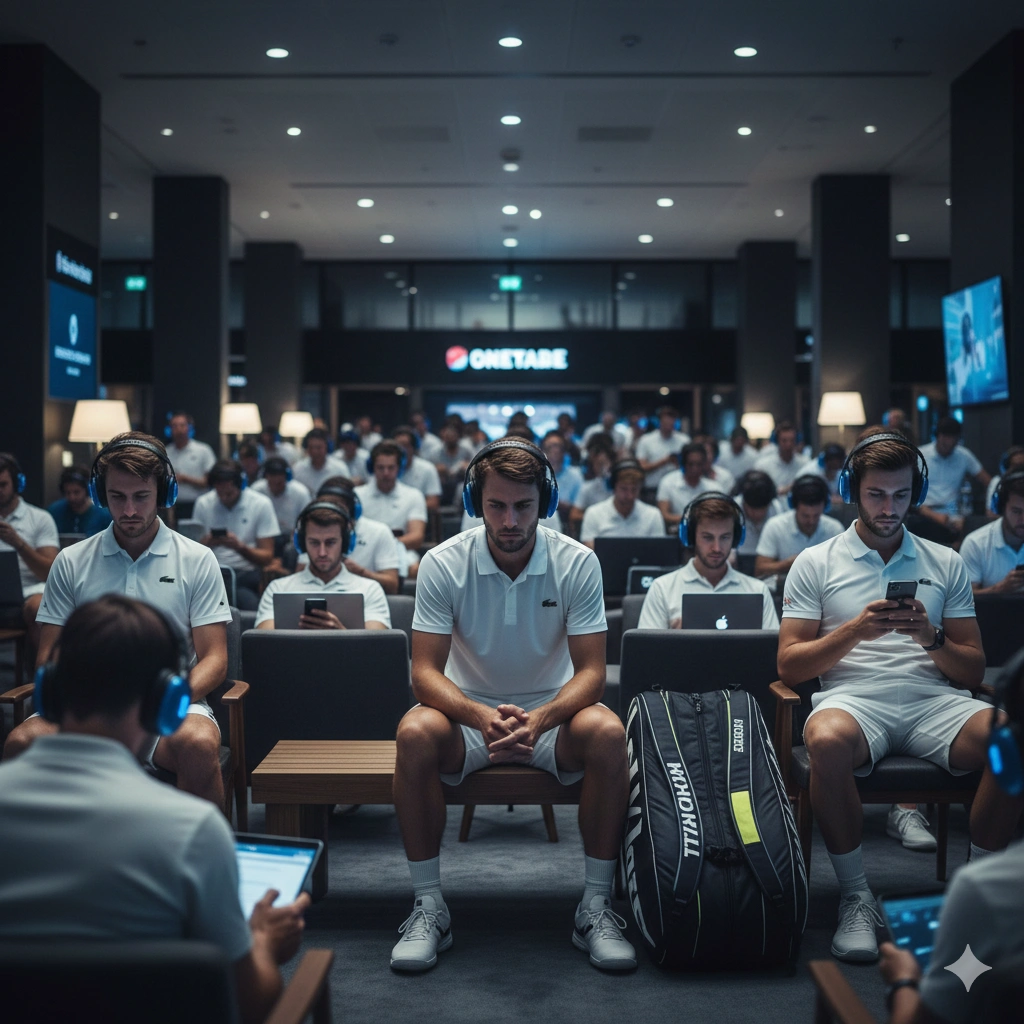
You’re in the player lounge surrounded by 50 other professionals. But you can’t make real friends because everyone is competing for the same limited spots, the same ranking points, the same prize money. One player described: “I have experienced being out on that island on your own, where you have to fend for yourself. It’s a terrible feeling.”
The solitary nature of tennis amplifies isolation. Unlike team sports where you build camaraderie with teammates, tennis players compete individually. Your doubles partner this week might be your singles opponent next week. The person you share practice courts with today could eliminate you from the tournament tomorrow.
Combine competitive isolation with constant travel, and the loneliness becomes profound. You’re away from family and friends for months. You can’t establish local connections because you’re never anywhere long enough. As players describe: “you’re always on the go, you’re alone, a lot of pressure, away from family and friends.” Some players report being so lonely they avoid video calls with family during dinners because seeing everyone together while you’re alone is too painful.
The Toll
Chronic isolation doesn’t just cause loneliness—it fundamentally alters mental health. Without social support, small setbacks feel catastrophic. You lose perspective because you’re processing everything alone. Research identifies “having no one to talk to about worries” as a significant risk factor for depression. One player admitted: “I don’t even want to call [my coach]. I don’t want to tell him that I lost because I struggled with confidence.”
Mindful Solutions
- “Competition compassion” practice: Before competing against someone you know, take 30 seconds to genuinely wish them well: “May you play your best tennis. May you be free from injury. May you find joy in this match.” This sounds counterintuitive, but it reduces the anxiety of competition-as-threat and preserves your capacity for human connection.
- Seek “tennis family”: Identify 2-3 players at your level who understand the unique pressures and aren’t direct competitors (different tour, different ranking tier, or retired). Create a text group for honest check-ins. These relationships provide perspective that people outside tennis can’t offer.
- Professional support utilization: Use the ATP’s partnership with Sporting Chance (24-hour helpline) or PTPA’s Mental Fitness Program resources. These services exist specifically because tennis’s isolation creates unique mental health challenges. Seeking help isn’t weakness—it’s career maintenance.
Research Reference
ATP Mental Health Partnerships
Quick Mindfulness Practices for Tennis Professionals
1. The 90-Second “Racket Rest”
When
Before every match, especially during high-pressure tournaments or financial stress
How
- Find a private space (locker room, quiet corner, bathroom stall)
- Hold your racket in both hands
- Close your eyes
- Take three slow, deep breaths: inhale for 5 counts, exhale for 7 counts
- Say internally with each breath:
Breath 1: “I play for love of the game”
Breath 2: “The outcome doesn’t define my worth”
Breath 3: “I release the weight of expectation”
- Open your eyes, set down the racket, pick it up again with fresh energy
- Step onto court
Why it works
This brief ritual creates psychological separation between external pressures (financial need, ranking anxiety, family expectations) and the intrinsic motivation that brought you to tennis. The physical act of putting down and picking up your racket symbolically releases and resets your mental state.
2. The 3-Minute “Travel Anchor”
When
Upon arriving at each new hotel room during tour travel
How
- Before unpacking, sit on the bed for 3 minutes
- Place both feet flat on the floor
- Close your eyes or gaze softly at one spot
- Take slow breaths and notice: the feeling of the mattress beneath you, your feet on the ground, the air temperature
- Create one familiar ritual: specific tea, specific song, specific stretching sequence—something identical you do in every new location
- Say internally: “Different room, same me. I carry home within myself.”
- Only after this ritual, begin unpacking
Why it works
This practice gives your brain continuity markers when geography constantly changes. Research shows that rituals reduce anxiety and create sense of control in unpredictable environments. By anchoring yourself with familiar sensory experiences, you counteract the disorientation of perpetual travel.
What Tennis Organizations Won’t Admit
Here’s the uncomfortable truth beneath ATP’s partnerships with Headspace and PTPA’s Mental Fitness Program:
The system profits from your suffering. More tournaments mean more revenue for organizers, but they mean your body and mind never recover. The ranking system that penalizes injury time benefits tour operators while harming player health. Financial structures that pay only top performers while charging entry fees create a poverty trap for lower-ranked players.
Loneliness is structural, not personal. You’re not lonely because you’re weak or antisocial—you’re lonely because the tour’s design atomizes players, treats you as isolated economic units competing for scarce resources, and provides no infrastructure for human connection beyond competition.
Injury is inevitable, not accidental. The repetitive stress of professional tennis, combined with inadequate recovery time, inadequate healthcare support for lower-ranked players, and pressure to play through pain, means your body will break down. The question isn’t if, but when. And when it does, the system replaces you with the next 18-year-old phenom.
Mental health resources are bandages, not solutions. Having access to therapists is wonderful. But therapy doesn’t fix the nomadic lifestyle, financial precarity, ranking anxiety, chronic injuries, and profound isolation that structurally create mental health problems. Real solutions would require redesigning the tour entirely—and that threatens too many financial interests.
For more mindfulness resources designed for high-performance professionals navigating isolation and pressure, visit Mindful Engineer where you’ll find:
- First Responder Burnout and High-Stress Performance
- Job-Hunt Burnout and Staying Human (relevant during career uncertainty)
- Chronic Illness and Career Management (relevant for injury recovery)
Resources for Immediate Support
If you’re experiencing mental health crisis:
- ATP/Sporting Chance 24-Hour Helpline: Available to all ATP members
- PTPA Mental Fitness Program: Free access to therapy app Talkspace, mental performance app Apeak Tennis, and 1:1 coaching with Director Damon Valentino
- National Suicide Prevention Lifeline (US): 988
- Samaritans (UK): 116 123
- Your national tennis federation: Most now have mental health resources
For ongoing support:
- PTPA/Psych Hub Partnership: Custom platform with resources on depression, anxiety, burnout, social media harassment
- Tennis Canada Mental Timeout Initiative: Comprehensive mental health strategy
- USTA Mental Health Initiative: Services available during US Open and year-round
- Private sports psychology: Investment in mental health is career maintenance
Final Thought: The Question That Changes Everything
Years from now, when you look back at your tennis career, what will matter?
Your career-high ranking? The prize money? The number of tournaments?
Or will it be whether you stayed human during an inhuman system? Whether you maintained relationships despite constant travel? Whether you treated yourself kindly when the world demanded more?
Tennis is temporary. You, the person playing tennis, continue after the final match.
That person deserves care. That person deserves support. That person deserves to be more than their ranking.
Choose wisely. Choose mindfully. Choose yourself.
Research Sources Cited
- International Journal of Sport and Exercise Psychology – Lifestyle Challenges Study (2022)
- Global Sport Matters – Mental Health Challenges First-Person Account (2022)
- PTPA – Mental Fitness Program Launch (2024)
- PMC – Obsessive-Compulsive and Depressive Symptoms Study (2022)
- ATP Tour – Tennis Canada Mental Health Strategy (2023)
- Inside the Games – ATP Mental Health Partnerships (2020)
- Tennis Wizard – Hidden Battle Between Mental Health and Tennis (2024)
- Bravara – Tennis Mental Health Struggles (2024)
- PTPA – Players’ Perspectives on Mental Health (2023)
- USTA – Mental Health Initiative Launch (2021)
- PTPA/Psych Hub – Partnership Announcement (2025)
- Tennis Letter – Mental Health Awareness (2023)
- University of Birmingham Research Portal – Full Study PDF (2022)