The gaokao is one test for your entire life — how to breathe through it without sacrificing your humanity
You’ve been preparing for this moment since you were five years old. Every tutoring session, every after-school class, every sacrifice your parents made—it all converges on two days in June when you’ll sit for nine hours of examinations that will determine which university accepts you, which career paths open to you, and by extension, what kind of future you can build.
This is the gaokao—China’s National College Entrance Examination—and it’s not merely a test. It’s a cultural institution, a rite of passage, a nationwide ritual where 13 million students simultaneously take the most consequential exam of their lives. With millions competing for limited university slots, the pressure isn’t just academic—it’s existential.
Recent research reveals the psychological toll of this system: over one-third of students experience their first depressive episode during the period from gaokao preparation to college matriculation. A 2024 study on gaokao’s impact found that students experience intense worry and fear as exam dates approach, with chronic high anxiety levels driven by external academic pressures inherent to China’s gaokao-oriented education system.
But here’s what often gets lost in the statistics: You are not a data point. Your worth cannot be measured by your gaokao score. And survival through this process means more than just getting accepted to university—it means preserving your mental health, your sense of self, and your capacity for joy beyond academic achievement.
Let’s talk about how to navigate this immense pressure while keeping your humanity intact.
Issue #1: The Parental Expectation Mountain (When Your Score Determines Their Pride)
Carrying Three Generations of Dreams on Your Test Paper
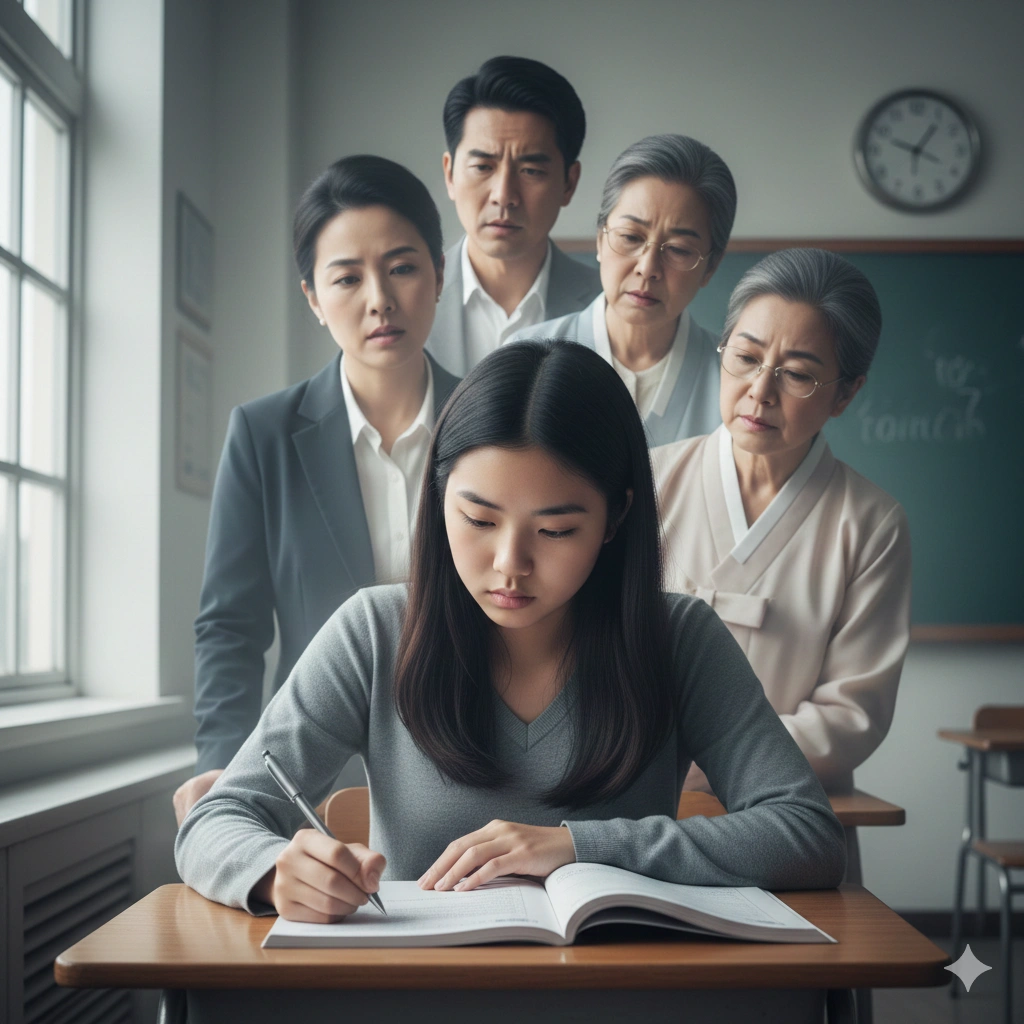
You’re not just studying for yourself. You’re studying for your parents who sacrificed their savings for your tutoring. For your grandparents who believe education is the only path to prosperity. For your extended family who will ask “Which university?” at every gathering. For the neighbors who will compare your results to their children’s. Your gaokao score isn’t personal—it’s public, and it carries the weight of familial pride.
This phenomenon is deeply rooted in Chinese culture. Research shows that 81% of Chinese children worry “a lot” about exams, 73% are physically punished by parents for lax academic effort, and over one-third report psychosomatic symptoms at least once a week. The pressure comes not from cruelty but from parental anxiety about your future in a highly competitive society.
Chinese parents’ concerns stem from systemic factors: unequal educational resource distribution, fierce job competition among graduates, income gaps linked to credentials, and the high-stakes nature of gaokao itself. Your parents aren’t just pushing you—they’re terrified for your future in a system with limited safety nets.
Research Reference
Academic stress in Chinese schools and a proposed preventive intervention program.” Cogent Education]
Mindful Solutions
- Honest family conversation: Before gaokao season intensifies, have a calm discussion with your parents. Acknowledge their concerns while expressing your need for emotional support beyond academic pressure. Most parents don’t realize their anxiety transfers to you unless you name it gently.
- Reframe success beyond scores: Help your family understand that gaokao is one pathway, not the only one. Many successful people graduated from second-tier universities. Character, resilience, and adaptability matter as much as initial college placement.
- Create pressure-free zones: Designate certain times or spaces where gaokao cannot be discussed—family dinners, Sunday mornings, evening walks. Protect these moments fiercely. Your relationship with family should exist beyond exam results.
- Express gratitude while setting boundaries: “I appreciate your investment in my education. I’m working hard. I also need your belief in me regardless of my scores.” This acknowledges their sacrifice while establishing that your worth isn’t conditional.
Issue #2: The Sleep Sacrifice Cycle (When Rest Becomes a Luxury You Can’t Afford)
Studying Until 2 AM, Waking at 5 AM, Repeat Until Collapse
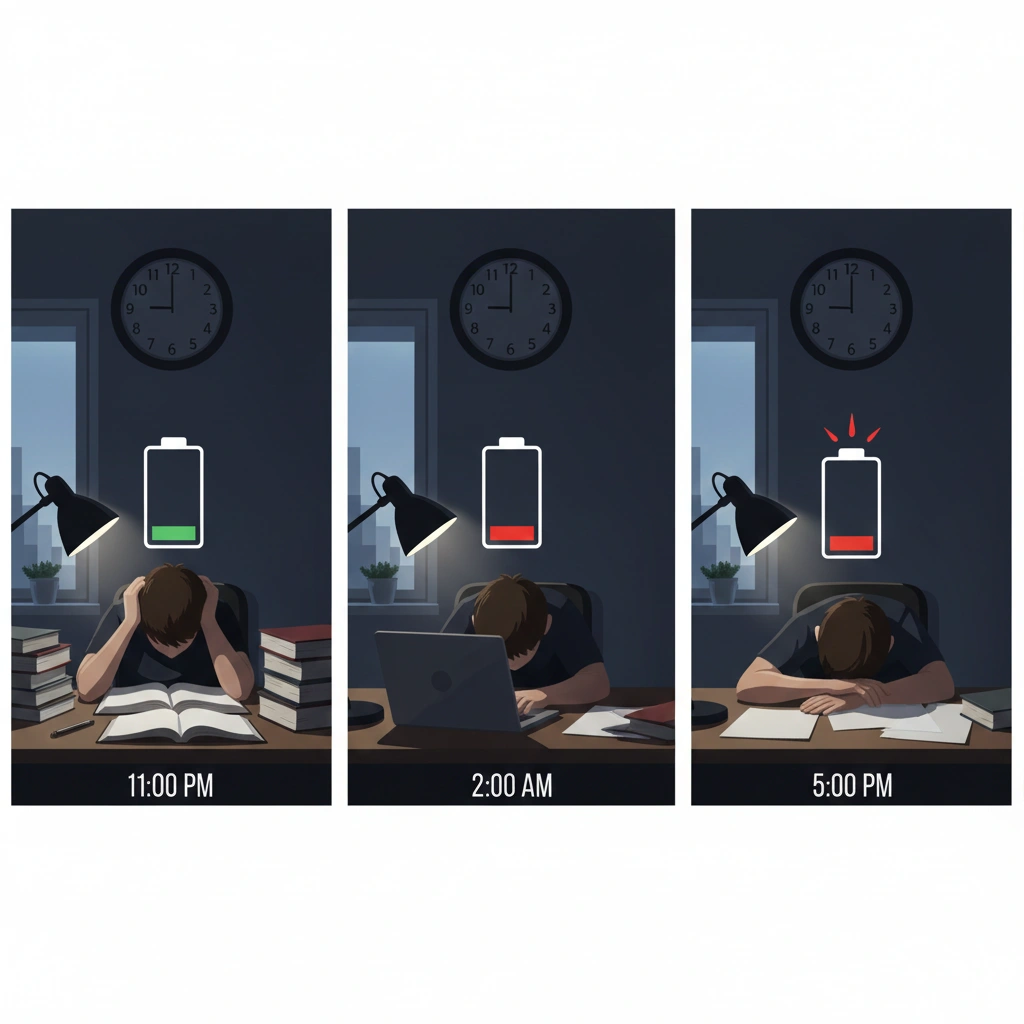
You’ve normalized sleeping five hours. You drink multiple cups of tea to stay alert. Your eyes burn from screen time and textbook glare. You tell yourself: “Just until gaokao. Then I can rest.” But exhaustion accumulates like debt—you can’t just repay it with one good night’s sleep after the exam. Chronic sleep deprivation impairs the very cognitive functions gaokao tests: memory, problem-solving, concentration.
Research confirms this dangerous pattern: Chinese students spend excessive time on academic activities and insufficient time on sleep and exercise, contributing to emotional exhaustion. You’re sabotaging your performance in the name of preparation.
Sleep isn’t weakness—it’s when your brain consolidates learning. During deep sleep, your brain transfers information from short-term to long-term memory. Without adequate sleep, you’re studying harder but retaining less. The irony is brutal: the hours you sacrifice sleep to study might be the hours that prevent you from remembering what you studied.
Research Reference
Mindful Solutions
- Non-negotiable seven-hour minimum: Protect seven hours of sleep like you protect exam time. Schedule backward from your wake time. If you must wake at 6 AM, you must be asleep by 11 PM. No exceptions during the final months before gaokao.
- Strategic napping: Twenty-minute naps between 2-3 PM can restore cognitive function without interfering with nighttime sleep. This is especially valuable after intensive morning study sessions.
- Quality over marathon studying: Four focused hours when well-rested accomplish more than eight exhausted hours. Track your actual comprehension, not just time spent with books open.
- Pre-sleep ritual: Thirty minutes before bed, close all textbooks. Do gentle stretching, listen to calming music, or practice breathing exercises. Signal to your brain that it’s safe to transition from high-alert study mode to rest mode.
Issue #3: The Comparison Trap of Social Rankings (When Everyone Knows Everyone’s Mock Scores)
Living in a Transparent Meritocracy Where Your Rank Is Your Identity
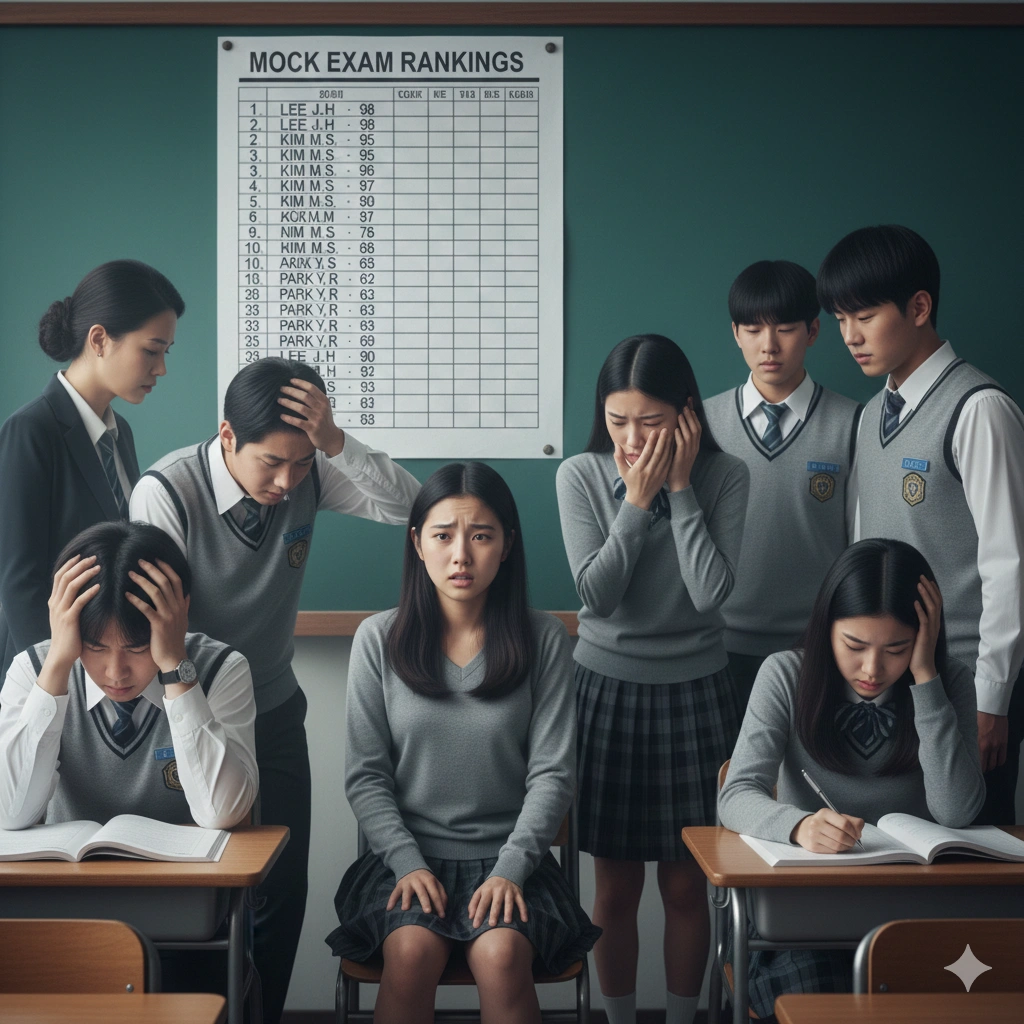
Your school posts mock exam rankings publicly. Your teachers announce top performers in class. Your classmates know approximately where you stand. There’s nowhere to hide, no privacy in your academic struggle. If you’re ranking in the top 10, there’s pressure to maintain it. If you’re ranking outside the top 100, there’s shame and anxiety about your gaokao prospects.
This public ranking system, while intended to motivate, often devastates. The competitive nature of gaokao intensifies stress, with millions of students vying for limited university spots, fostering feelings of inadequacy as students constantly measure their performance against peers.
The psychological damage of constant comparison is well-documented. When your worth is publicly quantified and compared daily, you lose the ability to see yourself as a complete person. You become a number, a ranking, a data point in a competitive system. Your classmates stop being potential friends and become threats to your relative standing.
Research Reference
Mindful Solutions
- Personal baseline focus: Track your improvement relative to your own past performance, not others’ current performance. Did you understand a concept you struggled with last month? That’s success, regardless of where others stand.
- Selective information diet: You don’t need to know everyone’s scores. When rankings are posted, check your own performance, note areas for improvement, and walk away. Don’t memorize the entire list. Protect your mental space.
- Humanize your classmates: Remember that the person ranked above you is also terrified, exhausted, and human. They’re not your enemy—they’re another person navigating the same brutal system. Competition doesn’t require dehumanization.
- Find collaboration pockets: Study groups can transform competitive dynamics. When you explain concepts to struggling classmates or receive help with your weak areas, you remember that education is collective, not purely competitive.
Issue #4: The Identity Erosion Beyond Textbooks (When You Forget Who You Were Before Exam Prep)
Realizing You Can’t Remember the Last Time You Did Something Just Because It Brought You Joy

You used to play an instrument. Or paint. Or play basketball. Maybe you loved reading novels not assigned by teachers. Now, every hour is allocated to exam preparation. Your hobbies feel like luxuries you can’t afford. When someone asks what you enjoy, you genuinely can’t remember. Gaokao preparation has consumed not just your time but your identity.
This complete absorption is psychologically dangerous. When your entire self-worth ties to one pursuit, setbacks in that pursuit feel like personal annihilation. Research shows that the relentless gaokao preparation schedule leaves little time for rest, extracurricular activities, or social interactions, leading to physical and mental exhaustion and contributing to burnout.
You’re not a studying machine. You’re a human with interests, relationships, dreams beyond academic achievement. When you sacrifice all of these for gaokao, you’re not optimizing for success—you’re increasing your vulnerability to breakdown if results don’t meet expectations.
Research Reference
The Impact of Gaokao High-Stakes Testing on Student Mental Health in China
Mindful Solutions
- Weekly joy practice: Designate two hours weekly for an activity unrelated to gaokao—playing music, drawing, running, cooking, anything that reminds you of who you are beyond test scores. This isn’t distraction; it’s psychological survival.
- Maintain one friendship: Keep one genuine friendship where you talk about things besides gaokao. Protect this relationship like you protect study time. Human connection is not negotiable for mental health.
- Post-gaokao visioning: Regularly visualize your life after the exam—not just “which university,” but what kind of person you want to be, what experiences you want to have, what values you want to embody. Gaokao is preparation for life, not life itself.
- Three-dimensional self-reminder: Write down five traits about yourself unrelated to academics—maybe you’re kind, funny, loyal, creative, empathetic. Read this weekly. These qualities exist regardless of gaokao results and will serve you long after the exam.
Issue #5: The Post-Gaokao Emotional Void (When the Exam Ends But the Anxiety Doesn’t)
That Strange Emptiness When Your Life’s Purpose Suddenly Disappears

Gaokao is over. You’ve submitted your answers. You walk out of the exam hall and feel… nothing. Or worse, you feel panic. What now? For years, your life had singular focus—prepare for gaokao. Now that purpose is gone, and you’re directionless. Whether you performed well or poorly, there’s a void where constant preparation used to be.
Then results arrive. If they’re excellent, there’s brief elation followed by unexpected emptiness—”I achieved the goal, so why don’t I feel fulfilled?” If they’re disappointing, there’s devastation that threatens to define your entire self-worth. Either way, the emotional aftermath is often more challenging than the preparation itself.
Research reveals that over one-third of depressed youth had their first onset during the nine-month period from gaokao to college matriculation, highlighting how the post-exam transition is particularly vulnerable time for mental health.
Research Reference
[Epidemiology of depressive disorders among youth during Gaokao to college in China
Mindful Solutions
- Transition buffer period: Give yourself 1-2 weeks post-gaokao to simply rest without making major decisions. Your nervous system needs time to recalibrate from high-alert mode to normal functioning.
- Gradual reintegration: Slowly reintroduce activities you abandoned during preparation—hobbies, social connections, physical activity. Don’t expect immediate joy; your capacity for pleasure needs time to recover from stress suppression.
- Results-day support plan: Before results are released, identify who you’ll talk to first—someone who loves you regardless of scores. Plan to be with supportive people when you receive results, not alone with your thoughts.
- Perspective anchoring: Remind yourself: gaokao is one data point, one moment in a long life. It opens certain doors, but it doesn’t determine your entire future. Many paths lead to fulfilling lives, and not all pass through top-tier universities.
Quick Mindfulness Practices: Your Gaokao Survival Toolkit
When pressure threatens to overwhelm your capacity to cope:
Practice 1: The 5-Minute “Ancestral Metta” (Loving-Kindness for Generational Healing)
You’re carrying not just your own stress but generations of familial hopes, cultural expectations, and historical context. This practice helps you hold that weight with compassion rather than crushing pressure.
Sit comfortably. Close your eyes. Take three deep breaths. Then, for five minutes, practice this progression:
Minute 1-2: Direct compassion toward yourself. Mentally repeat: “May I be at peace. May I know my worth beyond exam scores. May I be gentle with myself during this difficult time.” Feel these words in your body, not just your mind.
Minute 3-4: Extend compassion toward your parents and grandparents. “May you find peace beyond your worries for me. May you trust in my capability. May your sacrifices bring you joy, not anxiety.” Recognize their love beneath their pressure.
Minute 5: Extend compassion toward all gaokao students—the millions taking the exam simultaneously. “May we all find our paths. May we remember our shared humanity. May this system not diminish our spirits.” You’re not alone in this struggle.
Why it works: Metta (loving-kindness) practice activates neural pathways associated with compassion and connection, countering the isolation and self-criticism that gaokao pressure creates. By including your family, you transform adversarial dynamics into shared humanity.
Practice 2: The 3-Minute “Score Detachment”
Results are imminent, or you’ve received disappointing mock scores, and you’re spiraling into catastrophic thinking. This practice creates psychological distance between your performance and your worth.
Stand or sit with good posture. For three minutes, practice this:
Minute 1: Place one hand on your heart. Feel your heartbeat. This heart has been beating since before gaokao existed and will beat long after. Your life force is independent of exam results. Repeat mentally: “I am alive. I am more than my scores.”
Minute 2: Visualize your gaokao score as a leaf floating on a river. Watch it float past. It exists, but it doesn’t define the river. You are the river—vast, moving, continuous. The score is temporary data floating through your life story.
Minute 3: Name three things true about you that have nothing to do with academics—perhaps you’re kind to animals, you make people laugh, you’re resilient through difficulty. Say them aloud or write them down. These truths remain regardless of gaokao outcomes.
Why it works: Cognitive defusion—the practice of seeing thoughts and scores as events, not identities—reduces the psychological fusion that makes exam results feel like existential verdicts. You’re training your mind to hold results lightly rather than letting them crush you.
The Bigger Picture: Gaokao Is Brutal, But It’s Not Everything
The gaokao system is structurally flawed. It reduces the complexity of human potential to a single nine-hour assessment. It creates enormous psychological stress for millions of students. It perpetuates educational inequality between urban and rural areas. These are systemic problems beyond individual students’ control.
But here’s what you can control: how you navigate this system while preserving your mental health. You can take gaokao seriously without letting it destroy you. You can prepare diligently without sacrificing sleep, friendships, and identity. You can honor your parents’ hopes without internalizing their anxiety as your own.
Recent research emphasizes that schools should provide more opportunities for physical exercise integrated with psychological counseling and sleep management to help students effectively alleviate academic stress and enhance overall well-being. While waiting for systemic reform, you must create your own support structures.
Remember: China has hundreds of universities. Many successful people graduated from institutions that aren’t Tsinghua or Peking University. Your gaokao score opens certain doors, but your character, work ethic, creativity, and resilience determine what you accomplish once you walk through those doors. Those qualities aren’t tested by gaokao—they’re tested by how you handle the preparation period itself.
Implementation: Building Sustainable Preparation
Small, consistent practices prevent complete burnout:
Daily
One moment of presence. Before studying, take three breaths and set an intention: “I will do my sincere best today and treat myself with compassion.” This creates psychological space between effort and outcome.
Weekly
One complete rest day or half-day. No studying, no guilt. Sleep, see friends, do something you enjoy. Your brain consolidates learning during rest—this isn’t laziness, it’s neuroscience.
Monthly
One honest self-assessment beyond scores. How’s your sleep? Your mood? Your relationships? If multiple indicators decline for consecutive months, adjust your approach. Sustainable preparation beats burnout-driven cramming.
Post-exam
Regardless of results, take 72 hours before making major decisions. Let emotional intensity settle. Then, with clarity, evaluate your options and choose your path forward.
Conclusion: You Are Not Your Gaokao Score
The exam will end. In a few weeks, few months, few years, gaokao will be a memory—vivid perhaps, but just a memory. What will remain is the person you became while navigating this pressure. Did you learn resilience? Did you practice self-compassion? Did you maintain your humanity while the system tried to reduce you to a number?
Gaokao is genuinely difficult. The pressure you feel is real, the stakes are high, and the competition is intense. Acknowledge this reality without letting it consume you. You can respect the challenge while also recognizing that your worth transcends this assessment.
Your parents’ pressure comes from love and fear—fear that you won’t have the opportunities they want for you. But the greatest gift you can give them isn’t a perfect score—it’s becoming a mentally healthy, resilient, compassionate adult who can navigate life’s challenges with grace. That begins with how you treat yourself now.
Prepare strategically. Sleep adequately. Maintain connections. Preserve your identity beyond academics. And when results arrive—whether they’re everything you hoped or far from it—remember: this is one data point in a long, rich life full of possibilities that gaokao cannot predict or measure.
You are more than one test on two days in June. You are a complete human with talents, relationships, dreams, and a future that extends infinitely beyond this single assessment.
Hold that truth. Breathe through the pressure. And whatever your score, walk out of that exam hall with your humanity intact.
That’s the real victory.