
At ten years old, you stood on a scale while your coach frowned. By twelve, you were counting almonds. By fifteen, your relationship with food looked less like nutrition and more like a mathematical equation where the wrong answer meant losing everything you’d worked for
The Reality Behind the Sequins
You’ve watched them on television—gymnasts and figure skaters who defy gravity, their bodies moving with precision that seems superhuman. What you don’t see are the invisible battles: the 92.7% of competitive figure skaters who report pressure to lose weight, or the daily mental calculations that transform training into psychological warfare.
The USA Gymnastics Safety & Response framework emerged after years of documented abuse, but the cultural shift from performance-at-any-cost to athlete wellbeing remains incomplete. Behind every perfect routine lies a complex web of physical exhaustion, emotional depletion, and systemic pressure that begins shockingly early.
Five Daily Battles You Face (That No One Else Understands)
1. “Just One More Rotation” — The Training Trap That Never Ends
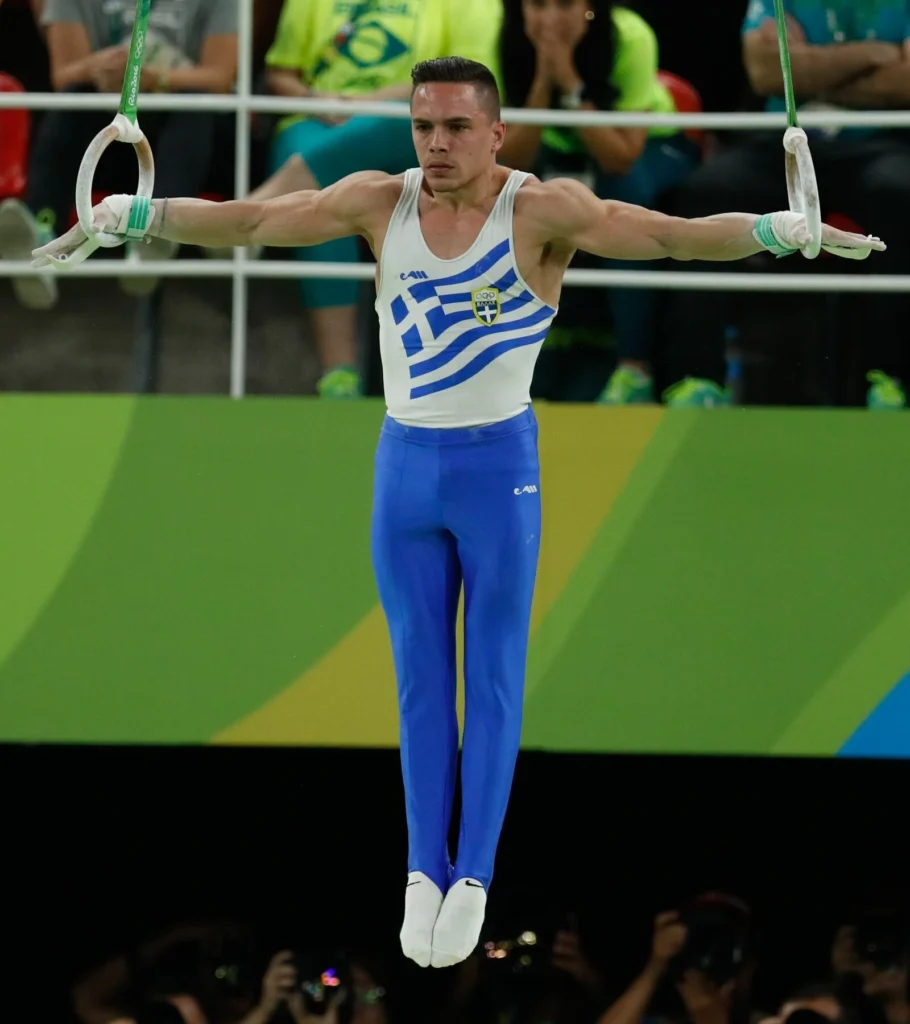
You finish practice. Your muscles are screaming. Your coach says, “One more.” You comply. Because saying no feels like admitting weakness. The next day, you arrive already depleted. Research on athlete burnout demonstrates that chronic stress develops when perceived demands consistently outweigh available resources, creating a cycle where rest feels like regression.
The hidden issue
Your training schedule operates on a “more is better” principle that ignores recovery science. The yearly spike in overuse injuries and burnout in gymnastics often stems from inadequate planning for the entire calendar year, leaving you perpetually balancing on the edge of breakdown.
Research insight
A study published in Frontiers in Psychology found that athletic mental energy serves as a buffer against stress-induced burnout, yet training programs rarely incorporate mental recovery alongside physical conditioning.
Mindful solutions
- Implement deliberate rest days that aren’t negotiable
- Track your energy levels daily using a simple 1-10 scale
- Communicate fatigue to coaches using objective data, not apologies
- Practice the “Body Neutrality Scan” (see below) before and after training
- Establish clear boundaries around additional training requests
2. The Mirror Nightmare — When Reflections Become Judges

Every gym has mirrors. Every competition has cameras. Every comment about “maintaining appearance standards” lands like a verdict on your worth. Female athletes in aesthetic sports consistently show greater risk for body dissatisfaction and eating pathology, and the damage starts before your body even finishes developing.
The hidden issue
Scoring standards that increasingly emphasize technically complex moves favor pre-pubescent body shapes, creating pressure to delay or prevent natural physical development through restrictive eating.
Research insight
According to research in the Journal of Eating Disorders, female high school athletes in aesthetic sports reported disordered eating at rates of 41.5% and were eight times more likely to incur injuries than their peers without eating concerns.
Mindful solutions
- Practice body-neutral language: describe your body by what it does, not how it looks
- Challenge appearance-based feedback with performance-based metrics
- Document strength gains, flexibility improvements, and skill mastery
- Connect with sports dietitians who understand athletic fueling, not restriction
- Recognize that body changes during adolescence are biological necessities, not training failures
Further Reading
Mindful Engineer’s Stress & Burnout section.
3. The Perfection Prison — Where Good Enough Never Exists

You landed the vault. But your toes weren’t pointed enough. You executed the routine. But your smile wasn’t bright enough. Perfectionism in gymnastics can become damaging when athletes set unattainable standards or equate self-worth solely with flawless performance.
The hidden issue
The sport literally requires judges to score you on precision measured in tenths of points. This external validation system becomes internalized until you can’t differentiate between constructive feedback and self-destruction.
Research insight
Studies on eating psychopathology show ballet dancers have higher tendencies to restrict food intake and more intense drive for thinness, with similar patterns expected in gymnastics and figure skating due to comparable pressures.
Mindful solutions
- Separate performance evaluation from self-worth evaluation
- Create a “good enough” practice where you deliberately accept 85% execution
- Identify three things you did well before analyzing what needs improvement
- Work with sports psychologists who specialize in performance anxiety
- Understand that pursuit of excellence differs fundamentally from perfectionism—one motivates growth, the other paralyzes it
4. The Coach Conundrum — When Authority Figures Become Trigger Points
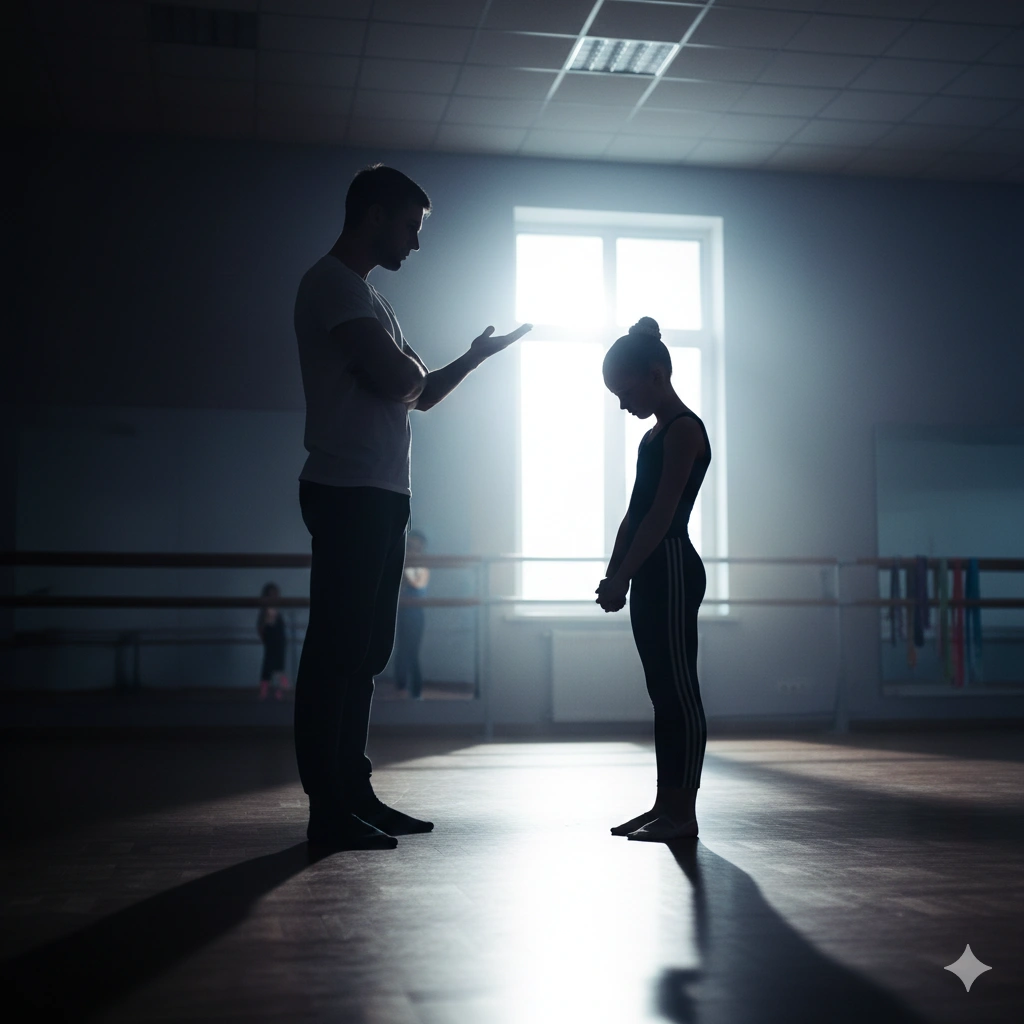
Your coach’s approval means everything. Their disappointment feels devastating. When feedback crosses from constructive to controlling—comments about your weight, your food choices, your personal life—you’re trapped between staying silent and losing your place in the sport.
The hidden issue
67% of eating-disordered athletes reported beginning to diet because coaches recommended it, illustrating how authority figures directly influence harmful behaviors. USA Gymnastics now requires specific training on recognizing abuse and maintaining appropriate boundaries, but implementation varies widely.
Research insight
The International Journal of Environmental Research and Public Health documented that body dissatisfaction was the strongest predictor of eating disorders in elite athletes, often triggered by coaching comments about appearance.
Mindful solutions
- Document concerning interactions objectively: dates, specific comments, witnesses
- Identify one trusted adult outside your coaching structure who can provide perspective
- Learn to distinguish between performance feedback (technique, execution) and personal criticism (appearance, worth)
- Practice the “Coach Boundary Check” meditation (see below) weekly
- Understand that healthy coaching relationships involve mutual respect, not fear
Further reading
Mindful Engineer’s Life & Reflections.
5. The Social Sacrifice — When the Gym Becomes Your Entire World

Your friends go to parties. You go to practice. They post about homecoming dances. You post about competition results. You’ve sacrificed birthday celebrations, family vacations, and school events. The narrow focus on gymnastics can limit opportunities for diverse experiences that contribute to well-rounded development and affect social skills and academic performance.
The hidden issue
Social isolation compounds stress. When gymnastics becomes your only identity, any setback—injury, poor performance, or simply aging out—feels like losing yourself entirely.
Research insight
A 2019 study found that approximately 35% of elite athletes have mental health concerns, with burnout, depression, and anxiety topping the list.
Mindful solutions
- Schedule protected time for non-gymnastics activities weekly
- Maintain friendships outside the sport intentionally
- Develop interests and skills unrelated to athletic performance
- Keep a “whole person” journal documenting non-gym accomplishments
- Recognize that identity diversification protects against burnout and prepares you for life transitions
Further Reading
Mindful Engineer’s Focus & Flow.
Quick Mindfulness Practices: Your Emergency Toolkit
Practice 1: 2-Minute “Body Neutrality Scan” (120 seconds)
When to use: Before practice, after weigh-ins, or when body-critical thoughts escalate
The practice
- Stand or sit comfortably. Close your eyes (0:00-0:10)
- Take three deep breaths, noticing the expansion of your ribcage (0:10-0:30)
- Starting with your feet, mentally acknowledge each body part by function: “These feet provide balance and power for landings” (0:30-1:00)
- Move upward through legs, core, arms, acknowledging capability rather than appearance: “This core generates rotation force. These arms create lines and catch my weight” (1:00-1:40)
- End by stating aloud or internally: “This body is my training partner, not my opponent” (1:40-2:00)
Why it works
Body neutrality shifts focus from aesthetic evaluation to functional appreciation, interrupting appearance-based anxiety cycles.
For Deeper Practice
Mindful Engineer’s Guided Practices.
Practice 2: 4-Minute “Coach Boundary Check” (240 seconds)
When to use
Weekly review, or after interactions that left you feeling uncomfortable or diminished
The practice
- Find a quiet space. Sit comfortably with a journal (0:00-0:20)
- Breathe naturally while bringing to mind your most recent coaching interactions (0:20-0:40)
- Ask yourself these questions, writing brief answers (0:40-3:00)
Did feedback address my technique and performance, or my body and worth?
Do I feel motivated to improve, or ashamed and diminished?
Can I ask questions and express concerns without fear?
Are mistakes treated as learning opportunities or failures?
- Review your answers. Circle any that raise concerns (3:00-3:40)
- Commit to one action: talking to a trusted adult, documenting the concern, or setting a boundary (3:40-4:00)
Why it works
Regular boundary assessment prevents normalization of harmful dynamics and provides evidence if you need to advocate for change.
Learn about mindful awareness techniques at
Mindful Engineer’s Science Behind Calm.
The Path Forward: From Surviving to Thriving
You entered gymnastics or figure skating for joy—the thrill of flight, the satisfaction of mastery, the beauty of movement. Creating environments where athletes feel comfortable discussing mental health is essential, including access to sports psychologists and resources. The culture is slowly shifting, but change requires individual athletes like you to prioritize wellbeing alongside performance.
Research indicates that individual sports like gymnastics, swimming, and tennis have the highest burnout rates, yet these same sports can teach resilience, discipline, and self-awareness when approached mindfully. Your mental health matters more than any medal. Your worth transcends any score.
The gymnastics community is beginning to understand that mental well-being directly impacts physical performance—athletes who neglect mental health risk burnout, decreased performance, and career-ending injuries. You don’t have to choose between excellence and health. You can pursue both.
Your Action Plan: Starting Today
- This week: Complete the Body Neutrality Scan daily before practice
- This month: Have one conversation with a trusted adult about mental health resources
- This season: Establish one non-negotiable boundary around training or feedback
- Long-term: Build an identity beyond gymnastics through interests, relationships, and experiences
Remember
Taking care of yourself isn’t selfish. It’s strategic. Athletes who prioritize mental health and balanced training outperform those running on exhaustion and anxiety. Your body isn’t the enemy. The system that taught you to treat it that way is.
Learn Stress Management At
Mindful Engineer’s complete resource library.
Additional Resources
- USA Gymnastics Safety & Response: usagym.org/safety
- National Eating Disorders Association (NEDA): Helpline for athletes with eating concerns
- The Female Athlete Triad Coalition: Resources on managing health in aesthetic sports
- Sports Psychology Databases: Psychology Today directory filtered for sports performance specialists
Research References
- Sundgot-Borgen, J. (1994). Risk and trigger factors for the development of eating disorders in female elite athletes. Medicine & Science in Sports & Exercise. https://pubmed.ncbi.nlm.nih.gov/22093018/
- Ziegler, P.J., et al. (1998). Body image and dieting behaviors among elite figure skaters. International Journal of Eating Disorders, 24(4), 421-427. https://pubmed.ncbi.nlm.nih.gov/9813767/
- Voelker, D.K., Gould, D., & Reel, J.J. (2014). Prevalence and correlates of disordered eating in female figure skaters. Psychology of Sport and Exercise, 15, 696-704. https://pmc.ncbi.nlm.nih.gov/articles/PMC11356870/
- DeFreese, J.D., Raedeke, T.D., & Smith, A.L. (2015). Athlete burnout: An individual and organizational phenomenon. Journal of Applied Sport Psychology. https://www.tandfonline.com/doi/full/10.1080/1750984X.2023.2225187
- Gustafsson, H., et al. (2011). Integrated model of athlete burnout. Scandinavian Journal of Medicine & Science in Sports. https://pmc.ncbi.nlm.nih.gov/articles/PMC9517900/
USA Gymnastics Safe Sport Policy (2023). https://usagym.org/safety/policy/