One Delayed Flight Can Destroy a $1 Million Wedding
It’s 6 AM. You’ve been awake for 32 hours straight. The bride’s mother is calling—again. The florist just sent the wrong centerpieces. The celebrity guest’s flight is delayed four hours, which means the entire ceremony timeline collapses. And that $1 million wedding you’ve spent eight months planning? It’s teetering on the edge of disaster because of factors completely outside your control.
Welcome to event planning, where you’re expected to orchestrate perfection while managing chaos, absorb everyone’s stress while suppressing your own, and somehow make it look effortless—all while your own mental health silently crumbles.
According to research from IBTM World’s Culture Creators Report 2023, an overwhelming 79% of event planners report their roles have become more stressful than before the pandemic. The World Scholarship Vault ranks event planning as the third most stressful job globally—behind only military service and home health aides, and ahead of teachers, first responders, and social workers.
This isn’t just about long hours or difficult clients. Research shows that event planning creates a unique psychological pressure cooker that’s systematically burning out an entire industry. And nobody’s talking about it.
Until now.
The Five Hidden Battles Event Planners Fight Daily
1. “The Perfection Prison” – When 99% Perfect Means Total Failure
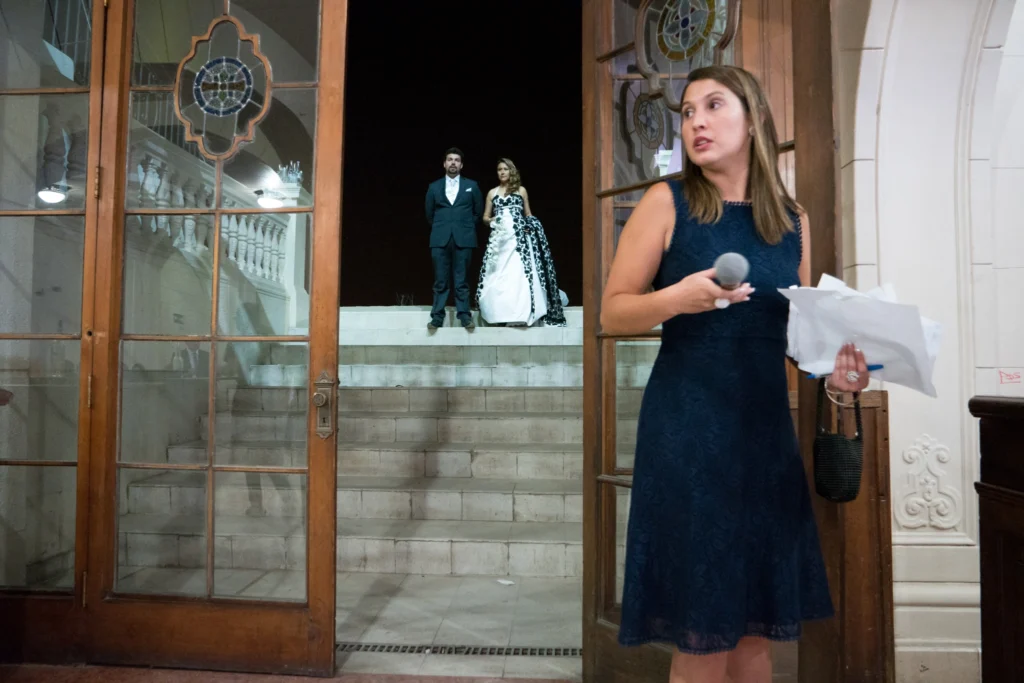
Here’s the brutal truth: In event planning, there are no do-overs. No second chances. No “let’s try that again tomorrow.” Every event is a high-stakes, one-shot performance where anything less than absolute perfection is considered catastrophic failure.
The research confirms what you live daily. The Occupational Information Network ranks meeting, convention, and event planners with a stress tolerance level of 95 out of 100—one of the highest stress tolerance requirements among 873 professions tracked. Studies show that event planners experience stress levels comparable to emergency room physicians and air traffic controllers, yet receive a fraction of the recognition or compensation.
What makes this particularly devastating? You’re often blamed for circumstances completely beyond your control. Weather doesn’t cooperate? Your fault. Vendor fails to deliver? Your responsibility. Client changes their mind at the last minute? You should have anticipated it. Research from EventWell found that 42% of event planners have changed jobs specifically due to job-related stress and the impossible pressure to control the uncontrollable.
The psychological toll is severe. Studies on perfectionism and occupational stress show that jobs requiring flawless execution with no margin for error create chronic anxiety, hypervigilance, and burnout. When your professional reputation depends on variables you cannot control—airline schedules, vendor reliability, weather patterns, human behavior—you live in a constant state of vigilant dread.
Mindful Solutions
- The 90-Second “Timeline Anchor” Practice: When you feel overwhelmed by perfectionism, pause for 90 seconds. Place both hands flat on a solid surface (table, wall, floor). Feel the solidity beneath your palms. Take five deep breaths. With each breath, silently affirm: “I control what I can control. I release what I cannot.” This somatic practice grounds you when perfectionism spirals into panic.
- Radical Acceptance Meditation: Before each event, spend three minutes practicing radical acceptance. List mentally: “What I can control” and “What I cannot control.” Accept both lists equally. This doesn’t mean giving up—it means directing energy wisely.
- Reframe ‘Failure’: Keep a private journal of “disasters” that happened but didn’t ruin events. Most catastrophes we anticipate never materialize. Those that do rarely destroy the experience. Evidence-based perspective counteracts catastrophic thinking.
- Permission for Imperfection: Practice phrases like “This is a beautiful event with one small flaw” instead of “This one thing ruined everything.” Cognitive reframing reduces all-or-nothing thinking.
2. “The Emotional Sponge Syndrome” – Absorbing Everyone’s Anxiety While Drowning in Your Own
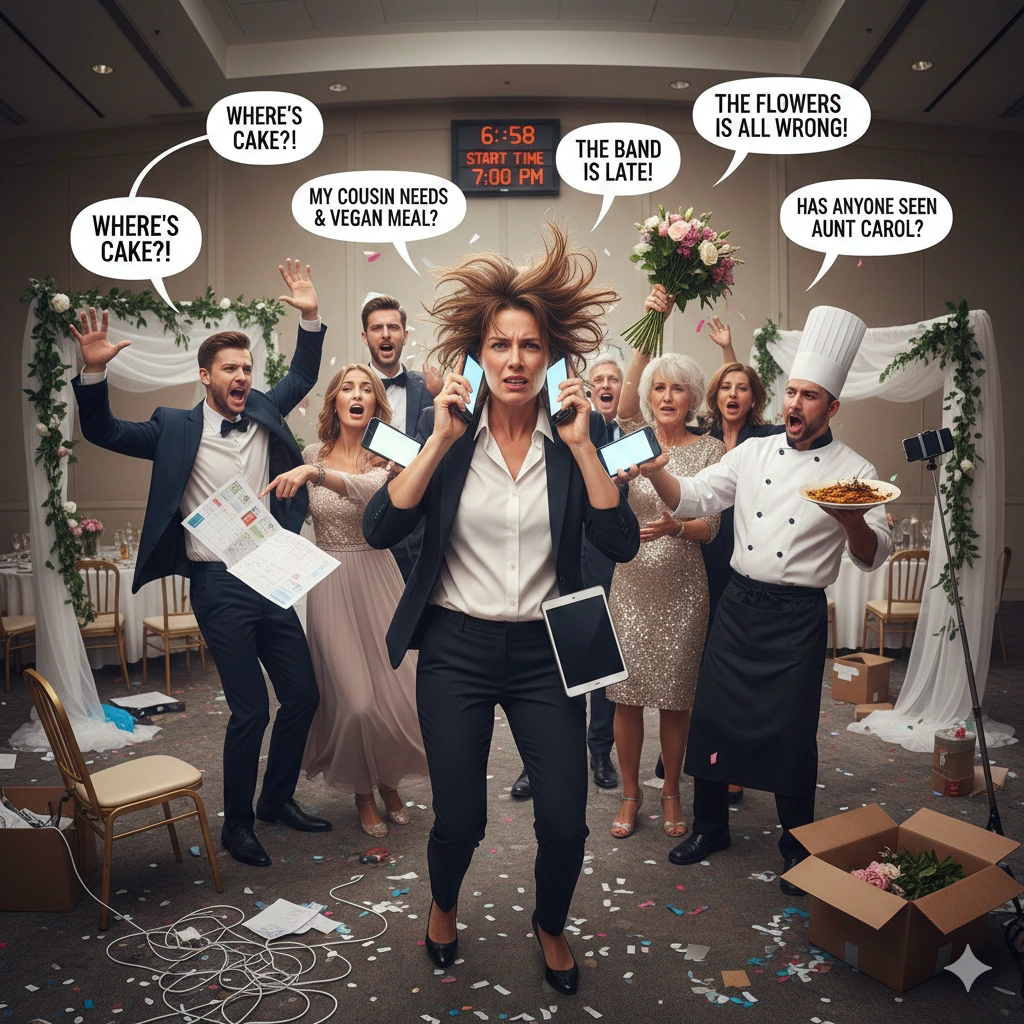
You’re not just planning events. You’re managing the bride’s mother’s control issues, the CEO’s anxiety about public speaking, the vendor’s financial problems, the bridesmaid drama, the family conflicts, the ego clashes, and the thousand tiny emotional crises that arise when people gather for high-stakes occasions.
And while you absorb everyone else’s stress, you’re expected to radiate calm confidence. Always.
Research on emotional labor in event planning reveals a devastating pattern. Studies show that event planners consistently perform high levels of emotional labor—the requirement to manage and display specific emotions regardless of how you actually feel. You must appear enthusiastic when exhausted, calm when panicking, patient when frustrated, and endlessly accommodating when boundaries are violated.
The IBTM World survey found that despite 79% of event planners reporting increased stress, 90% have seen no corresponding increase in compensation. You’re doing more emotional labor for the same or less pay (when adjusted for inflation). Research from The American Psychological Association confirms that employees who feel undervalued and over-stressed have a 50% likelihood of seeking new positions within a year.
The psychological impact of constant emotional labor is severe. Studies show that suppressing authentic emotions while displaying required positive affect leads to emotional exhaustion, depersonalization, reduced sense of accomplishment, and eventual burnout. The constant mismatch between what you feel and what you must display creates what researchers call “emotional dissonance”—a chronic stressor that damages mental health over time.
Mindful Solutions
- The 2-Minute “Client Calm” Reset: After particularly draining client interactions, find a private space (bathroom, car, empty room). Set a timer for exactly two minutes. Close your eyes. Place one hand on your heart, one on your belly. Breathe deeply while silently acknowledging: “Their anxiety is not mine to carry. I am helping without absorbing. I am separate from their stress.” This practice creates psychological boundaries when emotional contagion threatens to overwhelm you.
- Emotional Compartmentalization: Visualize a filing cabinet. After absorbing someone’s anxiety, mentally file it in a drawer labeled with their name. Close the drawer. This isn’t callousness—it’s healthy boundary-setting that allows you to help without drowning.
- Daily Emotional Inventory: Each evening, spend five minutes identifying which emotions were genuinely yours versus which you absorbed from others. This practice increases self-awareness and prevents cumulative emotional exhaustion.
- Permission to Feel: Schedule “authentic emotion time” where you allow yourself to feel frustrated, scared, exhausted, or resentful without judgment. Emotional suppression compounds stress; scheduled release prevents accumulation.
3. “The Invisible Labor Trap” – When Your Expertise Is Treated Like Magic
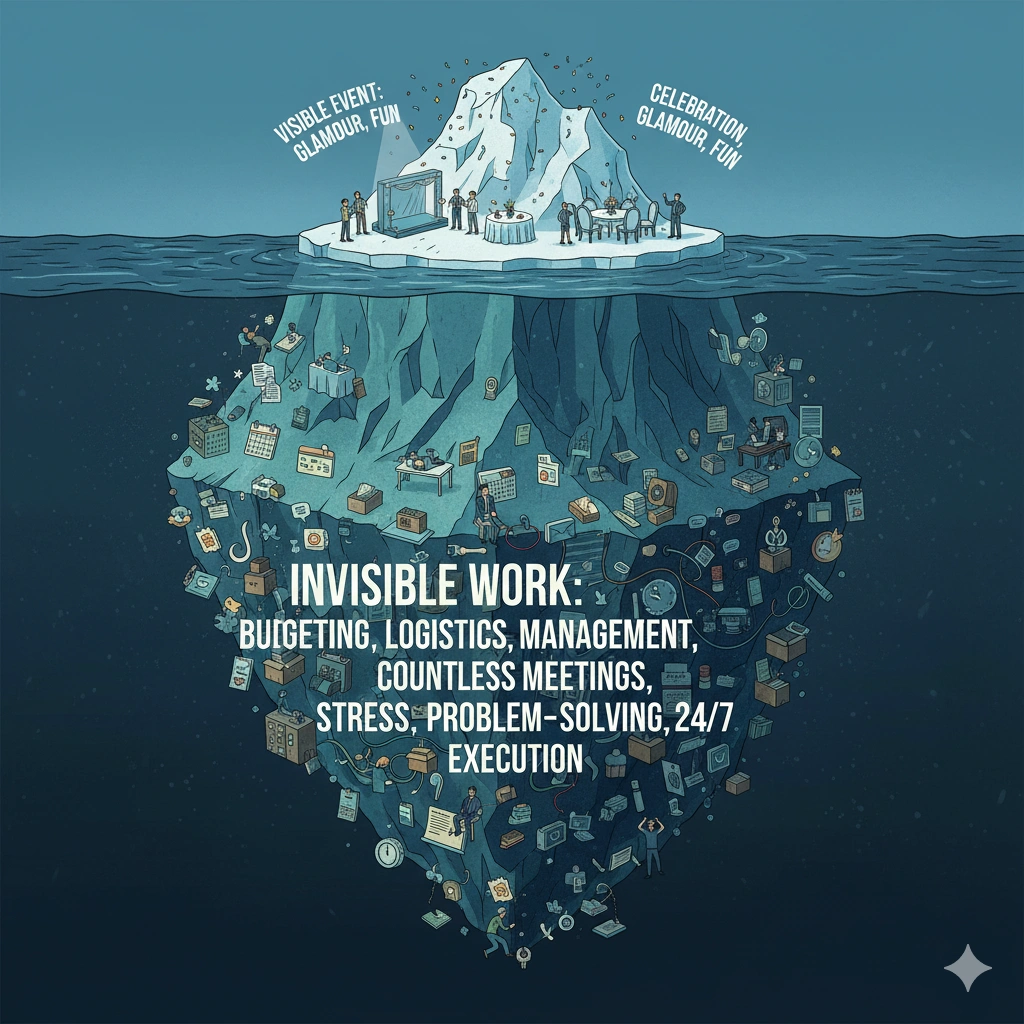
Clients see the final event—the seamless execution, the beautiful details, the flawless timing. What they don’t see are the hundreds of hours of negotiation, problem-solving, crisis management, vendor coordination, timeline creation, contingency planning, and emotional labor that made it possible.
And because they don’t see it, they don’t value it.
Research confirms this frustrating reality. Studies show that successful event planning requires complex multitasking, specialized knowledge, emotional intelligence, crisis management skills, negotiation expertise, and project management abilities—yet the profession is consistently undervalued and underpaid. The median salary for event planners, according to Zippia, is just $51,542—despite stress levels comparable to physicians and firefighters.
The “invisibility” of your work creates additional stress. Research on occupational recognition shows that when skilled labor appears effortless, others assume it requires minimal expertise. Your competence works against you—the better you are at your job, the easier you make it look, and the less people appreciate the complexity involved.
This invisibility extends to your own team and family. Because you work irregular hours across weekends, evenings, and holidays, loved ones often can’t comprehend the demands of your profession. Research shows that event professionals working nonstandard hours experience social isolation, difficulty maintaining relationships, and lack of understanding from friends and family about job demands.
Mindful Solutions
- Visibility Documentation: Keep a detailed log of every task you complete for one full event—every email, phone call, problem solved, contingency planned. Review this when you feel undervalued. The evidence counteracts impostor syndrome and validates your expertise.
- Education, Not Defensiveness: When clients undervalue your work, respond with calm education: “Event planning involves over 200 individual tasks. Here’s what goes into creating what appears seamless.” Frame your expertise as professional knowledge, not defensive justification.
- Community Recognition: Connect with other event planners who understand your work. Online communities, professional associations, and peer networks provide the recognition and validation you’re not receiving from clients.
- Self-Validation Practice: After each successful event, list five complex problems you solved that no one saw. Acknowledge your invisible expertise even when others don’t.
4. “The Burnout Binge-Purge Cycle” – Chaotic Season, Dead Season, Repeat
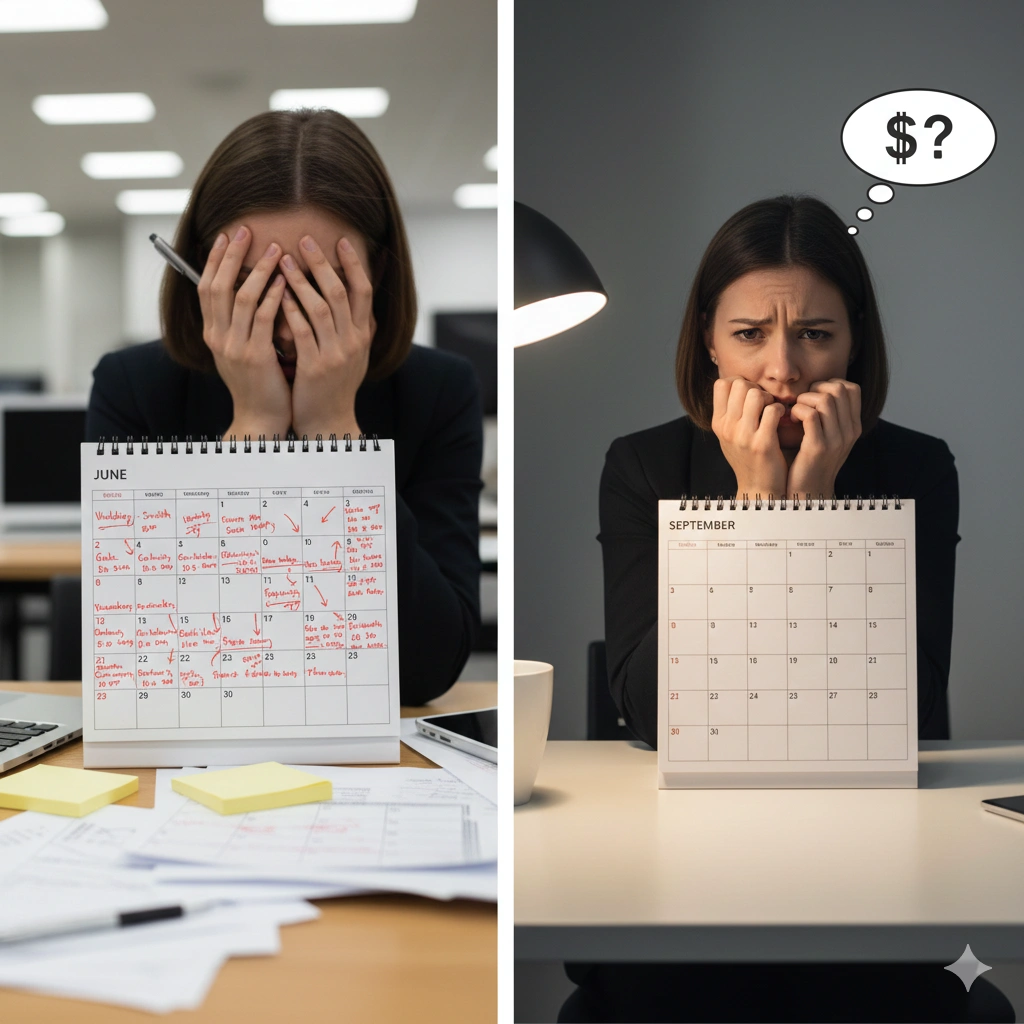
Wedding season hits. You’re planning six events simultaneously. You work 80-hour weeks for three months straight. You haven’t seen your family. You’re surviving on coffee and adrenaline. And the moment you collapse in exhaustion? The work disappears completely, leaving you financially anxious and professionally adrift.
This isn’t sustainable employment. It’s a boom-bust cycle that guarantees burnout.
Research from Bizzabo’s industry report reveals that the cyclical nature of event planning creates unique burnout patterns. Studies show that professionals experience intense periods of overwork (wedding season, conference season, holiday events) followed by sudden unemployment or underemployment. This creates financial instability, inability to plan personal life, chronic fatigue from overwork periods, and anxiety during slow periods about future income.
The research is clear: this pattern is unsustainable. Studies show that 74% of event planners are at risk of burnout, with some research indicating rates as high as 79%. Event planning has one of the highest job stress rankings globally precisely because of this boom-bust cycle combined with high-stakes perfectionism and emotional labor.
The physical toll is severe. Research shows that during peak seasons, event planners work excessive hours without adequate rest, skip meals, sacrifice sleep, and defer medical care. The recovery time needed after intense event seasons is substantial, yet the industry structure rarely allows for proper rest before the next cycle begins.
Mindful Solutions
- Strategic Rest Scheduling: Don’t wait until you’re destroyed to rest. Build mandatory recovery days into your calendar between events. Treat these as non-negotiable appointments with yourself.
- Energy Banking: During slow seasons, focus on restoration rather than anxiety. Use this time for sleep recovery, relationship maintenance, creative renewal, and physical health. You’re not “wasting time”—you’re preparing for the next cycle.
- Financial Buffer Building: Work with a financial advisor to create strategies for smoothing income across peak and slow seasons. Financial stress compounds occupational burnout; addressing this practically reduces overall stress.
- Off-Season Professional Development: Frame slow seasons as investment time. Take courses, develop new skills, network strategically. Reframing “slow” as “growth opportunity” reduces anxiety.
5. “The Responsibility Without Authority Paradox” – Blamed for Everything, Control Over Nothing

You’re responsible for every detail, every outcome, every person’s experience. But you don’t control vendor quality, client decision-making, guest behavior, venue equipment, weather conditions, airline schedules, or any of the thousand variables that determine event success.
This paradox—total responsibility with minimal authority—is psychologically devastating.
Research on occupational stress identifies this as one of the most toxic workplace dynamics. Studies show that positions requiring high responsibility with low control create maximum stress and burnout. You’re accountable for outcomes influenced by factors beyond your control—a recipe for chronic anxiety and learned helplessness.
The research from EventWell confirms this pattern. The survey found that 42% of event planners left positions specifically due to this stress dynamic. When you’re blamed for vendor failures, weather disasters, last-minute client changes, or guest misconduct—none of which you control—the psychological burden becomes unbearable.
This paradox is compounded by client expectations. Research shows that clients often view event planners as miracle workers who should prevent or fix any problem, regardless of whether it’s remotely within their control. The delayed flight that ruins a wedding timeline? Somehow your fault for not anticipating airline schedules. The vendor who goes bankrupt three days before the event? You should have known. This expectation of omniscience and omnipotence creates impossible pressure.
Mindful Solutions
- Clear Scope Documentation: At the start of every client relationship, create a written document clearly outlining what you control versus what you don’t. Reference this when unreasonable blame arises.
- Contingency Communication: When presenting plans, explicitly state contingencies: “If the airline delays the guest’s arrival, here’s Plan B.” This manages expectations proactively rather than reactively absorbing blame.
- Responsibility Boundaries: Practice phrases like “I take responsibility for coordination and communication. I cannot take responsibility for vendor performance once they’re onsite.” Stating boundaries doesn’t mean avoiding accountability—it means claiming appropriate accountability.
- Post-Event Debriefs: After events with problems outside your control, document what happened and what you did manage. This evidence protects you professionally and validates your efforts when clients or your own brain try to blame you for the uncontrollable.
Your Crisis-Management Mindfulness Kit
Practice 1: The 90-Second “Timeline Anchor” for Perfectionism Spirals
When perfectionism threatens to overwhelm you during event planning or execution, this practice brings you back to reality.
How to practice
- When you notice perfectionism spiraling (“This one thing will ruin everything”), pause immediately
- Place both hands flat against a solid surface—table, wall, desk, floor
- Press firmly and feel the solidity beneath your palms
- Take five slow, deep breaths—inhale for 4 counts, exhale for 6
- With each exhale, silently affirm: “I control what I can control. I release what I cannot.”
- Open your eyes and identify three specific things within your control right now
Why it works
Research on grounding techniques shows that physical touch combined with conscious breathing activates the parasympathetic nervous system, reducing anxiety. The cognitive reframing of control versus non-control prevents catastrophic thinking—a common pattern in perfectionism. Studies show that distinguishing controllable from uncontrollable factors reduces stress and improves problem-solving effectiveness.
Practice 2: The 2-Minute “Client Calm” for Emotional Labor Recovery
After absorbing someone’s anxiety or managing a difficult interaction, this practice prevents emotional accumulation.
How to practice
- Immediately after a draining client interaction, find privacy (bathroom, car, empty room)
- Set a timer for exactly two minutes
- Close your eyes and place one hand over your heart, one over your belly
- Take slow, deep breaths—inhale feeling your belly expand, exhale feeling it contract
- With each breath cycle, silently affirm:
- Inhale: “I am helping”
- Exhale: “I am not absorbing”
- Visualize their stress as a heavy coat you’re taking off and setting down
- End with: “Their anxiety is not mine to carry. I remain separate while caring.”
Why it works
Studies on emotional labor show that creating psychological boundaries prevents emotional exhaustion and compassion fatigue. This practice uses somatic awareness (hand placement), breath regulation, and cognitive reframing to create healthy detachment. Research confirms that brief interventions immediately following stressful interactions prevent cumulative emotional damage more effectively than end-of-day processing.
When Mindfulness Isn’t Enough: Recognizing Serious Burnout
Let’s be direct: breathing exercises help, but they’re not sufficient when you’re experiencing severe burnout or mental health crisis. If you’re experiencing any of these signs, professional help is essential:
- Physical symptoms that won’t resolve: chronic headaches, digestive problems, chest pain, insomnia persisting weeks beyond events
- Emotional numbness: inability to feel joy, excitement, or satisfaction from successful events
- Cynicism and detachment: feeling that nothing matters, that your work is meaningless
- Persistent anxiety or panic attacks before, during, or after events
- Depression lasting beyond two weeks: hopelessness, constant fatigue, loss of interest in everything
- Thoughts of self-harm or suicide
- Substance dependence: increasing reliance on alcohol or drugs to cope with work stress
According to research from The American Psychological Association, burnout is not a personal failing—it’s a predictable response to workplace conditions that demand more than humans can sustainably provide. The research shows that the event industry’s structure—not your resilience—is the problem.
Resources
- Employee Assistance Programs (EAP) if your company offers them
- National Suicide Prevention Lifeline: 988
- Crisis Text Line: Text HOME to 741741
- Psychology Today Therapist Finder for mental health professionals specializing in occupational stress
The Truth About Your Profession
You need to hear this: Event planning is legitimately one of the world’s most stressful professions. This isn’t exaggeration or weakness on your part—it’s scientifically documented reality.
The research is unequivocal. Event planning ranks third globally for occupational stress, with a stress tolerance requirement of 95 out of 100. Studies consistently show that 74-79% of event planners experience high stress or burnout. Research from IBTM World confirms that 87% of event professionals state that events are needed more than ever, yet 79% report their roles are more stressful than pre-pandemic, and 90% have seen no pay increases despite increased workload.
Your profession requires you to:
- Achieve perfection with zero margin for error
- Manage everyone’s emotions while suppressing your own
- Control outcomes influenced by uncontrollable variables
- Work irregular, exhausting hours during peak seasons
- Absorb blame for circumstances beyond your influence
- Perform highly skilled, complex labor that appears effortless
This combination would break anyone. The fact that you’re still standing is testament to your strength, not evidence of inadequacy when you struggle.
Moving Forward: You Deserve Better
The event industry needs systemic change. Better pay. Reasonable hours. Mental health support. Realistic client expectations. Recognition of expertise. Until that happens, you need strategies to survive within a broken system.
Start with one mindfulness practice this week. Just one. Maybe it’s the 90-second Timeline Anchor when perfectionism spirals. Maybe it’s the 2-minute Client Calm after draining interactions. Maybe it’s simply acknowledging that you’re carrying an impossible load and that’s not your fault.
You create magic for others. You orchestrate joy, celebration, connection, and memories that last lifetimes. Your work has profound meaning, even when the cost to you is high.
But you cannot pour from an empty cup. And you’ve been running on fumes for too long.
The next time someone says “event planning must be so fun,” let yourself feel the full complexity of what that statement erases. Yes, there’s joy in creating beautiful experiences. But there’s also sacrifice, stress, exhaustion, and invisible labor that deserves recognition.
You’re not “just” an event planner. You’re a crisis manager, emotional labor performer, perfectionist performer, and miracle worker—all while making it look effortless.
That takes extraordinary strength.
Take care of yourself. You’re worth it.
Research References
- IBTM World – The Culture Creators Report 2023: https://www.meetingmentormag.com/december-2023/event-planning-gets-even-more-stressful-post-pandemic/
- World Scholarship Vault – Most Stressful Jobs 2023 Study: https://convene.com/catalyst/meeting-event-planning/event-planning-most-stressful-jobs/
- Occupational Information Network (O*NET) – Stress Tolerance Rankings for 873 Occupations: https://convene.com/catalyst/meeting-event-planning/event-planning-most-stressful-jobs/
- EventWell Survey – Job Stress Among 424 Event Planners: https://welcome.bizzabo.com/hubfs/Burnout%20in%20the%20Events%20Industry%20V6.pdf
- Cvent Blog – Event Professional’s Guide to Beating Burnout and Stress: https://www.cvent.com/en/blog/events/event-planners-guide-beating-burnout-and-stress
- Bizzabo – Burnout in the Events Industry: Key Factors and Practical Solutions (PDF): https://welcome.bizzabo.com/hubfs/Burnout%20in%20the%20Events%20Industry%20V6.pdf
- Zippia – Seven Most Stressful Jobs of 2023 (Event Planner Salary and Stress Data): https://www.bizzabo.com/blog/preventing-event-planner-burnout
- The Incentivist – Event Professionals More Stressed Than Ever (IBTM World Report): https://theincentivist.com/event-professionals-more-stress-than-ever-ibtm-world-report/
- Vendelux News – 5 Event Planner Burnout Prevention Tips: https://vendelux.com/news/event-planner-burnout-prevention-tips/