18-hour days, unrelenting scrutiny, and the soul-crushing weight of moral compromise—what happens when democracy’s warriors burn out before the battle ends?
You wake at 4:47 AM to seventeen missed calls. The crisis started three hours ago, and your phone has been buzzing with campaign strategy changes, donor demands, and breaking news alerts. By the time you reach the first event at 7:30 AM, you’ve already lived a full workday. Your smile is practiced, your talking points memorized, but somewhere between the third fundraiser and the eighth handshake, you forget who you are beneath the performance.
This is political burnout. And it’s destroying more careers than any scandal ever could.
1. The Smile That Never Sleeps: Emotional Labor Exhaustion
“I Perform Therefore I Am (Dying Inside)”
Research reveals that emotional labor is central to political work, with 60% of politicians reporting that dealing with emotionally charged issues is critical to their roles, and 71% believing their work requires displaying many different emotions when interacting with people. This constant performance takes a devastating toll.
When you’re a politician or campaign staffer, your face is a product. Your emotions are commodities. Every interaction demands what researchers call “false-face acting”—the suppression of genuine feelings to project an acceptable public persona. Studies show that symptoms such as negative self-evaluation, affective exhaustion, stress, occupational cynicism and generalized apathy were 51% higher among politicians who reported the highest levels of false-face acting.
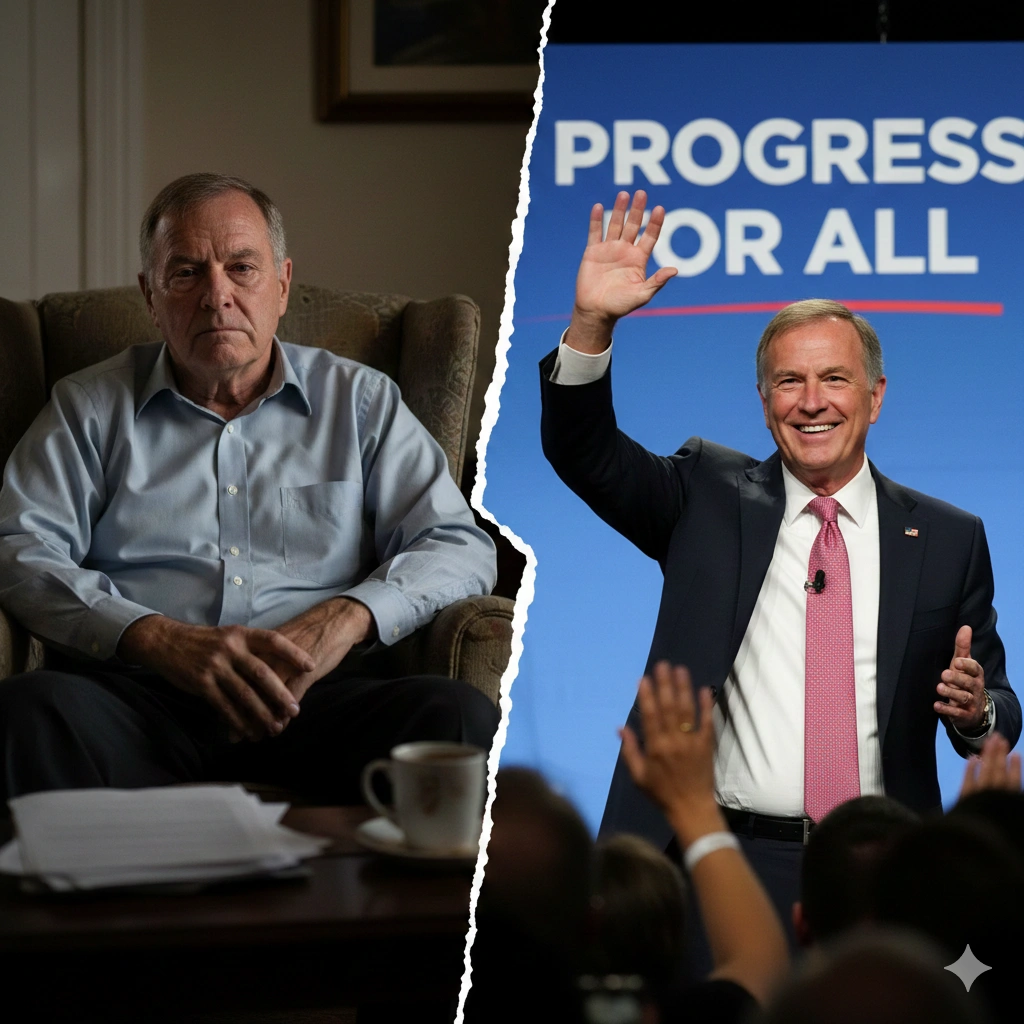
The Hidden Cost
Unlike most service workers who can seek peer support, admitting vulnerability in politics can be costly at the ballot box. You’re trapped in a performance with no intermission.
Research Study
James Weinberg’s 2021 study “Emotional labour and occupational wellbeing in political office” surveyed over 500 elected councillors and MPs in the UK, demonstrating that false-face acting positively predicts occupational burnout symptoms including exhaustion, pessimism, and stress.
Study link:
Emotional labour and occupational wellbeing in political office
Mindful Solutions
Practice 1: The 2-Minute “Podium Breath” Before stepping onto any stage or into any meeting:
- Find a private space (even a bathroom stall works)
- Place one hand on your chest, one on your belly
- Inhale for 4 counts, feeling your belly expand
- Hold for 4 counts
- Exhale for 6 counts, releasing the performed persona
- Repeat 3 times
This Science-backed breathing technique helps reset your nervous system between performances.
Practice 2: The Authenticity Audit Once daily, ask yourself: “What did I genuinely feel today that I couldn’t express?” Write it down. This mindful self-reflection practice prevents emotional suppression from becoming chronic.
2. The Feast or Famine Fallacy: Financial Insecurity Despite Power
“One Election Away From Unemployment (But Sure, I’ll Rent That Luxury Office)”
Campaign work operates on a brutal equation: work 18-hour days for months, win or lose everything. Campaign staff face the reality that if their candidate loses, they’re out of work, unable to secure administration positions. This creates a pressure-cooker environment where burnout isn’t a risk—it’s a certainty.
The financial instability compounds the stress. Despite the optics of power and influence, many campaign workers earn modest salaries while working in expensive political hubs. You’re expected to maintain appearances—the right clothes, the right connections, the right address—on a salary that barely covers rent.
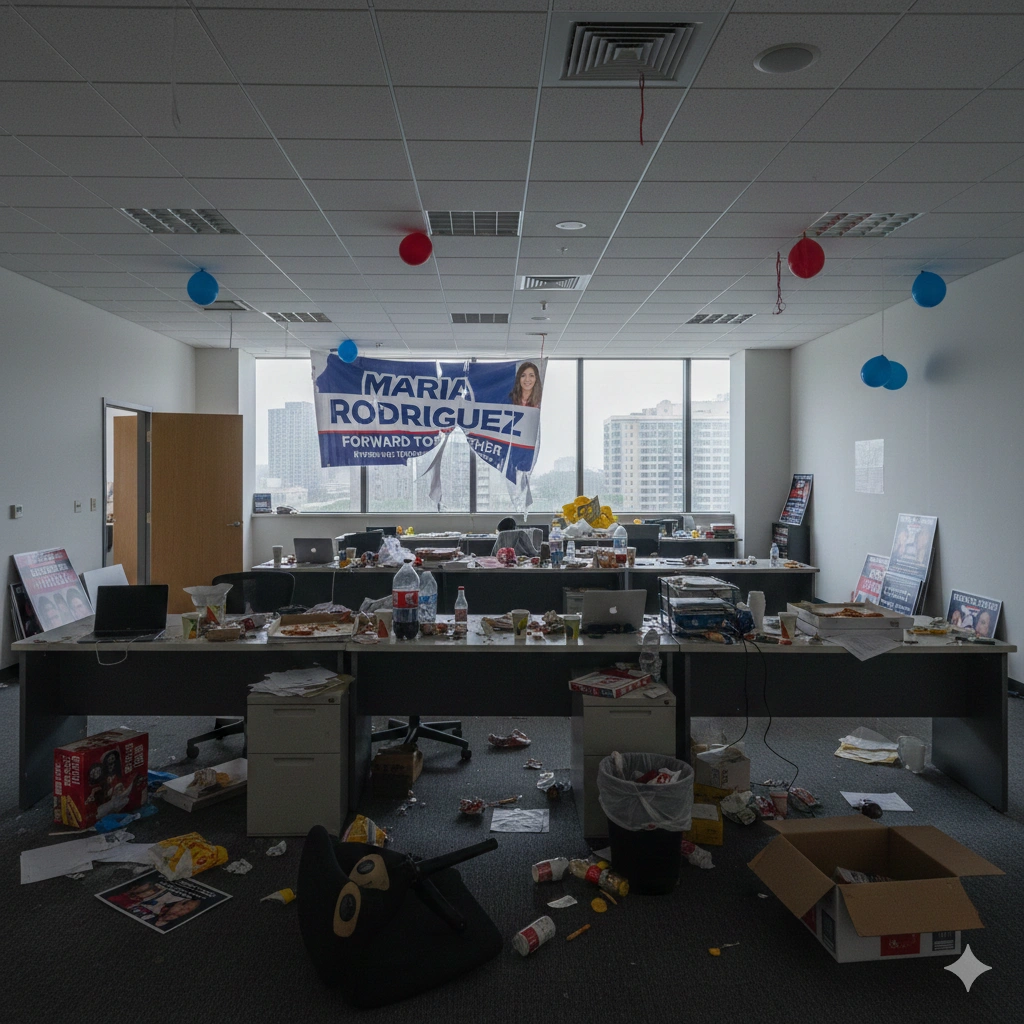
The Reality
Research indicates that campaign staff motivation comes primarily from passion and belief in the cause rather than compensation, with leadership keeping staff motivated by focusing on purpose beyond individual gain.
Research Study
Multiple studies confirm political work’s unique stressors. A 2020 Pew Research study found that 66% of Americans were worn out by political stress, with even those not following news experiencing 73% fatigue rates.
Study context
American Psychological Association’s annual survey on political stress
Mindful Solutions
Financial Mindfulness Practice
- Separate your identity from your campaign success/failure
- Create a “post-layoff identity” plan before the campaign ends
- Practice this daily affirmation: “My worth is not determined by electoral outcomes”
The Campaign Sunset Ritual
Regardless of win or loss, schedule a 30-minute reflection:
- What did I learn?
- What values did I honor?
- What would I do differently?
- Who am I beyond this role?
This practice, adapted from mindful leadership principles, helps maintain perspective during political turbulence.
3. Moral Injury: When Your Values Become Casualties
“I Compromised Once. Then Twice. Now I Don’t Recognize Myself.”
This is the wound that doesn’t heal with rest. Moral injury occurs when you witness, commit, or fail to prevent actions that violate your deeply held beliefs. In politics, this isn’t theoretical—it’s Tuesday.
Moral injury refers to a psychological wound that occurs when an event violates our most deeply held moral values and beliefs. Originally studied in combat veterans, researchers now recognize that political environments create similar conditions. You watch compromises become betrayals. Strategic decisions become ethical violations. The ends-justify-means logic erodes your moral foundation one decision at a time.
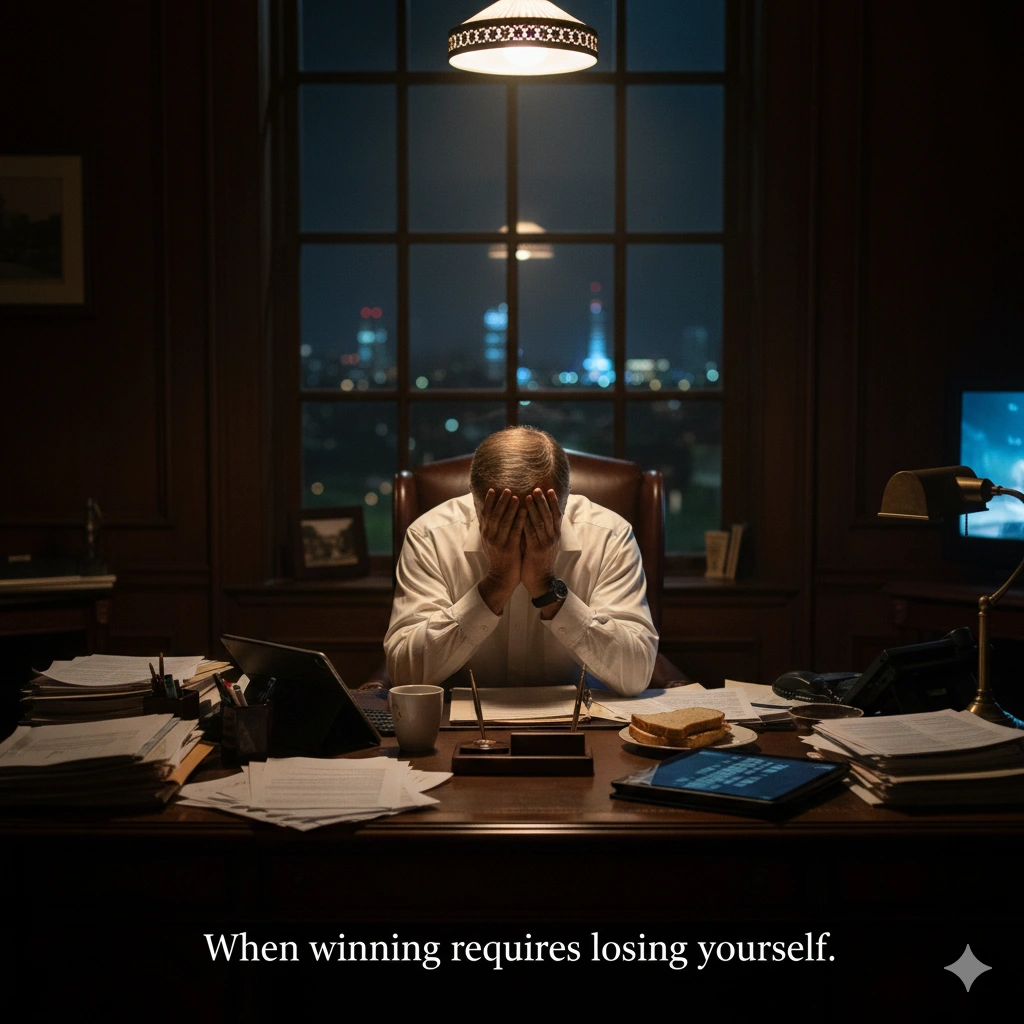
The 2024 political climate has intensified this phenomenon. The election reflects a moral injury for many—a psychological wound caused by betrayal of deeply held values. Campaign staff witness dehumanizing rhetoric, participate in fear-based messaging, or remain silent about unethical practices because speaking up means career suicide.
Research Study
Dr. Jonathan Shay’s groundbreaking work on moral injury defined it as occurring when “there has been a betrayal of ‘what’s right’ by someone in legitimate authority in a high-stakes situation”. This framework applies directly to political environments where authority figures make morally questionable decisions in pursuit of electoral victory.
Reference
International Centre for Moral Injury research on political contexts
Mindful Solutions
The 4-Minute “Voter Metta” Practice When you feel morally compromised:
- Sit quietly for a moment
- Visualize the voters you’re serving (not the donors, not the party—the actual people)
- Silently repeat: “May you be well. May you be safe. May you be free from suffering.”
- Extend this compassion to your opponents: “Despite our differences, may you be well.”
- Finally, to yourself: “May I maintain integrity. May I serve with authenticity.”
This loving-kindness meditation adapted for political contexts helps reconnect you with your original purpose.
The Non-Negotiables List
Before the next campaign cycle, write down 3-5 values you will not compromise. Make these specific:
- “I will not participate in campaigns that dehumanize immigrants”
- “I will not spread information I know to be false”
- “I will not sacrifice my family relationships for political advancement”
Review this list weekly. If you’ve crossed a line, you have permission to reassess and recalibrate.
4. The Public Microscope: Constant Scrutiny Without Privacy
“Your Worst Moment Is Always One Screenshot Away From Going Viral”
Every word, gesture, and expression is captured, analyzed, and potentially weaponized. Half of Americans surveyed indicated that one source of stress is that the news isn’t focused on day-to-day issues most important to them, while 59% said the same about politicians. You’re simultaneously over-exposed and misunderstood.
Social media has transformed political life into a 24/7 performance. A single off-day can become a career-defining scandal. A moment of genuine frustration can be edited into a viral hit piece. Campaign staff and politicians alike report that this constant surveillance creates paralyzing anxiety. You second-guess every casual conversation, every candid photo, every unscripted moment.
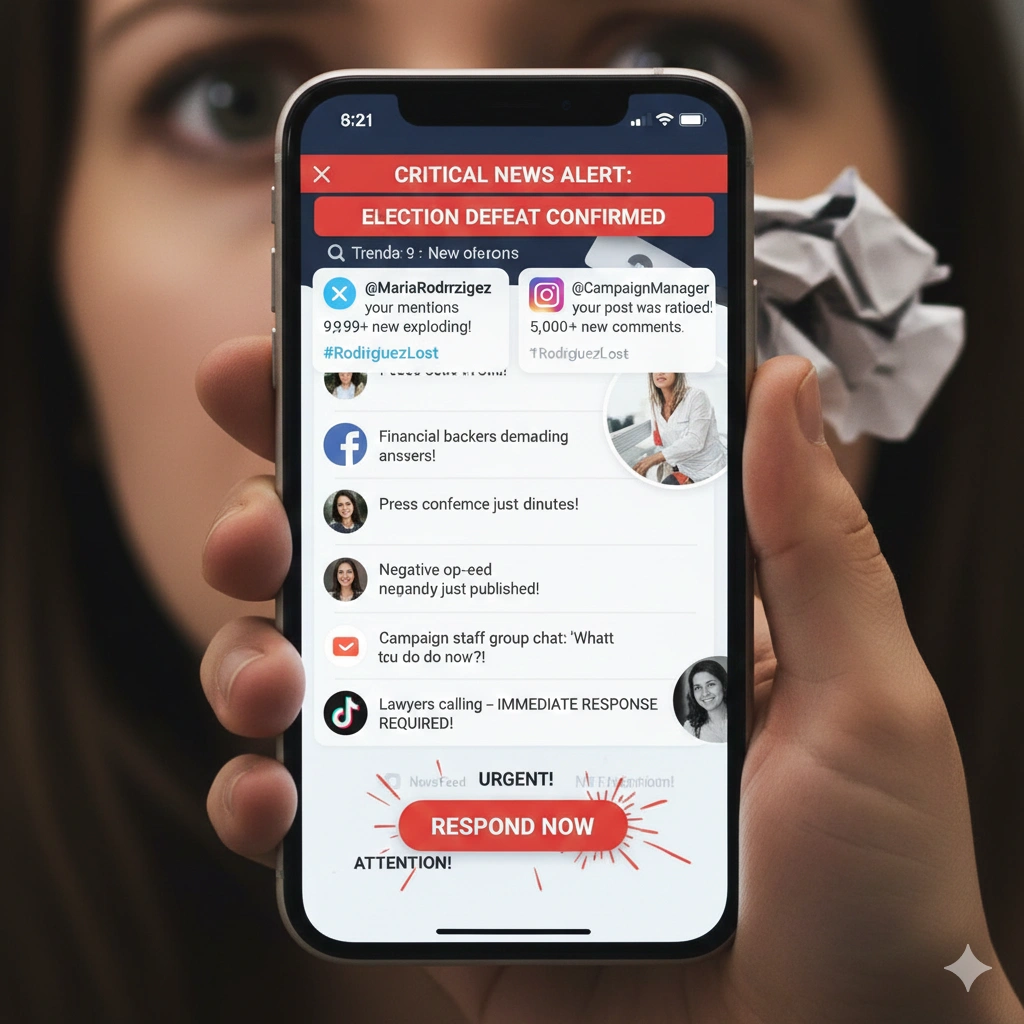
The mental health impact is measurable. A 2023 study tracking participants’ daily emotional responses to political events found that politics triggered negative emotions on 81% of surveyed days, with participants reporting higher fatigue, sickness, and depression.
Research Study
Charlie Health’s 2025 survey found that 75% of clients agreed that the current political climate negatively impacts their mental health. The surveillance aspect compounds this stress exponentially for those working in politics.
Mindful Solutions
The Digital Detox Protocol
- Designate “device-free hours” (start with 7 PM – 9 PM)
- Delete social media apps from your phone on weekends
- Use dopamine detox strategies specifically designed for high-stress professionals
The “Three-Breath Rule” Before Responding
Before replying to any criticism, accusation, or provocation:
- First breath: Acknowledge the emotion you’re feeling
- Second breath: Remember your values
- Third breath: Consider if this response serves your actual goals
This creates a crucial pause that prevents reactive decisions that fuel burnout.
Boundary Statement Script
“I value transparency and accountability. I also value my mental health and family time. I will respond to legitimate concerns during business hours. Everything else can wait.”
Practice saying this until it feels natural. Your mindful leadership depends on protecting your energy.
5. The Sleep-When-You-Win Delusion: Physical Health Collapse
“You Can Sleep After Election Day (If You Survive Until Then)”
The political culture glorifies exhaustion. “You can sleep after election day” is a common mantra in many political campaigns, especially presidential ones. This isn’t dedication—it’s systematic self-destruction.
The health consequences are severe and well-documented. Politicians and campaign staff report chronic sleep deprivation, poor nutrition (endless fast food and coffee), lack of exercise, and substance use as coping mechanisms. The physical health impacts between 2017 and 2020 worsened significantly, with increases in stress, fatigue, and sleep loss being most pronounced.

Your body keeps score. Research from 2017 found that an estimated 94 million Americans felt politics caused significant stress, 44 million lost sleep, 30 million suffered physical health harm, and 11 million had suicidal thoughts—effects comparable to or worse than those associated with alcohol abuse.
Research Study
The American Psychological Association’s “Stress in America 2023” report documented that the pandemic and over a decade of intense political stress have resulted in collective trauma with lasting mental and physical distress effects across all age ranges.
Mindful Solutions
The Non-Negotiable Physical Protocol
Even during peak campaign season, protect these three things:
- 6-hour minimum sleep (not negotiable—science proves you’re less effective with less)
- One real meal per day (not at your desk, not while multitasking)
- 15 minutes of movement (walk, stretch, anything that’s not sitting)
The Campaign Health Pact
Make this agreement with your team: “We will not celebrate working through illness or exhaustion. We will not shame people for taking care of basic human needs. We will win because we’re strategic, not because we’re martyrs.”
Studies show that well-rested teams make better decisions. Burnout prevention isn’t weakness—it’s strategy.
Emergency Reset Practice (30 seconds)
When you’re running on fumes
- Stand up, shake out your hands
- Take three deep breaths
- Say out loud: “I am a human being, not a political machine”
- Drink a full glass of water
- Return to work
This micro-practice, inspired by mindfulness techniques for high-stress professionals, can prevent total system shutdown.
The Path Forward: Sustainable Political Engagement
Political burnout isn’t a personal failing—it’s a systemic crisis. The current political culture treats humans as disposable resources in the machinery of democracy. But it doesn’t have to be this way.
Institutional Changes Needed
- Campaign duration limits (looking at you, two-year presidential campaigns)
- Mental health support as standard infrastructure
- Protection for whistleblowers who report unethical practices
- Training in emotional labor management for all political staff
Personal Commitments You Can Make Today
- Name it to tame it: Acknowledge burnout when you feel it. Tell someone you trust.
- Connect with purpose, not just party: Remember why you entered politics. Was it the party line, or was it genuine desire to serve?
- Build support networks outside politics: Your entire social circle cannot be campaign staff. You need people who knew you before this job and will know you after.
- Practice radical self-compassion: You’re doing hard work in impossible circumstances. The exhaustion you feel isn’t weakness—it’s evidence you’re human.
Conclusion: Democracy Needs You Whole, Not Broken
Here’s the truth nobody wants to say out loud: Democracy doesn’t need more martyrs. It needs more humans who can sustain the work without destroying themselves in the process.
The research is clear—politicians who experience higher levels of emotional labor while maintaining personal efficacy can have job satisfaction and occupational pride, but only when they avoid the false-face acting that leads to burnout.
You entered politics to make a difference. But you can’t pour from an empty cup. You can’t serve others while betraying yourself. You can’t build a better society while participating in your own destruction.
The mindfulness practices outlined here aren’t optional extras—they’re survival tools. The two-minute podium breath, the four-minute voter metta, the authenticity audit, the digital detox protocols—these aren’t distractions from the work. They’re what make the work sustainable.
Your political career will end someday. The question is: will you end it on your terms, with your integrity intact and your health preserved? Or will you wake up one day realizing you sacrificed everything that mattered for a victory you were too burned out to enjoy?
The choice is yours. But make it consciously. Make it soon. Democracy needs warriors, not casualties.
If you’re experiencing political burnout
- Talk to a mental health professional familiar with high-stress occupations
- Connect with the mindful leadership community for ongoing support
- Remember: leaving politics doesn’t make you a quitter. Sometimes the bravest thing you can do is choose yourself.
Research Sources Cited
- James Weinberg (2021) – Emotional labour and occupational wellbeing in political office
- Pew Research Center (2020) – Political exhaustion studies
- American Psychological Association (2023) – Stress in America report
- Charlie Health (2025) – Political climate mental health survey
- Dr. Jonathan Shay – Moral injury research
- HuffPost (2017) – Campaign staff burnout investigation