
When one mistake can cost hundreds of lives
You’re holding thousands of lives in your hands. The radio crackles. Your vision blurs from sleep deprivation. Your last break was six hours ago. Welcome to another Tuesday in aviation.
The stakes couldn’t be higher. Every decision you make—every instruction you give, every altitude adjustment, every landing clearance—carries the weight of hundreds of human lives. And yet, the very systems designed to keep passengers safe are quietly breaking the people who operate them.
Recent data reveals a sobering reality: nearly 20% of air traffic controllers in the US show moderate to severe anxiety levels, while over 10% display signs of depression. For pilots, the picture is equally concerning, with fatigue, stress, complacency, workload, and communication issues significantly impacting performance.
According to ICAO’s comprehensive research on aviation human factors, pilot error accounts for approximately 53% of aircraft accidents, with mechanical failure at 21% and weather conditions at 11%. But here’s what those statistics don’t tell you: behind every “human error” is a human being pushed beyond their cognitive and emotional limits.
The Five Daily Battles You Face (And Nobody Talks About)
1. “Just One More Flight”—The Fatigue That Never Ends
When your body runs on fumes and autopilot becomes your co-pilot
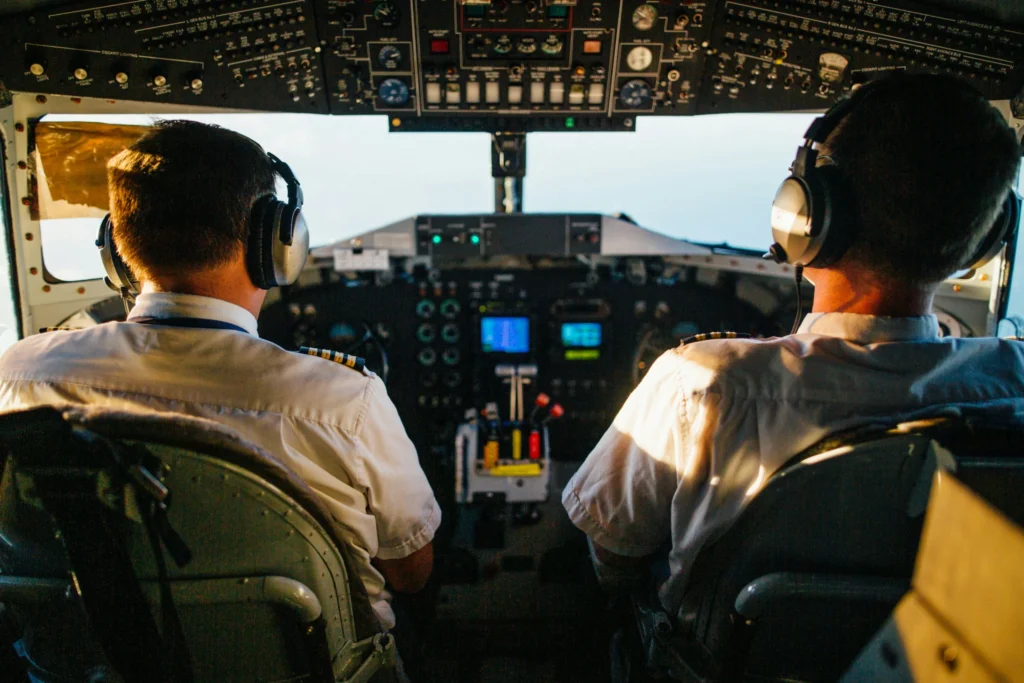
You’ve been awake for 16 hours. Your biological clock is screaming for sleep, but the schedule demands otherwise. Your eyes burn. Your reaction time has slowed to dangerous levels. But admitting fatigue? That’s career suicide.
Research shows stress, mental workload, fatigue, distraction, and situational unawareness produce scenarios ranging from small inefficiencies to catastrophic disasters. The long-term effects are even more insidious: post-traumatic stress disorder, anxiety disorder, depression, chronic back pain, and neck pain.
For air traffic controllers, the reality is brutal. Controllers describe working six-day work weeks for consecutive years, with fatigue setting in without individuals even recognizing it. One controller anonymously reported: “Six-day work weeks for consecutive years take their toll on the human body, and fatigue can set in without the individuals even recognizing it.”
Mindful Solutions
- Body scan awareness: Before each shift, spend 90 seconds scanning your body from head to toe. Notice tension, fatigue, or discomfort without judgment. This simple practice increases awareness of your physical state, helping you recognize fatigue before it becomes dangerous.
- Strategic micro-rests: Between tasks, practice 30 seconds of conscious breathing. Four counts in, hold for four, exhale for six. This activates your parasympathetic nervous system, providing a brief mental reset.
- Sleep hygiene boundaries: Create non-negotiable sleep rituals. Your room should be cool, dark, and quiet. Power down screens 60 minutes before bed. Your brain’s recovery depends on quality sleep, not just quantity.
Research Reference
A comprehensive study on stress and workload in aviation found that chronic stress exposure leads to significant health deterioration and impaired decision-making in high-stakes aviation environments.
2. “Everything’s Fine”—The Silence That Kills
When asking for help means losing your wings

You’re struggling with anxiety. Perhaps depression. Maybe panic attacks before each shift. But admitting it? That means losing your medical clearance. Your career. Your identity.
Controllers who fear losing medical clearances can be conditioned to answer questions so they seem okay. Even with special FAA waivers for psychological evaluation, you won’t have your job during that time—or you’ll be relegated to an administrative position at a drastically lower salary.
The culture of silence is pervasive. Some ATCOs who may be struggling with their mental health avoid asking for help, creating a feedback loop that worsens staffing gaps and increases burnout rates.
Mindful Solutions
- Anonymous journaling: Create a private space to express your real feelings. No judgment, no censorship. Writing activates different neural pathways, helping process emotions that verbal expression can’t reach.
- Peer support circles: Find trusted colleagues who understand the unique pressures. Shared experience reduces isolation and normalizes struggles that feel unspeakable.
- Professional boundary setting: Learn to separate your professional identity from your inherent worth. You are not your job title. Your value exists independent of your clearance status.
- Mindful check-ins: Practice the guided self-reflection technique weekly to identify patterns before they escalate into crises.
Research Reference: Southern Illinois University research emphasizes that mental health issues are prevalent in aviation but rarely discussed, with professionals conditioned to hide struggles to protect their careers.
3. “One Second, 300 Lives”—The Weight of Split-Second Decisions
When hesitation isn’t an option and mistakes aren’t either
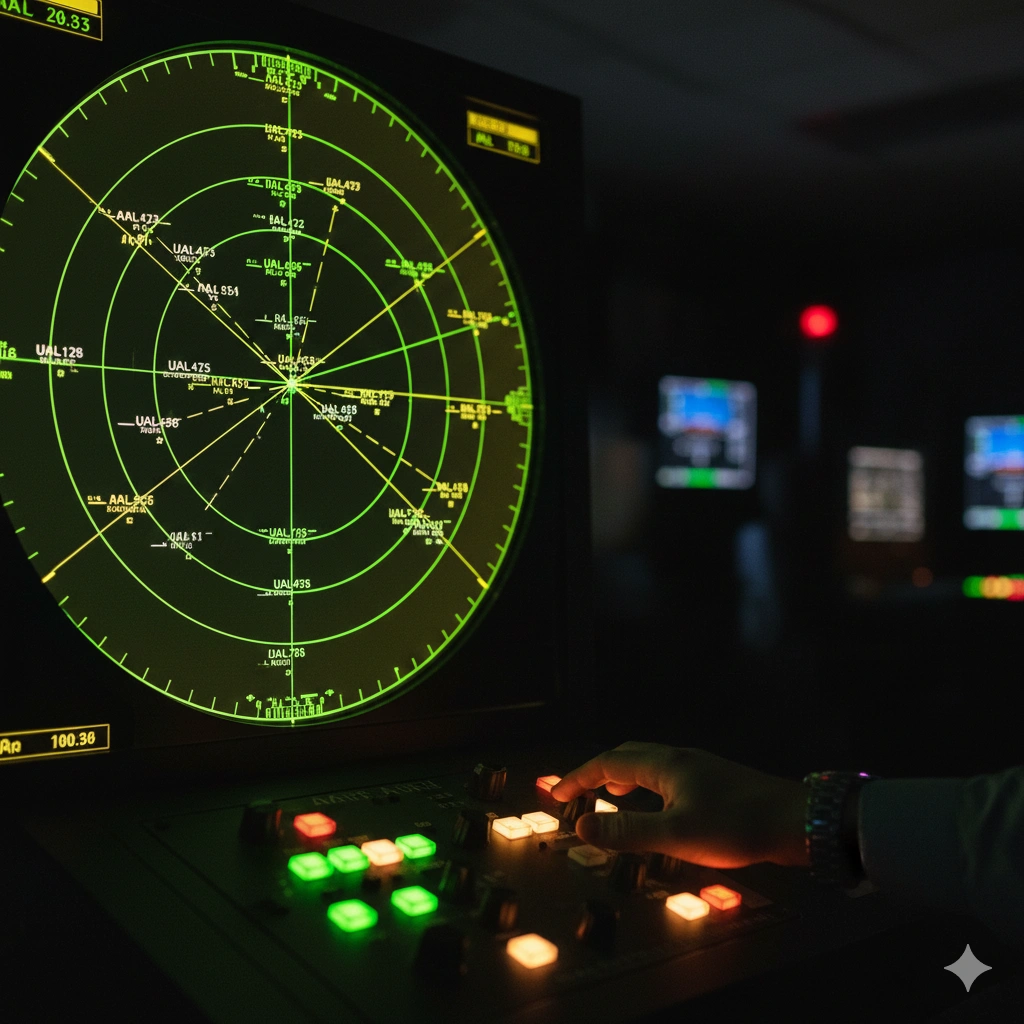
The radio erupts with emergency chatter. Two aircraft on potential collision course. Weather deteriorating rapidly. You have three seconds to decide. Your heart races. Your palms sweat. One wrong instruction, and hundreds die.
Pilots under stress may experience tunnel vision, focusing on a limited set of cues while ignoring other critical information. This cognitive narrowing leads to poor judgment, especially when dealing with multiple simultaneous issues.
Research indicates that stress reduces concentration, impairs judgment, and leads to memory lapses, increasing error rates. A pilot under stress from personal issues might misinterpret instrument readings, leading to navigational errors.
For controllers, the decision-making process of those chronically overloaded by workplace demands which exceed their resources leads to negative consequences including health deterioration, occupational burnout syndrome, and risky situations at work.
Mindful Solutions
- Pressure training meditation: Practice visualization during low-stress moments. Mentally rehearse high-pressure scenarios while maintaining calm breathing. This builds neural pathways for composed decision-making under duress.
- The 4-7-8 technique: When overwhelmed, breathe in for 4 counts, hold for 7, exhale for 8. This physiologically impossible pattern forces your mind to focus on breath rather than panic.
- Post-shift processing: After intense shifts, spend 10 minutes writing or recording your experience. This helps your brain process traumatic moments instead of storing them as unresolved stress.
- Develop a “reset ritual”: Create a simple physical gesture (like pressing thumb and middle finger together) paired with a calming breath that you practice during calm moments. This becomes an anchor during chaos.
Research Reference
The ICAO human factors research demonstrates how experience levels affect stress management, with less experienced professionals showing higher vulnerability to stress-induced errors.
4. “Everything’s an Emergency”—The Burnout You Can’t Escape
When your nervous system stays in crisis mode 24/7

Your shift ended three hours ago. You’re home, supposedly relaxing. But your heart rate is still elevated. Your jaw is clenched. Every unexpected sound triggers a startle response. Your nervous system hasn’t received the memo that you’re off duty.
Burnout is a long-term response to chronic emotional and interpersonal stress at work, common among aviation employees. The research reveals that burnout partially mediates the relationship between job satisfaction and safety behavior, accounting for 40% of the total effect.
Controllers describe this as “airmiss complex”—a constant tension that builds up and goes down, leaving professionals in a perpetual state of heightened alert.
The physical toll is devastating: symptoms include headaches, fatigue, difficulty concentrating, irritability, and sleep disturbances, with long-term effects leading to hypertension, diabetes, and mental health disorders.
Mindful Solutions
- Vagus nerve activation: Practice humming, gargling, or cold water face splashes to activate your vagus nerve, which signals your body to shift from fight-or-flight to rest-and-digest mode.
- Boundary rituals: Create a physical or mental transition between work and home. Change clothes, take a specific route, or perform a brief meditation. Signal to your nervous system that you’re entering a different space.
- Progressive muscle relaxation: Systematically tense and release muscle groups, starting from your toes and moving upward. This releases physical tension that accumulates during high-stress work.
- Explore mirror work affirmations to rebuild positive self-perception and counter the negative self-talk that burnout creates.
Research Reference
Research on air traffic controller burnout identifies burnout as the primary predictor of safety behavior, demonstrating the critical connection between mental health and operational safety.
5. “The System’s Broken”—The Staffing Crisis Nobody Fixes
When you’re one person doing three people’s jobs

The airport’s busier than ever. But your team is at its lowest staffing level in history. You’re covering multiple positions, working mandatory overtime, and watching colleagues drop out from exhaustion or mental health crises.
Nashville air traffic controllers report conditions nearing “a breaking point,” with the airport busier than ever but controller numbers as low as they’ve ever been. Controllers describe working six-day weeks, sometimes eight to 10 hours daily, in an incredibly stressful environment.
The consequences are predictable: an anonymous safety report cited controller fatigue and excessive workload as factors in potentially putting two passenger jets on course for a midair collision.
And it’s not just one location. There are new legislative and institutional efforts to bridge the gap between mental health professionals and aviation needs, including the US Air Traffic Control Workforce Development Act.
Mindful Solutions
- Advocacy as self-care: Document workload issues systematically. Report fatigue honestly. Your advocacy protects not just you, but future professionals and passengers. Use official safety reporting channels without fear.
- Collective support networks: Organize informal support groups with colleagues. Shared struggle reduces isolation and creates space for honest conversation about systemic problems.
- Strategic energy management: When working extended shifts, prioritize tasks ruthlessly. Not everything is equally critical. Identify what truly requires your peak performance versus what can be handled with maintenance-level attention.
- Organizational mindfulness: Encourage management to implement mindful leadership practices that prioritize human sustainability over short-term operational gains.
Research Reference: FAA data and recent investigative reporting reveal a nationwide crisis in air traffic control staffing, with controllers working unsustainable schedules that compromise both their wellbeing and aviation safety.
Quick Mindfulness Practices: Your Emergency Toolkit
90-Second “Cockpit Calm”
For pilots: Use during flight preparation or straight-and-level cruise
- Ground (20 seconds): Feel your seat beneath you, your hands on controls, feet on pedals
- Breathe (40 seconds): Four counts in through nose, six counts out through mouth, repeat twice
- Scan (20 seconds): Notice five things you can see, without judgment or analysis
- Reset (10 seconds): Set an intention—”I am present, I am capable, I am safe right now”
This micro-practice interrupts stress cascades before they compromise performance. The key is consistency—practice during calm moments so it’s available during chaos.
3-Minute “Clearance Compassion”
For air traffic controllers: Use during position rotations or breaks
- Body awareness (60 seconds): Close eyes if possible. Notice where you’re holding tension—jaw, shoulders, hands. Breathe into those areas.
- Mental acknowledgment (90 seconds): Silently acknowledge, “This job is difficult. I’m doing my best. Struggling is not failing.” Let one breath carry each thought.
- Compassionate action (30 seconds): Choose one small kind act for yourself—stretch your neck, drink water, or simply allow yourself to rest your eyes.
Self-compassion isn’t self-indulgence—it’s operational necessity. Research shows self-compassion reduces cortisol levels and improves stress recovery.
The Way Forward: From Breaking Point to Breaking Through
The aviation industry stands at a crossroads. The current model—pushing human beings beyond sustainable limits while expecting perfect performance—is fundamentally broken.
- Technology alone cannot compensate for a fatigued, understaffed, or unsupported human workforce. True safety requires accelerating recruitment and training pipelines, implementing sustainable staffing models, normalizing trauma leave and psychological support, and integrating mental wellness into routine safety culture.
- Organizations like NAV CANADA have won awards for fatigue risk management systems that govern controller shift scheduling and ensure limits for shift lengths and mandatory rest periods.
- But systemic change starts with individual awareness. You cannot pour from an empty cup. Your wellbeing isn’t separate from safety—it is safety.
Your Next Step
If you recognized yourself in these struggles, know this: you’re not alone, and you’re not broken. The system is broken. Your response is normal.
Start small:
- Practice the 90-second Cockpit Calm technique once tomorrow
- Journal honestly about your stress levels for one week
- Reach out to one trusted colleague to share your experience
- Explore additional mindfulness resources designed specifically for high-stress professions
- Learn about gratitude loops that can rewire stress responses
Your safety matters. Their safety matters. But first, you must be whole.
The sky needs you—healthy, present, and sustainable. Not burning out at 35,000 feet.
References
- Frontiers in Public Health – Development of effective human factors interventions for aviation safety management
- International Journal of Research – The Effect Of Human Factors In Aviation Accidents
- Aviation Safety Blog – The Dirty Dozen Human Factors in Aviation Safety
- FAA Human Factors Guide – Human Factors Chapter 14
- Pilot Pulse 360 – Human Factors in Aviation: The Human Side of Flight Safety
- MDPI Sensors – Stress and Workload Assessment in Aviation—A Narrative Review
- SKYbrary Aviation Safety – The Human Factors “Dirty Dozen”
- IJRASET – Human Factor and Pilot Performance: A Case Study
- Wikipedia – Stress in the Aviation Industry
- NEXTOR – Human Factors in Aviation Safety
- PMC – An Exploration of Perceived Stress, Burnout Syndrome, and Self-Efficacy in Polish Air Traffic Controllers
- Southern Illinois University – Research focuses on air traffic controllers’ mental health