Artificial Intelligence (AI) and automation have long ceased to be the stuff of futuristic novels and sci-fi movies. They’re here, right now, making our lives easier, more productive, and, dare I say, lazier (in the best possible way!). From personal assistants like Siri and Alexa to complex manufacturing robots and smart algorithms that predict your next Netflix binge, AI is everywhere. But what exactly are AI and automation doing to enhance our lives? And more importantly, are there any potential downsides we should be wary of?
Remember when “automation” meant setting your coffee maker to brew at 7 AM? Those were simpler times. Now, we’re living in an era where AI and automation are transforming everything from how we work to how we play. It’s like we’ve all suddenly become Tony Stark, minus the cool suit (but hey, give Boston Dynamics a few more years).
In this blog, we will dive into how AI and automation are transforming our day-to-day lives, examine both the pros and cons of these technologies and explore what the future might look like in an increasingly automated world.
AI and Automation: A Quick Rundown
Before we get into the juicy details, let’s first clarify what we mean by AI and automation.
Artificial Intelligence (AI) is a branch of computer science that aims to create machines capable of intelligent behaviour. These are systems that can mimic human intelligence—learning, reasoning, and self-correcting. AI can range from narrow AI, designed to perform specific tasks (like recognizing images or recommending movies), to general AI, which, in theory, could handle a range of tasks like a human.
Automation, on the other hand, involves the use of machines, software, or other technologies to carry out repetitive tasks without human intervention. This doesn’t necessarily require intelligence but often overlaps with AI in areas like robotics and data processing.
Now that we’re clear on definitions, let’s explore how AI and automation are affecting our lives.
Making Our Lives Easier: How AI and Automation Help
Imagine this: It’s Monday morning. Your alarm wakes you up, set perfectly in sync with your sleep pattern, thanks to an AI-driven sleep app. You walk into the kitchen, and your smart coffee maker has already brewed your favourite blend. On the way to work, you relax in the backseat of your car because it’s a self-driving Tesla that knows the exact route and traffic conditions. You smile. It’s not even 9 a.m., and AI has already done more work than you will in the next hour!
Sounds like the life, right?
Well, AI and automation are indeed making everyday tasks more convenient, and here’s how:
1. AI in Healthcare: Saving Lives and Diagnosing Faster
AI has significantly impacted healthcare by aiding doctors in early and accurate disease diagnosis. IBM’s Watson Health, for instance, can analyse extensive medical literature, patient records, and genetic data to recommend personalised treatment plans for cancer patients. This early detection of diseases, such as cancer, can be crucial in saving lives, and AI tools are playing an increasingly important role in this area. What’s more, AI can process millions of data points far quicker than any human doctor could. Think of AI as the superhero doctor you never knew you needed—without the white coat.
Pro Tip: AI may even help you avoid spending hours in a waiting room. Thanks to AI chatbots like Babylon Health, you can get instant medical advice at the click of a button. Next time you have a mysterious rash, no need to worry—AI’s got your back!
2. Automation in Business: Boosting Productivity
Businesses, too, are reaping the benefits of AI and automation. From automating simple tasks like responding to emails and managing schedules to using AI-driven analytics tools that predict customer trends, automation is making companies more efficient and employees more productive.
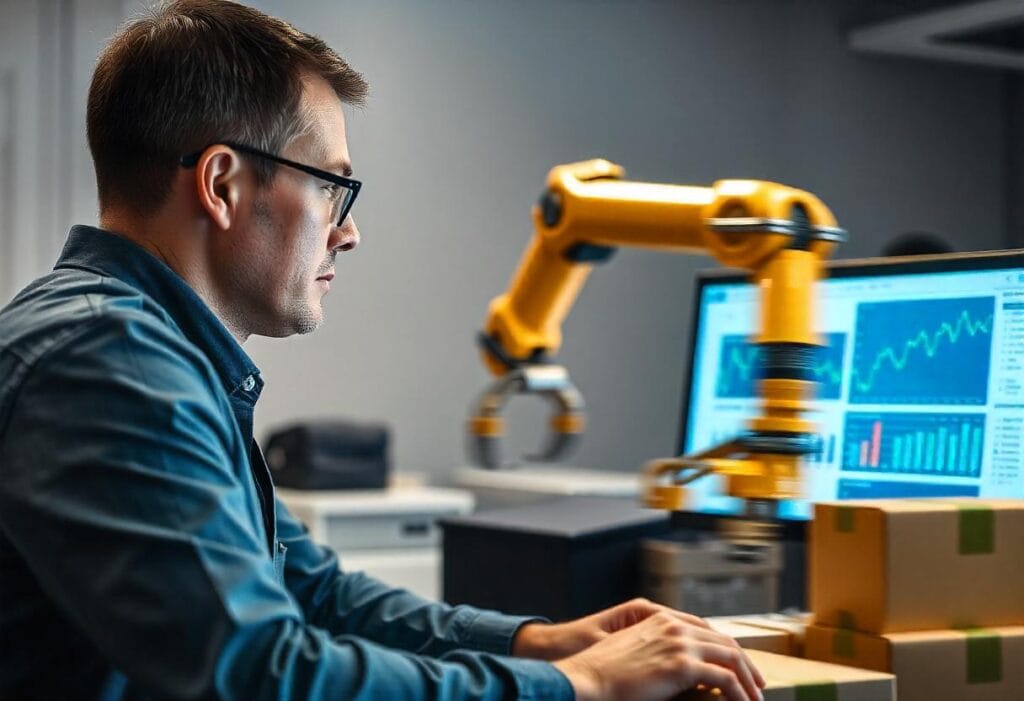
For instance, Amazon’s warehouses use robotics for sorting and packing, cutting down human labour and reducing errors. Meanwhile, AI-driven customer service chatbots help answer queries 24/7, making sure you never have to shout “representative!” into the phone ever again.
Automating repetitive tasks allows employees to focus on more creative and strategic work, which is a win-win for both productivity and job satisfaction. Except, of course, for the robots—you won’t find them complaining.
3. Smart Homes: From Cool to Convenient
Ah, the joys of coming home and finding that the lights have already been turned on, the thermostat has adjusted to your preferred temperature, and dinner is already on its way to perfection in your smart oven. Smart homes powered by AI are making our lives more comfortable.
Voice assistants like Google Home and Amazon Echo can turn on your appliances, play your favourite music, and even order groceries for you. It’s as if your house suddenly acquired a butler, minus the need for a salary!
A Fun Example: My friend once asked Alexa to set a reminder to “buy wine tomorrow,” only to have Alexa suggest wine options from her Amazon account right away! Talk about proactive!
4. Keeping Our Inboxes Sane:
Email filters and spam detection have come a long way. Now, AI algorithms prioritize your emails, suggest quick replies, and even complete your sentences. It’s like having a personal secretary who never asks for a raise.
5. Protecting Our Financial Well-being:
Banks and credit card companies use AI to detect fraudulent activities. These systems use machine learning algorithms to analyze patterns in your spending habits. They create a profile of your typical behaviour based on factors such as:
- Types of purchases you usually make
- Locations where you typically shop
- Average transaction amounts
- Frequency of transactions
What the AI looks for: The system flags activities that deviate significantly from your normal patterns. Two examples are provided:
- Sudden large purchases: If you usually spend small amounts and suddenly there’s a very large transaction, it might be flagged.
- Transactions in unfamiliar locations: If you’ve never made a purchase in a particular country before and suddenly there’s activity there, it could be suspicious.
Benefits to the customer: By quickly identifying potential fraud, these systems can save customers from “financial headaches.”

The Flip Side: The Cons of AI and Automation
Of course, as with any technology, AI and automation come with their own set of challenges. It’s not all sunshine, rainbows, and robots folding your laundry (though wouldn’t that be nice?).
1. Job Displacement: Robots Coming for Your Job?
One of the biggest concerns about AI and automation is the potential for job loss. Automation can indeed replace repetitive tasks, and industries like manufacturing, customer service, and even retail are seeing the effects. Self-checkout machines, AI-powered customer service bots, and autonomous cars are just the beginning.
But wait! Before you panic, remember that while automation may replace certain jobs, it also creates new opportunities in fields like AI development, data science, and machine learning. In fact, many experts believe that AI will transform jobs rather than eliminate them entirely.
2. Ethical Concerns: Who’s Really in Control?
AI systems make decisions based on the data they’re fed, but what happens if that data is biased or incomplete? Ethical concerns around AI are on the rise, particularly when it comes to privacy and decision-making. For example, facial recognition software has been shown to misidentify people of colour at higher rates than white individuals, raising concerns about fairness and justice.
Then there’s the question of accountability. If an AI-driven car crashes, who’s to blame? The human who programmed it? The company that manufactured it? Or the AI itself? These are tricky issues that don’t have easy answers.
3. Privacy Concerns: Big Brother Is Watching
Privacy concerns are also growing as AI becomes more integrated into our lives. Smart home devices, while convenient, are always listening. Facebook’s AI algorithms analyse your browsing history to serve you eerily accurate ads (like when you just talked about needing a new blender, and suddenly all you see are blender ads!).
While companies assure us that our data is being used responsibly, the idea that machines constantly collect and analyse our personal information is enough to make anyone a little paranoid.
What Does the Future Hold?
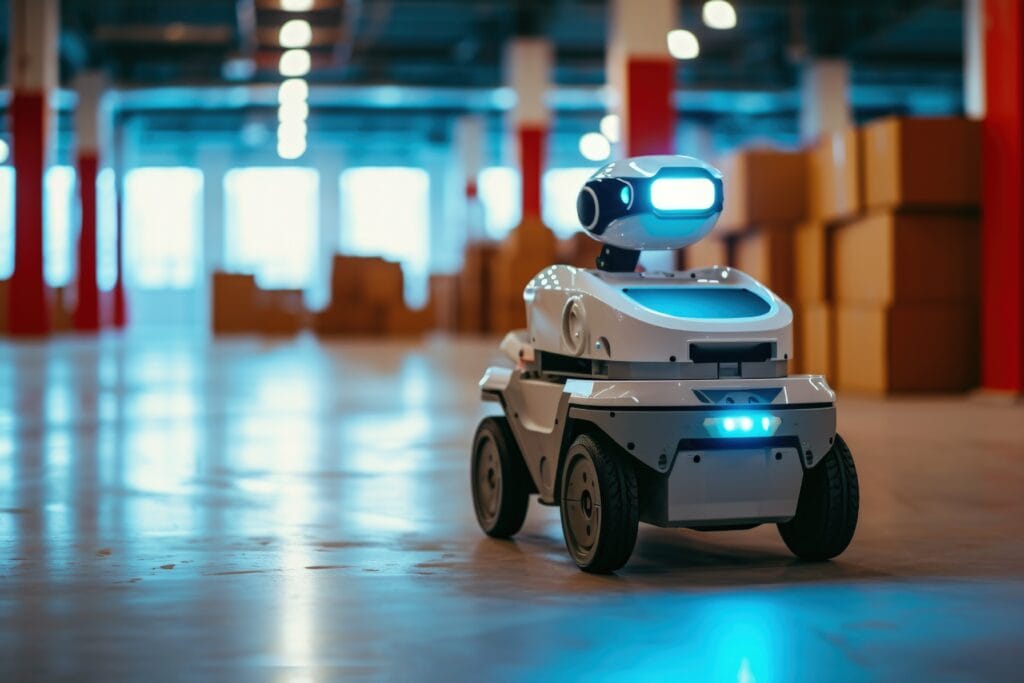
So, what can we expect from AI and automation in the future? Are we heading toward a world of flying cars and robot maids, or should we be bracing for Skynet to take over?
1. AI and Human Collaboration: Best of Both Worlds
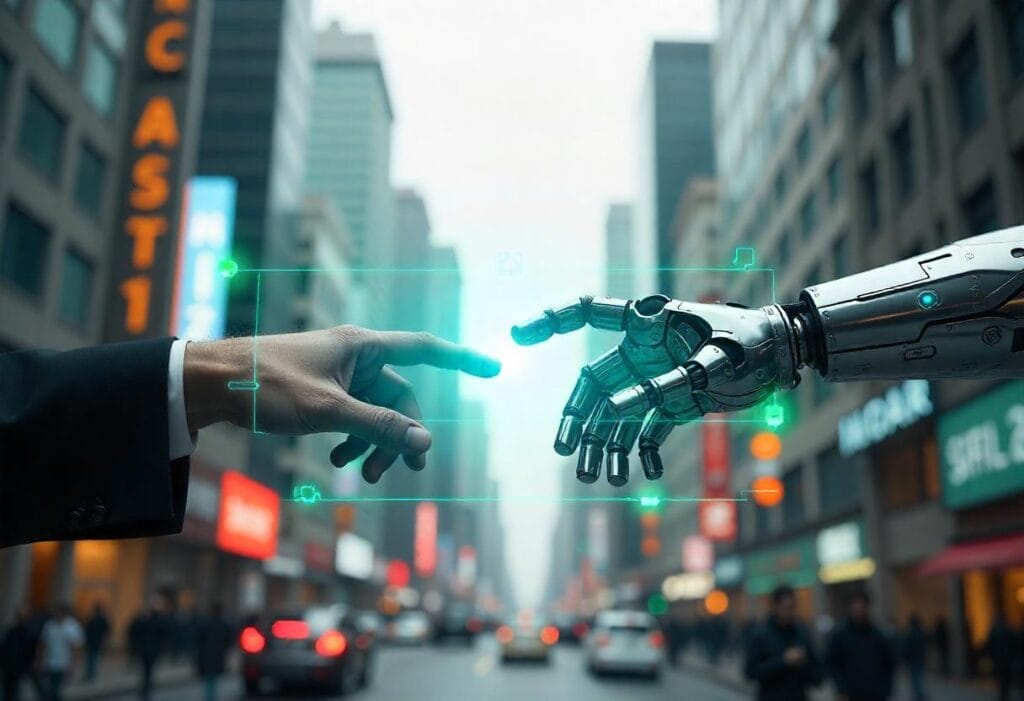
Rather than replace humans, the future of AI seems to be more focused on collaboration. Think of AI as your trusty sidekick rather than a rival. We’ll likely see more tools designed to assist and enhance human work rather than replace it.
Imagine a future where AI supports doctors with instant diagnostic assistance, helps teachers create personalized learning experiences for students, and even collaborates with architects, engineers, and artists as creative partners, suggesting ideas and refining concepts based on data analysis.
2. Autonomous Everything: From Cars to Drones
Autonomous vehicles are already here, but the future will likely see self-driving cars and delivery drones become a normal part of life. Companies like Tesla, Google, and Uber are investing heavily in autonomous tech, and it’s not hard to imagine a future where we no longer need to drive, thanks to AI.
Think of the possibilities: You could finish your morning emails, binge-watch your favourite shows, or even catch a quick nap while your AI-powered car drives you to work. And with drone delivery becoming more advanced, we may no longer need to leave the house to get groceries.
3. AI in Daily Life: Pervasive and Invisible
As AI evolves, it will become more integrated into the fabric of our everyday lives—so much so that we may not even notice it. From smart cities that adjust traffic flow based on real-time data to AI-powered medical devices that monitor your health 24/7, AI will quietly work in the background, making everything run more smoothly.
Of course, we’ll still have to deal with some of the same ethical and privacy issues we face today, but with more awareness and regulation, we can strike a balance between the benefits of AI and the potential risks.
Wrapping Up: The AI and Automation Balancing Act
So, is AI making our lives easier and more effective? Absolutely! But like any powerful tool, it comes with its own set of pros and cons. While AI and automation are revolutionising healthcare, businesses, and our personal lives, they also raise questions about job displacement, ethics, and privacy.
The key is to approach AI and automation with both enthusiasm and caution. By embracing the benefits while addressing the challenges, we can create a future where AI truly enhances our lives—and maybe even folds our laundry!
And hey, if we’re lucky, we’ll still get that flying car. Fingers crossed!
QUIZ:
What is one of the key benefits of AI in healthcare?
- AI helps doctors diagnose diseases faster and more accurately.
- AI provides free pizza delivery to hospitals.
- AI creates personalized playlists to cheer up patients during surgeries.
- AI teaches robots how to dance during surgery to keep things fun.
What is one of the potential downsides of automation in the workplace?
- Robots might take over repetitive tasks, displacing some jobs.
- Robots might unionize and demand paid vacations.
- AI could start demanding coffee breaks to stay operational.
- Robots might challenge humans to a dance-off for the “Employee of the Month” title.
Thank you for reading! Please drop your answers in the comments. For more articles like this, visit our website.
Also, follow us on LinkedIn for AI insights with a Mindful Twist.