The medical and healthcare sectors are rapidly evolving with the integration of Artificial Intelligence (AI) and Large Language Models (LLMs). These advanced technologies are streamlining operations and enhancing diagnostic accuracy, enabling early disease detection, and transforming the way doctors and patients interact with healthcare data. AI and LLMs are revolutionizing modern medicine in ways we could only dream of a decade ago, from identifying subtle symptoms in their early stages to predicting disease outbreaks.
In this blog, we will explore how AI and LLMs are proving to be game-changers in healthcare, especially in the early detection of diseases and symptom identification, and how they contribute to some of the latest tech discoveries.

1. AI and Early Disease Detection: The Power of Prediction
One of the most exciting applications of AI in healthcare is its ability to detect diseases early—often before symptoms even appear.
AI in Medical Imaging
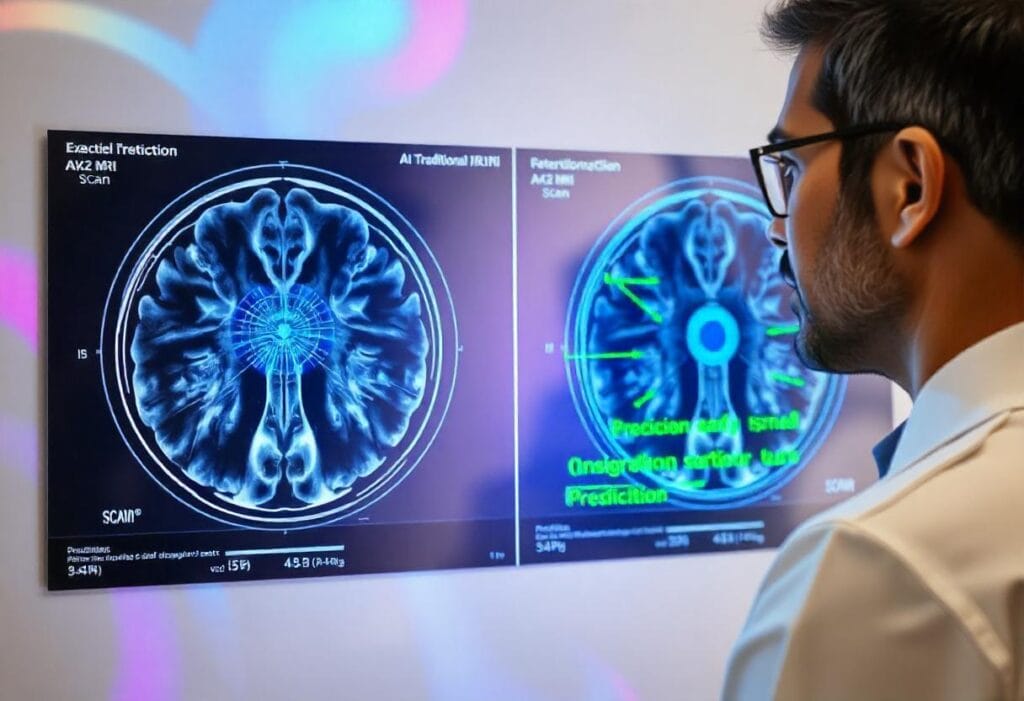
Medical imaging technologies like X-rays, CT scans, and MRIs produce massive volumes of data, which can sometimes be overwhelming for human interpretation. AI algorithms, especially deep learning models, have been trained to analyse these images with unparalleled precision.
For example, Google’s DeepMind AI has demonstrated its ability to detect breast cancer at an earlier stage than human radiologists. The AI model was able to identify cancerous tumours in mammograms with fewer false positives and negatives, greatly reducing the need for follow-up biopsies and procedures. By detecting early signs that might be missed by the naked eye, AI is empowering doctors to start treatments sooner, leading to better patient outcomes.
Example:
Imagine a patient with no visible symptoms who undergoes a routine mammogram. AI algorithms, trained on millions of mammograms, might detect an abnormal growth pattern that is invisible to the human eye, allowing for early intervention and treatment that could potentially save the patient’s life.
AI and Genetic Testing for Disease Prediction
AI is also being used in conjunction with genetic testing to predict an individual’s susceptibility to certain diseases. Machine learning models can analyse a person’s genetic code and compare it with millions of other data points to determine whether they’re at risk for conditions like Alzheimer’s, Parkinson’s, or certain types of cancers.
Take the company Helix, which uses AI-driven genetic insights to predict the likelihood of patients developing diseases such as type 2 diabetes or cardiovascular conditions. By analyzing the patient’s genetic data, lifestyle habits, and environmental factors, AI tools can offer precise, personalized recommendations for early interventions.
Latest Tech Discovery: AI in Detecting Heart Disease
In 2024, researchers at Stanford University made headlines with an AI algorithm capable of detecting coronary artery disease (CAD) by analysing a patient’s speech. The AI can identify subtle changes in voice patterns, which are often associated with cardiovascular issues, providing a non-invasive, affordable tool for early diagnosis. This revolutionary technology is still in development but shows tremendous promise in identifying heart disease in its nascent stages.
2. LLMs in Symptom Identification: Smarter, Faster, and More Accurate
Large Language Models (LLMs) like GPT-4 are incredibly useful in the healthcare sector, particularly for symptom identification and providing information to both patients and medical professionals.
Chatbots and Virtual Health Assistants
Imagine being able to describe your symptoms to an AI chatbot and receiving instant, evidence-based guidance. LLM-powered chatbots are trained on massive datasets, including medical journals, patient histories, and clinical trials. These bots can interpret the user’s inputs (symptoms) and provide preliminary assessments or suggest next steps, like visiting a doctor or undergoing specific tests.
Example:
Consider a patient who has been experiencing a persistent cough but is unsure whether it is serious. A chatbot powered by GPT-4 or another LLM can ask targeted questions—duration of the cough, associated symptoms, medical history—and provide an initial diagnosis or guidance on what to do next.
Several companies are already using LLM-powered virtual assistants. For example, Babylon Health, a UK-based company, has developed an AI chatbot that helps users identify symptoms and provides personalized health information.

LLMs in Assisting Doctors with Complex Diagnoses
LLMs can also be integrated into clinical decision-making platforms, assisting doctors in making complex diagnoses. By processing huge volumes of patient records, lab results, and medical literature, these models can help doctors narrow down the list of potential conditions based on symptoms and recommend appropriate diagnostic tests or treatments.
An LLM might, for instance, analyse the symptoms of a patient presenting with fatigue, dizziness, and weight loss and suggest that the patient be tested for anaemia, thyroid issues, or diabetes, based on existing data patterns from similar cases.
3. The Role of AI in Chronic Disease Management
Managing chronic diseases like diabetes, heart disease, or asthma requires ongoing monitoring, early identification of complications, and personalized treatment. AI’s ability to analyze real-time health data is making chronic disease management much more effective.
AI-Powered Wearables
Wearable devices like smartwatches and fitness trackers are becoming ubiquitous. These devices track key health metrics such as heart rate, oxygen levels, and physical activity. With AI, the data collected can be analyzed to detect abnormalities or trends that may indicate the onset of a health issue.
Example:
The Apple Watch, for instance, has a built-in ECG feature, powered by AI algorithms, which can detect signs of atrial fibrillation (AFib), a condition that may lead to strokes if left untreated. This type of early detection can prompt users to visit their doctors, potentially preventing serious complications down the line.
AI in Diabetes Management
For diabetes patients, maintaining consistent blood glucose levels is critical. AI is now making it possible to continuously monitor blood sugar levels through devices like Dexcom’s continuous glucose monitors. These devices are equipped with AI-powered alerts that notify patients if their blood sugar levels are too high or too low, providing recommendations on food intake, exercise, or insulin adjustments.
4. AI in Rare Disease Identification: Shedding Light on the Unseen
One of the most challenging areas in healthcare is the identification and treatment of rare diseases. These conditions often go undiagnosed for years, simply because doctors may not have enough data or experience with them.
AI in Accelerating Diagnosis of Rare Diseases
AI tools are now helping clinicians diagnose rare diseases much more quickly and accurately. Take Face2Gene, a technology that uses AI to analyze facial features and detect signs of rare genetic disorders. By comparing a patient’s facial structure to a database of known conditions, the AI can suggest possible diagnoses, helping doctors zero in on the correct treatment faster.
In one case, a patient suffering from Ehlers-Danlos Syndrome (EDS), a rare connective tissue disorder, was diagnosed in just a few weeks using AI, whereas it might have taken years without this technology.
LLMs in Mining Medical Research
LLMs are also invaluable when it comes to combing through the vast sea of medical research to find connections that can help diagnose rare diseases. They can analyse research papers, clinical trial results, and patient data to identify patterns or symptoms that correlate with less common diseases.
Example:
A doctor might input a patient’s symptoms into an LLM platform. The model, having been trained on countless rare disease cases and medical literature, might suggest a possible diagnosis that the doctor hadn’t considered because it’s too rare to have encountered before.
5. AI and LLMs in Personalised Treatment Plans
AI’s ability to process massive datasets in real-time makes it ideal for creating personalised treatment plans based on a patient’s unique genetic makeup, lifestyle, and medical history.
AI in Oncology
One of the most promising uses of AI in healthcare is in oncology, where it’s helping doctors develop personalised treatment plans for cancer patients. For example, AI can analyse the genetic mutations in a patient’s tumour to suggest targeted therapies, improving treatment outcomes.
IBM Watson Health, an AI-powered tool, helps oncologists sift through thousands of research papers and clinical trials to recommend the most effective treatments for individual patients. The AI considers the type of cancer, the stage of the disease, the patient’s genetics, and other factors to suggest the best course of action.
LLMs in Medication Management
LLMs can also assist in medication management by analysing patient records and drug interaction databases to recommend the most suitable drugs and dosages, reducing the risk of side effects or harmful interactions.
Example:
An LLM might recommend a different medication for an elderly patient suffering from multiple chronic conditions, based on a careful analysis of their entire medication history and the latest medical research, ensuring that the treatment plan is both safe and effective.
6. Quantum Computing and AI in Healthcare
While still in its infancy, the combination of quantum computing and AI could lead to unprecedented advances in areas like:
- Drug discovery, potentially reducing the time to develop new medications from years to months or even weeks
- Complex protein folding simulations are crucial for understanding diseases at a molecular level
- Optimisation of personalised treatment plans considering vast numbers of variables
7. The Future of AI in Disease Outbreak Prediction
AI and LLMs aren’t just transforming individual healthcare—they’re also making it possible to predict and manage disease outbreaks on a global scale.
AI in Predicting Pandemics
During the COVID-19 pandemic, AI proved instrumental in tracking and predicting the spread of the virus. Companies like BlueDot, an AI-powered health monitoring platform, were able to identify the outbreak of the virus days before the World Health Organisation (WHO) issued a public statement.

AI models can analyse travel data, population density, and social media activity to identify patterns that suggest an emerging health crisis. As AI tools become more sophisticated, they’ll play a key role in preventing and controlling future pandemics.
Conclusion: The Unstoppable Rise of AI and LLMs in Healthcare
From early disease detection and symptom identification to personalised treatment plans and global pandemic prediction, AI and LLMs are revolutionising the healthcare sector. These technologies offer unprecedented opportunities for doctors, patients, and healthcare providers to improve outcomes and save lives.
With the continued development of AI-powered tools and LLMs, we are on the brink of a new era in healthcare—one where diseases are detected before they manifest, treatments are tailored to individual genetic profiles, and global health crises are mitigated before they spiral out of control.
Embracing AI and LLMs is no longer an option for the medical community—it’s a necessity. And as we move forward, one thing is clear: the future of healthcare is here, and it’s powered by artificial intelligence.
Quiz:
- Which of the following is a key benefit of using AI and LLMs in the healthcare sector?
- Early disease detection and symptom identification
- Faster delivery of medical supplies
- Reduced cost of hospital construction
- Improved patient room design
- How do AI and LLM models assist in early disease detection?
- By predicting weather patterns
- By analyzing large datasets of patient symptoms and medical history
- By scheduling doctor appointments
- By designing hospital equipment
Thank you for reading! Please drop your answers in the comments. For more articles like this, visit our website.
Also, follow us on LinkedIn for AI insights with a Mindful Twist.