Why You’ll Wish You Tried AI for Depression Before Anyone Else Did (And Why Waiting Might Change Everything)
Discover the quiet revolution inside your mind—where old patterns dissolve, your story rewrites itself, and waiting any longer could mean missing out on the gentlest healing force you’ve never truly met.

The Secret at Your Fingertips
Picture this: You’re not alone with your thoughts at 2am. You reach for your phone, and instead of endless scrolling, a patient and quietly wise companion greets you—not with judgment, but with questions that unlock clarity. This isn’t a therapist or a friend. It’s an artificial intelligence tuned to your moods, always alert, weaving evidence-based wisdom into the currents of your life—all before the world’s awake enough to notice your struggles.
Why AI for Depression Isn’t Hype—It’s the Shortcut You Deserve
In 2025, over 280 million people worldwide bear the weight of depression, many in silence. Meanwhile, the biggest revolution in mental health is quietly, gently transforming lives. While professionals and old-school apps struggle to keep up with surges in demand, AI tools break traditional barriers: no long waits, no stigma, no impossible costs, just steady support and gentle nudges tailored to your shifts.
AI for depression isn’t science fiction. It’s mindfulness and cognitive-behavioral therapy (CBT), reframed for 24/7 guidance. If you ever thought, “Something should just get me and my patterns,” now, for the first time, your wish is real.
You’re Not the Only One Who Waited—Stories That Will Sound Like Yours
A personal note from the community:
“I asked for help from an AI and I seriously don’t regret it! Just venting felt amazing—like a long time’s worth of emotion finally had a place to go. It’s not a replacement for everything, but if you’re scared to speak up or tired of waiting, try an AI. It might change your world, even if just for tonight.”
Another user revealed:
“Building things, creating with AI, gives me a sense of purpose. But what really stunned me was when I used a chatbot on a rough day—no judgment, just a space to be. Depression tells you you’re broken, but an AI can meet you where you are. That moment, I didn’t feel alone.”
The Science Your Brain Has Been Waiting For
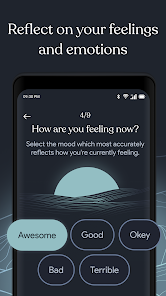
Modern AI depression tools do more than just “listen”—they analyze speech, text, and the rhythm of your feelings, flagging subtle shifts long before you collapse. Whether you use an app like Youper, which fuses CBT, mindfulness, and compassionate responses, or opt for a chatbot in platforms like Wysa, you aren’t just logging symptoms. You’re being heard—and science is on your side.
- Meta-analyses from 2024-2025:
AI-based conversational agents—chatbots—cut depressive symptoms (Hedges’ g = 0.64 across 15 randomized controlled trials).
The “AID-ME” trial used an AI-driven dashboard to match patients with the right antidepressant, improving remission rates faster than clinical guidelines alone. - Rapid detection of worsening moods and personalized advice are powered by machine learning, allowing for faster interventions—even predicting your bad days before you spiral.
- Personalization at scale—AI analyzes your unique scenario, recommending the pace and content that fits your life, not someone else’s chart.
Your Life, Amplified: How You Can USE AI For Healing
Day in the Life—A 7-Day AI-Mindfulness Reawakening Plan:
This is what an AI-powered healing plan might look like:
- Day 1: Gentle awareness—log your mood, try a mindful breathing session, jot a small gratitude.
- Day 2: Map your emotions without self-judgment. Body scan meditation so you can release tension.
- Day 3: Practicing self-kindness—reframe harsh self-talk with loving-kindness meditation.
- Day 4: Mindful movement—set a tiny goal, walk it off, sync breath to motion.
- Day 5: Acceptance—vent into a voice journal, use distress-tolerance tools, meditate on emotions like waves.
- Day 6: Cultivate joy—catch a spark of pleasure, scan your senses for a mindful anchor.
- Day 7: Reflect and integrate your week, amplify the light you found
Imagine looking back—one week later—realizing subtle, steady shifts in your thinking. Gentle, sustainable, and at your fingertips. That’s not fantasy any longer. It’s the normal you will expect, soon.
But Is It Safe? What About Pitfalls? (You’ll Want to Know This)
Ethics and privacy come first in this new world. Yes, Stanford’s June 2025 meta-analysis warned that a quarter of mental health chatbots failed key tests for ethical reliability and safety—meaning not all solutions are created equal. But the best tools pass FDA review, encrypt your data, and escalate you to human support when the going gets tough.What’s more, the 2025 BMC Psychiatry review shows that hybrid models, where AI supports but doesn’t replace human therapists, now dominate responsible innovation. You never have to choose between human warmth and digital accessibility. AI is the bridge, not a wall.
You’re About to Miss the Most Transformative Shift—So Don’t.
Therapist shortages are real. Waitlists are long, and the world isn’t slowing down. But your healing doesn’t have to wait another minute. You can step into a new, data-driven kind of self-care tonight, one where algorithms notice what even close friends can’t, and where your smallest steps add up to real change.
Research Links (for further reading/external embed)
- Meta-analysis: “Effectiveness of AI-Driven Conversational Agents in Improving Mental Health Among Young People” 2024.“Artificial Intelligence in Depression—Medication Enhancement (AID-ME): A Cluster Randomized Trial of a Deep-Learning–Enabled Clinical Decision Support System for Personalized Depression Treatment Selection and Management” 2025.
- “The Role of Artificial Intelligence in Identifying Depression and Related Disorders: Focused Narrative Review” 2024.
- Stanford 2025: “Regulatory Evaluation of Digital Mental Health Interventions”.
- Industry meta-reviews and ethical position statements.
Zen Exhale: What Awaits When You Step Forward
You wouldn’t wait for antibiotics if you were sick—don’t let shame or secrecy keep healing out of reach. One breath at a time, one mood check, one gentle nudge from an AI that’s always listening and always learning—everything starts to shift.
In a world craving connection, you now have a lifeline built for you. Reach out, and let tomorrow’s light find you before the world catches on.
Additional Citations
- https://ppl-ai-file-upload.s3.amazonaws.com/web/direct-files/attachments/30362618/8a6e4b17-a3e1-4066-b37a-17a845bcf21f/AI-for-Depression-Management.docx
- https://douglas.research.mcgill.ca/news/benrimoh-lab-ai-for-better-mental-health-a-new-era-in-depression-treatment/
- https://www.winssolutions.org/ai-depression-mental-healthcare/
- https://www.reddit.com/r/selfimprovement/comments/147iy0d/i_asked_for_help_from_an_ai_and_i_seriously_dont/
- https://community.openai.com/t/how-ai-and-development-help-me-cope-with-depression/1251945
- https://pmc.ncbi.nlm.nih.gov/articles/PMC11025697/
- https://pmc.ncbi.nlm.nih.gov/articles/PMC12416039/
- https://www.reddit.com/r/ChatGPT/comments/1m1ikiz/hes_an_ai_but_he_did_what_8_years_of_therapy_and/
- https://earkick.com
- https://www.godofprompt.ai/blog/high-density-keywords-with-chatgpt-depression-case-study
- https://www.seopital.co/blog/seo-keywords-for-mental-health