
200+ stops per day, bathroom breaks banned, and van GPS tracking every move
Your shift starts at 6 AM. You load 300 packages in 20 minutes. The app calculates your route down to the second. The camera in your van watches your eyes, your seatbelt, your every gesture. You have 217 stops to complete by 8 PM—that’s 2.3 minutes per delivery, including drive time.
You need to use the bathroom. The algorithm doesn’t care. Your “time off task” metric is already flagged. One more unscheduled stop and you’ll get written up. So you hold it. Again.
Your back screams from lifting 50-pound boxes. Your knee buckles on the stairs. You’re 28 years old and your body feels 50. You’ve worked here six months.
Welcome to the invisible workforce powering your convenience. Every time you click “Buy Now” with two-day delivery, someone’s health deteriorates to make it happen.
An 18-month Senate investigation led by Bernie Sanders found that Amazon’s injury rate is twice that of other warehouses—data the company deliberately concealed through cherry-picked reporting. Nearly 70% of Amazon workers have had to take unpaid time off due to pain or exhaustion in the past month. This isn’t occasional strain—it’s systemic breakdown.
1. The Algorithm Overlord: When Software Decides if You Can Use the Bathroom
Or: My “Time Off Task” Score Doesn’t Account for Being Human
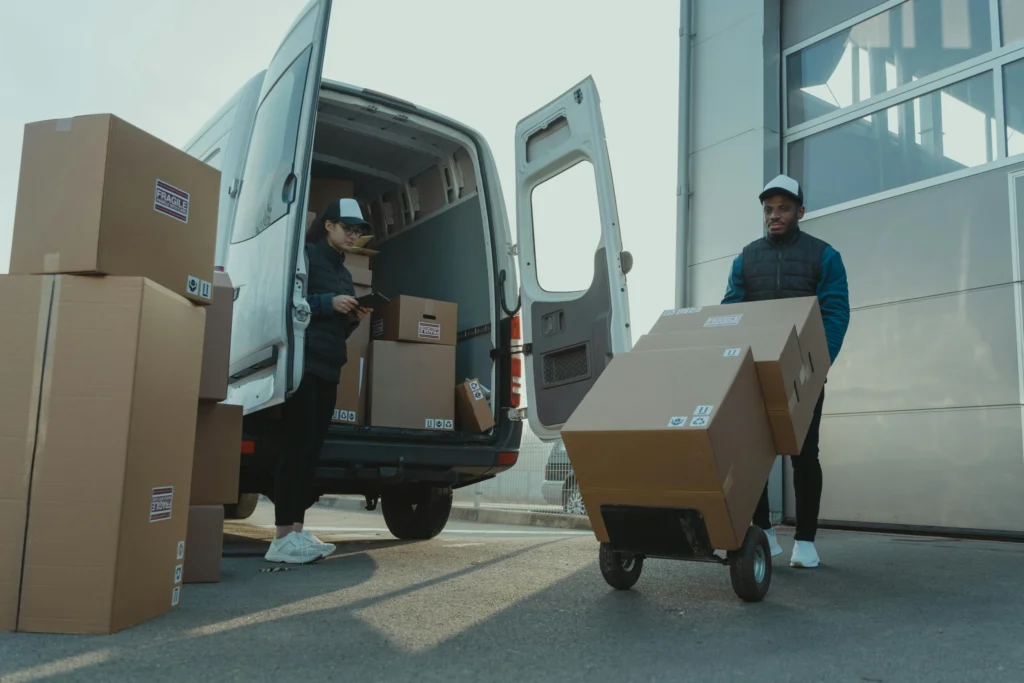
Your handheld scanner tracks every second. GPS monitors your location. AI cameras in your van detect if you’re yawning, looking at your phone, or failing to wear your seatbelt. You’re not driving a delivery van—you’re operating inside a mobile surveillance system.
The algorithm calculates the “perfect” time for each delivery. It doesn’t account for locked gates, apartments without visible numbers, customers who aren’t home, or your biological need to urinate. Every deviation from algorithmic perfection gets flagged as “time off task.”
A UNI Global Union international study of 2,000 Amazon workers across 8 countries found that 57% reported negative mental health impacts from performance monitoring systems. Workers described feeling “stressed, pressured, anxious, like a slave, robot and untrusted.” One U.S. driver reported: “Today I received a write-up for unaccounted for idle time due to my IBS. I’m constantly harassed over missing work or restroom breaks due to my illness.”
The Research Says
Research examining Amazon’s monitoring systems revealed that 78% of delivery drivers find targets either difficult or very difficult to achieve, while 58% said Amazon doesn’t clearly explain how it uses collected worker data. Most concerning: 65.7% of drivers reported negative physical health impacts stemming directly from productivity monitoring. The combination of opaque algorithmic management and unrealistic expectations creates what researchers call “algorithmic anxiety”—a state where workers exist in perpetual fear of invisible metrics they can’t fully understand or control.
Research URL
New Survey: Amazon workers in 8 countries say intrusive monitoring is making them sick and anxious
Mindful Solutions
- 60-Second “Package Pause”
Between deliveries, while still in your van, take 60 seconds. Close your eyes. Take three deep breaths—inhale for 4 counts, hold for 4, exhale for 6. This brief pause interrupts the stress response before it compounds. The algorithm can wait 60 seconds. Your nervous system can’t wait any longer.
- Document Everything
Keep a private log of impossible delivery situations—locked gates, missing apartment numbers, dangerous dogs. When the algorithm penalizes you, you have evidence that the system, not you, is broken. This preserves your sanity when metrics suggest you’re failing.
- Know Your Rights
You have the legal right to bathroom breaks. Document every time you’re penalized for biological needs. This isn’t weakness—it’s evidence for future labor action and proof the system is inhumane.
2. The Injury Assembly Line: When Your Body Becomes Collateral Damage
Or: I’m 25 and Already Need Surgery From Lifting Boxes

You lift 200-500 packages daily. Some weigh 5 pounds. Some weigh 70. The app gives you 20 minutes to load your van each morning—that’s 15-25 packages per minute with no time to use proper lifting technique.
Your lower back throbs constantly. Your right knee clicked weird three weeks ago and hasn’t been the same since. Your shoulder aches when you raise your arm. You’re not even 30.
This isn’t bad luck. It’s by design.
A University of Illinois Chicago study of 1,484 Amazon warehouse workers found that 41% reported being injured on the job, with that percentage rising to 51% for workers employed longer than three years. Most damning: 69% had to take unpaid time off due to pain or exhaustion in just the past month, with 34% doing so three or more times.
The Research Says
Research analyzing Amazon’s workplace safety found injury rates of 6.6 serious injuries per 100 workers—more than double the 3.2 rate at non-Amazon warehouses. The Senate investigation revealed that during Prime Day 2019, Amazon’s injury rate spiked to 45 per 100 workers—nearly half the warehouse staff injured in a single event. Workers consistently reported that Amazon prioritizes speed over safety, with the company’s own metrics creating pressure to work at physically unsustainable paces. One worker stated: “Amazon favors productivity over safety. They won’t make safety changes unless someone gets hurt really bad.”
Research URL
41 Percent of Amazon Workers Have Been Injured On the Job, New Report Finds
Mindful Solutions
- Micro-Recovery Between Stops
After every 10th delivery, spend 30 seconds doing gentle neck rolls and shoulder shrugs while still in your van. These tiny recovery moments prevent cumulative strain from becoming permanent injury.
- Listen to Pain Signals
Your body is communicating. Sharp pain means stop immediately. Dull ache means modify your technique. Numbness or tingling means see a doctor today. Pushing through pain to meet metrics doesn’t make you tough—it makes you permanently injured.
- Form Over Speed
Even if it costs you 10 seconds per package, use proper lifting technique—bend knees, keep back straight, engage core. Yes, your metrics might suffer slightly. But you’ll still have a functioning body at 40.
3. The Isolation Chamber: Alone in a Van With Nobody to Talk To About What’s Happening
Or: I Deliver to 200 Houses Daily But Haven’t Had a Real Conversation in Weeks
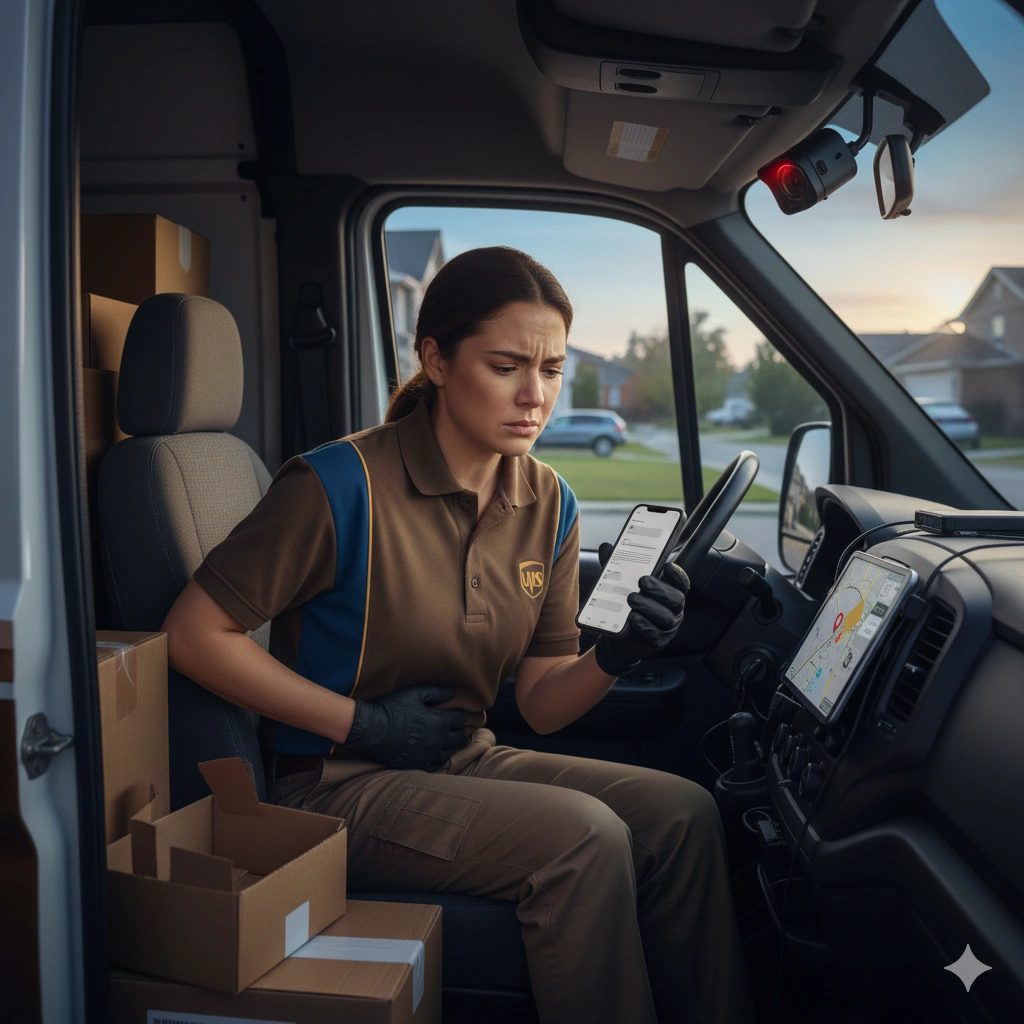
You start your shift before dawn. You drive alone for 12 hours. You interact with customers for approximately 90 seconds total per day—mostly through doorbell cameras. You end your shift after dark, go home, collapse, and do it again tomorrow.
Nobody at the warehouse knows your name. The dispatcher communicates only through app notifications. Your “coworkers” are other drivers you see for three minutes during van loading. You’re part of a massive workforce, yet profoundly alone.
The isolation isn’t accidental—it’s structural. Amazon uses a subcontractor model (Delivery Service Partners) specifically to avoid direct employment relationships. You’re not an Amazon employee; you’re a contractor for a contractor. This legal structure maximizes Amazon’s profit while minimizing their responsibility for your wellbeing.
The Research Says
According to Teamsters organizing data, Amazon contracts with approximately 210,000 delivery drivers through third-party DSPs in the U.S. alone. This contractor model creates isolation by design—drivers have no workplace community, limited recourse for grievances, and minimal employment protections. Research on gig economy workers shows this isolation significantly increases mental health risks, as workers lack the social support networks that traditionally buffer workplace stress. One driver described it: “I feel like I’m drowning all day, causing me to drive in unsafe ways to meet unreasonable expectations.”
Research Study
Teamsters Launch Largest Strike Against Amazon in American History
Mindful Solutions
- 2-Minute “Route Gratitude” Practice
During your lunch break (if you take one), spend 2 minutes mentally noting three specific things from your route that didn’t completely suck. Maybe a customer thanked you. Maybe you saw a cute dog. Maybe traffic was light for once. This rewires your brain from pure survival mode to recognizing small positives.
- Build Driver Networks
Exchange numbers with other drivers during loading. Create a group chat. Share warnings about dangerous dogs, impossible apartments, traffic delays. This shared knowledge becomes community. Isolation loses power when you connect.
- Protect Your Personal Life
When you get home, resist the urge to isolate further. Call a friend. Text your family. Engage with people who know you as a person, not a delivery metric. The van isolation can’t be fixed, but your off-hours isolation can.
4. The Wage Theft Machine: Working Harder for Less Than UPS Drivers Doing Identical Work
Or: I Make $18/Hour and UPS Drivers Make $30 for the Same Job
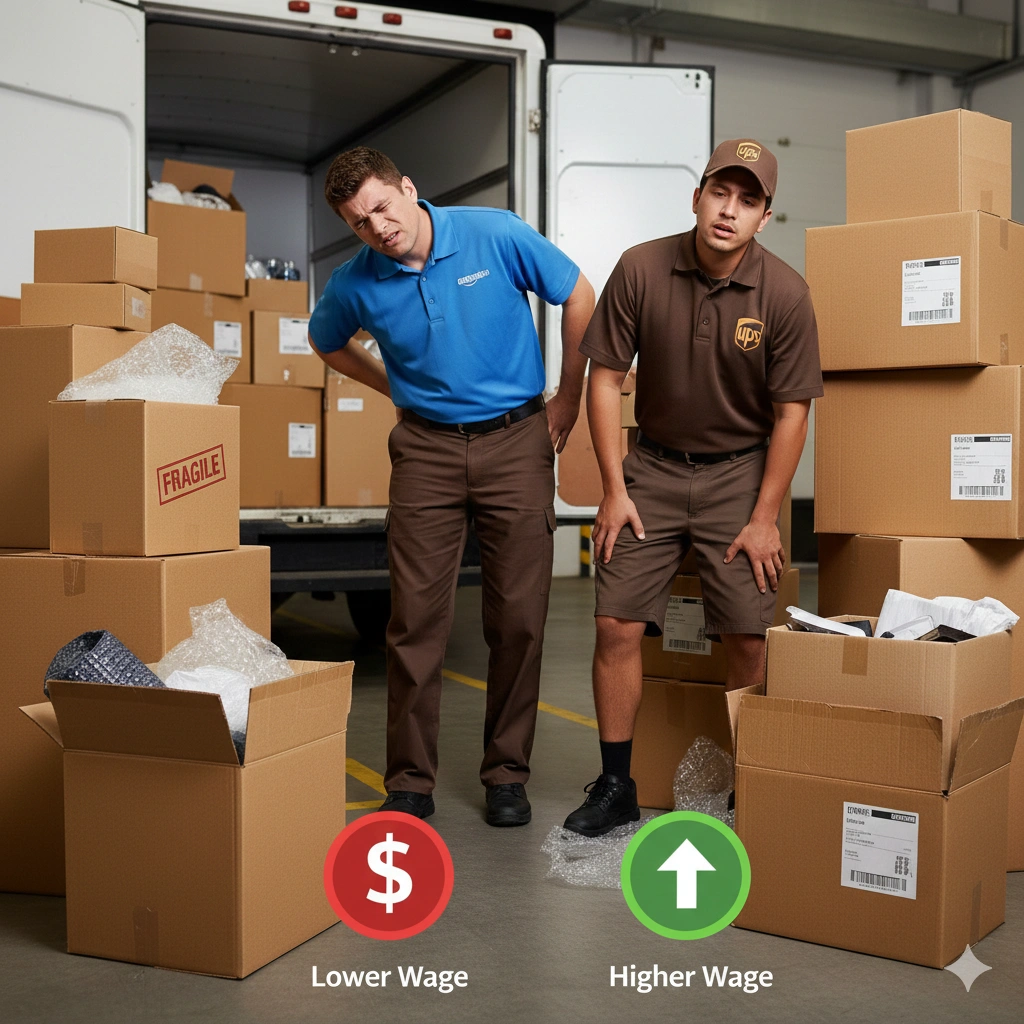
You deliver packages. UPS drivers deliver packages. Your jobs are functionally identical. They make $30+ per hour with full benefits. You make $18-22 with minimal benefits.
Why? Because Amazon refuses to employ you directly, instead using the DSP subcontractor model to suppress wages and avoid unionization. This isn’t competitive market forces—it’s deliberate wage suppression through legal loopholes.
Following the Teamsters’ historic 2023 UPS contract securing major wage increases, Amazon drivers began demanding similar compensation. The company’s response? A $1.50 raise that brought average pay to $22—still significantly below UPS rates for identical work.
The Research Says
Teamsters organizing data shows Amazon driver wages average $18-22 per hour, while comparable UPS drivers earn $30+ with comprehensive benefits, retirement plans, and job security protections. Amazon’s refusal to recognize itself as a “joint employer” of DSP drivers—despite controlling every aspect of their work from uniforms to routes to delivery times—allows the company to avoid collective bargaining obligations. The National Labor Relations Board has ruled that Amazon is indeed a joint employer in cases where it exercises sufficient control over working conditions, but the company continues to legally challenge such rulings rather than negotiate with organized workers.
Research Study
How the Teamsters Tested Amazon
Mindful Solutions
- Know Your Worth
Write down the actual value you provide: you’re operating a commercial vehicle, managing logistics, providing customer service, performing physical labor, and navigating complex routes—all simultaneously. That skillset deserves fair compensation. The cognitive dissonance between your value and your pay is real. Acknowledging it isn’t complaining; it’s reality.
- Financial Emergency Planning
Amazon’s model creates income instability. Build a 3-month emergency fund if possible (yes, we know that’s hard on $18/hour—start with one week, then build). Financial insecurity amplifies every other stressor. Even small savings create psychological breathing room.
- Support Unionization Efforts
The Teamsters launched the largest strike against Amazon in U.S. history in December 2024 specifically to fight for fair wages and working conditions. Whether you join organizing efforts or not, understand that every improvement in driver conditions comes from collective action, not corporate benevolence.
5. The Mental Health Desert: Where Stress Compounds and Nobody Offers Help
Or: I’m Having Panic Attacks in My Van and Amazon’s Solution is an App About “Wellness”
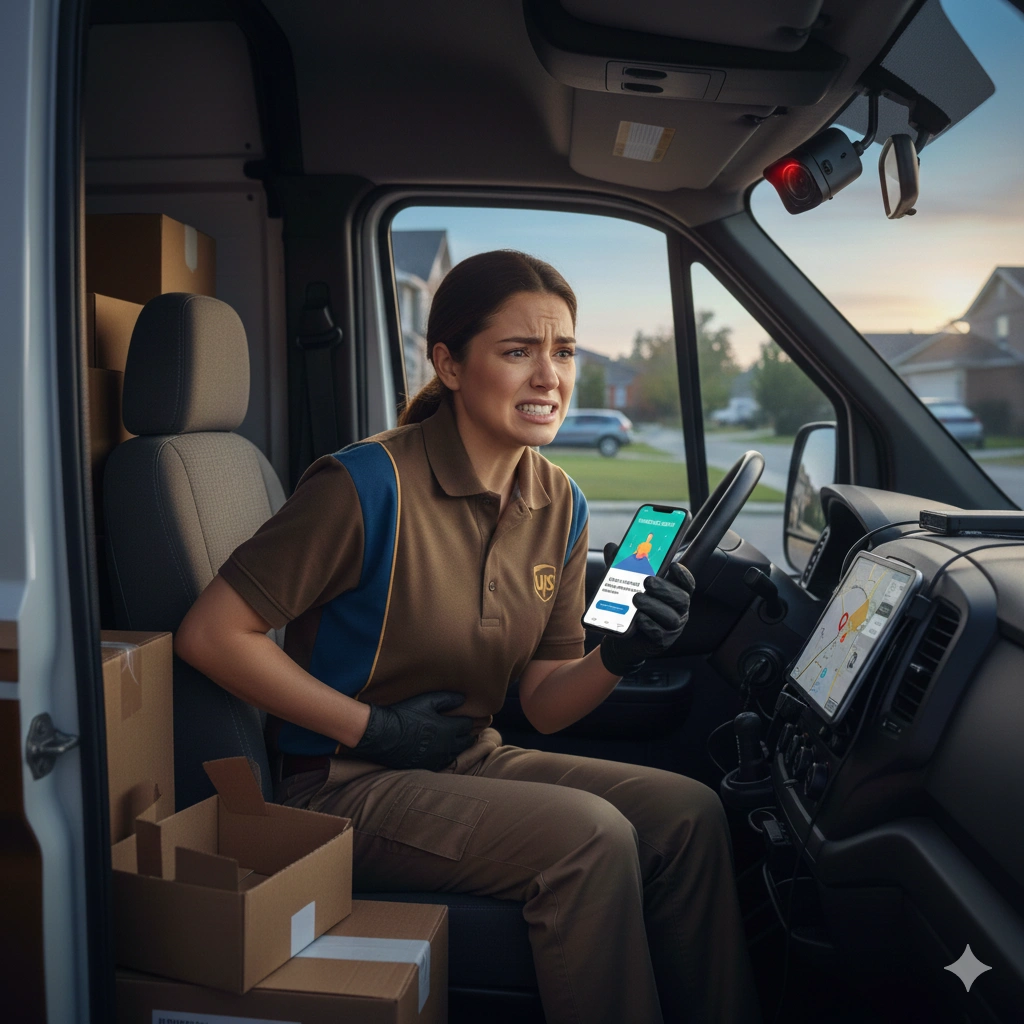
Your hands shake when you wake up. You dream about missed deliveries and algorithm notifications. You’ve started having panic attacks in your van between stops—heart racing, can’t breathe, vision narrowing. You’re 32 years old and taking blood pressure medication.
Amazon’s response to driver mental health crisis? AmaZen “wellness booths” in some warehouses—glorified phone booths where you can watch mindfulness videos during your 15-minute break. Meanwhile, the system creating the stress remains unchanged.
Research tracking delivery driver mental health found that over 80% report experiencing burnout, with one in five describing their mental health as “poor” or “very poor.” The University of Illinois Chicago study found that 52% of Amazon workers feel burned out, rising to 60% for those employed longer than three years.
The Research Says
Studies examining the psychological impact of algorithmic management on delivery drivers found that the combination of extreme time pressure, constant surveillance, physical danger, financial insecurity, and social isolation creates what researchers call a “perfect storm” for mental health deterioration. Research specifically on delivery drivers in China—where algorithmic management is similarly pervasive—found that over 95% reported experiencing occupational stress, with three-quarters at levels indicating high health risks. Critically, mindfulness-based interventions showed significant protective effects against burnout, suggesting that while the system is broken, individual practices can provide some buffer.
Research Study
Job Demands and Resources, Mindfulness, and Burnout Among Delivery Drivers in China
Mindful Solutions
- Recognize the Symptoms
Persistent anxiety, sleep disruption, panic attacks, physical tension, irritability—these aren’t personal failings. They’re predictable responses to unsustainable working conditions. Naming them removes their power to make you feel weak.
- The “Stop the Van” Rule
If you’re having a panic attack, experiencing chest pain, or feeling unsafe to drive—pull over immediately. Turn off the engine. Call someone. The packages can wait. Your life cannot. No delivery is worth dying for.
- Access Real Support
Amazon offers an Employee Assistance Program (EAP) with limited free counseling sessions. Use them—these counselors cannot report to your employer. If you’re uninsured, Crisis Text Line (text HOME to 741741) provides free 24/7 mental health support. Your mental health is not a luxury—it’s survival.
The Strike That Shook the Algorithm
In December 2024, Teamsters launched the largest strike against Amazon in U.S. history. Thousands of delivery drivers and warehouse workers across nine cities walked out during peak holiday season, demanding union recognition, fair wages, and safe working conditions.
Amazon claimed the strike didn’t affect operations. They were lying. Trucks were delayed. Deliveries were disrupted. And most importantly: other Amazon workers saw that resistance was possible.
The strike ended on Christmas Eve, but Teamsters warned: “Stay tuned.” Nearly 10,000 Amazon workers joined the union in 2024 alone. The company refuses to bargain. Workers refuse to accept it.
This isn’t the end—it’s the beginning.
The Numbers Behind Your Doorstep
Let’s be clear about what “free two-day shipping” actually costs:
- 41% of Amazon warehouse workers report being injured on the job
- 69% took unpaid time off due to pain/exhaustion in just one month
- 52% feel burned out from their work
- 57% report negative mental health impacts from monitoring systems
- 78% of drivers find productivity targets difficult or impossible to achieve
- 80% report experiencing burnout symptoms
Amazon is valued at $2.3 trillion. Jeff Bezos is one of the richest humans who has ever existed. The company reported $15 billion in net income in Q3 2024 alone.
The wealth exists. It’s just not being shared with the people whose bodies are breaking to generate it.
Your 60-to-120 Second Survival Practices
The 60-Second “Package Pause” (Between Deliveries)
- Still in your van, close your eyes
- Breathe: inhale 4 counts, hold 4, exhale 6
- Repeat three times
- This interrupts the cortisol accumulation
- 60 seconds won’t destroy your metrics, but skipping it will destroy your nervous system
The 2-Minute “Route Gratitude” (During Break)
- Mentally note three things from your route that didn’t completely suck
- Write them down if possible
- A thank-you. A dog. Light traffic. Anything.
- This practice isn’t toxic positivity—it’s neurological self-defense against chronic stress
The 30-Second Physical Reset (Every 10 Deliveries)
- Neck rolls (5 each direction)
- Shoulder shrugs (5 times)
- Ankle circles (5 each direction)
- These prevent micro-injuries from compounding into permanent damage
Building Your Support System
Links to Mindful Engineer Resources
Understanding delivery driver burnout connects to broader workplace stress patterns
- First Responder Burnout: Repeated Adrenaline Cycles – Managing constant performance pressure
- Caregiver Fatigue: Giving Until Empty – The cost of invisible labor
- Job-Hunt Burnout: Identity and Worth – When systems devalue your humanity
- Chronic Illness and Career – Working while your body breaks down
These resources offer frameworks for surviving systemically stressful work.
What Needs to Change (And Won’t Without a Fight)
Fair Direct Employment
Amazon must employ its delivery drivers directly, with full benefits, job security, and union rights. The DSP contractor model exists solely to suppress wages and avoid accountability.
Realistic Workload Standards
200+ stops per day with 2-minute-per-delivery expectations is physiologically impossible without injury. Standards must account for human limitations, not algorithmic fantasies.
Transparent Monitoring
If Amazon monitors workers, workers deserve to see all data collected, understand exactly how it’s used, and have recourse to challenge unfair penalties.
Mandatory Bathroom Breaks
Yes, we have to explicitly state this. Denying biological needs is inhumane.
Injury Protection
Workers injured on the job must receive full pay during recovery and cannot be penalized for injuries caused by unsafe working conditions.
Amazon will not provide these voluntarily. Every worker protection in history was won through organized resistance.
The Question Your Body is Asking
How long can you do this?
Not how long until you pay off your car. Not how long until you find something better. How long until your back gives out? Until your knee needs surgery? Until the panic attacks become debilitating?
Your body is already answering. The question is whether you’re listening.
The Choice at 6 AM
Your alarm goes off. Another 12-hour shift. Another 200+ stops. Another day of algorithmic surveillance and physical breakdown.
You can keep pushing through. You can ignore the pain signals. You can believe that if you just work harder, scan faster, sacrifice more of yourself, the system will reward you.
Or you can pause for 60 seconds. Breathe. Remember you’re human. Document the impossible demands. Connect with other drivers. Support organizing efforts. Protect what’s left of your body and mind.
The algorithm doesn’t care about your survival. But you must.
Take Your Next Breath
Not your next delivery. Your next breath.
The packages will still be there. The route will still be there. The algorithm will still be demanding the impossible.
But your body—your one body that has to last you a lifetime—won’t wait for convenient moments to break down.
You deserve bathroom breaks. Fair wages. Safe working conditions. The ability to do your job without permanent injury.
These aren’t radical demands. They’re basic human dignity.
And they’re worth fighting for.
RESEARCH CITATIONS & REFERENCES
- Teamsters – Largest Strike Against Amazon (December 2024)
- URL: https://teamster.org/2024/12/teamsters-launch-largest-strike-against-amazon-in-american-history/
- Key Finding: Nearly 10,000 Amazon workers organized with Teamsters in 2024
- In These Times – Teamsters Test Amazon (February 2025)
- URL: https://inthesetimes.com/article/new-york-teamsters-strike-amazon
- Key Finding: Senate investigation found Amazon injury rate twice that of other warehouses
- UNI Global Union – International Amazon Worker Survey (2023)
- URL: https://uniglobalunion.org/news/globalsurvey23/
- Key Finding: 57% negative mental health impact from monitoring systems
- University of Illinois Chicago – Pain Points Report (2023)
- URL: https://cued.uic.edu/pain-points/
- Key Finding: 41% of workers injured on job, 69% took unpaid time off for pain/exhaustion
- CNBC – Amazon Warehouse Injury Study (October 2023)
- URL: https://www.cnbc.com/2023/10/25/study-amazons-focus-on-speed-surveillance-drives-worker-injuries.html
- Key Finding: 6.6 serious injuries per 100 Amazon workers vs 3.2 at non-Amazon warehouses
- CBS News – Amazon Worker Injury Survey (October 2023)
- URL: https://www.cbsnews.com/news/amazon-workers-injuries-warehouse-survey-unpaid-time-off/
- Key Finding: 52% feel burned out, rising to 60% for workers employed 3+ years
- Frontiers in Psychology – Delivery Driver Burnout Study (2022)
- URL: https://pmc.ncbi.nlm.nih.gov/articles/PMC8971555/
- Key Finding: Job demands significantly predict burnout; mindfulness moderates effects
- PMC – Algorithmic Management and Burnout (2024)
- URL: https://pmc.ncbi.nlm.nih.gov/articles/PMC12037544/
- Key Finding: Algorithmic punishment systems cause anxiety, depression, insecurity
- Asana Recovery – Delivery Driver Mental Health (April 2025)
- URL: https://asanarecovery.com/blog/burnout-anxiety-and-substance-misuse-a-wake-up-call-for-amazon-delivery-drivers/
- Key Finding: 80% of delivery drivers report experiencing burnout
- Floristry Trade Club – Driver Mental Health Trends (August 2024)
- URL: https://www.floristrytradeclub.co.uk/post/rising-pressures-affect-the-mental-health-of-delivery-drivers
- Key Finding: 1 in 5 drivers describe mental health as “poor” or “very poor”
- NPR – Amazon Union Strike Coverage (December 2024)
- URL: https://www.npr.org/2024/12/19/nx-s1-5233832/amazon-union-teamsters-strike
- Key Finding: Teamsters represent 7,000-10,000 Amazon workers seeking collective bargaining