
Kitchen heat, screaming head chefs, and knife-cut fingers
The dinner rush is in full swing. Flames leap from the stovetop. Orders flood in faster than you can read them. Your hands are covered in burns, cuts, and blisters. Your feet throb from standing for 14 hours straight. The head chef screams across the kitchen. Your vision blurs from exhaustion.
And you still have five hours to go.
Welcome to the culinary profession—where passion meets pain, and the price of perfection is your well-being.
Recent research reveals that 44% of chefs report their restaurant work negatively impacted their mental health, with 70% experiencing anxiety, 49% suffering from sleep disorders, and 38% dealing with depression. These aren’t just statistics—they’re warnings we’ve ignored for far too long.
According to comprehensive research, 47% of chefs report at least two or more health complaints, including gastrointestinal, cardiovascular, and mental health issues. The James Beard Foundation’s ongoing industry research highlights that restaurant professionals face unique stressors that distinguish them from virtually every other career path.
Long working hours rank as the third leading cause of mortality, increasing death rates by nearly 20%. Behind every perfectly plated dish is a human being pushed beyond sustainable limits. And the industry’s culture of “tough it out” is literally killing us.
The Five Daily Battles You Face (And the Industry Pretends Don’t Exist)
1. “Just Five More Hours”—When Your Body Becomes Your Enemy
When 80-hour weeks feel normal and sitting down becomes a luxury
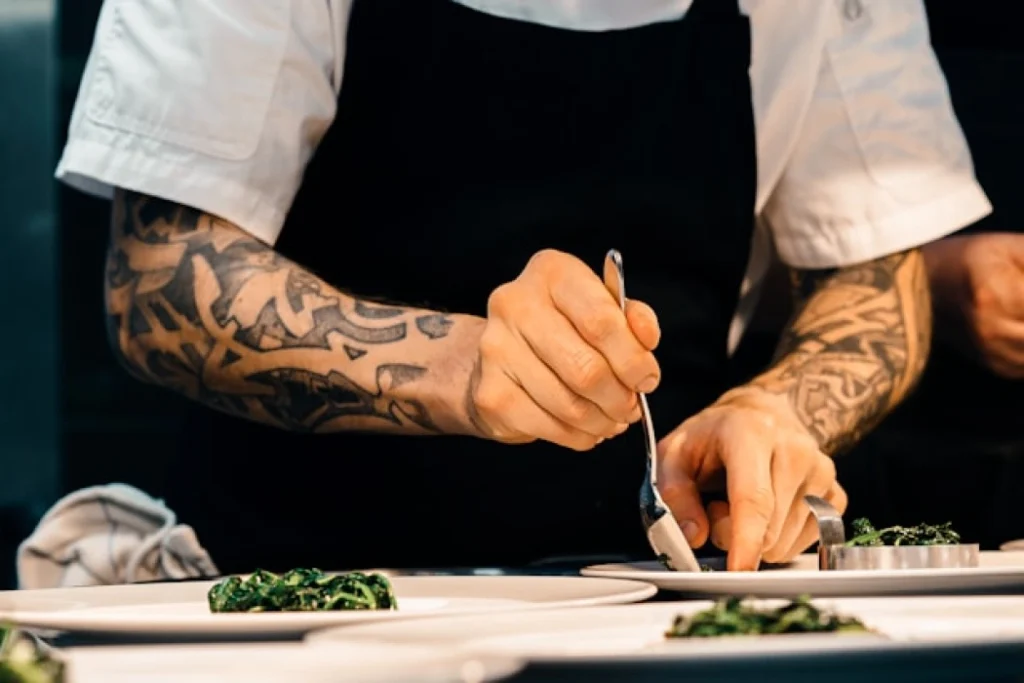
You clocked in at 9 AM for prep. It’s now midnight. Your feet are swollen in your clogs. Your back screams with every movement. You can’t remember when you last ate a real meal or took a bathroom break. Your hands shake from exhaustion, making knife work dangerous.
But the reservations keep coming. And you keep moving.
Research on Italian chefs found they work an average of 66.4 hours per week, with many reporting that workload accumulation over weeks and years is a primary cause of health complaints. For chefs in London, nearly half work between 48 and 60 hours weekly, with 69% reporting significant health impacts.
The physical demands are relentless. You’re lifting heavy pots, standing on concrete floors, working near open flames, and repeating the same movements thousands of times. Over time, this creates chronic pain, musculoskeletal disorders, and physical exhaustion that accumulates like compound interest on a debt you’ll never pay off.
For culinary students, the pressure starts even earlier. Research indicates that acquiring stress management skills through training significantly influences psychological health and overall well-being, yet most culinary programs prioritize technical skills over mental resilience.
Mindful Solutions
- Body awareness breaks: Every two hours, step away for 90 seconds. Close your eyes and scan your body from head to toe. Notice tension without trying to fix it. This practice increases awareness of physical stress before it becomes injury.
- Micro-stretching routine: Between stations, practice 30-second stretches—neck rolls, shoulder shrugs, wrist rotations. These brief movements prevent the chronic pain that accumulates during long shifts.
- Hydration mindfulness: Keep water visible and drink consciously. Dehydration amplifies fatigue and impairs cognitive function. Set a timer if needed—your body can’t run on espresso alone.
- Foot care rituals: At shift’s end, elevate your legs for 10 minutes while practicing deep breathing. This reduces swelling and signals to your nervous system that the workday is over.
- Explore science-backed stress reduction techniques designed for high-demand professions.
Research Reference
A comprehensive study in Frontiers in Public Health demonstrates that job duration and length of working day are significant stress predictors that increase the likelihood of physical and mental illness among chefs.
2. “Screaming Is Just How We Communicate”—The Toxic Culture You’ve Normalized
When verbal abuse becomes background noise and bullying becomes tradition
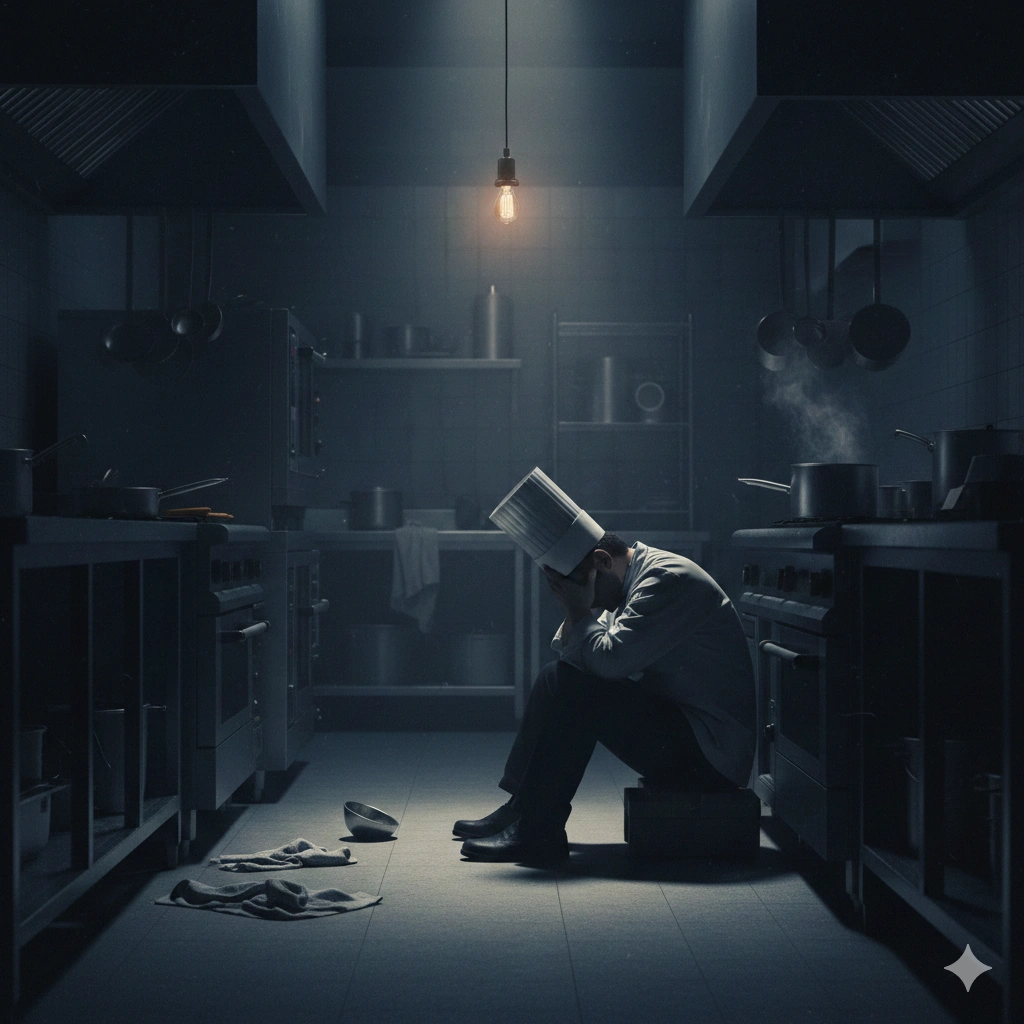
The executive chef throws a pan across the kitchen. Again. The sous chef screams at you for plating too slowly. A senior cook humiliates you in front of the entire brigade. You make a mistake, and everyone knows it—loudly.
You tell yourself it’s just passion. It’s just the pressure. It’s just how kitchens work.
But deep down, you know this isn’t normal. This is abuse disguised as excellence.
Toxic restaurant culture involves a social hierarchy and employee expectations that leave chefs feeling constantly exhausted, ignored, and undervalued. The military-style brigade system, while efficient for service, creates power dynamics ripe for exploitation.
The famous Auguste Escoffier demanded 100% commitment from his staff, and one demonstration of such dedication was excessive working hours. This legacy continues today, with many chefs viewing brutal conditions as a rite of passage rather than a systemic failure.
Nearly two-thirds (65%) of chefs report that toxic restaurant culture makes them feel isolated from the outside world. The isolation extends beyond the kitchen—lost friendships, failed relationships, and a life consumed entirely by work.
For culinary students entering the field, witnessing this culture can be profoundly disorienting. The gap between their educational ideals and industry reality creates cognitive dissonance that many resolve by either leaving the profession or adopting the same toxic behaviors they initially rejected.
Mindful Solutions
- Boundary language: Practice phrases like “I need a moment to collect myself” or “I work best with constructive feedback.” You’re not weak for requesting respect—you’re professional.
- Emotion regulation techniques: When faced with verbal aggression, practice the 4-7-8 breathing technique—breathe in for 4 counts, hold for 7, exhale for 8. This physiologically calms your nervous system before you respond.
- Support networks: Find allies in and outside the kitchen. Share experiences honestly. Toxic culture thrives on silence and isolation. Breaking that silence is revolutionary.
- Document everything: If abuse crosses legal lines, keep records. Dates, witnesses, specific incidents. Your wellbeing matters more than any job.
- Values clarification: Write down your non-negotiables. What treatment will you accept? What crosses the line? Clarity protects you when pressure tempts compromise.
Research Reference
Research published on toxic restaurant culture found that 45% of chefs lost friendships due to workplace demands, and 43% lost romantic partnerships, highlighting how toxic environments destroy lives beyond the kitchen.
3. “One Bad Review Can Ruin Everything”—The Perfection Prison
When Instagram food critics and Michelin pressure make every plate feel life-or-death
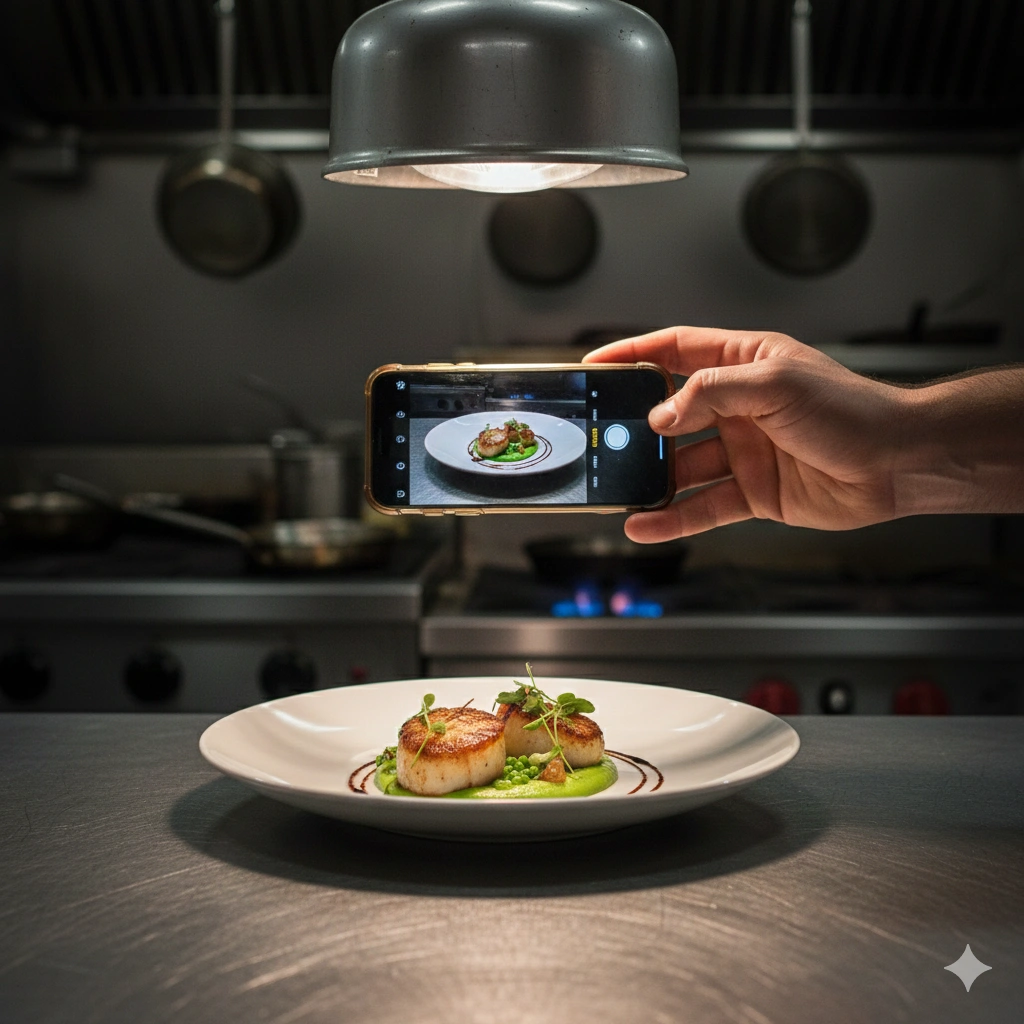
You spent three hours on prep for this dish. Every element is precise—molecular gastronomy, microgreens positioned with tweezers, sauce drizzled at the exact angle. One Instagram post from the wrong table, and your reputation crumbles.
One slow ticket, and you’re failing. One underseasoned sauce, and you’re incompetent. One negative review, and months of work vanish.
The pursuit of perfection isn’t inspiring—it’s suffocating.
Recent surveys reveal that 81% of UK chefs now struggle with debilitating stress levels, a dramatic increase from 51% in 2017. The rise of social media food culture, online reviews, and constant public scrutiny has intensified pressure exponentially.
Every dish leaves your kitchen as a potential viral moment—for better or worse. Diners aren’t just eating; they’re documenting, judging, comparing, and broadcasting their opinions to thousands. The margin for error has evaporated.
For culinary students, this pressure begins before they’ve mastered fundamentals. Social media creates unrealistic expectations, where every dish must be photogenic before it’s edible. The craft becomes performance art, and authenticity drowns in aesthetics.
The James Beard Foundation’s industry reports emphasize that modern chefs face unprecedented scrutiny from multiple sources—traditional critics, online platforms, social media influencers, and customers who view themselves as critics. This omnidirectional pressure creates a psychological pressure cooker.
Mindful Solutions
- Perfectionism audit: Distinguish between excellence and perfection. Excellence improves; perfection paralyzes. Ask yourself: “Is this detail serving the food, or serving my anxiety?”
- Reframe criticism: View feedback as data, not verdict. One negative review doesn’t define your worth. Practice responding with curiosity rather than defensiveness.
- Progress documentation: Keep a journal of your improvements, successes, and proud moments. When criticism hits hard, this becomes evidence against your inner critic.
- Self-compassion practice: When you make mistakes—and you will—talk to yourself as you would a student you’re mentoring. Kindness accelerates learning; cruelty breeds paralysis.
- Explore mirror work affirmations to rebuild confidence after harsh criticism.
Research Reference
Paracelsus Recovery research on Michelin-star chefs reveals how perfectionism combined with public scrutiny creates mental health crises including anxiety, depression, and substance dependency.
4. “I’ll Sleep When I’m Dead”—The Burnout You Can’t Taste
When cocaine becomes your coffee and alcohol becomes your therapy

You’re running on three hours of sleep. Your body screams for rest, but your mind won’t shut off. Recipes, prep lists, yesterday’s mistakes—they all replay endlessly.
So you have another drink. Or something stronger. Just to take the edge off. Just to shut down the noise.
Chefs are nearly twice as likely to develop alcohol dependency compared to the wider population, with unsocial hours, burnout rates, and easy access to alcohol creating a perfect storm. A shocking percentage of restaurant workers rely on substances to either stay alert during busy hours or numb the stress afterward.
Burnout is more than fatigue—it’s a pervasive challenge affecting both leaders and their teams, impacting performance, customer satisfaction, and personal life. When you’re burned out, your immune system weakens, sleep problems intensify, and feelings of helplessness and disillusionment take root.
The Burnt Chef Project’s global research reveals that 4 out of 5 hospitality professionals experience at least one mental health issue during their careers. The physical toll manifests as chronic back pain, neck pain, headaches, and fatigue—conditions that chefs often ignore until they become debilitating.
Working more than 60 hours per week significantly increases odds of psychosocial stress responses, creating a vicious cycle where exhaustion drives substance use, which worsens sleep quality, which intensifies exhaustion.
Mindful Solutions
- Sleep hygiene protocol: Create non-negotiable pre-sleep rituals. Power down screens 60 minutes before bed. Your room should be cool, dark, and quiet. Quality sleep isn’t a luxury—it’s a performance enhancer.
- Substance awareness: Track your consumption honestly. Are you using to enhance, or to cope? If substances feel necessary rather than optional, that’s your signal to seek support.
- Stress substitution: Replace destructive coping with constructive alternatives. Instead of a drink, try a 10-minute walk, cold shower, or breathing exercise. These build resilience rather than dependency.
- Professional support: Consider therapy specifically designed for hospitality professionals. Organizations like The Burnt Chef Project offer free, confidential support tailored to industry-specific struggles.
- Community connection: Join support groups or forums where chefs discuss recovery and healthy coping. Shared struggle reduces shame and isolation.
Research Reference
Worldchefs research on kitchen culture emphasizes that burnout isn’t just fatigue but a syndrome of complete physical, mental, and emotional exhaustion requiring systemic cultural change.
5. “Who Am I Without the Kitchen?”—The Identity Crisis
When your career consumes your identity and you’ve forgotten who you are
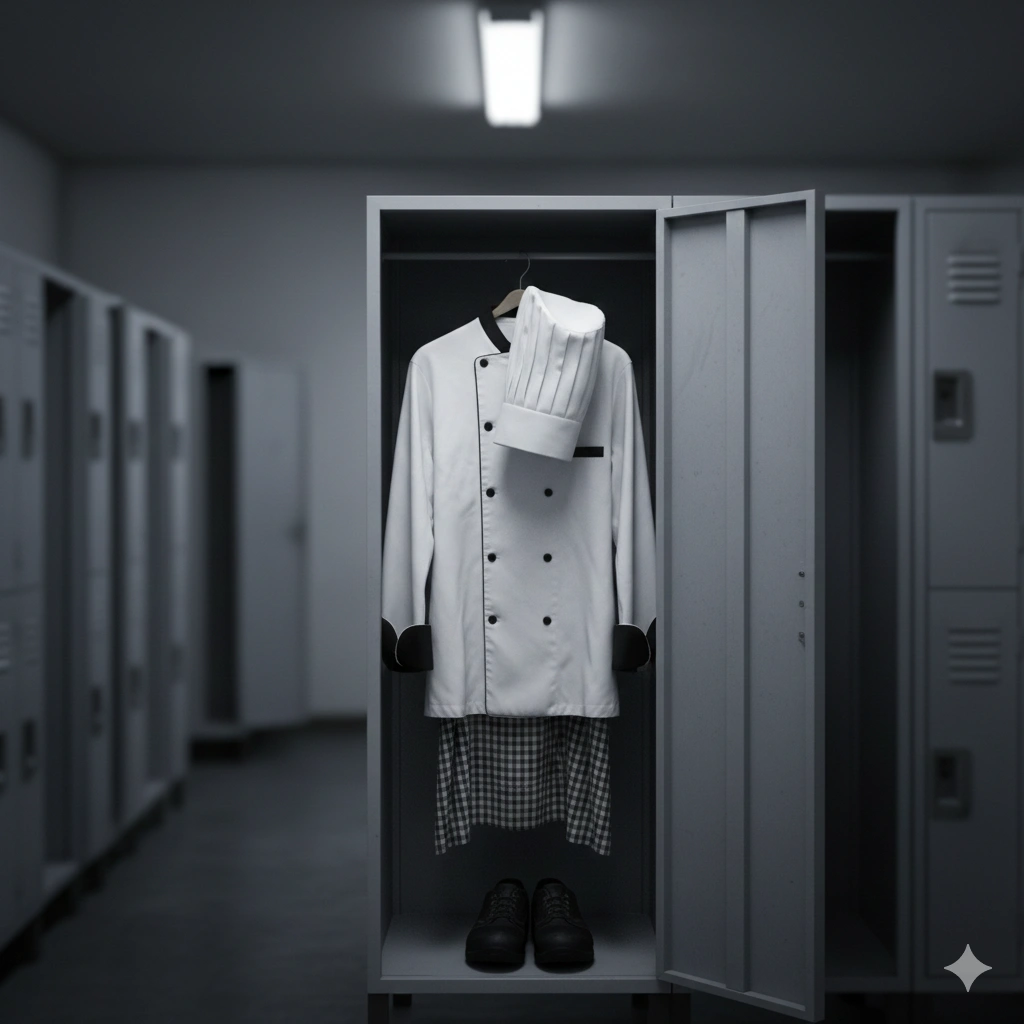
You’ve given everything to the kitchen. Birthdays, holidays, relationships, hobbies—all sacrificed for the craft. Your social circle is entirely industry people. Your conversations revolve around food. Your identity is inextricably linked to your job title.
But what happens when you burn out? When your body gives out? When you realize this isn’t sustainable?
Who are you without the chef’s jacket?
Close to half (45%) of surveyed chefs report losing friendships due to stressful workplace demands. The isolation extends beyond social connections to a fundamental loss of self outside culinary identity.
Millennials entering the industry view long hours and high stress differently than previous generations, seeking better work-life integration rather than accepting traditional sacrifices. This generational shift highlights that the old model—complete devotion to the craft at the expense of everything else—is crumbling.
For culinary students, the pressure to conform to this all-consuming identity starts early. Educational programs often romanticize the “married to the kitchen” mentality, setting up unrealistic expectations that lead to early burnout and disillusionment.
Research shows that chefs describe feeling constantly on, even during time off. Your nervous system remains in high-alert mode, unable to shift into rest-and-digest. Birthday parties, weddings, family reunions—most happen on weekends, precisely when you’re committed to the kitchen.
Mindful Solutions
- Identity diversification: Cultivate interests completely unrelated to food. Read fiction, learn an instrument, take up hiking. Your worth exists independently of your culinary achievements.
- Boundary rituals: Create physical and mental separation between work and home. Change clothes, take a specific route, practice a transition meditation. Signal to yourself when you’re off-duty.
- Relationship investment: Schedule protected time for loved ones—and actually protect it. Your relationships nourish you in ways food never can.
- Values exploration: Complete a weekly self-reflection practice to reconnect with what matters beyond professional success.
- Alternative career paths: Consider consulting, teaching, private chef work, or food writing. Culinary skills transfer to lower-stress environments where sustainability is possible.
Research Reference
Research on occupational stress in the chef profession demonstrates how identity over-attachment to the profession creates vulnerability to burnout and mental health crises when that identity is threatened.
Quick Mindfulness Practices: Your Emergency Toolkit
60-Second “Knife Pause”
Use during service lulls or between stations
- Hold (15 seconds): Hold your knife handle (sheathed) or spatula. Feel its weight, temperature, and texture completely.
- Breathe (30 seconds): Inhale for 4 counts, hold for 4, exhale for 6. Repeat twice. Let your breath anchor you to the present.
- Reset (15 seconds): Silently acknowledge: “I am here. I am capable. This moment is manageable.”
This micro-practice interrupts stress cascades before they compromise your performance or safety. Consistency matters more than duration—practice during calm moments so it’s available during chaos.
3-Minute “Plate Presentation Ground”
Use during breaks or before starting a new section
- Physical awareness (60 seconds): Notice where you’re holding tension—jaw, shoulders, hands, lower back. Breathe into those areas without forcing release.
- Sensory inventory (90 seconds): Name five things you can see, four you can touch, three you can hear, two you can smell, one you can taste. This grounds you in present reality rather than spiraling thoughts.
- Intentional transition (30 seconds): Set a clear intention for your next task: “I will work with precision and presence.” Let this intention guide your next actions.
This practice creates mental separation between tasks, preventing the blur that leads to mistakes and injury. It’s not wasted time—it’s recalibration that enhances both safety and quality.
The Way Forward: From Kitchen Nightmare to Sustainable Career
The culinary industry stands at a crossroads. The current model—glorifying suffering, normalizing abuse, and expecting superhuman endurance—is fundamentally unsustainable.
Organizations like The Burnt Chef Project and Worldchefs’ CHOW initiative are pioneering mental health resources specifically for hospitality professionals. The James Beard Foundation’s industry research continues highlighting the urgent need for systemic change in restaurant culture and operations.
True change requires leadership implementing team training and support, providing mental health resources, establishing policies promoting work-life balance, and creating environments where all can thrive.
But systemic change starts with individual awareness. You cannot pour from an empty cup. Your well-being isn’t separate from your culinary excellence—it enables it.
Your Next Step
If you recognized yourself in these struggles, understand this: you’re not weak, and you’re not alone. The system is broken. Your response is normal.
Start small today:
- Practice the 60-second Knife Pause once during your next shift
- Identify one toxic behavior you’ll no longer tolerate
- Reach out to one trusted colleague or friend to share honestly
- Explore additional mindfulness resources designed for high-stress professions
- Consider gratitude loops that rewire stress responses
- Learn about mindful leadership practices that can transform kitchen culture
The culinary world needs you—whole, healthy, and sustainable. Not burned out at 35, wondering where your passion went.
Your craft matters. Your mental health matters. But first, you must matter to yourself.
References
- Cozymeal – Toxic Restaurant Culture’s Effects on Chefs’ Mental Health
- Frontiers in Public Health – Work-Related Stress Among Chefs: A Predictive Model of Health Complaints
- PMC – Work-Related Stress Among Chefs: A Predictive Model of Health Complaints
- Burnout Nutrition – Chef Burnout Statistics
- Worldchefs – In the Weeds: Why Kitchen Culture Must Change
- ResearchGate – Work-Related Stress Among Chefs
- ResearchGate – Occupational Stress in the Chef Profession
- Paracelsus Recovery – Mental Health Issues Facing Michelin Star Chefs
- The Burnt Chef Project – Hospitality Mental Health Awareness
- The Burnt Chef Project – Mental Health Survey
- Escoffier – Why Stress Management Is Important for Culinary Students