Understanding Buddhist Meditation: A Simple Guide for Beginners
Buddhist meditation has been practised for over 2,500 years, helping people find peace, reduce stress, and understand themselves better. While it has deep spiritual roots, the benefits of this meditation go beyond religion. People around the world now practice it to feel more relaxed, happy and focused in their daily lives.
What is Buddhist Meditation?

Buddhist meditation is a practice that helps calm the mind and develop a deep understanding of ourselves and the world around us. The aim of meditation is to achieve enlightenment (Nirvana), or a state of profound wisdom and to be free from suffering.
It’s all about being mindful and paying attention to the present moment, instead of letting our minds wander. By sitting quietly and focusing on our thoughts, and feelings, we can learn to control our minds and become more peaceful.
Buddhism teaches us that most of our suffering comes from how we think about other things. Through meditation, we can make our minds stop worrying about the past or future and be more present in the now. This helps reduce stress, fear, and negative emotions.
The Origin

Buddhist meditation began with Siddhartha Gautama, also known as The Buddha, who lived around 500 BCE. The Buddha was a prince who gave up his wealth to understand why people suffer and how to overcome it.
Through deep meditation, he found enlightenment – a state of complete peace, and wisdom, and to be free from suffering.
The meditation practices he taught spread across Asia and became a core part of many Buddhist traditions. Today, Buddhist meditation is practised all over the world, and you don’t have to be a Buddhist to enjoy its benefits.
Different Types of Buddhist Meditation

There are many different kinds of this meditation, but we’ll focus on two of the most common and easiest to practice:
1. Mindfulness Meditation (Vipassana)
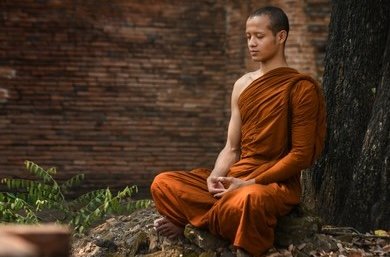
Mindfulness meditation, or Vipassana, means “clear seeing.” This type of meditation helps you become more aware of your thoughts, emotions, and body without judging them.
You observe what’s happening in your mind and body, just like a scientist observes things in a lab. The goal is to notice everything without trying to change it. For example, if you feel angry, instead of fighting that feeling, you just observe it and recognize, “I’m feeling angry.” By simply being aware, your mind learns to stay calm even when things get tough.
Scientific Proof: Research shows that mindfulness meditation can help in reducing stress and anxiety. A study by the American Psychological Association found that people who practised mindfulness had lower levels of stress hormones and were better at controlling their emotions.
2. Loving-Kindness Meditation (Metta)

The second type of meditation is Loving-kindness meditation, or Metta, which focuses on developing feelings of love and compassion for yourself and others. During this meditation, you silently repeat phrases like “May I be happy,” “May I be healthy,” or “May others be free from suffering.” You start by sending kindness to yourself, then to loved ones, and finally to all beings in the world.
This practice not only helps you feel more connected to others but also reduces feelings of anger and resentment. It’s like watering a plant: as you keep nurturing these feelings of love, they grow stronger over time.
Scientific Proof: A study published in the journal Emotion found that people who practised loving-kindness meditation felt happier and more positive about themselves and others. The research also showed improvements in social connections and emotional well-being.
How Does Buddhist Meditation Work?
Buddhist meditation works by calming the mind and making it to be more focused and aware. Normally, our minds jump from one thought to another like a monkey swinging from tree to tree. This constant thinking can make us feel stressed and overwhelmed.
When we meditate, we slow down these racing thoughts. We start by focusing on one thing, like our breath, a word, or a feeling. As we focus, we notice when our mind starts to wander and gently bring it back to our focus. Over time, this practice helps us build concentration and become more in control of our thoughts.
Benefits of Buddhist Meditation

1. Reduces Stress
One of the most well-known benefits of meditation is that it helps reduce stress. When we’re stressed, our bodies release a hormone called cortisol, which can make us feel anxious and tired. Meditation helps lower cortisol levels, making us feel more relaxed and calm.
Scientific Proof: A study from Harvard Medical School found that meditation can lower blood pressure and improve heart health by reducing stress.
2. Improves Focus
Meditation strengthens our ability to focus on tasks and ignore distractions. This is helpful for work, school, and everyday activities.
Scientific Proof: A study from the University of California found that people who meditated for just two weeks improved their focus and memory.
3. Boosts Happiness
By practising mindfulness and loving-kindness meditation, we can rewire our brains to think more positively. This makes us feel happier and more satisfied with life.
Scientific Proof: Neuroscientist Richard Davidson, from the University of Wisconsin, discovered that people who meditated regularly had higher levels of activity in parts of the brain linked to happiness.
4. Promotes Emotional Health
Meditation helps us understand and manage our emotions better. It teaches us to accept our feelings without getting overwhelmed by them, leading to more emotional stability.
Scientific Proof: A study in Psychiatry Research showed that mindfulness meditation reduces symptoms of depression and anxiety by changing the way our brain responds to stress.
5. Increases Compassion
Loving-kindness meditation helps us develop more empathy and kindness toward others. This makes our relationships stronger and more meaningful.
Scientific Proof: A study in Social Cognitive and Affective Neuroscience found that people who practised loving-kindness meditation showed greater empathy and concern for others’ well-being.
How to Start Practicing Buddhist Meditation?
You don’t need any special tools or equipment to start meditating. All you need is a quiet place and a few minutes of your time. Here’s a simple guide to help you begin:
1. Find a Quiet Place
Choose a comfortable spot where you won’t be disturbed. It could be a room in your house, a park, or even a quiet corner in your office.
2. Sit Comfortably
You can sit on a chair or the floor with your legs crossed. Keep your back straight but relaxed. Rest your hands on your lap or knees.
3. Focus on Your Breath
Close your eyes and take a few deep breaths. Then, focus on your normal breathing. Feel the air as it goes in and out of your nose or mouth. If your mind starts to wander, gently bring your attention back to your breath.
4. Practice for a Few Minutes
Start with just 5 to 10 minutes of meditation each day. As you get more comfortable, you can gradually increase the time.
5. Try Loving-Kindness Meditation
Once you feel ready, you can add loving-kindness meditation to your practice. Silently repeat phrases like “May I be happy” or “May I be healthy.” After a few minutes, extend these wishes to your loved ones, friends, and even strangers.
Common Challenges and How to Overcome Them
1. Your Mind Keeps Wandering
It’s completely normal for your mind to wander during meditation. This doesn’t mean you’re doing it wrong. The goal is to notice when it happens and gently bring your focus back to your breath or the phrases you’re repeating.
2. You Feel Restless
If you find it hard to sit still, try doing a walking meditation. This involves walking slowly and mindfully, paying attention to the movement of your feet and the sensations in your body.
3. You Feel Frustrated
Meditation is a skill that takes time to develop. It’s okay if you don’t feel calm right away. Keep practising, and over time, you’ll notice improvements in your ability to focus and stay present.
Conclusion
Buddhist meditation is a powerful tool for calming the mind, reducing stress, and finding inner peace. Whether you’re looking to improve your emotional health, strengthen your focus, or simply feel more relaxed, meditation offers a variety of benefits for people of all ages and backgrounds.
By practising mindfulness meditation (Vipassana) and loving-kindness meditation (Metta), you can bring more balance, compassion, and happiness into your daily life. Start small, be patient with yourself, and enjoy the journey of self-discovery and growth. If you are dealing with a lot of stress and want to reduce it, then read our next blog on Mindfulness-Based Stress Reduction (MBSR).
References
- American Psychological Association. (2015). Mindfulness practice reduces stress and improves emotional well-being. Retrieved from APA.
- Fredrickson, B. L., et al. (2008). Open Hearts Build Lives: Positive Emotions, Induced Through Loving-Kindness Meditation, Build Consequential Personal Resources. Emotion, 8(2), 291-295.
- Lutz, A., et al. (2008). Attention regulation and monitoring in meditation. Trends in Cognitive Sciences, 12(4), 163-169.
- Harvard Medical School. (2013). Meditation: A simple, fast way to reduce stress. Retrieved from Harvard Health.
- Davidson, R. J., et al. (2003). Alterations in Brain and Immune Function Produced by Mindfulness Meditation. Psychosomatic Medicine, 65(4), 564-570.
FAQ’s
Follow our LinkedIn page for never-ending AI and Tech updates!