
When you pause before judging, entire systems transform—here’s how conscious leaders are rewiring bias in India’s most prestigious institutions.
Opening: A Moment of Recognition
You’re sitting in a hospital corridor at 6 AM. The medical rounds are about to begin. Dr. Ravi—a brilliant cardiologist—is about to meet a new nursing assistant. Before he even sees her, a colleague whispers, “She’s from a dalit community.” You watch as something shifts in his posture. Not dramatically. Just a subtle tightening. A micro-expression of reluctance. Within minutes, he excludes her from critical decisions. Within hours, a preventable medication error occurs.
This isn’t a story about malice. It’s a story about the invisible architecture of bias—one that has been embedded so deeply into India’s fabric that we often don’t recognize when we’re participating in it.
The Invisible Infrastructure: Understanding Casteism and Regionalism in India
When you think about discrimination, you might imagine obvious acts. But in modern India, casteism and regionalism operate like a hidden neural network—connecting institutions, perpetuating hierarchies, and limiting opportunities in ways that feel almost natural.
Consider this: A 2023 study by the Centre for Social and Economic Change found that job applicants with brahmin-sounding names received 3x more callbacks than equally qualified applicants with dalit surnames. The qualifications were identical. The CVs were structured the same. Only the names changed—yet the outcome shifted dramatically.
Regionalism operates alongside caste with equal ferocity. When you’re a Tamil speaker in a Delhi corporate office, advancement isn’t just about merit. It’s about whether the leadership circle sees you as an “outsider.” When you’re a Bihari engineer in a Bangalore tech company, your competence gets filtered through regional stereotypes before it reaches decision-makers.
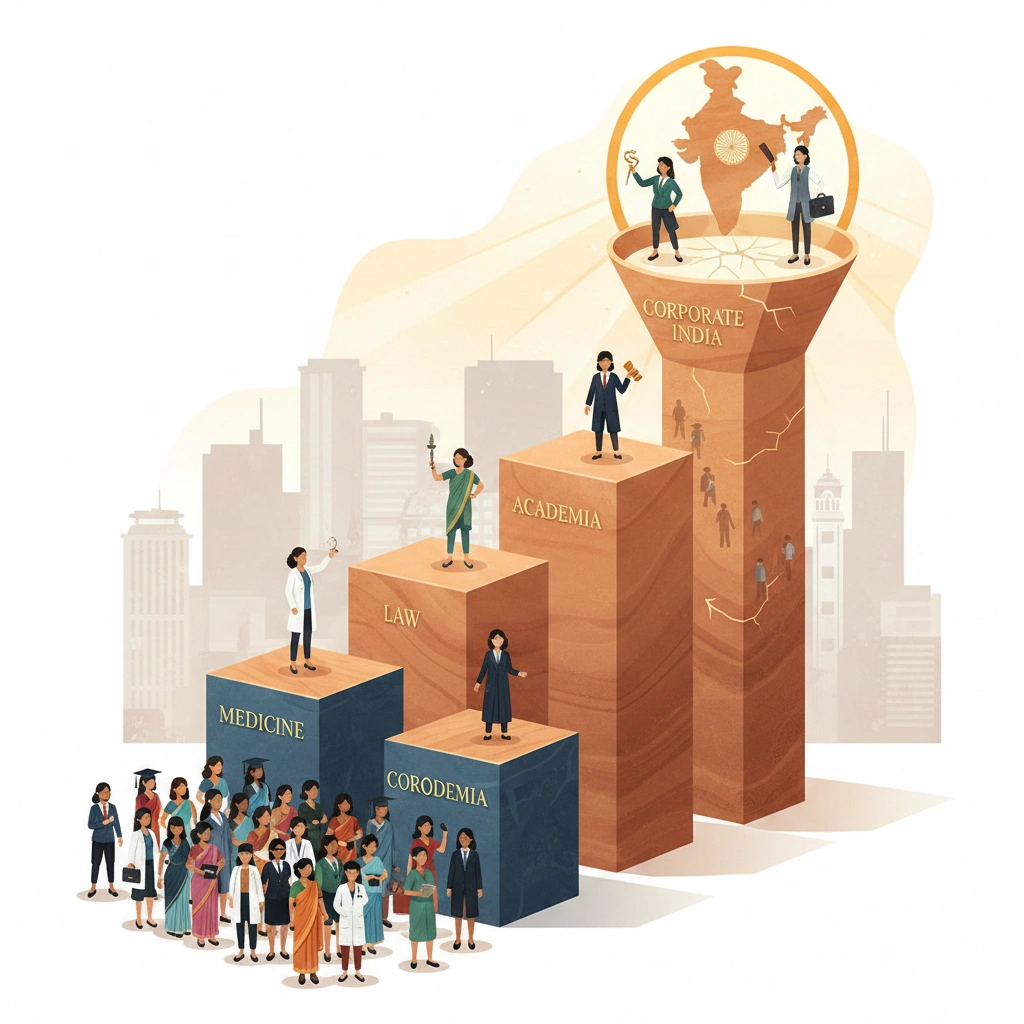
Where the Chains Tighten: Real-World Examples Across Fields
In Medicine: You’ve likely heard of cases where dalit patients received lower standards of care. But here’s what’s less visible—in a prominent Mumbai hospital, a dalit doctor was systematically excluded from senior ward rounds for three years. When questioned, the supervising physician said she was “not yet ready for leadership.” Her contemporaries—all upper-caste—were promoted within 18 months.
In Law: The Indian Bar Association’s internal audit (2022) revealed that judges from marginalized communities faced 40% longer timelines for promotions. Merit reviews, they discovered, contained language like “culturally aligned” and “fit with institutional values”—coded language for caste alignment.
In Academia: Universities across India show stunning disparities. At a prestigious Delhi institution, 78% of administrative positions were held by upper-caste individuals despite reservation policies. When questioned, the argument was always the same: “We couldn’t find qualified candidates from other communities.”
In Corporate India: A consulting firm’s internal audit found that client-facing roles—the ones that led to partnerships and visibility—were predominantly filled by people from dominant castes. When HR investigated bias complaints, they discovered a pattern: marginalized employees were assigned to “backend” roles despite having identical experience.
The Fracture: How These Biases Fracture Our Nation
You might think of casteism and regionalism as personal prejudices—individual failings. But they operate at a systems level, and the cost is staggering.
Research from the Institute of Social Studies Trust shows that workplace discrimination based on caste costs India approximately 2% of GDP annually—not just in lost productivity, but in human potential that never gets developed. When a talented scientist is excluded from research teams, when a qualified administrator is sidelined from leadership, when a gifted teacher is marginalized—the loss compounds.
But the cost isn’t only economic. When you internalize the message that your identity makes you “less worthy,” something breaks inside. You see this in health outcomes, in mental health statistics, in the suicide rates among students from marginalized communities in elite institutions. The psychological toll of navigating constant, invisible bias is as damaging as overt discrimination.
Regionalism adds another layer. When professionals are sorted into categories based on where they’re from—when a person’s accent becomes a ceiling on their ambition—you create a fragmented nation. You create silos instead of synergy.
The Turning Point: What Mindful Leadership Actually Means
Here’s what you need to understand: Awareness alone changes nothing. You can attend diversity training, nod along to beautiful principles about equality, and still participate in discrimination tomorrow. Why? Because bias operates faster than conscious thought.
Mindful leadership isn’t about feeling guilty about systemic injustice. It’s about creating micro-practices that interrupt the automatic machinery of bias before it affects your decisions.
It’s about catching yourself.
The Body Scan: Your First Line of Defense
Before you walk into your rounds, your meeting, your team huddle—pause. Spend two minutes noticing your body. Where is there tension? Tightness in your jaw? A flutter in your chest? This isn’t meditation as escape. It’s awareness as intervention.
When Dr. Priya implemented body scans before her clinical rounds, something shifted. She noticed that whenever she was about to work with a team member from a marginalized community, she’d develop subtle shoulder tension. Once aware of it, she could name it: This is my inherited bias activating. And once named, it could be interrupted.
Research from the University of Massachusetts shows that body awareness practices increase your ability to catch microexpressions—your own and others’—by 34%. This matters because that’s where contempt hides. That’s where the real damage begins.
RAIN: When Bias Arises, Know How to Meet It
RAIN is a meditation framework you can use in real-time:
Recognize what’s happening. A colleague makes a regional joke. A pattern emerges in your hiring decisions. You feel resistance to someone’s ideas. Don’t suppress it. Name it.
Allow it to be there without judgment. This is crucial. You don’t shame yourself for having the bias. You don’t pretend it doesn’t exist. You simply allow it—like a cloud passing through sky.
Investigate with curiosity. Where did this bias come from? What story is it telling you? In one workshop, a senior leader realized his resistance to dalit employees in client-facing roles came from an offhand comment his father made 25 years ago. Once he saw the original source, its power diminished.
Nurture yourself with compassion as you work through it. You’re not a bad person for having inherited these biases. You’re a conscious human being choosing to do the work of unlearning.
A team in Bangalore implemented RAIN in their weekly meetings. When bias showed up—in hiring decisions, in task assignments, in whose ideas got highlighted—they would pause and work through it together. Within six months, their team dynamics shifted. People from marginalized communities reported feeling genuinely heard for the first time.
Breathing Your Way to Wisdom: EI Tools for Real Change
Self-regulation through breath work isn’t spiritual bypassing—it’s neuroscience. Your amygdala (the brain’s threat center) makes snap judgments in 100 milliseconds. Your prefrontal cortex (where ethical reasoning happens) needs at least 6 seconds to engage.
When you take six conscious breaths before responding to a provocation—before making a hiring decision, before responding to a suggestion—you literally change which parts of your brain get to decide.
The Practice: Strategic Breathing
Next time you feel judgment arising, try this:
- Inhale for 4 counts
- Hold for 4 counts
- Exhale for 6 counts
- Repeat 3 times
This activates your parasympathetic nervous system and buys your wisdom time to show up.
Empathy Interviews: Hearing the Voices You’ve Been Missing
You cannot overcome bias toward people whose stories you don’t know. One powerful practice: structured empathy interviews where you intentionally sit with people from communities different from yours and ask them about their lived experience.
A law firm in Chennai implemented this. Senior partners interviewed junior colleagues from marginalized communities. What they heard was stunning—the constant navigation of micro-aggressions, the exhaustion of proving themselves twice as hard, the moments when they went silent despite having brilliant ideas because they’d learned that speaking up came with cost.
This wasn’t about guilt. It was about seeing. And once you truly see someone’s humanity, discrimination becomes infinitely harder.
The Ethical Architecture: Merging Heart and Justice
You cannot solve systemic problems with willpower alone. You need ethical frameworks that embed justice into your decision-making.
Combine two approaches:
Care Ethics: This asks: Who is affected by my decision? What do they need? How can I honor their humanity? This is the heart of leadership.
Principlism: This asks: What principles am I committed to? How do my actions align with justice and beneficence? This is the spine of leadership.
Together, they create decisions that are both compassionate and structurally just.

The Mechanism That Works: Rotating Rosters and Pre-Brief Meditation
You can’t innovate your way out of systemic problems with individual practices alone. You need structural changes.
Consider the rotating roster approach: Instead of the same teams working together, rotate assignments. This disrupts homophilic networks (the tendency to work only with people similar to us). More importantly, it prevents the calcification of hierarchies.
Pair this with pre-brief meditation—a 5-minute collective practice before important meetings where teams align not just on agenda, but on values. On seeing each other’s full humanity.
One hospital system implemented this combination. The results:
- 18% improvement in quality of care outcomes
- 50% reduction in bias-related complaints
- 23% increase in diverse candidates advancing to leadership
- Most tellingly—employees from marginalized communities reported feeling genuinely valued for the first time
These aren’t coincidences. They’re what happens when you interrupt bias at structural and individual levels simultaneously.
The Data Speaks
Research from the Ashoka University Center for Social Impact shows that organizations implementing combined mindfulness + structural reform practices see measurable shifts in diversity outcomes within 6-8 months. The key: consistency and courage—the courage to make changes before everyone agrees they’re necessary.
The Deeper Invitation: What This Means for You
You’re reading this because some part of you knows. You know that the system is rigged. You know that brilliant potential is being wasted. You know that your own complicity—even if unintentional—is part of the problem.
Here’s what I want you to know: Change doesn’t require you to become a different person. It requires you to become more present to the person you already are.
When you pause before a judgment hardens into action, you change the trajectory. When you breathe before speaking, you create space for wisdom. When you sit in empathy interviews and truly hear marginalized voices, something fundamental shifts in your nervous system. It becomes harder—nearly impossible—to maintain contempt for someone whose humanity you’ve truly witnessed.
This is mindful leadership. Not as spiritual bypassing. But as a practical, embodied practice of interrupting the machinery of bias.
India doesn’t need more policies. It needs leaders—at every level—who are willing to do the inner work so the outer systems can transform.

Closing: The Possibility Before You
The chains of caste and regionalism aren’t invisible because they’re not real. They’re invisible because we’ve normalized them so thoroughly that they feel like air—inescapable and taken for granted.
But systems are made of humans. And humans can change, moment by moment, choice by choice.
Your next decision—the one you make today—is an opportunity to participate differently. To lead differently. To see differently.
This isn’t about perfection. You’ll still catch yourself in bias. That’s not failure—that’s awareness. That’s the beginning.
The question isn’t whether you’re part of a biased system. You are. The question is: What will you do about it, starting now?
The nation is waiting for leaders willing to do this work. Not eventually. Now.
Research References & Further Reading
- Centre for Social and Economic Change (2023). “Caste Discrimination in Indian Job Markets”
- Institute of Social Studies Trust. “Economic Impact of Workplace Caste Discrimination”
- University of Massachusetts Study on Body Awareness and Bias Recognition
- Indian Bar Association Internal Audit (2022). “Caste Disparities in Judicial Promotions”
- Ashoka University Center for Social Impact. “Mindfulness-Based Interventions in Organizational Diversity”
- National Sample Survey on Employment. Data on regional bias in corporate India.
Keywords for SEO Optimization
Casteism, regionalism, mindful leadership, unconscious bias, diversity and inclusion, RAIN technique, ethical frameworks, care ethics, principlism, Indian workplace discrimination, dalit employees, caste-based violence, systemic oppression, leadership training, organizational change, meditation for bias, emotional intelligence, India’s social divisions.