Heat strokes, falling-from-height fear, and zero sick leave
You wake up at 5 AM. Your back already hurts before you even stand. You’ll spend the next 12 hours carrying 50-pound bags of cement up scaffolding in 95-degree heat. There’s no shade. No bathroom nearby. If you stop for water too often, the foreman notices.
You’re working 40 feet above ground with safety equipment that hasn’t been inspected in months—if it exists at all. One slip means death or permanent disability. No workers’ compensation. No health insurance. No safety net of any kind.
Tomorrow, if the weather is bad or the project finishes early, there might be no work. No work means no pay. No pay means your family doesn’t eat. So you ignore the chest pain. You push through the heat exhaustion. You work while injured because stopping isn’t an option.
Welcome to construction work, where your body is the commodity and your life is expendable.
According to the International Labour Organization, more than 229 million people worldwide work in construction. The ILO’s 2023 revised code of practice on safety and health notes that despite international standards, construction workers continue facing some of the most dangerous occupational conditions globally—with mental health impacts that remain largely invisible and unaddressed.
1. The Heat Death Lottery: When Your Worksite Becomes a Furnace
Or: I Collapsed Three Times This Summer But Can’t Afford to Stop Working
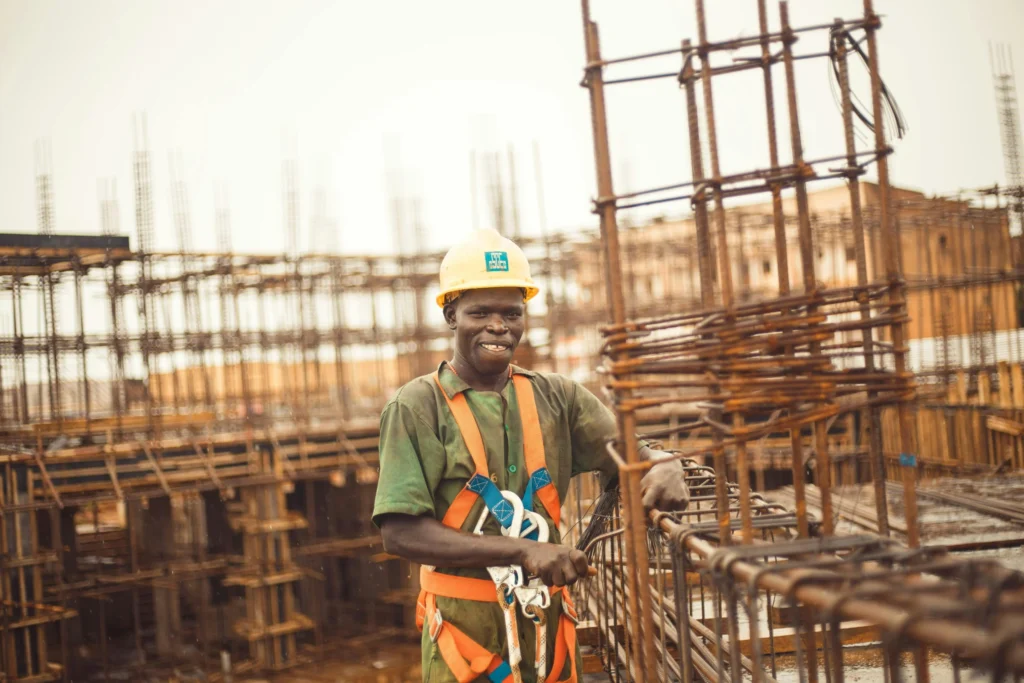
It’s 102 degrees. The concrete radiates heat like a stovetop. You’re pouring foundations, moving rebar, carrying materials. Your shirt is soaked through. You’re dizzy. Your head pounds. You know the signs of heat stroke, but you also know taking a break means losing half a day’s wages.
Heat-related illness is one of the leading causes of death among construction workers, yet many worksites lack basic protections—shaded rest areas, readily accessible water, mandatory cooling breaks. You’re expected to work through conditions that would shut down an office building.
Research examining stress and anxiety among construction workers found that the physical demands of construction jobs—including exposure to extreme weather—cause not just physical exhaustion but mental strain that compounds over time. Workers prioritize economic needs over physical health, continuing to work despite fatigue out of fear of job loss.
The Research Says
A systematic review published in PMC analyzed stress, fear, and anxiety among construction workers, finding that long working hours in harsh conditions create both immediate physical danger and cumulative psychological burden. Workers experiencing heat stress report cognitive impairment, decreased concentration, and increased accident risk—yet they continue working because economic survival depends on it. The study emphasized that construction workers, despite being fatigued, continue working rather than prioritizing their physical health, driven by job insecurity and the preservation mechanism where perceived job loss threats intensify overwork.
Research Study
Stress, fear, and anxiety among construction workers: a systematic review
Mindful Solutions
- 90-Second “Helmet Breath”: When you feel lightheaded or overheated, find any shade—even your own shadow. Remove your helmet for 90 seconds. Close your eyes. Breathe slowly—inhale for 4 counts, exhale for 6. This brief pause can prevent heat stroke while barely impacting your work time.
- Water Ritual: Drink water on a schedule, not when you remember. Every hour, on the hour, take 5 sips minimum. Dehydration impairs judgment before you notice thirst. Your survival depends on this schedule.
- Buddy System: Pair up with a coworker to watch for heat illness signs in each other. Slurred speech, confusion, stopped sweating—these mean emergency. You can’t always recognize the danger in yourself, but you can save each other.
2. The Fall That Haunts Every Ladder: Working at Heights Without Protection
Or: My Safety Harness is Held Together With Duct Tape (If I Have One At All)
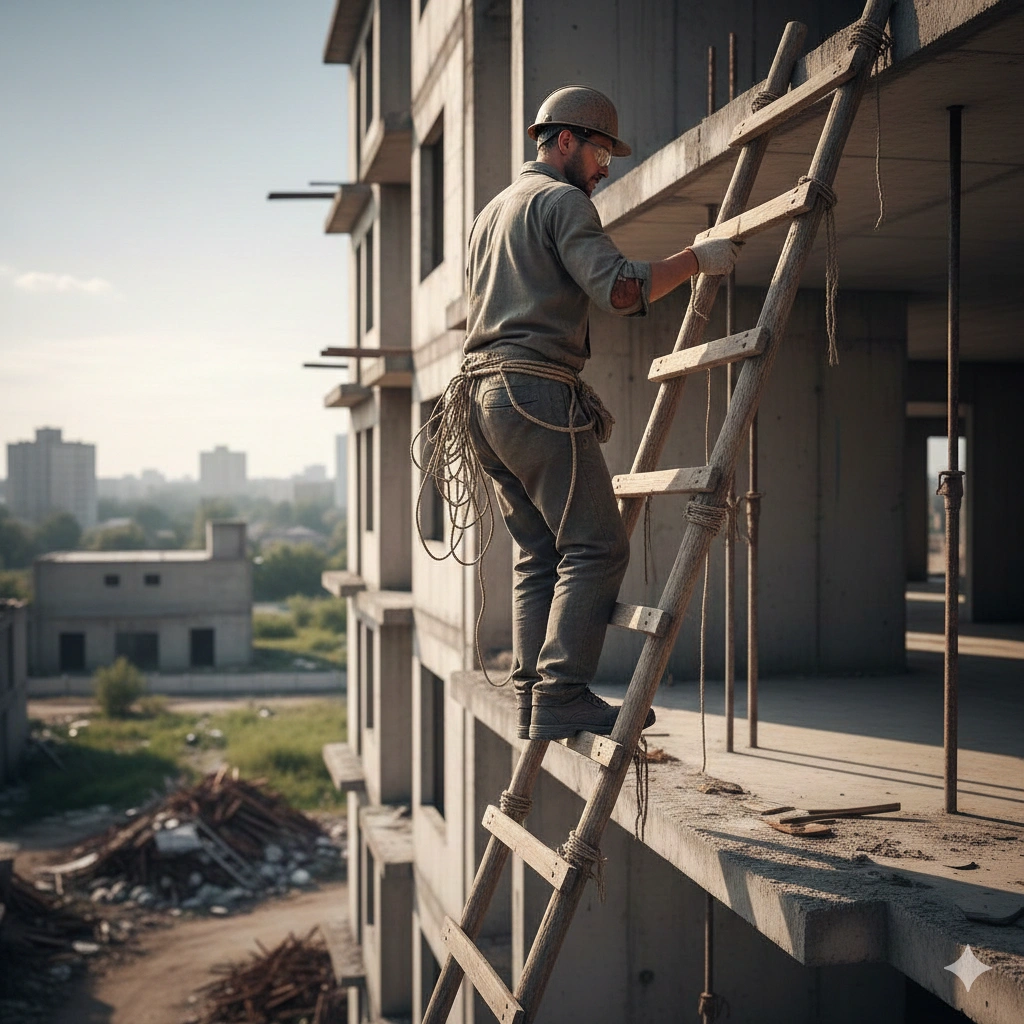
You’re 40 feet up. The scaffolding wobbles. Your safety harness—if the company provided one—is frayed. The anchor point isn’t properly secured. You know this is dangerous. You also know refusing means you’re fired and someone else takes your place within the hour.
Falls from height are the leading cause of construction worker deaths globally, yet safety equipment is often inadequate, improperly maintained, or nonexistent. You’re expected to risk your life daily for wages that barely cover rent.
The ILO’s code of practice on safety and health in construction emphasizes that working at height requires comprehensive safety measures—proper scaffolding, personal protective equipment, guardrails, safety nets. In reality, these protections are luxuries many workers never see.
The Research Says
According to ILO construction safety guidelines, falls from height remain one of the most significant hazards in construction. The revised 2023 code promotes a preventative safety culture where the right to safe and healthy working environments is respected throughout the construction project lifecycle. However, research consistently shows a gap between international standards and on-ground reality, particularly for daily-wage laborers and workers in small construction firms where safety regulations are minimally enforced. The psychological toll of constant danger—working daily with the knowledge that one misstep means death or severe injury—creates chronic anxiety that workers are expected to suppress.
Research Study
Safety and health in construction (Revised edition)
Mindful Solutions
- Pre-Climb Safety Scan: Before ascending any ladder or scaffold, take 30 seconds to check: Is it stable? Is equipment secured? Is there a safe anchor point? This isn’t paranoia—it’s survival. If something looks unsafe, document it (photo on phone if possible) before refusing.
- Fear Acknowledgment: The fear you feel working at heights isn’t weakness—it’s your body’s survival mechanism working correctly. Before climbing, acknowledge the fear: “I’m afraid. That’s smart. I’ll be careful.” This reduces anxiety’s power by removing shame.
- Three-Point Contact Rule: On ladders and scaffolding, always maintain three points of contact (two hands and one foot, or two feet and one hand). This simple rule dramatically reduces fall risk and provides a focusing ritual that grounds your attention.
3. The Wage Theft Epidemic: When a Day’s Hard Labor Earns Nothing
Or: I Worked 60 Hours This Week and Got Paid for 35
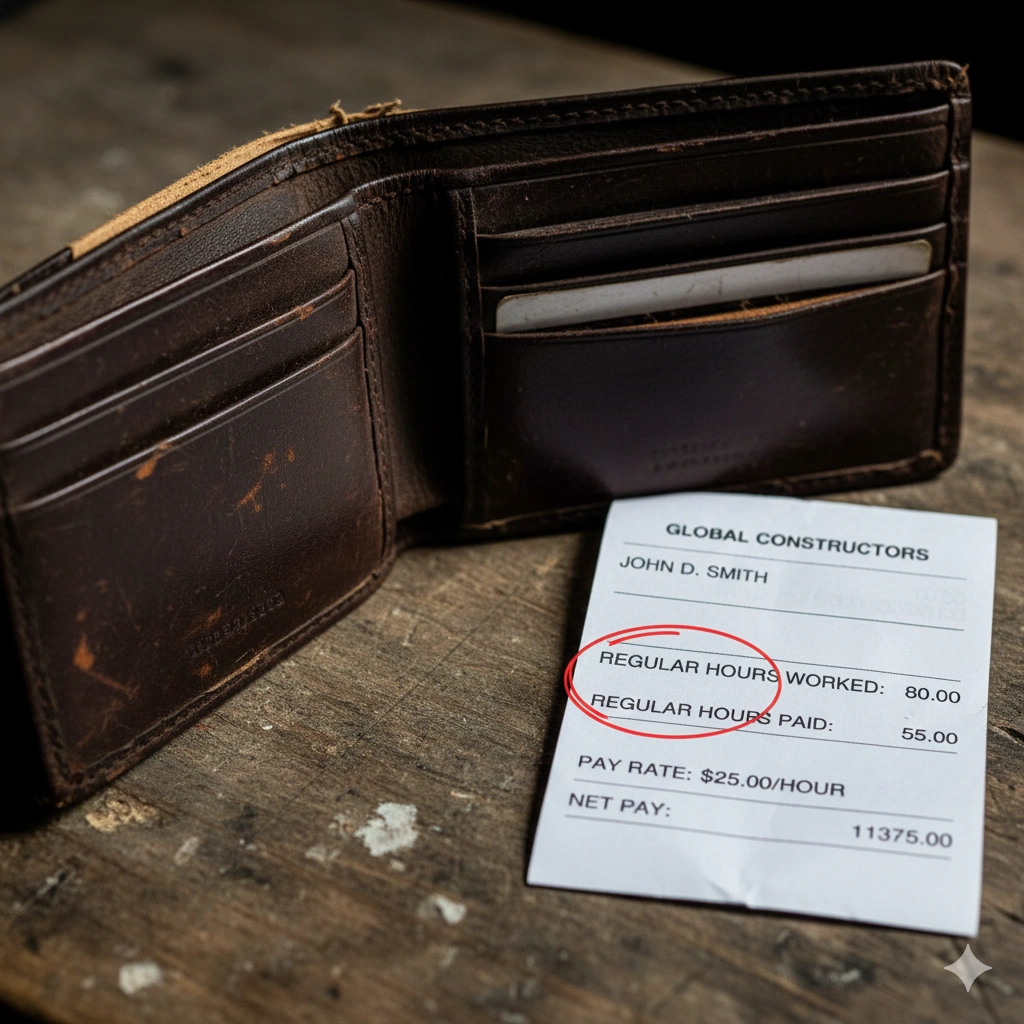
You worked Monday through Saturday. You were on site for 60 hours. Your pay stub shows 35. The contractor claims you took breaks you didn’t take, left early when you didn’t, showed up late when you arrived first. You have no recourse because you’re paid cash, under the table, with no documentation.
This is wage theft—and it’s rampant in construction. Daily-wage laborers are especially vulnerable, working without contracts, without documentation, with no legal protection when employers simply refuse to pay.
Even workers with formal employment face wage theft through misclassification as independent contractors, unpaid overtime, or illegal deductions. You’re building someone else’s wealth while barely surviving yourself.
The Research Says
Research on construction worker mental health found that financial stress ranks among the top stressors contributing to poor mental health. According to a systematic review, 62% of construction workers report financial stress as a major concern. The transactional nature of stress means financial insecurity directly impacts physical and mental health outcomes. Workers facing wage theft experience not just economic hardship but psychological distress from the powerlessness of having their labor stolen with no recourse.
Research Study
Stress, fear, and anxiety among construction workers: a systematic review
Mindful Solutions
- Document Everything: Take photos of your timesheet daily. Record your own hours in a notebook or phone. When wage theft happens (not if—when), you have evidence. Even without formal employment, documentation creates power.
- Know Your Rights: Research labor laws in your area. Even undocumented workers have rights regarding wage payment in many jurisdictions. Connect with worker advocacy organizations. You’re not alone, even when it feels that way.
- Build Emergency Fund: If possible, save even $5 per paycheck. Wage theft and work scarcity are predictable. A small financial buffer reduces the panic when theft happens and gives you slightly more power to refuse exploitative conditions.
4. The Injury Invisibility: When Getting Hurt Means Getting Fired
Or: I’ve Been Working With a Broken Rib for Two Weeks Because I Can’t Afford to Stop
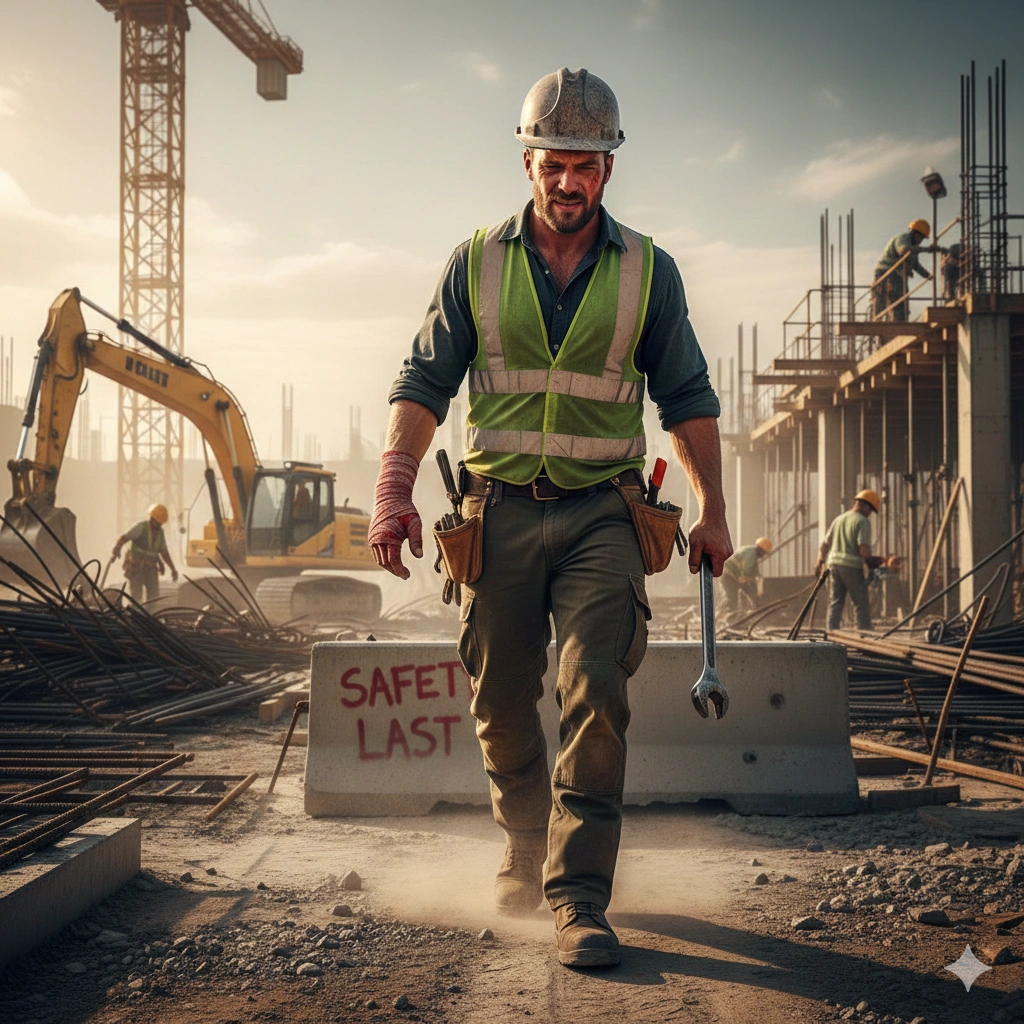
Your wrist has been swelling for three weeks. Probably a stress fracture from repetitive lifting. You can’t afford a doctor visit. Even if you could, taking time off for treatment means losing your position. The contractor will replace you before you return.
So you work injured. You take over-the-counter painkillers that barely touch the pain. You develop a worse injury compensating for the original one. Your body breaks down incrementally, but you can’t stop the process because survival demands you keep working.
Construction has one of the highest injury rates of any industry globally. The ILO reports that workers are exposed to numerous occupational safety and health hazards and risks, yet many injuries go unreported because reporting means unemployment.
The Research Says
University research examining construction worker mental health found that 41% of workers reported being injured on the job, with that percentage rising to 51% for workers employed longer than three years. More concerning: 69% took unpaid time off due to pain or exhaustion in just one month. The study emphasized that injuries sustained on the job exacerbate mental health issues such as depression, anxiety, and burnout. The psychological distress from injuries manifests as feelings of helplessness, loss of confidence, and fear of returning to work—yet workers return anyway because economic necessity overrides all other concerns.
Research Study
Assessment of Construction Workers’ Mental Health to Improve Wellbeing
Mindful Solutions
- Pain Signal Literacy: Learn the difference between “sore” and “injured.” Soreness is symmetrical and fades with rest. Injury is localized, sharp, or progressively worsening. Sharp pain demands you stop immediately. Chronic ache demands you modify technique. This knowledge prevents temporary injuries from becoming permanent disabilities.
- Modified Movement Strategies: When injured, adapt rather than power through. Use your other hand. Lift differently. Ask for help with heavy items. Pride won’t rebuild your torn rotator cuff, but strategic adaptation might let you heal while working.
- Free/Low-Cost Clinics: Research community health clinics, worker advocacy organizations, or hospital charity care programs in your area. Many areas have resources specifically for uninsured workers. Asking for help isn’t weakness—it’s survival strategy.
5. The Mental Health Desert: Where Stress is “Weakness” and Help Doesn’t Exist
Or: I’ve Had Panic Attacks on the Jobsite and Nobody Talks About It
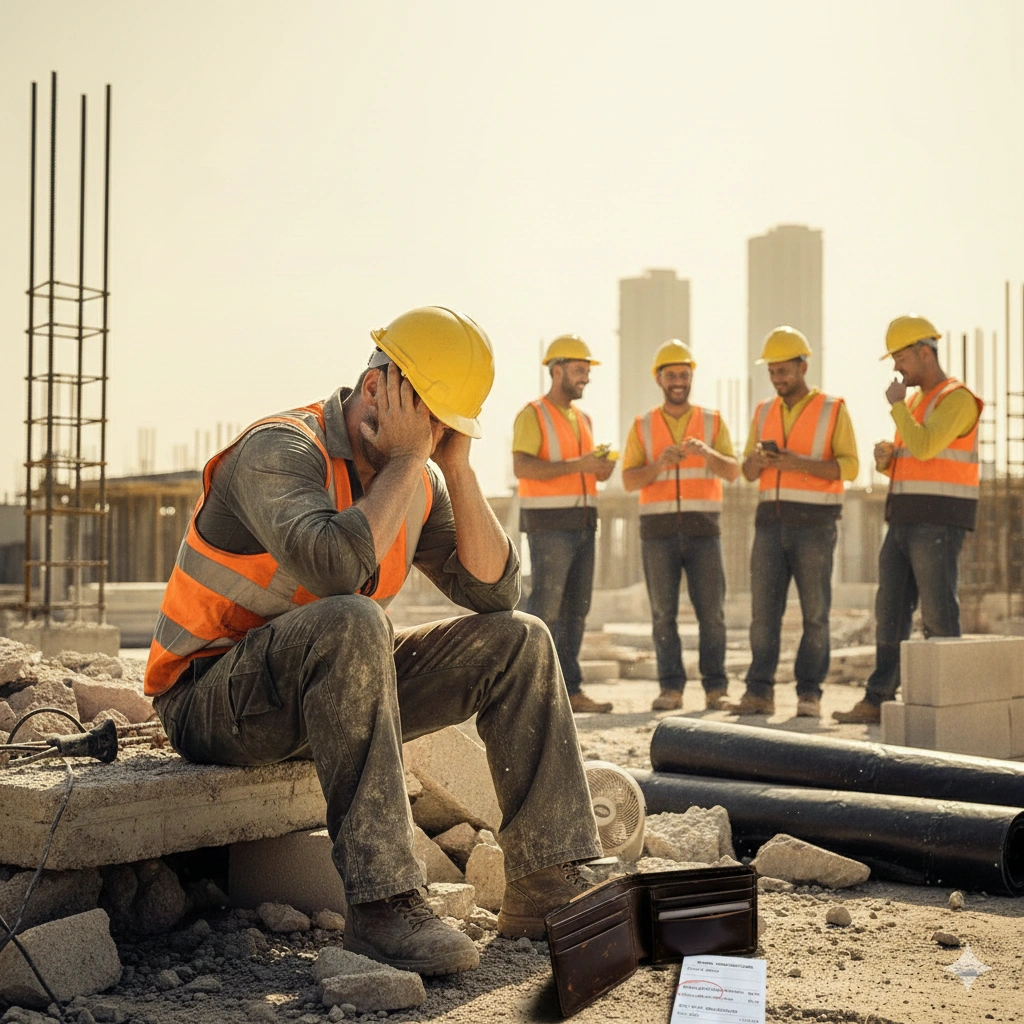
You wake up with chest pain. Your heart races for no reason. You can’t sleep because your mind won’t stop calculating how many days until the next paycheck, how many bills are overdue, whether tomorrow there will be work.
You’re not “stressed”—you’re experiencing a mental health crisis. But in construction, admitting struggle is career suicide. The culture demands toughness. Mental health is seen as weakness. Men (who comprise 90% of construction workers) especially are socialized to suppress all emotional vulnerability.
So you suffer in silence. Maybe you drink to cope. Maybe you develop substance dependency. Maybe you think about suicide and don’t tell anyone because who would you tell?
The Research Says
Research reveals that construction has the highest suicide rate of any profession in the United States. More than 80% of construction workers report experiencing stress at work, yet nearly 60% of those struggling with mental health never communicate this to employers due to fear of embarrassment, belief their employer can’t help, or worry about career consequences. Statistics Canada estimates 33% of construction workers report poor mental health. The male-dominated culture creates particular barriers: men are 6-7 times more likely to die of overdose than workers in other professions, with opioids as the leading cause.
Research Study
The Biggest Danger in Construction Work Is Poor Mental Health
Mindful Solutions
- 3-Minute “Site Safety Scan”: During lunch break, find a quiet spot. Close your eyes. Scan your body from head to toe, noticing where you hold tension. Breathe into those areas. This practice isn’t “solving” mental health issues—it’s preventing acute stress from becoming chronic crisis.
- Name the Feeling: When panic hits, name it aloud (quietly): “This is anxiety. I’m safe right now. This feeling will pass.” Naming activates your prefrontal cortex and reduces the amygdala’s panic response. It sounds simple because it is—and it works.
- Crisis Resources: Save these numbers in your phone: National Suicide Prevention Lifeline (988 in US), Crisis Text Line (text HOME to 741741). Many countries have construction-specific mental health resources. These aren’t for “weak” people—they’re for people in crisis who deserve to survive it.
The Numbers Behind the Buildings
Let’s be clear about what your labor actually costs:
- Construction has the highest suicide rate of any profession
- 80%+ of construction workers experience work-related stress
- 41% report being injured on the job
- 69% took unpaid time off for pain/exhaustion in just one month
- 33% report poor mental health
- 6-7x higher overdose death rate than other professions
- 52% of Australian construction leaders say skilled workers leave due to stress and burnout
You’re building the infrastructure of modern society while your own life infrastructure collapses.
The ILO Standards Nobody Enforces
The International Labour Organization’s 2023 revised code of practice on safety and health in construction provides comprehensive guidance. It promotes preventative safety culture. It emphasizes the right to safe and healthy working environments throughout the construction project lifecycle.
On paper, you have rights.
In reality? You have survival choices that masquerade as choices. Work in unsafe conditions or don’t work. Risk heat stroke or lose wages. Suppress injuries or lose your job.
The standards exist. The enforcement doesn’t. And you pay the price.
Your 60-to-180 Second Survival Practices
The 90-Second “Helmet Breath” (Heat Exhaustion Prevention)
- Find shade (even your own shadow)
- Remove helmet for 90 seconds
- Close eyes, breathe: inhale 4 counts, exhale 6
- Repeat 3-4 times
- This can prevent heat stroke without noticeably impacting productivity
The 3-Minute “Site Safety Scan” (Mental Health Maintenance)
- During lunch, find quiet spot
- Close eyes, mentally scan body head to toe
- Notice tension locations
- Breathe into those areas
- This prevents acute stress from becoming chronic crisis
The 30-Second Pre-Climb Check (Fall Prevention)
- Before ascending, visually inspect: stability, anchor points, equipment
- Ask: “If this fails, will I survive?”
- If no, document and refuse
- 30 seconds of checking saves your life
Building Your Support System
Links to Mindful Engineer Resources:
Understanding construction worker burnout connects to broader labor exploitation patterns:
- Amazon Delivery Driver Burnout: Surveillance and Exploitation – Physical labor under algorithmic control
- First Responder Stress: Constant Danger Management – Working in high-risk environments
- Caregiver Fatigue: Invisible Labor – The cost of undervalued work
- Job-Hunt Burnout: When Systems Devalue You – Fighting for dignity in exploitative systems
These resources offer frameworks for surviving work that treats you as expendable.
What Must Change (And Won’t Without Fighting For It)
Enforced Safety Standards: ILO guidelines must be legally mandated and actively enforced with real penalties for violations. Your life shouldn’t depend on your employer’s ethics.
Universal Healthcare Access: No worker should choose between medical treatment and feeding their family. Healthcare is a human right, not an employment benefit.
Guaranteed Sick Leave: Paid sick leave and injury recovery time must be standard. Working while sick or injured shouldn’t be economically necessary.
Wage Theft Prosecution: Stealing workers’ wages must be prosecuted as theft. Documentation and enforcement systems must protect day laborers and undocumented workers.
Mental Health Resources: Construction-specific mental health services, culturally sensitive programming, and destigmatization initiatives are essential.
Collective Bargaining Power: Union representation gives workers leverage. Organized labor remains the most effective tool for enforcing dignity.
None of this happens voluntarily. Every worker protection in history was won through organized resistance.
The Question Your Body is Already Answering
How many more years can you do this?
Not “until retirement”—you won’t make it that long at this pace. How many more years until your back gives out permanently? Until the heat stroke causes brain damage? Until the fall that you’ve been lucky to avoid finally happens?
Your body is keeping score even when you’re not.
The Choice at 5 AM
Your alarm goes off. Another day of risking your life for wages that don’t cover rent. Another day of heat, heights, injuries, and the knowledge that you’re expendable.
You can keep ignoring the pain signals. You can keep working through injuries. You can keep accepting conditions that slowly kill you because the alternative is immediate economic catastrophe.
Or you can take 90 seconds today to breathe in shade. You can take 30 seconds to check safety equipment. You can document wage theft. You can save one crisis helpline number. You can talk to one other worker about what you’re experiencing.
These tiny acts won’t fix the system. But they might keep you alive while we fight to change it.
Take Your Next Breath
Not your next lift. Your next breath.
The concrete will still need pouring. The scaffolding will still need climbing. The contractor will still be exploiting someone.
But your body—your one body that has to last you a lifetime—deserves 90 seconds of care.
You deserve safety equipment that works. Fair wages for your labor. Medical care when you’re injured. The right to refuse dangerous conditions without losing your livelihood.
These aren’t radical demands. They’re basic human dignity.
And you’re worth fighting for.
RESEARCH CITATIONS & REFERENCES
- ILO – Safety and Health in Construction (Revised Edition 2023)
- URL: https://www.ilo.org/resource/other/safety-and-health-construction-revised-edition
- Key Finding: 229 million construction workers globally face diverse OSH hazards
- PMC – Stress, Fear, and Anxiety Among Construction Workers (2023)
- URL: https://pmc.ncbi.nlm.nih.gov/articles/PMC10372223/
- Key Finding: Workers prioritize economic needs over health due to job loss fears
- PMC – Prevalence of Poor Mental Health in Construction (2024)
- URL: https://pmc.ncbi.nlm.nih.gov/articles/PMC10930880/
- Key Finding: Building and construction is third-highest stress industry globally
- CPWR – Construction Worker Mental Health Assessment (2023)
- URL: https://www.cpwr.com/wp-content/uploads/SS2023_Construction-Worker-Mental-Health-Assessment.pdf
- Key Finding: 41% injured on job, 69% took unpaid time off for pain/exhaustion
- EHS Today – Biggest Danger in Construction is Poor Mental Health (2024)
- URL: https://www.ehstoday.com/construction/article/21171410/the-biggest-danger-in-construction-work-is-poor-mental-health
- Key Finding: 80%+ of construction workers report experiencing work stress
- Corfix – Mental Health in Construction Industry Statistics (2025)
- URL: https://www.corfix.com/blog/mental-health-in-construction-statistics/
- Key Finding: Construction workers 6-7x more likely to die of overdose
- Workplace Mental Health – Construction Industry Survey (2021)
- URL: https://workplacementalhealth.org/employer-resources/guides-and-toolkits/mental-health-and-well-being-in-the-construction-i
- Key Finding: Construction ranks second highest in suicide rates among major industries
- Travelers Insurance – Construction Mental Health Survey (2025)
- URL: https://www.travelers.com/resources/business-industries/construction/mental-health-survey
- Key Finding: 51% of managers lack formal training on addressing mental health