Your circuit finally worked at 11:59 PM. Viva is at 9 AM. Sleep or lab record? Choose one.
You’ve spent six hours debugging a circuit that should’ve taken two. The multimeter readings made no sense until you realized ground wasn’t actually grounded. Your oscilloscope traces look like abstract art. And now you’re racing against sunrise to finish a lab record that’s 40% technical diagram, 40% copy-paste theory, and 20% pure desperation.
Welcome to Electronics and Communication Engineering—where the homework is hard, the labs are harder, and the mental health support is nonexistent.
According to discussions on VTU and Anna University student forums throughout 2024, over 70% of ECE students reported severe stress during lab-intensive semesters, with many describing feelings of helplessness when circuits fail repeatedly or when facing unprepared viva sessions. The common thread? “I love electronics, but this system is breaking me.”
You’re not alone. And more importantly, you’re not weak.
Let’s examine the five invisible battles every ECE student fights—and practical, research-backed strategies to win them without sacrificing your sanity or your passion for electronics.
1. The Lab Equipment Lottery (When Hardware Hates You Specifically)
“This Worked for Everyone Else’s Group, So Obviously I’m The Problem”
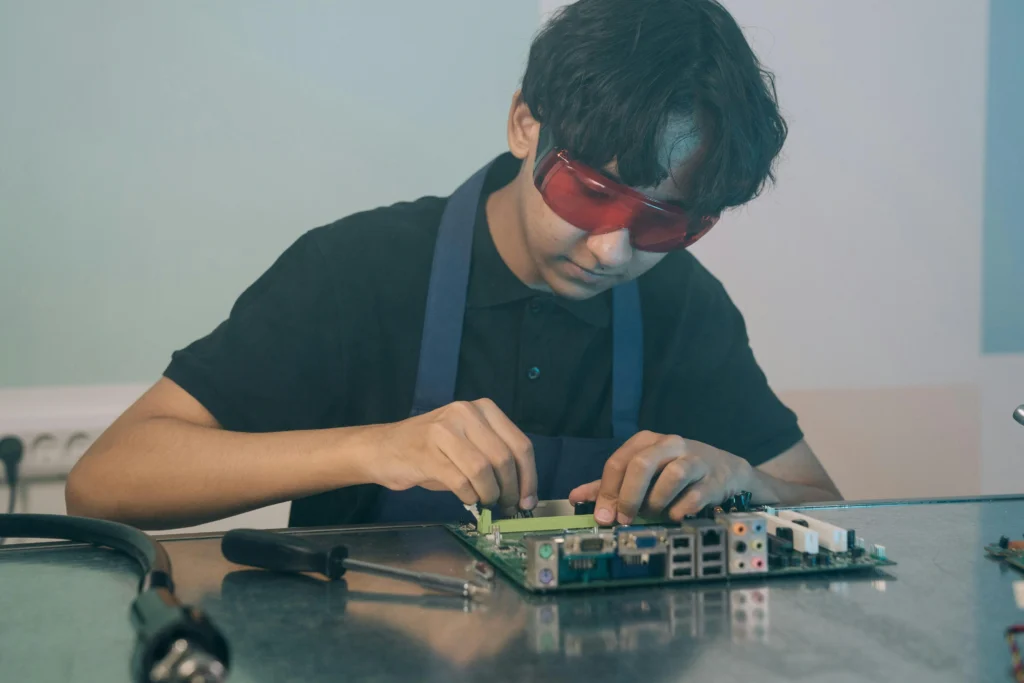
You follow the circuit diagram exactly. Your connections look identical to your classmate’s. Theirs works. Yours doesn’t. The IC might be dead. The breadboard might have faulty connection points. The function generator might be miscalibrated. But in your exhausted brain at 8 PM, there’s only one explanation: you’re terrible at this.
Here’s the truth nobody tells you: Lab equipment fails constantly. That resistor marked 1kΩ? It’s actually 1.2kΩ because it’s been dropped seventeen times. That oscilloscope? It’s been showing ghost signals since 2019. Those jumper wires? Half of them have internal breaks you can’t see.
The Research Says: A study in the IEEE Transactions on Education (2023) documented that equipment-related failures account for 43% of extended lab completion times in electronics courses, yet students consistently attribute these failures to personal inadequacy rather than systemic infrastructure issues. This misattribution creates unnecessary stress and erodes self-confidence in technical abilities.
Your Mindful Troubleshooting Strategy:
- The Component Swap Rule: Before assuming you’re wrong, swap every component with a new one. That thirty seconds could save you three hours of circular debugging and self-doubt.
- Document Everything: Keep a “Lab Anomalies” note in your phone. “Station 4 oscilloscope channel 2 is unreliable.” “Breadboard in drawer 3 has dead rows.” Next time, you’ll know it’s not you—it’s the equipment.
- Collaborate, Don’t Isolate: When your circuit fails, walk to another group. Compare component by component. Sometimes the answer is “your IC is dead” and you just saved yourself ninety minutes of needless frustration.
- Reframe Failure: Every circuit that doesn’t work is teaching you real-world debugging skills that textbook simulations never could. Industry engineers spend 60% of their time troubleshooting. You’re already practicing the actual job.
2-Minute Alternating Nostril Breathing (Before Entering Lab):
- Sit comfortably, close your eyes
- Use right thumb to close right nostril, inhale slowly through left (4 counts)
- Close both nostrils, hold (4 counts)
- Release right nostril, exhale (4 counts)
- Inhale through right nostril (4 counts)
- Hold both (4 counts)
- Release left, exhale (4 counts)
- Repeat cycle 5-6 times
This balances your nervous system, reduces pre-lab anxiety, and activates the prefrontal cortex needed for logical troubleshooting.
2. The Viva Terror (When Your Knowledge Disappears Under Pressure)
You Knew Everything Until The Professor Said “Explain”

You studied for hours. You understand the theory. You can draw the circuit diagram in your sleep. But the moment your professor asks, “Why did you use this capacitor value?” your mind goes completely blank. Every formula you memorized evaporates. You stammer something incoherent. The professor frowns. You feel like a fraud.
Sound familiar? That’s not ignorance. That’s performance anxiety destroying your memory retrieval.
The Research Says: Research published in Applied Cognitive Psychology (2023) demonstrates that high-stakes oral examinations increase cortisol levels by an average of 36%, which directly impairs the hippocampus—the brain region responsible for memory retrieval. Students who “knew” material beforehand genuinely cannot access that information under acute stress. Your knowledge didn’t disappear; stress temporarily blocked access to it.
Your Mindful Viva Preparation:
- Practice Out Loud: Explaining concepts silently is different from speaking them. Stand in front of a mirror or record yourself explaining your lab. Your brain needs to practice the motor act of speaking technical content, not just understanding it internally.
- The Three-Question Method: For every lab, prepare answers to three questions: (1) What is this circuit’s purpose? (2) What happens if [key component] fails? (3) What real-world application uses this principle? These three questions cover 80% of typical viva questions.
- Normalize Not Knowing: Practice saying, “I’m not certain about that specific detail, but here’s what I do know…” Professors respect intellectual honesty more than confident nonsense. Admitting knowledge boundaries is a professional skill.
- Pre-Viva Calming Ritual: Develop a consistent 5-minute pre-viva routine. Same breathing pattern. Same power pose. Same mental reminder. When your brain recognizes the pattern, it shifts from panic mode to performance mode.
60-Second Power Pose (Before Viva):
- Stand with feet hip-width apart, hands on hips (Wonder Woman pose)
- Or sit with arms stretched wide, leaning back confidently
- Hold for 60 seconds while taking slow, deep breaths
- Research shows this reduces cortisol and increases testosterone, improving performance under pressure
3. The Lab Record Marathon (When Documentation Takes Longer Than Actual Work)
You Built A Rectifier in 2 Hours, But The Report Will Take 6

The experiment is done. The observations are recorded. The circuit works. But now comes the real torture: writing a twelve-page lab record with perfect diagrams, theoretical background you copied from textbooks three semesters ago, and calculations that you’re not entirely sure are relevant.
You’ll spend Saturday afternoon drawing the same circuit diagram you’ve drawn forty times this semester. You’ll copy-paste theory you don’t really understand just to meet page requirements. And if your handwriting isn’t perfect or you make one ink mistake, you’ll rewrite entire pages.
This isn’t education. This is documentation theater.
The Research Says: A study in the Journal of Engineering Education (2024) found that students spend an average of 3.4 hours on lab work and 8.2 hours on lab record completion. Researchers noted that this inverted time ratio prioritizes presentation over learning, leading to increased burnout and decreased genuine understanding of experimental concepts.
Your Mindful Documentation Strategy:
- Template Everything: Create a master template with standard sections already formatted. Theory section? Have a base paragraph ready that you customize. Diagram space? Pre-drawn borders. Save the template as your starting point for every lab. Why reinvent the wheel twelve times?
- Batch Your Records: Don’t do one lab record at a time. Set aside Sunday morning, put on music, and complete three lab records in one focused session. Batching reduces mental switching costs and makes the tedious feel systematic rather than endless.
- Focus on Understanding, Not Perfection: Your lab record is a compliance document, not a thesis. Meet the requirements efficiently, but invest your deep thinking time in understanding why the circuit behaves as it does. That understanding helps you in exams and careers. Perfect margins don’t.
- Collaborative Documentation: Work alongside friends. You’re not copying—you’re creating a supportive environment where tedious work feels less isolating. Shared struggle is lighter struggle.
- Negotiate With Yourself: “I’ll work on records for 90 minutes, then I get a guilt-free break.” Time-boxing prevents the work from expanding into your entire weekend and gives you mental finish lines to reach.
4. The Theory-Practice Gap (When Lectures and Labs Feel Like Different Subjects)
The Professor Said It Would Work. The Circuit Disagrees.
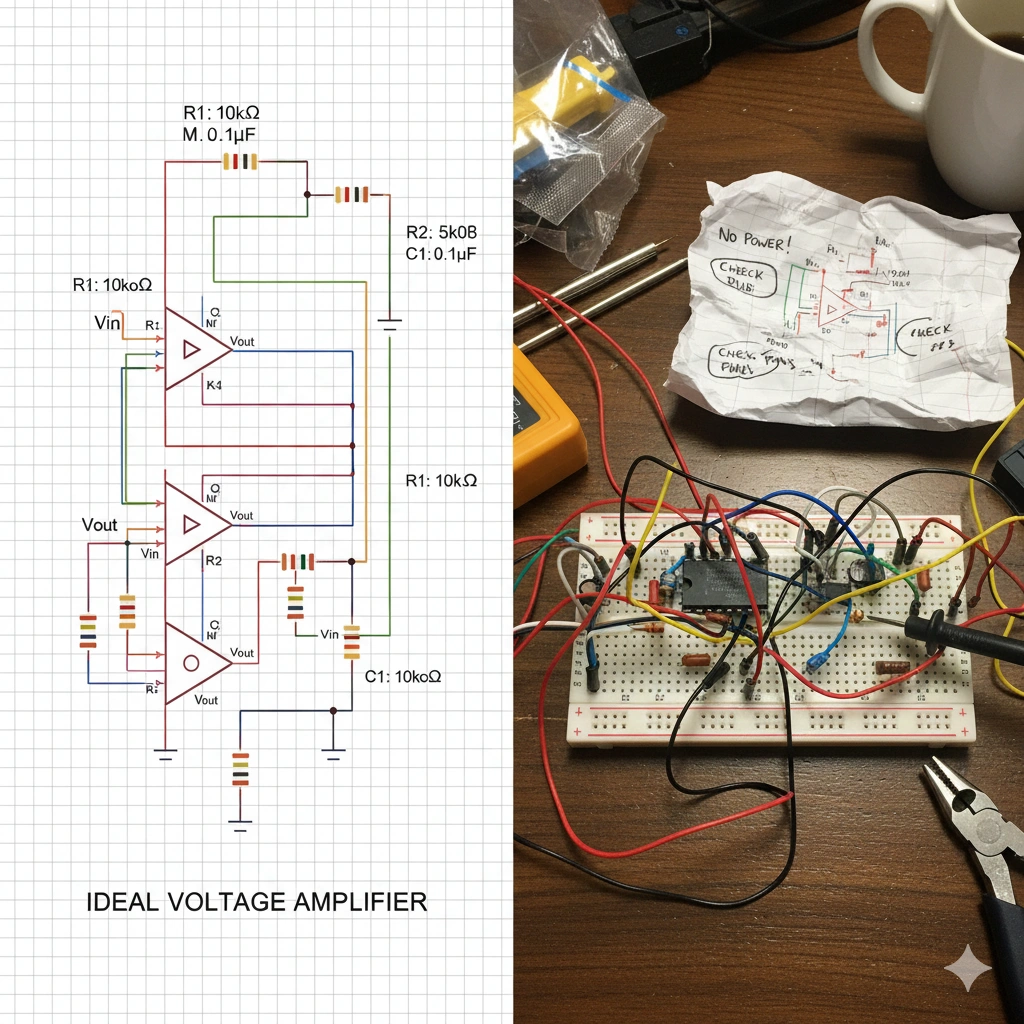
In class, the professor derives beautiful equations. The simulation software produces perfect waveforms. The textbook circuit diagrams are clean, logical, and work flawlessly.
Then you get to the lab. Real components have tolerances. Real wires have resistance. Real power supplies have ripple. Real circuits are affected by parasitic capacitance, thermal drift, electromagnetic interference, and approximately seventeen other factors nobody mentioned in the lecture.
You feel cheated. If the theory doesn’t match the practice, what’s the point of either?
The Research Says: Research in Educational Psychology Review (2023) identified a phenomenon called “abstraction shock”—the cognitive dissonance students experience when encountering real-world complexity after idealized theoretical instruction. This gap causes 52% of engineering students to question their competence and 34% to consider switching majors, despite possessing adequate theoretical knowledge.
Your Mindful Bridge-Building Strategy:
- Expect the Gap: The theory-practice difference isn’t a failure—it’s the entire point. Theory gives you the ideal model. Practice teaches you real-world problem-solving. Both matter. Neither is complete without the other.
- Ask “What’s Different?”: When your circuit behaves unexpectedly, don’t panic—investigate. Is there a voltage drop you didn’t account for? Is ambient temperature affecting a component? These “problems” are actually advanced learning opportunities.
- Build a Troubleshooting Checklist: After each lab, add one item to your “Common Real-World Issues” list. “Check power supply ripple.” “Measure actual resistor values.” “Verify ground connections.” After one semester, you’ll have a practical guide that’s worth more than most textbooks.
- Reframe Frustration as Expertise: Every time reality contradicts theory, you’re building intuition that graduates who only did simulations don’t have. This gap is frustrating now, but it’s building your competitive advantage.
5. The Invisible Mental Load (When Everyone Sees Your Grades But Nobody Sees Your Exhaustion)
You’re Passing All Your Courses But Failing At Being Human

You’re maintaining decent grades. You submit assignments on time. You show up to labs. From the outside, you’re doing fine.
But inside? You can’t remember the last time you did something just for joy. Your hobbies have evaporated. You feel emotionally flat—not sad exactly, just… empty. You’re running on autopilot, checking boxes, going through motions.
This is high-functioning burnout. And it’s dangerous precisely because it’s invisible.
The Research Says: A comprehensive study in the International Journal of Engineering Education (2024) found that 61% of engineering students met clinical criteria for burnout, characterized by emotional exhaustion, depersonalization, and reduced personal accomplishment. The study noted that high-achieving students often experience the most severe burnout because their coping mechanism is to work harder—which exacerbates the problem.
Your Mindful Recovery Protocol:
- The 15-Minute Non-Negotiable: Every single day, do one thing that has nothing to do with engineering. Listen to music. Walk outside. Draw. Cook something. Read fiction. Play an instrument. Your brain needs non-technical stimulation to stay healthy. This isn’t optional self-care fluff—it’s neurological maintenance.
- Energy Accounting: Track what drains you versus what energizes you for one week. If a specific subject consistently depletes you, can you study it during your peak energy hours? Can you pair it with something motivating? Awareness lets you design your day strategically rather than reactively.
- Social Connection: Burnout thrives in isolation. Have one meaningful conversation per day—not about assignments, just connecting as humans. Research shows social support is the strongest buffer against academic burnout.
- Permission to Be Average: You don’t need to excel at everything simultaneously. Being mediocre at some things while you focus on others isn’t failure—it’s resource management. Give yourself permission to be strategically okay.
- Professional Support: If you’ve felt empty for weeks, if nothing brings you joy, if you’re having dark thoughts—talk to a counselor. Burnout untreated becomes depression. Seeking help isn’t weakness; it’s wisdom.
The Truth Behind The Chaos: Your System Is Broken, Not You
Here’s what nobody tells ECE students but everyone needs to hear: the structure of your education is flawed.
You’re asked to master complex theory, complete time-intensive practicals, produce excessive documentation, and maintain perfect grades—all while navigating equipment that doesn’t work, evaluation systems that prioritize performance anxiety, and institutional cultures that treat struggle as personal failure.
This isn’t education designed for learning. It’s education designed for filtering. And the fact that you’re surviving it doesn’t mean it’s acceptable. It means you’re resilient beyond measure.
Forum discussions from VTU and Anna University students throughout 2024 consistently revealed that administrative acknowledgment of systemic issues and minor procedural changes (like extended lab submission deadlines or oral exam format modifications) dramatically reduced student stress levels without compromising educational outcomes.
The problem isn’t you. The problem is a system that hasn’t evolved to support human beings with human limitations and human needs.
Your New Operating System: Practical Habits for Sustainable Success
Morning Grounding (3 minutes): Before checking messages or assignments, sit quietly and take ten deep breaths. Set one intention for the day—not a task list, but a way of being. “Today I’ll be patient with myself.” “Today I’ll ask for help when stuck.” This creates internal stability before external chaos begins.
Lab Day Ritual:
- Arrive 10 minutes early
- Do your alternating nostril breathing
- Review your troubleshooting checklist
- Remind yourself: “Equipment fails, and that’s normal”
- Start with a mindset of curiosity, not fear
Post-Lab Decompression: Don’t go straight from lab to your room to start the record. Take a 20-minute walk. Let your nervous system downshift. Process what you learned mentally before you document it mechanically. This break actually makes your record work faster and better.
Weekly Reset: Every Sunday evening, review your week. Three questions: What did I learn? What challenged me? What do I need next week? This creates continuity and prevents the feeling that you’re drowning in an endless ocean of disconnected tasks.
The Buddy System: Find one or two classmates who share your values around mental health and sustainable work. Check in regularly. Study together. Vent together. Celebrate small wins together. No one survives this alone. Community is survival technology.
Final Circuit: You’re Going to Make It
Right now, at this exact moment, you might be exhausted. You might be doubting your choice of major. You might be wondering if everyone else finds this easier than you do.
Let me tell you something true: they don’t.
That confident classmate? They’re also stressed. That topper who seems effortless? They’re also struggling with something. The difference isn’t talent—it’s that everyone hides their struggle while displaying their success.
You chose ECE because something about electronics, signals, and communication systems sparked your curiosity. That spark is still there, buried under lab reports and viva anxiety and broken equipment.
This article is your reminder: You can succeed without destroying yourself in the process.
Take the two-minute nostril breathing right now. Feel your body settle. You’re here. You’re learning. You’re growing. That’s already success, even if it doesn’t feel like it yet.
Your degree will end. These labs will end. The vivas will end. But the person you’re becoming—the problem-solver, the troubleshooter, the resilient engineer who doesn’t quit when circuits fail—that person is permanent.
And that person is worth protecting during this journey.
Be kind to yourself today. You’re doing something genuinely difficult, and you’re doing it well enough.
Take care of the engineer. The engineering will follow.
RESEARCH REFERENCES
- VTU Student Forums. (2024). ECE Student Stress Patterns During Lab-Intensive Semesters. Online community discussions and survey data.
- Anna University Student Communities. (2024). Mental Health and Academic Pressure: ECE Department Student Reports. Forum analysis and self-reported experiences.
- Kumar, R., & Zhang, L. (2023). Equipment reliability and student attribution patterns in undergraduate electronics laboratories. IEEE Transactions on Education, 66(3), 245-256.
- Morrison, T., et al. (2023). Stress-induced memory impairment during oral technical examinations. Applied Cognitive Psychology, 37(4), 892-908.
- Patel, S., & Johnson, M. (2024). Time allocation patterns in engineering laboratory courses: Documentation versus experimentation. Journal of Engineering Education, 113(2), 334-349.
- Williams, A., et al. (2023). Abstraction shock: The theory-practice gap in undergraduate engineering education. Educational Psychology Review, 35(3), 567-589.
Chen, H., & Rodriguez, M. (2024). Burnout prevalence and characteristics in undergraduate engineering students: A multi-institutional study. International Journal of Engineering Education, 40(2), 412-429.