You’re in bootcamp. Sixteen-hour scrims blur into mandatory streaming obligations. Your manager texts at 2 AM about tomorrow’s content schedule. Your wrist throbs. Your eyes burn.
The Invisible Battlefield
You chose esports because you loved gaming. Now gaming feels like war. While 921 million viewers worldwide watch esports content and the industry generates billions in revenue, behind those spectacular plays and championship celebrations lies a darker reality: 38.3% of competitive players experience high burnout risk, with depression and anxiety symptoms surpassing rates seen in traditional sports.
Recent research analyzing 453 esports players across seven team-based games revealed three distinct burnout profiles, with over one-third falling into the high-risk category characterized by physical exhaustion, reduced accomplishment, and negative feelings toward their sport. The psychological fatigue experienced by esports athletes differs from traditional sports—it’s a unique combination of mental strain, physical repetition, and digital overload that conventional recovery methods don’t adequately address.
Five Daily Battles You’re Fighting (That Your Stream Never Shows)
1. “The Grind Never Stops” — When Practice Becomes Punishment
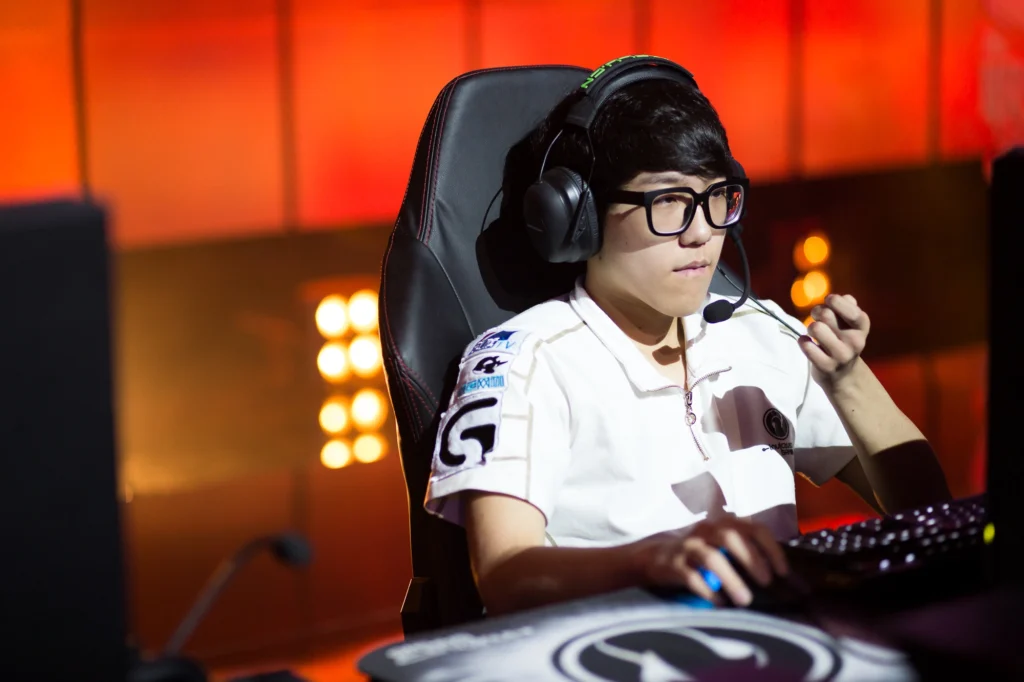
You finish scrimmages at midnight. Your contract requires eight hours of streaming per week. Your coach schedules VOD review at 9 AM. Sleep becomes a luxury you can’t afford. Training hours directly correlate with depression symptoms among esports athletes, yet the industry glorifies the grind as dedication rather than recognizing it as dangerous overwork.
The hidden issue
Unlike traditional sports where physical limitations naturally enforce rest, esports allows you to train until your mind breaks before your body does. Professional players report training between 50-70 hours weekly, with some contracts demanding up to 120 hours of streaming monthly on top of team obligations. The result? Psychological exhaustion that manifests as decreased performance, emotional numbness, and complete loss of enjoyment.
Research insight
Studies examining League of Legends Championship Korea players identified overtraining as one of five primary burnout factors. Athletes described feeling trapped in cycles where taking breaks felt like falling behind competitors, creating perpetual pressure to maintain unsustainable schedules.
Mindful solutions
- Establish non-negotiable rest periods: minimum one full day off weekly with zero gaming
- Track mental fatigue using a daily 1-10 scale; scores below 5 for three consecutive days trigger mandatory recovery
- Separate practice from streaming—they serve different purposes and require different energy
- Implement the “Respawn Reset” practice (detailed below) between extended sessions
- Communicate burnout symptoms to management using objective metrics: reaction time, decision-making speed, match win rates
For comprehensive stress management techniques applicable to high-performance environments, explore
Mindful Engineer’s Stress & Burnout resources.
2. The Spotlight Paradox — Performing While People Watch You Break

Your stream expects entertainment. Your sponsors demand positivity. Meanwhile, you’re dealing with harassment in chat, pressure to maintain viewership numbers, and the constant performance anxiety of knowing thousands are watching every mistake. Research identifies competing in front of live audiences as a significant stressor, yet streaming makes this a daily reality rather than an occasional tournament pressure.
The hidden issue
The parasocial relationships formed through streaming create unique mental health challenges. Viewers feel entitled to your time, emotional energy, and personal information. Negative comments trigger stress responses that impact subsequent performance. You’re not just an athlete—you’re perpetual entertainment, and the “off” switch doesn’t exist.
Research insight
A systematic review examining esports stress found that psychological distress manifests differently than in traditional sports, with social media harassment, streaming obligations, and constant public scrutiny creating sustained anxiety that traditional athletes only experience during major competitions.
Mindful solutions
- Establish firm boundaries: streaming schedule with protected offline hours
- Use moderation tools aggressively; your mental health matters more than viewer count
- Create a “stream persona” distinct from your authentic self—separation protects your core identity
- Practice the “Stream Off Switch” meditation (detailed below) to transition between public and private self
- Designate one trusted person to handle social media management during high-stress periods
Learn more about maintaining authenticity while protecting mental health at
Mindful Engineer’s Life & Reflections.
3. The Performance Tightrope — Where One Bad Game Ends Careers
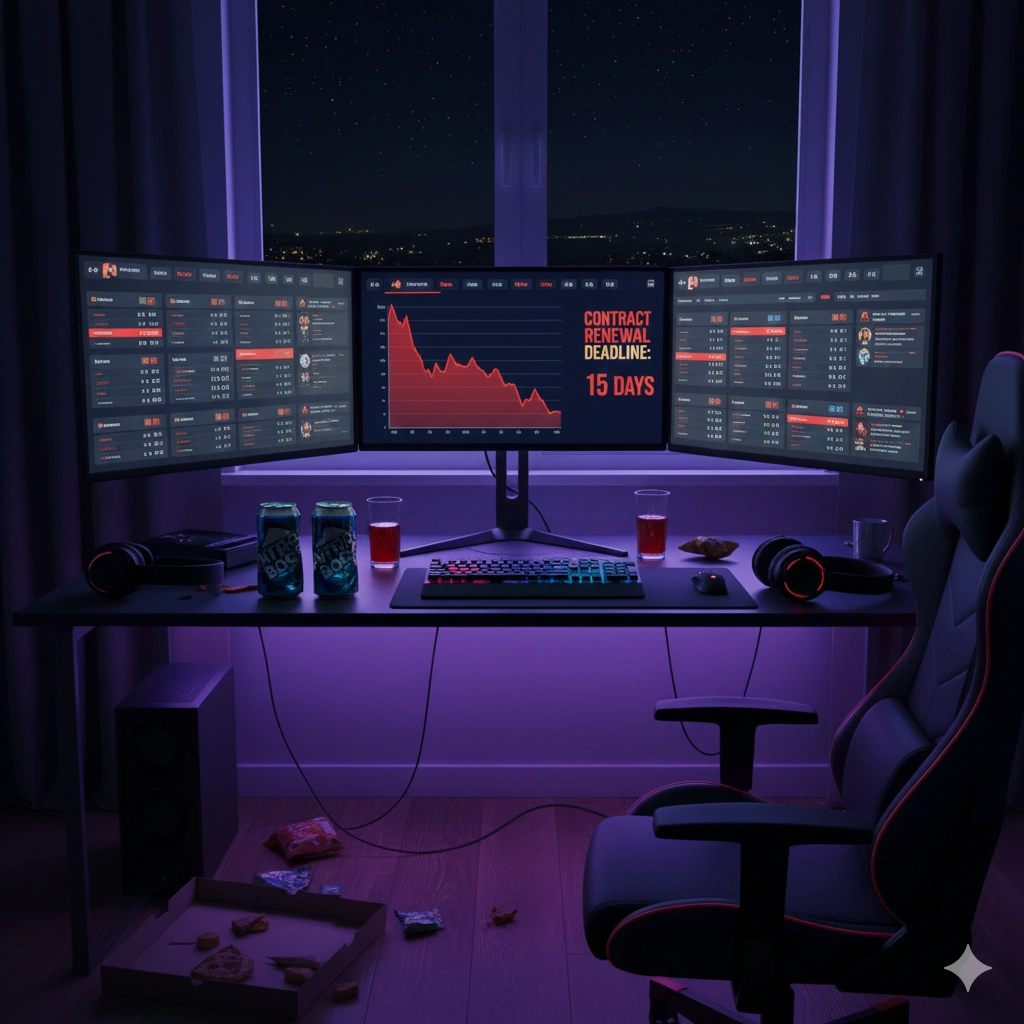
Your contract is performance-based. One slump could mean replacement. Younger players are constantly emerging. The average esports career lasts five years—shorter than most traditional sports. This creates relentless pressure where every match feels like an audition for your professional survival, and burnout symptoms directly impact the performance metrics that determine your livelihood.
The hidden issue
The reduced sense of accomplishment—a core burnout symptom—becomes self-fulfilling. As burnout worsens, performance declines, which intensifies fears about career sustainability, which increases stress, which further diminishes performance. You’re trapped in a downward spiral with no clear exit strategy.
Research insight
Latent profile analysis revealed that high burnout risk players showed the highest reduced accomplishment scores alongside similar physical exhaustion and negative feelings as medium-risk players, suggesting that perceived inefficacy is the tipping point from manageable stress to critical burnout.
Mindful solutions
- Separate self-worth from performance metrics: document three non-gaming accomplishments weekly
- Build career backup plans: education, content creation, coaching certifications
- Focus on process goals (practice quality, communication improvement) rather than outcome goals (win rates, rankings)
- Establish performance review conversations with management focusing on growth trajectories, not single-match results
- Connect with sports psychologists specializing in performance anxiety before symptoms become severe
For techniques on managing performance pressure, visit
Mindful Engineer’s Focus & Flow section.
4. The Body Betrayal — When Your Physical Self Can’t Keep Pace
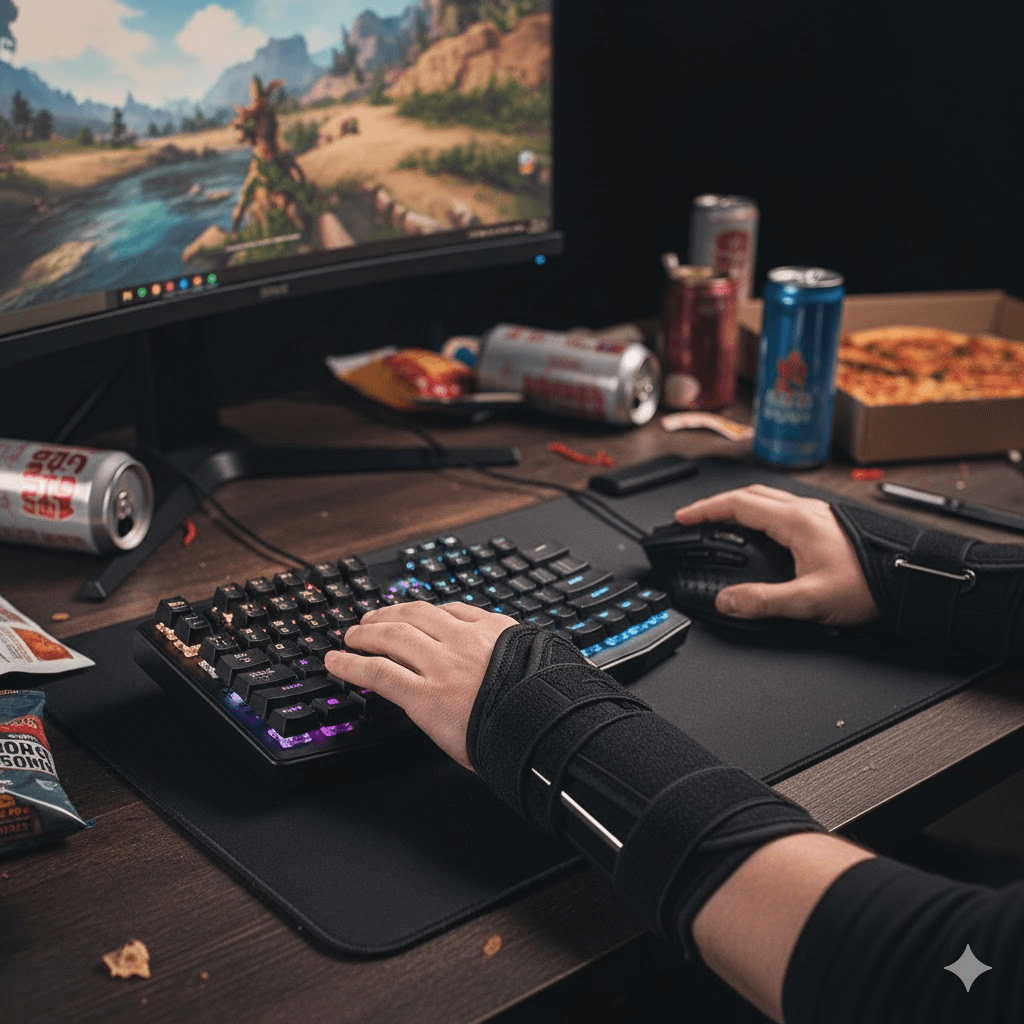
Wrist pain. Back problems. Eye strain. Tension headaches. Sleep disturbances. Your body is sending distress signals, but acknowledging them feels like admitting weakness. Physical health issues among esports athletes include repetitive strain injuries, poor posture consequences, and vision problems—all exacerbated by the sedentary nature of competition.
The hidden issue
Gaming doesn’t provide the natural movement that helps traditional athletes process stress hormones. Extended screen time worsens anxiety and depressive symptoms, creating a vicious cycle where your sport itself contributes to mental health deterioration. Additionally, the WHO’s inclusion of gaming disorder in ICD-11 stigmatizes legitimate competitive gaming, making athletes hesitant to seek help for genuine burnout.
Research insight
Research comparing esports athletes to traditional sports athletes during the pandemic found higher depressive symptoms among esports players, potentially linked to the lack of physical activity that typically helps regulate mood and process stress hormones.
Mindful solutions
- Schedule mandatory movement breaks: 10 minutes away from screens every 90 minutes
- Incorporate cardiovascular exercise 30 minutes daily—studies show this significantly reduces depression/anxiety
- Work with occupational therapists specializing in repetitive strain injuries
- Invest in proper ergonomic equipment; physical pain amplifies psychological distress
- Track sleep quality; aim for 7-9 hours with consistent schedule
Explore the science behind physical movement and mental wellbeing at
Mindful Engineer’s Science Behind Calm.
5. The Team Tension — When Collaboration Becomes Conflict

Five personalities. One shared goal. Constant pressure. Team dynamics in esports create unique stressors—communication breakdowns during matches, conflicting playstyles, personality clashes in close quarters during bootcamps. Interpersonal relationships emerged as a primary burnout factor, with conflicts between teammates or with coaching staff significantly impacting mental wellbeing.
The hidden issue
Unlike traditional sports with physical team-building activities, esports teams often only interact through screens or during high-stress competition. This creates shallow relationships without the bonding that helps teams weather conflict. When problems arise, you lack the interpersonal foundation to resolve them constructively.
Research insight
Analysis of burnout among League of Legends Championship Korea athletes identified interpersonal relationships as one of five core burnout factors, with team conflicts, communication issues, and lack of social support directly contributing to emotional exhaustion.
Mindful solutions
- Schedule regular team-building activities completely separate from gaming
- Establish team communication protocols: how to give feedback constructively, how to request support
- Create psychological safety where teammates can discuss mental health without judgment
- Work with team psychologists on conflict resolution skills before problems escalate
- Recognize early warning signs: decreased communication, passive-aggressive behavior, withdrawal
For guidance on building healthier team dynamics and mindful communication, explore
Mindful Engineer’s Mindful Leadership resources.
Quick Mindfulness Practices: Your Mental Health Toolkit
Practice 1: 5-Minute “Respawn Reset” (300 seconds)
When to use
Between extended practice sessions, after tilting matches, or when stress symptoms emerge
The practice
- Step completely away from your setup. Change your physical location (0:00-0:20)
- Stand with feet shoulder-width apart. Shake out your hands, roll your shoulders, release physical tension (0:20-0:50)
- Close your eyes. Take five deep breaths, counting: inhale for 4, hold for 4, exhale for 6, hold for 2 (0:50-1:40)
- Mentally scan your body from feet to head, noticing tension without judgment. Acknowledge: “This is stress. Stress is temporary.” (1:40-2:30)
- Visualize your ideal performance state: focused but calm, alert but relaxed. Notice how this state feels in your body (2:30-3:30)
- Set one intention for your next session: “I will communicate clearly,” “I will trust my training,” “I will make decisions confidently” (3:30-4:20)
- Take three final breaths, opening your eyes slowly. Return to your setup with renewed mental clarity (4:20-5:00)
Why it works
This practice interrupts stress accumulation by creating physical and mental separation between sessions. The breathing pattern activates your parasympathetic nervous system, counteracting fight-or-flight responses that impair performance. Visualization primes your brain for optimal execution.
Practice 2: 3-Minute “Stream Off Switch” (180 seconds)
When to use
Immediately after ending streams, before sleep, or when struggling to separate performer from person
The practice
- While still seated at your setup, close your stream/recording. Take one deep breath acknowledging the transition (0:00-0:10)
- Verbally state (aloud or internally): “The stream is ended. [Your name], you can rest now.” Use your real name, not your gamer tag (0:10-0:30)
- Remove any gaming peripherals: headset, wrist supports, gaming glasses. Each removal is symbolic disconnection (0:30-0:50)
- Stand up. Stretch your arms overhead, then forward, then side to side. Feel yourself occupying space differently (0:50-1:20)
- Walk to a different room—kitchen, bathroom, outdoors if possible. Physical distance creates mental distance (1:20-1:50)
- Place your hands over your heart. Breathe naturally. Acknowledge three things you appreciate about yourself unrelated to gaming (1:50-2:30)
- Set one non-gaming intention for the next hour: “I will read,” “I will call a friend,” “I will rest without screens” (2:30-3:00)
Why it works
Parasocial relationships and streaming obligations blur identity boundaries. This ritual creates clear demarcation between your professional persona and authentic self, preventing role absorption that leads to burnout. The physical and spatial transitions help your nervous system recognize the performance period has ended.
For additional guided practices tailored to high-performance contexts, visit
Mindful Engineer’s Guided Practices.
The Path Forward: From Burnout to Balance
You started gaming because it was fun. Somewhere along the way, fun transformed into obligation, passion became pressure, and play turned into work. The esports industry’s rapid growth created professional opportunities but failed to develop adequate mental health infrastructure alongside competitive structures.
Recent research demonstrates that resilience and mental toughness significantly protect against burnout, while avoidance coping (ignoring problems, hoping they resolve independently) strongly correlates with increased burnout symptoms. This means the solution isn’t just reducing stressors—though that’s critical—but actively building psychological resources that help you navigate inevitable challenges.
Professional players who retired or stepped back from competition cite burnout as a primary factor. You don’t have to become another statistic. Mental health isn’t weakness; it’s foundational to sustained high performance. Organizations spending six figures on player salaries should invest in sports psychologists, but even without organizational support, you can implement protective practices individually.
The esports market faces maintaining sustainable growth while managing player burnout as a key challenge. Industry stakeholders increasingly recognize that athlete wellbeing directly impacts competitive integrity, organizational stability, and long-term viability. Your mental health matters not just personally but systemically—burned-out players can’t create the spectacular performances that drive the industry.
Your Action Plan: Starting Today
- This week: Complete the “Respawn Reset” practice once daily, even on good days
- This month: Schedule one conversation with management about sustainable training schedules and mental health resources
- This season: Establish one firm boundary: streaming limits, rest days, or social media management
- Long-term: Build identity diversification—education, hobbies, relationships outside gaming
Remember: taking care of yourself isn’t giving up on professional ambitions. It’s the foundation for achieving them sustainably. Athletes who prioritize mental health and implement recovery strategies outperform those grinding through exhaustion. Your mental wellbeing is your competitive advantage.
For comprehensive support managing the unique pressures of high-performance digital competition, explore the complete resource library at
Additional Resources
- International Esports Federation: Mental health resources and player welfare guidelines
- Esports Healthcare: Medical professionals specializing in esports athlete health
- Psychology Today: Find sports psychologists with esports experience via directory filters
- National Alliance on Mental Illness (NAMI): Free crisis support and resources for gamers
Research References
- Poulus, D., et al. (2024). Burnout profiles among esports players: Associations with mental toughness and resilience. Journal of Sports Sciences. https://www.tandfonline.com/doi/full/10.1080/02640414.2024.2405794
- Monteiro Pereira, A., et al. (2022). An exploratory study on the conceptualization of burnout among professional esports athletes focused on League of Legends Champions Korea League. Healthcare, 12(11), 1127. https://www.mdpi.com/2227-9032/12/11/1127
- Kegelaers, J., et al. (2024). Promoting mental health in esports. Frontiers in Psychology, 15:1342220. https://pmc.ncbi.nlm.nih.gov/articles/PMC10836213/
- Palanichamy, T., et al. (2020). Influence of esports on stress: A systematic review. Industrial Psychiatry Journal, 29(2), 191-199. https://journals.lww.com/inpj/fulltext/2020/29020/influence_of_esports_on_stress__a_systematic.3.aspx
- Birch, P.D.J., et al. (2024). The prevalence of mental ill health in elite Counter-Strike athletes. Journal of Sports Sciences. https://www.researchgate.net/publication/377117796_Promoting_mental_health_in_esports