
Fame, awards, and red carpets don’t inoculate directors and editors—70-hour weeks, perfectionism, and creative terror still drive Hollywood’s elite to burnout and breakdown.
It’s 3 AM. You’re hunched over the editing bay for the eighteenth hour today, eyes burning from screen glare, replaying the same thirty-second sequence for the fortieth time. Your vision feels right, but the producer’s notes contradict your instincts, the deadline looms like a storm cloud, and somewhere in the back of your mind, a voice whispers: “Maybe you’re not good enough for this.”
Welcome to the hidden crisis of film directing and editing—where creative self-doubt meets punishing 18-hour post-production days, and your passion slowly transforms into a prison.
The film industry discusses diversity, representation, and box office numbers. But what about the mental health crisis silently dismantling the very people who bring stories to life? Research examining mental health in the UK film and television industry reveals that almost 90% of off-screen film and TV professionals have experienced mental health issues on the job. Think about that: nine out of ten people you’ve worked with are struggling.
This isn’t about weak people in a tough industry. This is about an industry structure that systematically burns through creative talent like disposable resources.
The Five Daily Battles You’re Fighting Behind Closed Doors
1. The Vision Vs. Reality Paradox: When Your Art Becomes Someone Else’s Product
The Reality
You spent years developing your unique visual language, your storytelling instincts, your directorial voice. Then you sit in a boardroom where executives who’ve never held a camera tell you to “make it more like that Netflix thing” or “cut it down, nobody watches past 90 minutes anymore.”
Picture This
A director sits in the color grading suite at 11 PM, watching producers transform her carefully crafted atmospheric thriller into something “more commercially viable.” The moody blues she fought for? Now oversaturated. The ambiguous ending she defended? Recut with exposition. She nods silently, wondering when she stopped fighting for her vision and started just trying to survive the process.
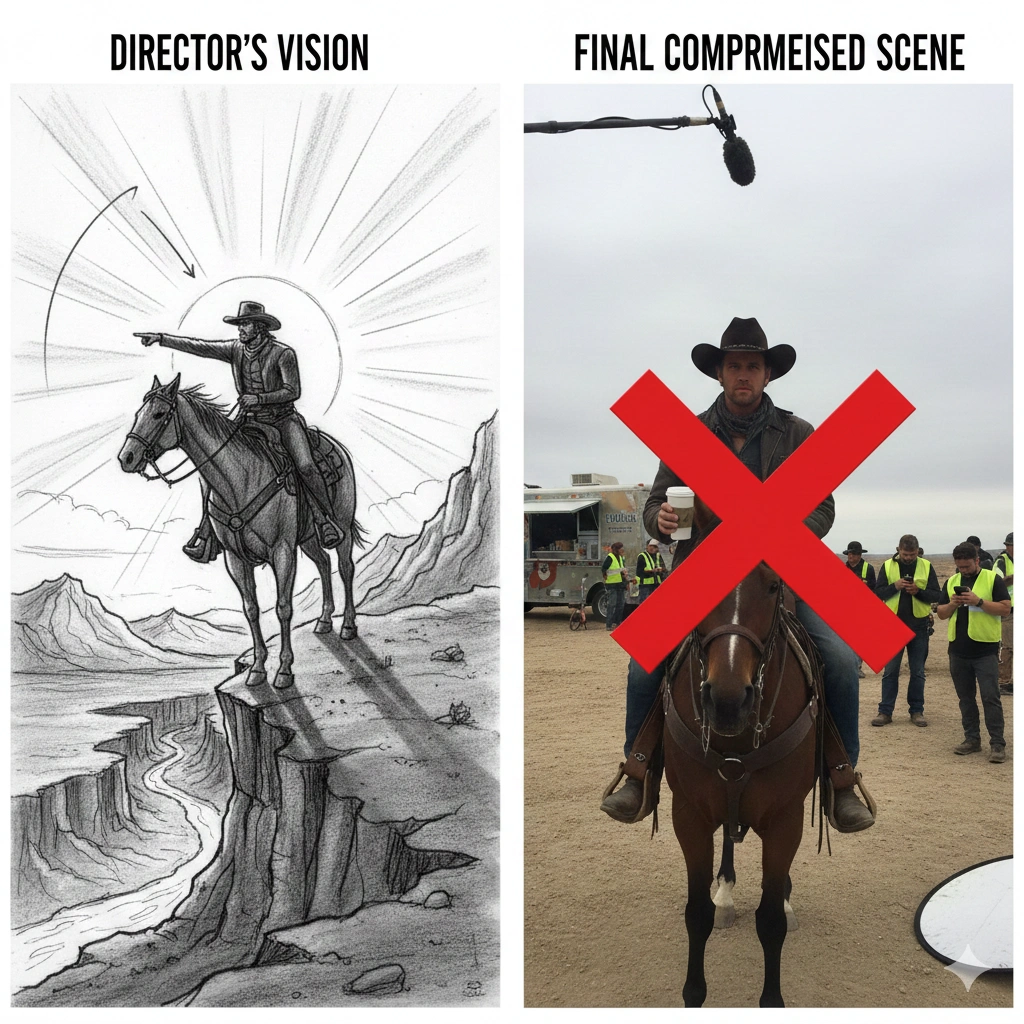
Research examining stress management for film directors reveals that balancing artistic vision with practical constraints represents one of the most consistent challenges on film sets. Directors must adapt their creative vision to fit budget limitations, location availability, and time restrictions, creating ongoing tension between artistic integrity and pragmatic execution.
Research Backing
Studies indicate that people working in entertainment have rates of moderate to severe anxiety ten times higher than the general public, with job insecurity, low pay, and intense pressure contributing to burnout.
Mindful Solutions
- Document Your Vision: Keep a visual diary—storyboards, references, notes. When compromises happen, you’ll remember what you were reaching for
- Pick Your Battles Strategically: Not every note deserves a fight. Identify the three non-negotiables in your vision and defend those fiercely; compromise gracefully on everything else
- Reframe Constraints as Creative Challenges: Budget cuts aren’t failures—they’re parameters. Some of cinema’s most innovative moments emerged from limitations
- Build Your Support Network: Connect with other directors who understand the unique pressure of protecting vision while navigating commercial demands
2. The Editing Bay Black Hole: When Time Stops and Life Disappears
The Reality
Post-production becomes your entire universe. You lose track of days. Your relationships become phone calls you’re too exhausted to return. Your healthy habits—exercise, proper meals, sleep—evaporate as you survive on coffee, takeout, and the promise that “just one more session” will crack the sequence.
Picture This
An editor wakes up on the couch in the editing suite for the third morning in a row. His partner stopped calling two weeks ago. He can’t remember his last full meal. The timeline stretches across three monitors, and somewhere around hour fourteen of yesterday’s session, all the cuts started looking the same. He questions whether he even knows what “good” looks like anymore.

Research on post-production burnout reveals that poor time and energy management leads to fatigue, frustration, and loss of creativity. Long hours without adequate rest create a cycle where mental exhaustion sabotages the very productivity editors and directors are desperately trying to maintain.
Research Backing
Industry professionals report replacing healthy habits with unhealthy coping mechanisms—going from 7-8 hours of sleep to barely four hours, craving junk food due to elevated cortisol, and completely abandoning exercise routines.
Mindful Solutions
- Time-Boxing Technique: Set non-negotiable end times for your editing day. Your brain needs rest to process creative decisions effectively
- The Fresh Eyes Protocol: Schedule mandatory breaks every 90 minutes. Walk outside. Look at something further than three feet away. Your eyes and perspective both need distance
- Create Micro-Rituals: Hot shower after uploading dailies. Tea and stretching before the last session. Small rituals signal to your brain when work ends and recovery begins
- Social Accountability: Share your schedule with someone who’ll actually call you out when you’re drowning in work
3. The Gig Economy Treadmill: When Saying “No” Feels Like Career Suicide
The Reality
You haven’t taken a vacation in years. Not because you don’t want to, but because turning down one project might mean losing the next three. The fear of unemployment keeps you accepting every offer, working yourself to exhaustion, then accepting the next project before you’ve recovered from the last.
Picture This
A freelance director receives an offer for a commercial shoot—good money, decent creative freedom, but it starts three days after her current project wraps. She’s been working 60-hour weeks for four months. Her body aches. Her relationships are strained. But she remembers the two-month gap between projects last year when she couldn’t pay rent. She accepts.
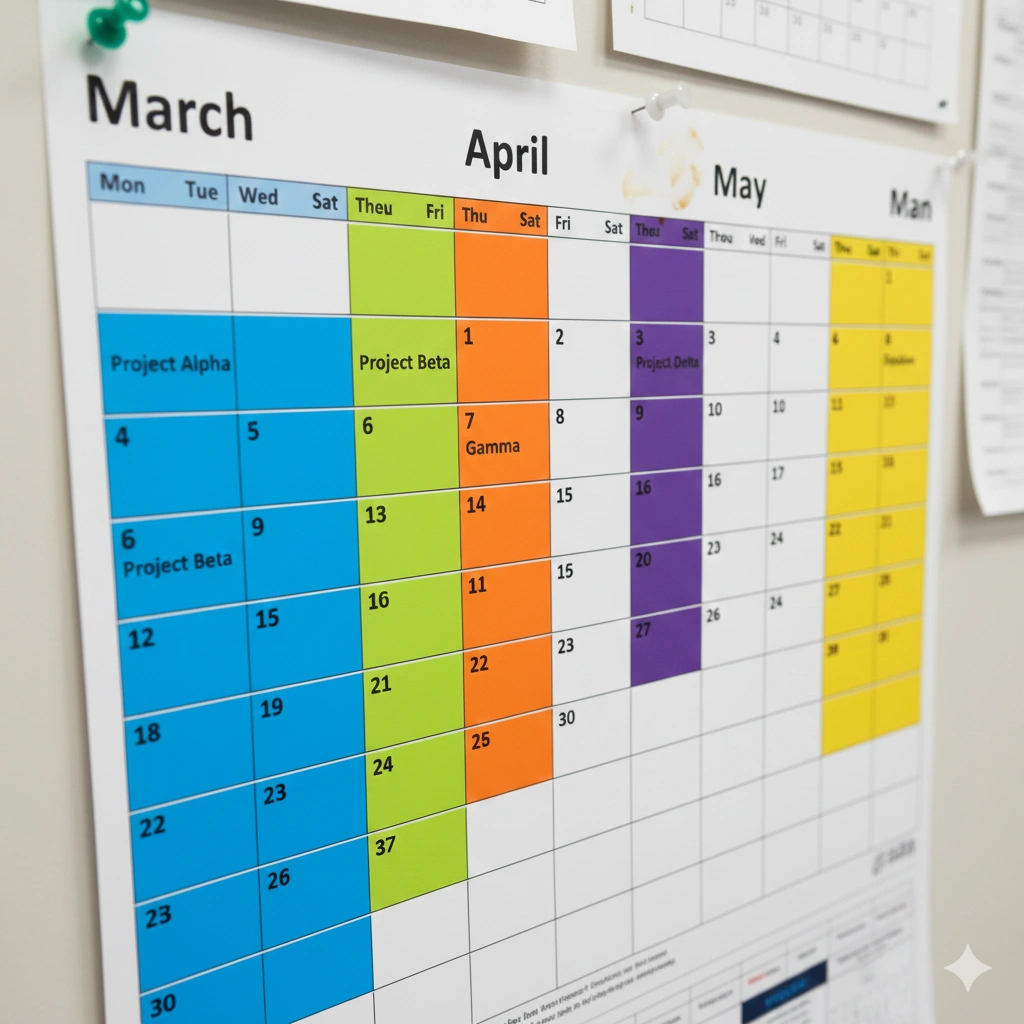
Research on project-based creative work reveals a culture where turning down projects becomes almost unthinkable. One crew member reported not taking a vacation for fifteen years due to fear that one declined project would eliminate opportunities for subsequent work, creating a cycle of overwork and burnout.
Research Backing
Mental health professionals working with entertainment industry clients note that patients typically seek help only when they’re “on the brink of divorce, nervous collapse, or when burnout has gotten significant enough that their job is in jeopardy.”
Mindful Solutions
- Create Financial Buffers: Save aggressively during high-earning periods specifically for strategic downtime. Financial security enables boundary-setting
- Communicate Availability Transparently: “I’m committed through X date, available from Y date” establishes professional boundaries without apologizing for needing rest
- Redefine Success Metrics: Success isn’t accepting every project. Success is sustaining a career you still love in five years
- Build Strategic Relationships: Cultivate long-term connections with producers who respect work-life boundaries and call you back after breaks
4. The Creative Self-Doubt Spiral: When Imposter Syndrome Directs Your Inner Monologue
The Reality
Every frame you cut, every directorial decision you make, is shadowed by the question: “Am I actually any good at this?” You scroll through social media seeing peers winning awards, landing dream projects, while you’re fighting just to get your cut approved. The voice in your head says you got lucky once, but eventually everyone will realize you’re a fraud.
Picture This
A director sits at a festival Q&A after her film’s premiere. The audience applauds. Critics praised her work. But she can only hear the two negative tweets she read backstage. She’s convinced the positive response is just people being polite. When an audience member asks about her “bold artistic choices,” she assumes they’re being sarcastic.

Research on mental health challenges in film reveals that anxiety and stress cloud judgment, hinder imagination, and lead to creative blocks. The performance pressure—particularly for directors who carry the narrative’s weight—can leave professionals vulnerable to anxiety and depression if not properly managed.
Research Backing
Studies show individuals who maintain healthy work-life balance unlock fuller creative potential, with evidence indicating that mental well-being directly correlates with sustained creative output quality.
Mindful Solutions
- Evidence Collection Journal: Document every positive piece of feedback, successful project, solved problem. Read it when imposter syndrome strikes
- Separate Worth from Work: Your value as a human isn’t determined by whether your last project succeeded. You are not your filmography
- Mentor Younger Creatives: Teaching others reminds you how much you actually know and reinforces your expertise
- Therapy with Industry-Competent Professionals: Work with therapists who understand entertainment industry pressures and won’t minimize your unique challenges
5. The Isolation Chamber: When Collaboration Feels Like Loneliness
The Reality
You’re surrounded by crew all day, yet profoundly alone. Directors carry the weight of every decision. Editors spend hours in dark rooms with only flickering screens for company. Everyone wants your approval, your vision, your leadership—but who asks how you’re actually doing?
Picture This
An editor finishes a 16-hour day and drives home in silence. He lives alone. His old friends from film school are scattered across different cities, working their own punishing schedules. He opens his apartment door to darkness and realizes he hasn’t had a meaningful conversation with anyone about anything other than work in weeks. The loneliness feels like a physical weight.
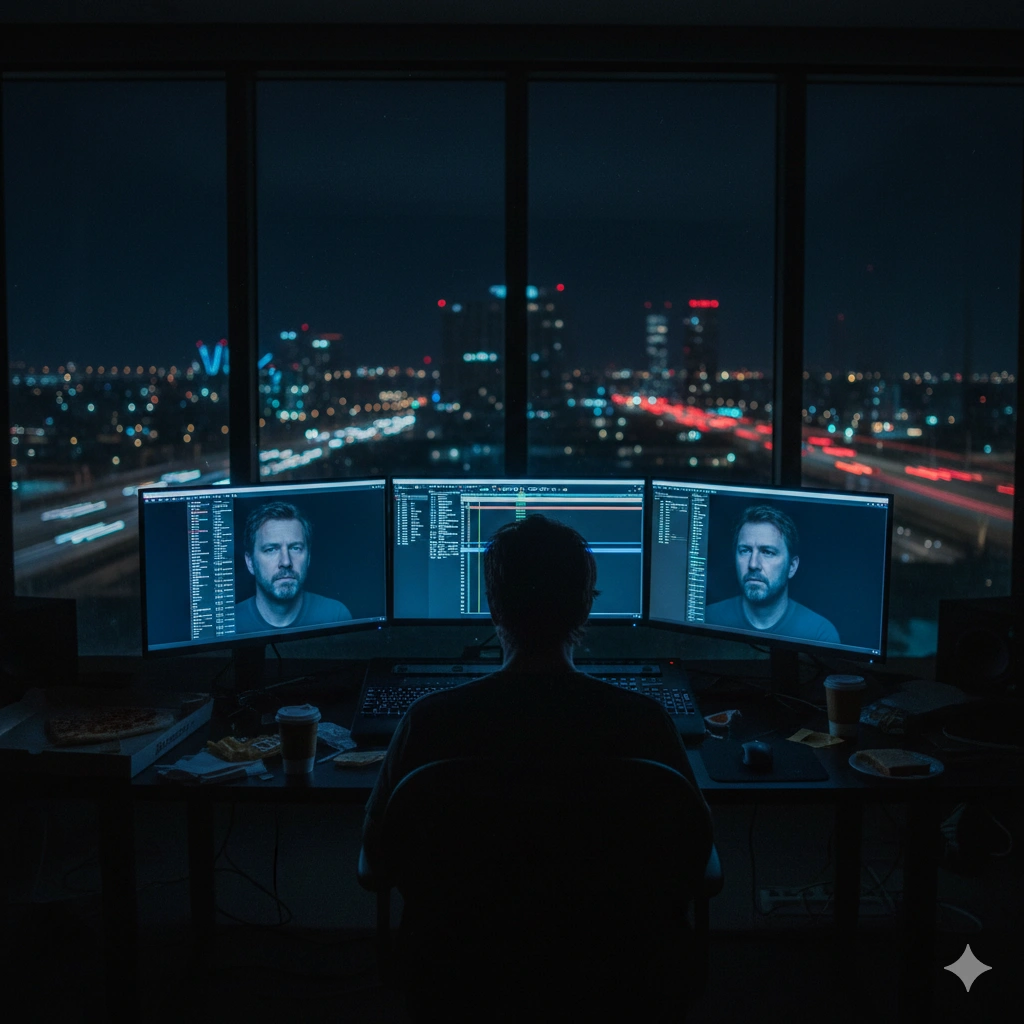
Research examining mental health in production reveals that the travel and extended periods required by film work mean spending long stretches away from loved ones, leading to feelings of isolation and disconnection. Missing family events, milestones, and the comfort of home while moving from set to set places significant strain on relationships.
Research Backing
Industry professionals report feelings of loneliness and depression, with the shame attached to admitting struggle locking people into silence and ultimately isolating them further.
Mindful Solutions
- Schedule Social Maintenance: Put friend calls and family dinners in your calendar like production meetings. Relationships require active maintenance
- Join Industry Support Groups: Connect with other directors and editors who inherently understand the unique isolation of your work
- Practice Vulnerable Conversation: Ask crew members, “How are you really doing?” Opening up creates space for others to be honest too
- Create Non-Industry Social Life: Cultivate friendships outside film where your identity isn’t defined by your last project
Relevant Resource
Explore practices for connection and presence
Quick Mindfulness Practices: Your 60-300 Second Survival Toolkit
Practice 1: The 3-Minute “Cut Compassion” (When Self-Criticism Spirals)
When to Use
During creative blocks, after receiving harsh feedback, when imposter syndrome strikes, or when you’re watching your work and only seeing flaws
How
- Minute 1—Acknowledge: Place your hand on your heart. Say aloud or internally: “This work is hard. I’m doing my best. I’m allowed to struggle.”
- Minute 2—Reframe: Ask yourself: “What would I tell a fellow director/editor facing this exact situation?” Offer yourself that same compassion
- Minute 3—Redirect Focus: Take three deep breaths. With each exhale, release one self-critical thought. Replace it with one factual positive: “I solved X problem today,” “I made Y creative decision that worked,” “I showed up.”
Science Behind It
Self-compassion practices activate the parasympathetic nervous system, reducing cortisol and stress responses. Research shows self-compassion correlates with increased resilience, creative risk-taking, and sustained motivation.
Practice 2: The 90-Second “Frame Pause” (When Overwhelm Hits Mid-Session)
When to Use
During long editing sessions, when deadline pressure peaks, before important creative decisions, or when you feel your judgment clouding
How
- 0-30 Seconds—Physical Reset: Stand up. Roll your shoulders back five times. Shake out your hands. Step away from your screen
- 30-60 Seconds—Sensory Grounding: Name five things you see, four you hear, three you feel physically, two you smell, one you taste. This pulls you into the present moment
- 60-90 Seconds—Intention Setting: Place both feet flat on the ground. Take one full breath. Ask: “What does this specific scene need right now?” Let your intuition answer, not your anxiety
Science Behind It
This practice interrupts stress response loops and reengages your prefrontal cortex—the part of your brain responsible for creative problem-solving and decision-making. Physical movement combined with sensory awareness creates immediate cognitive shift.
What Actually Helps: Evidence-Based Strategies for Directors & Editors
Industry-Level Changes That Work
BAFTA and other organizations have begun addressing mental health through initiatives including wellness summits, mental health first aid training, and support systems. The Film & TV Charity in the UK runs 24-hour support lines specifically for industry workers, while organizations like Film In Mind facilitate mental health discussions within documentary and broader film communities.
Research examining interventions for creative professionals shows that training, relaxation techniques, technology use, alternative working models, and robust support services reduce stress and anxiety while improving achievement, communication, motivation, and confidence.
Action Steps
- Research production companies with documented mental health initiatives before accepting projects
- Advocate for contracts that include specific overtime limitations and mental health day provisions
- Connect with organizations like The Finish Line that structure projects around shorter days and longer timelines
- Join or create peer support groups specifically for directors or editors in your region
Personal Resilience That Actually Sustains
Sleep, nutrition, and exercise determine an alarming amount of mental health stability. While this might seem obvious, the entertainment industry’s culture actively works against these basics. Producers sleep with phones next to their ears with ringers on loud, take calls until 3 AM, then wake at 8 AM for emails. This isn’t sustainable.
Practical Implementation
- Non-Negotiable Sleep Protection: Your brain requires 7-9 hours to process creative decisions effectively. Protect your sleep like you’d protect your equipment
- Movement Breaks: Even 10-minute walks significantly reduce stress hormones and improve creative problem-solving
- Nutrition as Energy Management: Your brain runs on glucose. Skipping meals or surviving on caffeine actively impairs your judgment
- Preventative Therapy: Don’t wait until you’re “on the brink.” Work with a therapist proactively, like preventative medicine for mental health
Setting Boundaries That Protect Your Craft
Learning to say “no” prevents burnout more effectively than any recovery technique. Setting realistic expectations, communicating limits, and advocating for fair treatment creates cultural change one boundary at a time.
How to Implement
- Contract Clarity: Before accepting projects, ensure contracts explicitly address overtime, turnaround times, and mental health provisions
- Identify Red Flags: If companies aren’t forthcoming about working hours or dismiss boundary conversations, that’s critical information
- Communicate Your Process: “I need X hours between major creative decisions for perspective” isn’t a weakness—it’s professional self-awareness
- Build Strategic Refusal Skills: “I’m unavailable for that timeline, but I can deliver quality work with Y schedule” protects both you and the project
Breaking the Silence: When to Seek Professional Support
Directors and editors often fear that admitting mental health struggles will make them seem “weak and overly emotional,” potentially costing future work opportunities. This silence is killing people. Literally. The 2017 suicide of Harry Potter location manager Michael Harm became a wake-up call, but the conversation still isn’t loud enough.
Red Flags Requiring Immediate Professional Support:
- Thoughts of self-harm or suicide
- Inability to make creative decisions you once handled easily
- Complete loss of joy in filmmaking
- Physical symptoms (chronic insomnia, panic attacks, unexplained pain)
- Substance use to cope with work stress
- Persistent feeling that you’re “driving with the brakes on”
How to Access Help
- Film & TV Charity 24-Hour Support Line (UK): 0800 054 0000 or filmtvcharity.org.uk
- Industry-Competent Therapists: Ask for referrals from other creatives; cultural competence matters
- Peer Support Networks: Organizations like Safe In Our World connect industry professionals
- “Therapist Shopping”: Try several therapists until you find one you’re comfortable with—relationship quality predicts therapy effectiveness
Your Path Forward: Sustainable Creativity, Not Sacrificial Art
The film industry romanticizes suffering for your art. We celebrate directors who “gave everything” to their vision, editors who “lived in the bay” for months. But here’s what nobody talks about: burnout doesn’t make better films. Exhaustion doesn’t create innovative edits. Sacrificing your mental health doesn’t serve your craft—it destroys it.
You don’t need to choose between artistic excellence and well-being. That’s a false dichotomy perpetuated by an industry structure that benefits from your burnout. The goal isn’t eliminating stress—filmmaking is inherently challenging—but developing tools that help you navigate pressure without self-destruction.
Your unique vision, your storytelling instincts, your creative voice—these are what the industry needs. But they only matter if you’re still here to share them. A sustainable career means you’re still making films you love in ten, twenty, thirty years, not burning out brilliantly and disappearing.
Remember: The film you’re making right now matters. But you matter more than any single project. Your mental health is not negotiable collateral damage in pursuit of artistic achievement.
Take what resonates from this article. Implement what feels possible. Your journey is yours alone, but you’re not walking it alone. Thousands of directors and editors are navigating similar struggles, finding their own balance, building their own support systems, and redefining what it means to succeed sustainably in this industry.
Your Oscar won’t save you from burnout. But you can save yourself.
Resources for Continued Support
- Film & TV Charity (UK): filmtvcharity.org.uk – 24-hour support line and resources
- The Finish Line: Post-production company structured around mental health priorities
- BAFTA Wellness Resources: bafta.org – Industry mental health initiatives
- Mindful Engineer Resources: Stress & Burnout Practices
- Self-Care for Creatives: Guided Practices
References
- Mental Health in Film & TV Industry Research. Looking Glass Report, Film and TV Charity. (2020, 2022). https://filmtvcharity.org.uk/
- Why the film industry needs to open up about mental health. Screen Daily. (2019). https://www.screendaily.com/features/why-the-film-industry-needs-to-open-up-about-mental-health/5145758.article
- Caldwell, M. Investigating Mental Health & Burnout in the UK Film & TV Industry. (2022). https://www.mark-caldwell.com/post/investigating-mental-health-burnout-in-the-uk-film-tv-industry
- Mental Health in the Film Industry: Balancing Creativity and Well-being. Frame Set. https://site.frameset.app/blog/post/mental-health-in-the-film-industry-balancing-creativity-and-well-being
- Behind the Scenes: Mental Health Impact of Film & TV Production. The Pursuit Counseling. (2024). https://thepursuitcounseling.com/behind-the-scenes-the-mental-health-impact-of-working-in-film-and-television-production/
- Mental Health & the Unscripted Industry. Wrapbook. https://www.wrapbook.com/blog/mental-health-entertainment-industry
- How to stay sane and healthy while making a film. The Creative Independent. https://thecreativeindependent.com/guides/how-to-stay-sane-and-healthy-while-making-a-film/
- 5 Tips for Managing Mental Health in Post-Production. Premium Beat. (2021). https://www.premiumbeat.com/blog/mental-health-in-post-production/
- Arnold, Z. A Classic Case of Post-Production Burnout. Optimize Yourself. (2022). https://optimizeyourself.me/post-production-burnout/
- Film Directors: Managing Stress with Therapy. Mayfair Therapy. (2025). https://www.mayfairtherapy.clinic/journal/how-therapy-can-help-film-directors-manage-stress-on-set
- Cut! Action! Building Mental Health Resilience in Film. Peek At This. (2025). https://peekatthis.com/mental-health-film-crew-industry/