
Transfer windows, loan spells, and racist abuse — surviving the pressure
Imagine scoring the winning goal for your national team in front of 80,000 screaming fans. Within minutes, your phone explodes with notifications: 500 messages celebrating your brilliance, and 2,000 telling you to kill yourself, calling you racial slurs, threatening your family. You’re 22 years old. This isn’t social media for you—it’s your workplace. And there’s no HR department to call.
Welcome to modern professional football, where 70% of Premier League players face online abuse, one in 14 receives it daily, and 13% of professional players worldwide report experiencing depression. Where the fixture congestion means you might play 89 games in a single season—11% more than the previous generation—with insufficient recovery between matches that literally batter your body and brain.
The research paints a sobering picture: professional footballers experience higher rates of depression and anxiety compared to the general population, with 23% reporting sleep disturbances. During the 2022 World Cup alone, FIFA and FIFPRO’s social media protection service detected thousands of abusive messages directed at players, with 87% of that abuse remaining online and visible despite reporting.
This isn’t just about tough competition or public scrutiny. This is a systemic mental health crisis hiding behind highlight reels and transfer fees.
Research Reference
FIFA and WHO #ReachOut Mental Health Campaign
Five Daily Battles Professional Footballers Fight in Silence
1. “The 89-Game Gauntlet” — When Your Body Becomes a Statistical Casualty
The Reality
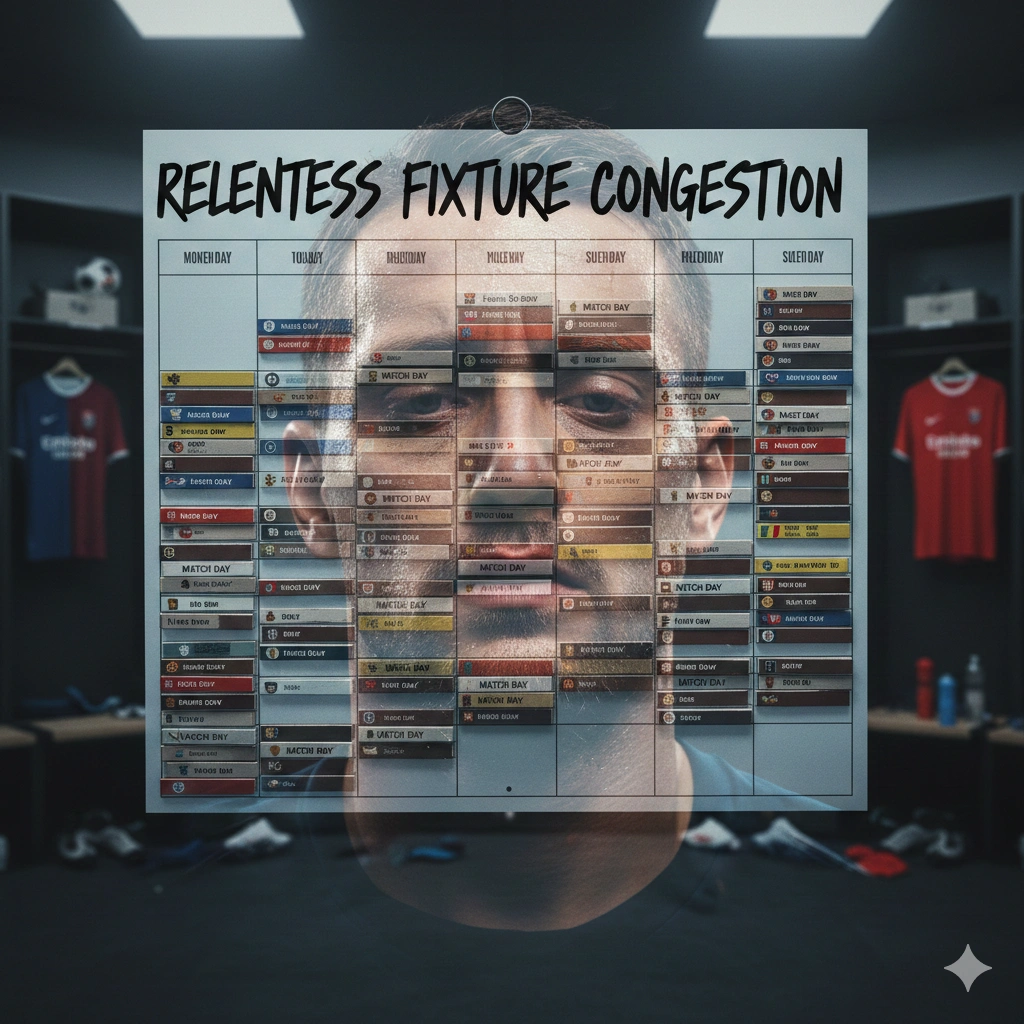
The 2022/2023 season was one of the busiest ever due to the mid-season World Cup in Qatar. Players in top clubs now face potential 89-game seasons with the expansion of UEFA Champions League and FIFA Club World Cup—an 11% increase in matches compared to previous generations.
You play Wednesday, fly Thursday, play Saturday, fly Sunday, train Monday, play Tuesday. Your hamstring is tight. Your ankle hurts. You’re exhausted. But if you admit it, you lose your starting position to the 23-year-old competing for your spot. So you inject, tape, and play through pain because missing games means losing value, which means shorter contracts, which means financial insecurity.
FIFPRO’s research reveals insufficient preparation and recovery times, with overlapping competition schedules creating what researchers call “calendar congestion”—a phrase that sounds administrative but translates to your body breaking down at 29 instead of 35.
The Toll
Chronic physical stress doesn’t just cause injuries—it triggers systemic inflammation, sleep disruption, and mental fog. Your brain needs recovery as much as your muscles. When you’re perpetually depleted, decision-making suffers, emotional regulation breaks, and depression takes root. Studies show the cannibalisation of the match calendar creates more mental and physical stress on today’s elite players than previous generations experienced.
Mindful Solutions:
- 3-Minute “Pitch Grounding” Practice: After every match, before you check your phone or speak to media, find a quiet space (locker room shower, team bus, hotel room). Sit or stand. Place both feet flat on the ground. Take five slow breaths, counting to 6 on inhale, 8 on exhale. Focus solely on the physical sensation: your feet touching ground, air filling lungs, heartbeat slowing. This parasympathetic activation interrupts the adrenaline-cortisol cycle that prevents recovery.
- Strategic rest advocacy: When your body signals genuine need for recovery, communicate it clearly to medical staff and coaches. Frame it as performance optimization, not weakness: “I need one training day off to prevent injury and maintain peak performance over the season.” Many clubs now respect this science-based approach.
- Sleep hygiene non-negotiables: With 23% of players reporting sleep disturbances, protect your sleep like a professional asset. Dark room, cool temperature, no screens one hour before bed, consistent schedule when possible. Sleep is when your brain processes stress and your muscles repair—it’s not optional.
Research Reference
Extreme Calendar Congestion: Adverse Effects on Player Health
2. “The Transfer Limbo Torture” — When You’re a Commodity, Not a Person
The Reality
Transfer windows operate like human trading markets. Your agent fields offers. Your club decides whether you’re “surplus to requirements.” Media speculates daily about your value—literally putting a price tag on your worth as a human. You might train with teammates knowing you’ve been listed for sale. Or worse, you’re sent on loan to a club in another country where you don’t speak the language, away from family, because it serves someone else’s financial strategy.
You’re 24, in your prime, and suddenly you’re packing up your life every 12-18 months. Your children change schools. Your partner gives up their career to follow you. You make friends knowing they’re temporary. You can’t plan beyond the next contract because you have no control over where you’ll be living next year.
The Toll
Identity instability becomes chronic. You’re never “home,” always temporary, perpetually auditioning. This creates what psychologists call “contingent belonging”—you only matter when you perform. Depression, anxiety, and isolation compound when every relationship feels transactional. Research shows professional footballers struggle more with mental health during transfer periods and loan spells due to this fundamental uncertainty.
Mindful Solutions
- “Portable roots” practice: Identify three things you can take with you anywhere: a daily routine (morning coffee ritual), a relationship (weekly call with a friend), a practice (journaling, meditation, exercise). These become your anchors when location changes.
- Compartmentalization skills: When transfer speculation peaks, set boundaries: check news once daily, not continuously. Designate “worry time”—15 minutes where you process all transfer anxiety, then consciously close it. This prevents constant low-level stress from poisoning your entire day.
- Professional therapy investment: Many players now work with sports psychologists to process the unique stress of their profession. This isn’t weakness—it’s career maintenance. Just as you have a physio for your body, you need psychological support for your mental health.
Research Reference
Mental Health in Association Football
3. “The Social Media Cesspool” — When a Billion People Have Access to Abuse You
The Reality
You miss a penalty. Within four minutes, you receive your first abusive tweet. By the end of the match, it’s 2,000 messages: racial slurs, death threats, attacks on your family, photoshopped images mocking you. The Alan Turing Institute found 70% of Premier League players face abuse on Twitter, with 3.5% of all tweets directed at players—over 80,000 abusive messages—in just five months of one season.
And it’s not anonymous trolls. A UK real estate employee used his real name to post racial slurs about Black England players. The abuse is public, persistent, and often racist—43% of Premier League players experienced racist abuse on Twitter in a six-week study period. When you play for your national team and lose, people wish death on your family. When you take a knee against racism, fans boo you. When you speak up about mental health, they call you weak.
The Toll
This isn’t “just social media”—research confirms it causes anxiety, depression, sleep disturbances, and suicidal thoughts. Two former English players cited racial trauma as the reason they retired early from professional football. The psychological impact mirrors in-person harassment, causing hypervigilance, reduced confidence, and social withdrawal. But unlike workplace harassment in other industries, there’s minimal consequence for abusers, and 87% of reported abuse remains online and visible.
Mindful Solutions
- 5-Minute “Fan Troll Detox”: After matches or during high-abuse periods, practice this: Sit quietly. Close your eyes. Visualize the abuse as literal trash—words written on garbage. Now imagine yourself standing in front of an industrial shredder. One by one, feed each piece of hate into the machine. Watch it disappear. Remind yourself: “These words say everything about the sender, nothing about me. I don’t carry other people’s garbage.” Breathe deeply for five minutes, releasing the toxicity.
- Social media boundaries: Use FIFPRO’s Social Media Protection Service or similar tools that filter abusive content before you see it. Many players now employ social media managers to handle accounts during high-stress periods. Alternatively, take complete breaks—delete apps for a week after difficult matches. Your mental health matters more than engagement metrics.
- Report and document: Every racist or threatening message should be reported to both the platform and police. Keep screenshots. Many football associations now have dedicated reporting systems. This isn’t just for you—it’s building the evidence base that forces systemic change.

Research Reference
Online Abuse of Footballers and Basketball Players
4. “The Performance Paradox” — When Excellence Is the Minimum, and Perfection Still Isn’t Enough
The Reality
You scored 25 goals last season. This season, you’ve scored 22 with three matches remaining. Headlines read: “Is [Your Name] Declining?” Your transfer value drops €10 million. Fans debate whether you’re “finished” at age 28. You’re performing at a level 99.9% of humans could never achieve, but in football, you’re measured only against your peak and your peers.
One poor performance erases ten great ones in public memory. You’re only as good as your last match. Miss a penalty? You’re a “choker.” Get injured? You’re “injury-prone” and a liability. Struggle during a bad team run? You’re the scapegoat. The pressure is relentless, the scrutiny constant, and the margin for human imperfection nonexistent.
The Toll
This creates “achievement addiction”—you’re never satisfied, never safe, never enough. Research shows elite athletes often develop anxiety disorders because achievement becomes their only source of self-worth. When performance inevitably fluctuates (you’re human, not a robot), your entire identity feels threatened. Many players develop what Thierry Henry described: depression throughout their entire career, masked by public success.
Mindful Solutions
- “Process over outcome” reframing: Before each match, set three process goals you control (work rate, communication, positioning) rather than outcome goals (score a goal, win). This redirects focus to controllable elements, reducing anxiety about uncontrollable results.
- Identity diversification: Intentionally develop aspects of yourself beyond football—education, relationships, hobbies, social causes. Richarlison’s public discussion of seeking therapy after Brazil’s World Cup elimination helped him recognize he’s more than his on-pitch performance. Build an identity that survives football retirement.
- Self-compassion practice: After difficult matches, speak to yourself as you would a teammate: “You tried your best. One game doesn’t define you. Tomorrow’s another opportunity.” Research shows self-compassion increases resilience more effectively than self-criticism.

Research Reference
Mental Health Spotlight: FIFA Women’s World Cup
5. “The Silence Trap” — When Admitting Struggle Means Losing Millions
The Reality
You’re struggling with depression. You wake up dreading training. Joy has leached from the game you once loved. But you can’t tell anyone because: (1) Your contract renewal depends on perception of peak performance, (2) Rival clubs won’t bid for you if they think you’re “mentally weak,” (3) Your sponsorships include clauses about “bringing the brand into disrepute,” and mental health struggles might be interpreted as such, (4) Teammates might view you as a liability, (5) Fans already think professional athletes shouldn’t complain because you’re wealthy.
So you suffer silently. You smile in interviews. You post happy photos on Instagram. And inside, you’re drowning. Professional footballers have one of the highest-pressure jobs globally, yet asking for help feels like career suicide. The culture still treats mental health as weakness despite increased awareness campaigns.
The Toll
Isolation compounds mental health problems exponentially. When you can’t be honest about struggling, symptoms worsen. Research shows athletes feel “disinclined to admit feeling anything less than heroic,” leading to untreated depression and anxiety. In extreme cases, players have died by suicide—cases like George Harrison (1939), Agostino Di Bartolomei (1994), and others whose depression went unaddressed until it was fatal.
Mindful Solutions
- Find one safe person: You don’t need to announce your struggle publicly, but tell one trusted person—partner, family member, agent, or teammate who’s shown vulnerability. Exiting complete isolation is crucial. As FIFPRO states: “It’s about trying to talk and getting relief from negative thoughts.”
- Use confidential player support services: Most leagues and player unions now offer confidential mental health services. PFA in England provides counseling. FIFPRO has mental health resources. These are designed specifically for players’ unique pressures and maintain strict confidentiality.
- Reframe “strength”: The bravest players aren’t those who hide pain—they’re those who address it. Richarlison, Simone Biles, Naomi Osaka, and others who spoke openly about mental health challenges demonstrated more courage than playing through injury. Strength is seeking help, not suffering in silence.

Research Reference
Player Welfare Remains Constant FIFA Focus
Quick Mindfulness Practices for Footballers
1. The 3-Minute “Pitch Grounding”
When
Immediately after matches, before media obligations or checking social media
How
- Find any quiet space—locker room, team bus, hotel room
- Sit or stand with both feet flat on the ground
- Close your eyes or soften your gaze
- Take five slow breaths: inhale for 6 counts, exhale for 8 counts
- Focus entirely on physical sensations: feet touching ground, air filling lungs, heartbeat slowing
- Let adrenaline drain from your body
- Say internally: “The match is over. I’m safe. I can rest now.”
Why it works
Extended exhales activate parasympathetic nervous system, interrupting the adrenaline-cortisol loop that prevents recovery. This practice helps transition from performance mode to recovery mode, essential for mental and physical health with fixture congestion.
2. The 5-Minute “Fan Troll Detox”
When
After experiencing online abuse or during high-criticism periods
How
- Sit comfortably, close your eyes
- Visualize all abusive messages as literal trash—words written on garbage
- Imagine yourself standing before an industrial shredder
- One by one, mentally feed each piece of hate into the machine
- Watch it get destroyed and disappear
- Take deep breaths and repeat: “These words say everything about the sender, nothing about me. I don’t carry other people’s garbage.”
- Continue for five minutes, releasing all toxicity
- Open your eyes, shake out your hands, return to your day
Why it works
Visualization engages different neural pathways than verbal processing, making it effective for releasing emotional weight. The physical gesture of “feeding the shredder” creates psychological closure. The affirmation reframes abuse as the sender’s issue, not your identity, protecting self-worth.
What Football’s Authorities Won’t Tell You
Here’s the truth hiding behind FIFA’s #ReachOut campaigns and mental health awareness months:
The system profits from your suffering. More matches mean more revenue. Expanded tournaments mean bigger broadcast deals. Your physical and mental health are externalities in a multi-billion dollar industry. When FIFPRO warns about calendar congestion, leagues respond by adding more matches.
Your value is temporary. You have maybe 15 years of peak performance. Then you’re replaced by younger, cheaper talent. The industry will celebrate you while you’re useful and forget you when you’re not. Former players struggle with depression after retirement because their entire identity was football, and suddenly that’s gone.
Mental health campaigns are often performative. Yes, FIFA partners with WHO. Yes, clubs have counselors now. But 87% of reported online abuse remains visible. Players still fear admitting struggles because it affects contracts. The structural problems—fixture congestion, abusive fans, transfer instability—continue unchanged because addressing them would cost money.
You’re allowed to prioritize yourself. Naomi Osaka withdrew from tournaments for mental health. Simone Biles stepped back from competition. The world didn’t end. They’re still elite athletes. You can say “no” to fixtures that will injure you. You can seek therapy. You can take social media breaks. Your humanity matters more than anyone else’s financial interests.
For more mindfulness resources designed for high-pressure professional environments, visit Mindful Engineer where you’ll find:
- First Responder Burnout and Adrenaline Management (relevant for high-stress performance)
- Job-Hunt Burnout and Staying Human (relevant during transfer periods)
- Chronic Illness and Career Management (relevant for injury recovery)
Resources for Immediate Support
If you’re experiencing mental health crisis:
- FIFPRO Mental Health Resources: https://fifpro.org/en/supporting-players/health-and-performance/mental-health
- PFA England: 24-hour helpline for players—0800 389 1884
- Samaritans: 116 123 (UK), available 24/7
- National Suicide Prevention Lifeline (US): 988
- Your club’s medical staff: Most clubs now have mental health professionals on staff
For ongoing support:
- Professional Footballers’ Association counseling (for English players)
- FIFPRO member unions in your country
- Common Goal mental health initiatives: https://www.common-goal.org
- Private sports psychology services specialized in football
Final Thought: The Question That Reframes Everything
In 20 years, when your playing career is long over, what will you remember?
The specific matches you won? The transfer fees? The social media followers?
Or will you remember whether you stayed human in a system designed to reduce you to statistics? Whether you built a life beyond football? Whether you treated yourself with the compassion you showed teammates?
Football will take everything you offer—and then ask for more. That’s the nature of elite sport.
But you get to decide what you preserve of yourself. What you refuse to sacrifice. What boundaries you enforce.
The pitch is temporary. Your mental health is forever.
Choose wisely. Choose mindfully. Choose yourself.
Research Sources Cited
- FIFA – #ReachOut Mental Health Campaign (2021)
- FIFPRO – Extreme Calendar Congestion Report (2023)
- Wikipedia – Mental Health in Association Football (2024)
- CNN – Online Abuse Study FIFPRO/NBPA/WNBPA (2022)
- FOX Sports – FIFA Women’s World Cup Mental Health Spotlight (2023)
- FIFA – Player Welfare Focus (2025)
- The Conversation – AI Study on Premier League Twitter Abuse (2024)
- FIFPRO – Combatting Social Media Abuse (2023)
- The Conversation – Traumatic Impact of Racial Abuse Study (2025)
- HR Magazine – Social Media Abuse Investigation (2025)
- The Lancet Psychiatry – Racism in Sport and Mental Health (2021)
- Open University – Racism in Football Social Media Study (2023)
- Italian Football – Online Bullying Case Studies (2025)
- TIME – Social Media Racist Abuse Response (2021)