2 years of 80-hour weeks for 0.5% success rate
Imagine dedicating two years of your life—160 weeks, 1,120 days, 26,880 hours—to a single goal. Now imagine that despite perfect execution, despite sacrificing sleep, friendships, hobbies, and your mental health, your chances of achieving that goal hover around 0.5% to 2%.
Welcome to the world of French classes préparatoires aux grandes écoles, where approximately 86,000 students each year enter a grueling two-year academic gauntlet designed to prepare them for entrance exams to France’s elite institutions like École Normale Supérieure (ENS), Polytechnique, and HEC.
The statistics are sobering: research reveals that 15.6% of prépa students exhibit full burnout profiles, with another 17.6% classified as “disengaged.” That’s one in three students either burned out or actively disconnecting. One-third of female students report experiencing stress “very importantly,” compared to 15% of males. Students in CPGE programs are significantly more likely to develop anxiety disorders, sleep disorders, and depressive episodes compared to their university counterparts.
And here’s the cruelest irony: the students most at risk are the most conscientious, the ones working hardest, the ones who believe if they just push a little more, sacrifice a little more, they’ll finally make it.
Research Reference
Burnout scolaire et engagement dans le travail scolaire
Five Daily Struggles of Surviving the Prépa Crucible
1. “The Khôlle Terror” — When Weekly Oral Exams Become Your Personality
The Reality
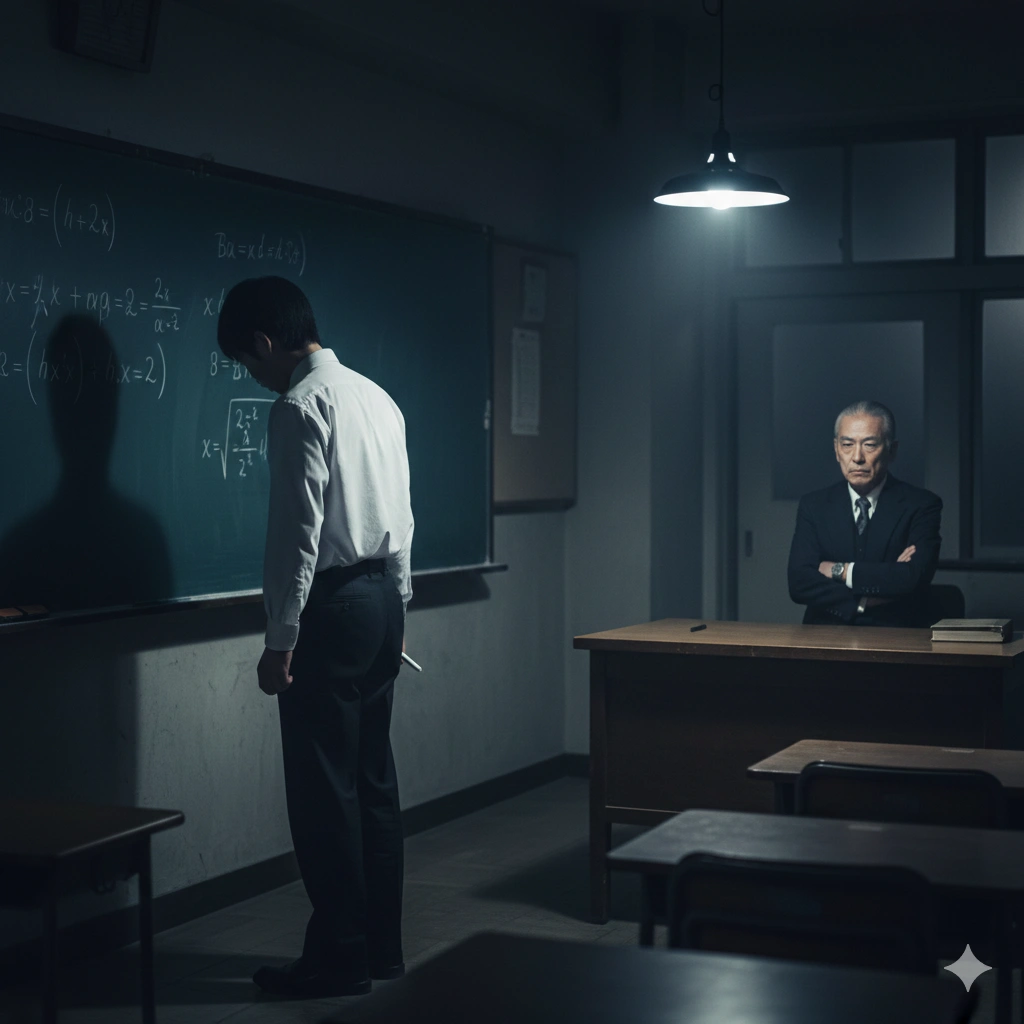
You wake up at 3 AM with your heart racing, not from a nightmare, but from anticipating your khôlle (oral examination) at 8 AM. These are not casual check-ins. These are intense, one-on-one oral exams with professors who will grill you on any topic from the semester, watching every flicker of uncertainty cross your face.
Most prépa students face approximately two khôlles per week—that’s 140 high-stakes oral examinations over two years. Unlike written exams where you can skip a question and return later, khôlles are live performance. You stand at a blackboard, chalk in hand, while a professor fires questions. Your mind blanks. The silence stretches. The professor’s expression remains inscrutable. You’ve prepared for 20 hours this week, but none of it surfaces when you need it.
The phrase “khôlle anxiety” has become so normalized in prépa culture that students joke about vomiting before presentations. Except it’s not really a joke—it’s Tuesday.
The Toll
Performance anxiety becomes chronic. You develop anticipatory stress that activates days before the actual khôlle. Sleep suffers because your brain rehearses potential questions while you’re trying to rest. Social interactions become transactions: “Can you quiz me?” replaces “How are you?” Your self-worth gets reduced to a score out of 20 that changes every three days.
Mindful Solutions
- 5-Minute “École Pause” Practice: The morning of your khôlle, before leaving your room, sit on the edge of your bed. Place both feet flat on the floor. Take five slow breaths, counting to 5 on the inhale, holding for 3, exhaling for 7. With each breath, say internally: “I am prepared enough. This exam measures one moment, not my worth. I will survive this.” This parasympathetic activation helps prevent the complete cortisol spike that makes you blank during performance.
- Post-khôlle ritual: Immediately after, regardless of how it went, spend 60 seconds doing a physical reset—shake out your hands, roll your shoulders, take three deep breaths. This prevents the rumination spiral (“I should have said…” “Why didn’t I remember…”) that poisons the rest of your day.
- Weekly “failure integration”: Every Sunday evening, write down one thing you learned from this week’s khôlles—not what you got wrong, but what you learned about yourself, your preparation style, or the material. Reframe from “I failed” to “I gathered data.”
Research Reference
Student Mental Health in CPGE Programs
2. “The Colles Marathon” — When 70-Hour Weeks Are ‘Normal’
The Reality
Your typical week looks like this: 35-40 hours of mandatory classes. 10-15 hours preparing for khôlles. 20-25 hours of personal study and assignments. That’s 65-80 hours per week, every week, for 30 weeks per year, for two years.
There are no “light” weeks. There is no coasting. The curriculum is designed to push beyond what seems humanly possible, operating on the premise that only those who can sustain this pressure deserve entry to grandes écoles. Students often refer to it as “l’enfer de la prépa”—prépa hell.
You haven’t seen your high school friends in months. When they post photos of university parties, concerts, or weekend trips, you’re in a library on Saturday night doing differential equations. Your relationship with your body becomes transactional: “If I give you four hours of sleep, will you function tomorrow?” The answer is usually “barely.”
The Toll
Chronic exhaustion isn’t just tiredness—it’s cellular-level depletion. Your immune system weakens; you catch every cold. Headaches become your baseline. You develop what researchers call “learned helplessness”: the belief that no amount of effort will ever be sufficient. And because everyone around you is equally exhausted, there’s no external reality check. This becomes “normal.”
Mindful Solutions
- Sacred Sunday morning: Protect one three-hour window per week as completely non-academic. Not “efficient rest” where you review flashcards while exercising. Actually doing something you enjoy: playing music, cooking, seeing a friend. This isn’t procrastination—it’s neurological recovery time that actually improves information retention.
- The “good enough” principle: Before each study session, define what “sufficient” looks like: “I will understand the key concepts and do three practice problems.” When you hit that mark, stop. Perfectionists in prépa often spend 5 hours on material that needed 3, creating a false sense that everything requires maximum effort.
- Micro-recovery practices: Between every 90-minute study block, take a genuine 10-minute break—not checking your phone, not reviewing notes. Stare out a window. Stretch. Make tea. These breaks feel wasteful but they’re when your brain consolidates learning.
Picture Suggestion

Research Reference
3. “The Social Siberia” — When Friendship Becomes a Competitive Sport
The Reality
In theory, you’re all in this together. In practice, every classmate is potentially competing for the same limited spots at grandes écoles. Class rankings are posted publicly. Professors compare your performance to your peers. The entire system is designed around relative performance, not absolute mastery.
You study in groups not because it’s collaborative, but because you need to know what others know—competitive intelligence disguised as camaraderie. When someone asks for help, there’s a split-second calculation: “Will helping them hurt my ranking?” You hate yourself for thinking this way, but the system has conditioned you to treat peers as obstacles.
One study found that contrary to the “black legend” of prépa, most students report high levels of cooperation. But that same research shows one-third of female students feel they lack talent compared to peers—not because they perform worse, but because confidence gaps create perception distortions.
The Toll
You develop what psychologists call “contingent self-worth”—your value fluctuates based on comparative performance. Loneliness becomes paradoxical: you’re surrounded by people going through the same thing, yet profoundly isolated because authentic connection requires vulnerability you can’t afford. Trust erodes. Celebrating others’ success feels like acknowledging your own inadequacy.
Mindful Solutions
- 3-Minute “Khâgne Compassion” Practice: Once daily, close your eyes and bring to mind three classmates. For each one, silently say: “You are also suffering. You are also afraid. You are also worthy.” This sounds sentimental, but it neurologically interrupts the comparison/competition circuit in your brain, activating empathy rather than threat response.
- One authentic conversation weekly: Find one person and have a 15-minute conversation about anything except academics. How they’re really feeling. What they miss. What scared them as a child. This maintains your capacity for genuine human connection.
- Reframe “rankings”: Every time you see class rankings, consciously remind yourself: “This measures one type of performance in one narrow context. It does not measure my worth, my potential, or my future.” Repetition rewires automatic thought patterns.

Research Reference: Stress and Cooperation in CPGE (CEPREMAP, 2025) – https://www.cepremap.fr/2025/02/note-de-lobservatoire-du-bien-etre-n2025-05-stress-et-cooperation/
4. “The Post-Concours Void” — When Everything You Built Your Identity On Disappears
The Reality
For two years, you’ve had singular purpose: pass the concours. Every decision filtered through that goal. Should I see my family this weekend? Only if it doesn’t interfere with studying. Should I pursue this hobby? Only if it reduces stress enough to improve performance. Your identity hasn’t just been shaped by prépa—it’s been consumed by it.
Then the concours ends. Maybe you passed, maybe you didn’t. Either way, the structure that organized your entire existence suddenly vanishes. Students who integrate into grandes écoles often describe feeling disoriented, realizing they don’t know who they are without the pressure. As one psychologist noted in research on grande école students: “Conflicts, anxieties, personal or family difficulties find space to exist” after concours, destabilizing fragile equilibrium.
Those who don’t pass face a different void: two years of your life poured into a goal that didn’t materialize. The grief is acute, but you’re supposed to quickly “move on” to university or find another path. No one acknowledges you’re mourning not just the outcome, but the person you sacrificed to pursue it.
The Toll
Identity crisis becomes inevitable. Without external structure defining your days, you realize you’ve lost touch with your authentic interests, values, and sense of self. Anhedonia—inability to feel pleasure—is common because you’ve trained your brain that joy must be earned through performance. Depression often emerges not during prépa, but after, when the adrenaline stops masking deeper psychological costs.
Mindful Solutions
- “Identity anchoring” journal: Starting in your second year, spend 10 minutes weekly writing about aspects of yourself unrelated to académie: values you hold, relationships that matter, questions about existence that intrigue you, moments of beauty you noticed. When prépa ends, you’ll have evidence that you exist beyond academic performance.
- Gradual transition planning: Three months before concours, begin slowly reintroducing one non-academic element per week: a hobby, social engagement, creative practice. This prevents the complete identity cliff when exams end.
- Grief permission: If you don’t achieve your target école, give yourself explicit permission to mourn for two weeks. Write about the loss. Talk about it. Feel it. Then, and only then, begin exploring next steps. Rushing past grief embeds it as unprocessed trauma.

Research Reference
Mental Health in Grandes Écoles (Conférence des Grandes Écoles, 2025)
5. “The Silent Suffering Syndrome” — When Asking for Help Feels Like Admitting Defeat
The Reality
Prépa culture operates on an unspoken principle: if you can’t handle it, you don’t belong here. Admitting struggle is perceived as weakness. Seeking mental health support feels like confirming you’re not “made for this.” You’ve been selected from thousands of applicants—you’re supposed to be exceptional, which means handling pressure that would break ordinary people.
Research shows students in CPGE programs are more likely to develop mental health problems, yet they feel “somewhat excluded from the university healthcare system” because they’re affiliated with high schools. They often don’t know they have access to mental health services, and even when they do, cultural stigma prevents utilization.
The phrase “Je vais bien” (I’m fine) becomes your automatic response, even when you’re catastrophically not fine. One student testimony from burnout research describes vomiting every morning before class due to stress but continuing to attend because “missing class means falling behind.”
The Toll
Isolation compounds suffering exponentially. When you process everything alone, minor setbacks feel catastrophic because there’s no external perspective. Suicidal ideation can develop quietly, masked by the normalization of suffering as “just part of prépa.” The longer you wait to seek help, the deeper the psychological grooves become.
Mindful Solutions
- Normalize mental health vocabulary: Start using phrases like “I’m stressed about the khôlle” instead of “I’m fine.” Small verbal honesty creates permission for deeper honesty later. You don’t need to immediately bare your soul—just stop automatically lying.
- Identify one trusted person: One professor, one classmate, one family member who demonstrates they can handle difficult conversations. Tell them truthfully: “I’m struggling more than I let on. I need to know someone knows.” This exits you from complete isolation without requiring full vulnerability.
- Professional support reframe: If your leg were broken, you’d see a doctor immediately. Your brain deserves the same care. Many prépas now have on-site psychological services. Using them isn’t admission of inadequacy—it’s strategic health maintenance. Athletes have trainers; you need mental health support.

Research Reference
Student Burnout and Solutions (Mister Prépa, 2024)
Quick Mindfulness Practices for Prépa Students
1. The 5-Minute “École Pause”
When
Before high-stress events (khôlles, major exams) or when overwhelm peaks
How:
- Sit comfortably with both feet flat on the ground
- Close your eyes or soften your gaze
- Inhale slowly for 5 counts, hold for 3, exhale for 7
- Focus on the physical sensation of breath—cool air entering nostrils, warm air leaving
- When thoughts intrude (“I’m not prepared enough,” “What if I fail”), acknowledge them: “That’s a thought,” then return to breath
- After 5 minutes, open eyes slowly
- Say aloud or internally: “I am prepared enough. This moment does not define my worth.”
Why it works
Extended exhales (7 counts) activate parasympathetic nervous system, counteracting fight-or-flight. This practice prevents the complete cortisol flooding that causes mental blanking during performance.
2. The 3-Minute “Khâgne Compassion”
When: During moments of comparison, ranking anxiety, or peer competition stress
How:
- Pause what you’re doing
- Bring to mind three classmates (not necessarily friends, just people in your prépa)
- For each person, silently repeat: “You are also suffering. You are also afraid. You are also worthy of compassion.”
- Include yourself: “I am also suffering. I am also afraid. I am also worthy of compassion.”
- Notice any resistance or cynicism that arises—that’s normal
- Take three deep breaths and return to your task
Why it works: This practice interrupts the neural pathways of comparison and competition by activating the brain’s empathy circuits. Self-compassion (treating yourself with the kindness you’d offer a friend) has been shown to reduce anxiety and increase resilience more effectively than self-esteem or self-criticism.
The Truth They Don’t Tell You in Prépa Orientation
Here’s what no one mentions during the lycée presentations that make prépa sound glamorous:
Your worth is not determined by ENS, Polytechnique, or HEC. These institutions open certain doors, yes. But they are not prerequisites for a meaningful career, a fulfilling life, or self-respect. Some of France’s most successful people never attended grandes écoles. Many who did attend describe those years as traumatic.
The skills you’re developing matter more than the outcome. Discipline. Resilience. Capacity for delayed gratification. These will serve you regardless of which school you attend—or whether you attend at all.
Failure is redirection, not termination. The prépa system wants you to believe that not integrating a grande école means your potential is wasted. This is structurally useful fiction that keeps students compliant. Reality is far more complex. Your “backup” university might offer better mentorship, more aligned interests, and healthier development.
You are allowed to change your mind. If you realize midway through prépa that you’ve been pursuing someone else’s dream—your parents’, your teachers’, society’s—that realization is worth more than any acceptance letter. Authentic paths require courage that rigid paths never teach.
Finding Support: You Are Not Alone
If you’re recognizing yourself in these struggles, your awareness itself demonstrates strength. Admitting “I’m not okay in prépa” isn’t weakness—it’s seeing reality clearly.
Immediate support in France:
- Nightline France: Anonymous peer support by students for students – https://www.nightline.fr
- Fil Santé Jeunes: 0800 235 236 – Free, anonymous hotline for young people
- SOS Amitié: 09 72 39 40 50 – 24/7 emotional support hotline
- Your lycée’s infirmière (nurse) and médecin scolaire: They exist specifically to support your wellbeing
For more mindfulness practices designed for high-pressure academic environments, visit Mindful Engineer where you’ll find resources on:
- High-Achieving Student Burnout
- Job-Hunt Burnout and Staying Human (surprisingly relevant to competitive academic environments)
- Post-Layoff Identity Crisis (similar to post-concours identity struggles)
A Letter to Your Future Self
Five years from now, when you look back at your prépa years, what will you remember?
Will you remember your exact ranking? The score you received on that one khôlle in November? Or will you remember how you learned to keep going when everything in you wanted to quit? How you discovered reservoirs of strength you didn’t know existed? How you stayed kind to yourself when the system demanded you be merciless?
The concours will end. July results will arrive. You’ll integrate somewhere—or you won’t. And then life will continue, far more complex and interesting than any ranking system can capture.
The most important skill you can develop in prépa isn’t mathematical fluency or philosophical rigor. It’s the capacity to recognize when a system is harming you and choose your wellbeing over its demands.
That choice—to stay human while the system tries to reduce you to a score—that’s the real test of excellence.
Final Thought: The Question No One Asks
The French prépa system was designed in a different era, for a different purpose: training a small elite to manage an empire. That empire no longer exists. Yet the system persists, largely unchanged, grinding through cohorts of brilliant young people year after year.
At some point, you have to ask: What am I willing to sacrifice for this? And more importantly: What do I want to preserve of myself, no matter what happens?
The system will not ask you these questions. It benefits from you not asking them.
But you deserve to ask. You deserve to answer honestly. You deserve to build a life defined by more than what you could endure.
Choose wisely. Choose mindfully. Choose yourself.
Research Sources Cited
- French High School Burnout Study – Vansoeterstede (2023)
- Génération Prépa – Burnout Prevention (2023)
- Nightline France – CPGE Mental Health (2022)
- CEPREMAP – Stress and Cooperation Study (2025)
- Conférence des Grandes Écoles – Student Mental Health (2025)
- Mister Prépa – Student Burnout Solutions (2024)
- Partage Ton Burn Out – Personal Testimonies (2019)
- Edulide – ENS Preparation Guide (2023)
- Souffrance et Travail – When Prépa Students Crack (2016)
- Frontiers in Education – Academic Stress and Anxiety (2024)