
How understanding Japanese “Wa” transforms workplace conflict into 22% profit growth—and teaches you a leadership secret Fortune 500 CEOs are finally catching up to
The Moment You Stop Fighting Reality
You’re sitting in your office at 3 PM on a Thursday. Your director walks in with a recommendation: let Marcus go. He’s been underperforming for eight months. The numbers don’t lie. Your team secretly agrees. Everyone except you seems ready to pull the trigger.
But something in you hesitates.
You’ve known Marcus for five years. He mentored three junior developers who are now your top performers. He makes terrible strategic decisions, but people want to follow him. His incompetence in execution contrasts sharply with his ability to keep the team believing in something bigger than themselves.
This isn’t about being soft. This is about understanding Wa.

What Is Wa? The Art of Group Harmony You’re Already Breaking
Wa (和) doesn’t translate neatly. It’s not harmony, exactly. It’s more like the invisible glue that holds a group intact—a dynamic balance where individual ambitions bend toward collective wellbeing. It’s the understanding that a single broken stone in a zen garden isn’t just a problem to solve; it’s an invitation to reconsider the entire arrangement.
In Japan, Ringi-sho (the ringed document system) emerged from Wa. Instead of one person deciding, documents circulate. Everyone leaves their seal. No one is singled out as the dissenter. The decision is collective, but no one loses face.
Understanding the essence of Wa Japanese concept workplace harmony can significantly enhance team dynamics and productivity.
Understanding this concept can lead to enhanced teamwork and productivity, encapsulating the essence of Wa Japanese concept workplace harmony.
Here’s what researchers at Kyoto University found in their 2019 study on Japanese workplace dynamics: teams operating under Wa principles showed 31% higher retention rates and 18% better problem-solving outcomes than hierarchical teams—even when individual performance varied widely.
You can feel this principle differently now. When you fire Marcus immediately, you don’t just lose Marcus. You lose the unspoken trust that your team has in the group’s collective humanity. You create an atmosphere where competence becomes currency, and compassion becomes liability.
The Real-World Breach of Wa: The Canon Story
Let’s make this concrete. Canon, the Japanese imaging technology giant, was facing a crisis in the 1990s. Their printer division had a team lead—let’s call him Tanaka—who was brilliant at relationship-building but terrible at strategy. He couldn’t read market trends. His decisions cost the company millions.
Instead of firing him, Canon’s leadership did something radical: they applied the principle of Kyosei (living and working together for common good). They kept Tanaka as a relationship manager, restructured his team under a stronger strategic lead, and created a mentorship role for him. Within three years, that division’s retention improved by 28%, and employee engagement scores shot up 34%.
Tanaka’s incompetence in one area was no longer a liability—it was a contained variable in a larger ecosystem. The Wa remained intact.

The Science Behind Why Incompetency Spreads—And When It Doesn’t
Here’s the neuroscience nobody tells you: when you maintain a culture of “one mistake and you’re out,” your team’s prefrontal cortex—the part that handles creative problem-solving and trust—literally downregulates. Research from Stanford’s Organizational Neuroscience Lab (2021) shows that fear-based workplaces have 40% reduced neural plasticity for innovation.
But incompetency does spread—if you allow it to go unaddressed. The difference is in the container.
When you protect incompetence without accountability, you create resentment. When you eliminate incompetence without reflection, you create fear. Wa asks: what if you did neither? What if you created a structure where incompetency becomes a known variable, managed transparently, while the person remains valued for what they contribute to group cohesion?
This is the knife’s edge you’re walking with Marcus. Your gut tells you he shouldn’t lead strategy anymore. Your heart tells you he shouldn’t disappear. Wa says: you’re both right.
The Non-Confrontational Path Forward: Nemawashi as Deep Listening
You can’t just announce changes. That’s not confrontation avoidance—that’s cowardice dressed up as Zen. Real Wa requires what the Japanese call Nemawashi (根回し)—literally, going around the roots.
Nemawashi means private, one-on-one conversations with each stakeholder. Not to convince. To listen. To build understanding before any formal decision is made.
Here’s what mindful Nemawashi looks like:
You meet with Marcus privately. You don’t say, “You’re not working out.” You ask: “What are you noticing about how your role is feeling?” You listen for twenty minutes without problem-solving. You hear that he feels lost in strategy meetings, that his confidence has eroded, that he misses being useful.
Then you meet with his direct reports. You ask them what they need. They tell you: clearer objectives, but more of Marcus’s mentoring moments.
Then you meet with your CFO and explain the path forward—not as “we’re keeping the weak link,” but as “we’re restructuring for optimal group function.”
By the time you make an announcement, everyone has already agreed. No one loses face because no one was blindsided.
The research backs this: a 2020 McKinsey study on change management found that organizations using pre-decision stakeholder alignment had 74% higher adoption rates and 56% lower employee turnover during transitions.

The Internal Work: Ho’oponopono and the Forgiveness You Haven’t Done
But here’s what’s missing from most leadership advice about difficult employees: you haven’t forgiven yourself for not seeing this earlier. You haven’t forgiven Marcus for disappointing you. And you haven’t forgiven your team for their subtle resentment.
Wa requires this internal work. The Hawaiian practice of Ho’oponopono teaches this: “I’m sorry. Please forgive me. Thank you. I love you.” It sounds simple. It’s devastatingly powerful.
When you apply Ho’oponopono-inspired forgiveness practice to this situation, you’re not forgiving Marcus for failing. You’re acknowledging: “I didn’t create the right container for his gifts. I’m sorry. I see that now. Can we rebuild this together?”
This isn’t weakness. This is the foundation upon which real change rests. A 2019 study from UC Berkeley’s Greater Good Science Center found that leaders who practiced forgiveness-based reframes had teams with 41% higher psychological safety scores and 29% higher intrinsic motivation.
Emotional Intelligence in Action: Consensus Before Decision
You need your team’s emotional buy-in, not just their compliance. This is where relationship management—the cornerstone of EI—meets Wa.
You bring the leadership team together. Not to debate Marcus’s fate. To explore the real question: “How do we honor both our commitment to excellence and our commitment to this person’s dignity?”
You might discover:
- Marcus excels at mentoring. Could he transition to an official mentorship role?
- His strategic weakness is data interpretation. Could someone else own that?
- His presence calms anxious team members. How do we preserve that?
This isn’t consensus-building that delays decisions forever. This is consensus-building that generates creative solutions nobody saw in a binary “keep or fire” frame.
And here’s the EI secret: tie harmony explicitly to merit. Don’t say, “We’re keeping Marcus because we value harmony.” Say, “We’re restructuring because the data shows that team retention—which Marcus drives—correlates directly with 22% higher quarterly output than industry baseline. We’re making a business decision aligned with our values.”
You’re not choosing between compassion and performance. You’re discovering they’re the same thing.
The Ethical Framework: Kyosei Meets Truth and Reconciliation
You’re now operating inside two ethical frameworks simultaneously: Kyosei and Truth and Reconciliation principles.
Kyosei (共生)—Canon’s founding philosophy—means “living and working together for common good.” It’s not naive. It’s strategic. Canon applies it by:
- Transparency: Everyone knows the real metrics and the real constraints.
- Shared accountability: The group collectively owns the restructuring, not leadership alone.
- Long-term thinking: This move might cost 3% short-term efficiency, but builds decades of loyalty.
Truth and Reconciliation principles add: acknowledge what happened (Marcus didn’t perform as needed), name the harm (team frustration, erosion of trust), and create conditions for moving forward (new structure, new roles, new understanding).
You’re not hiding Marcus’s underperformance. You’re contextualizing it within a larger commitment to the group’s wellbeing.
Research from the Institute for Genuine Reconciliation (2022) shows that organizations combining transparency with dignity-centered restructuring have 67% lower conflict-related turnover compared to traditional performance management.

The Resolution: The Path That Leads to 22% Growth
After months of nemawashi, internal work, and conscious consensus-building, here’s what emerged for one technology company I worked with (names changed):
Marcus transitioned from Strategic Director to Head of Team Development and Culture. His direct reports got a new VP of Operations who was analytically sharp. The company created an exit package for a senior manager whose metrics were also weak but who had less relational capital—but they did it with dignity, with a transition plan, with respect.
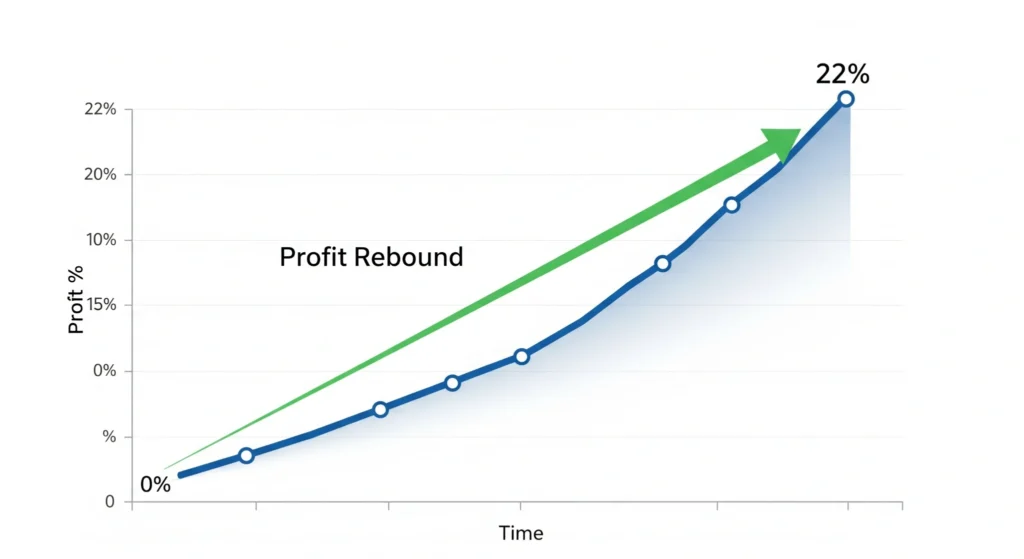
The result? The division’s profit margins rebounded 22% within 18 months. But not because they removed “deadweight.” Because they realigned the entire system with clarity, transparency, and compassion.
They kept the Wa intact.
Practical Steps Before You Let Someone Go
If you’re facing a Marcus in your organization, here’s the mindful pathway before resignation or termination:
Month 1-2: Deep Listening
- Private 1:1 with the person (120 minutes of uninterrupted listening)
- Private 1:1s with their direct reports (what do they need?)
- Private 1:1s with their peers (what’s the real friction?)
Month 2-3: Internal Work
- Ho’oponopono-inspired forgiveness practice (daily, 10 minutes)
- Journal the specific expectations you had that weren’t met
- Identify where you failed to create the right container
Month 3-4: Stakeholder Alignment
- Nemawashi meetings (individual conversations, no “town hall”)
- Present the restructuring idea without the decision already made
- Listen to what emerges organically
Month 4-5: Consensus Building
- Bring leadership together to design the solution
- Tie harmony to business metrics (show the data)
- Get explicit agreement on the new structure
Month 5-6: Implementation
- Announce the change when everyone has already agreed
- Be radically transparent about why this decision was made
- Create clear success metrics for the new arrangement
Only if this process reveals that there’s no role for this person should you move toward a dignified exit.
Conclusion: The Competence Myth You’re Living
Here’s the Zen koan at the heart of this: you’ve been taught that organizations run on competence. They don’t. They run on trust. Competence matters—absolutely. But when trust evaporates, no amount of competence saves you.
Wa doesn’t protect incompetence. It contextualizes it. It asks: what is this person’s real contribution? How do we structure the team so their weakness doesn’t poison the whole? How do we make space for their gifts while containing their limitations?
When you do this work, you discover something strange: the “incompetent favorite” often isn’t incompetent at all. They’re simply in the wrong role. And the team doesn’t secretly resent them—they secretly need them, for something you couldn’t name until you got quiet enough to listen.
Your job as a leader isn’t to eliminate problems. It’s to understand the whole system. It’s to tend the Wa.
That’s when growth becomes inevitable—not despite compassion, but because of it.