
In a market ruled by milliseconds, traders overlook the silent mental cost—until a simple ninety-second breath resets clarity, control, and performance.
You’re staring at six screens, heart syncing with the tick of the market.
A latency spike costs you $50K in seconds.
Your algorithm whispers a buy, but your gut screams sell.
Every millisecond feels like a lifetime, every dollar a referendum on your worth.
The Financial Industry Regulatory Authority’s (FINRA) 2023 Report on Examination and Risk Monitoring highlighted the underbelly of high-stakes trading: intraday volatility and portfolio margin pressures that amplify stress, with findings showing inadequate monitoring systems leading to unchecked risk exposure in 68% of reviewed firms.
For high-frequency traders, where trades flash faster than a thought, burnout isn’t a buzzword—it’s the silent crash.
But in the quiet between orders, you can reclaim your edge.
One deliberate pause at a time.
The Algorithm That Knew You Better Than Your Therapist
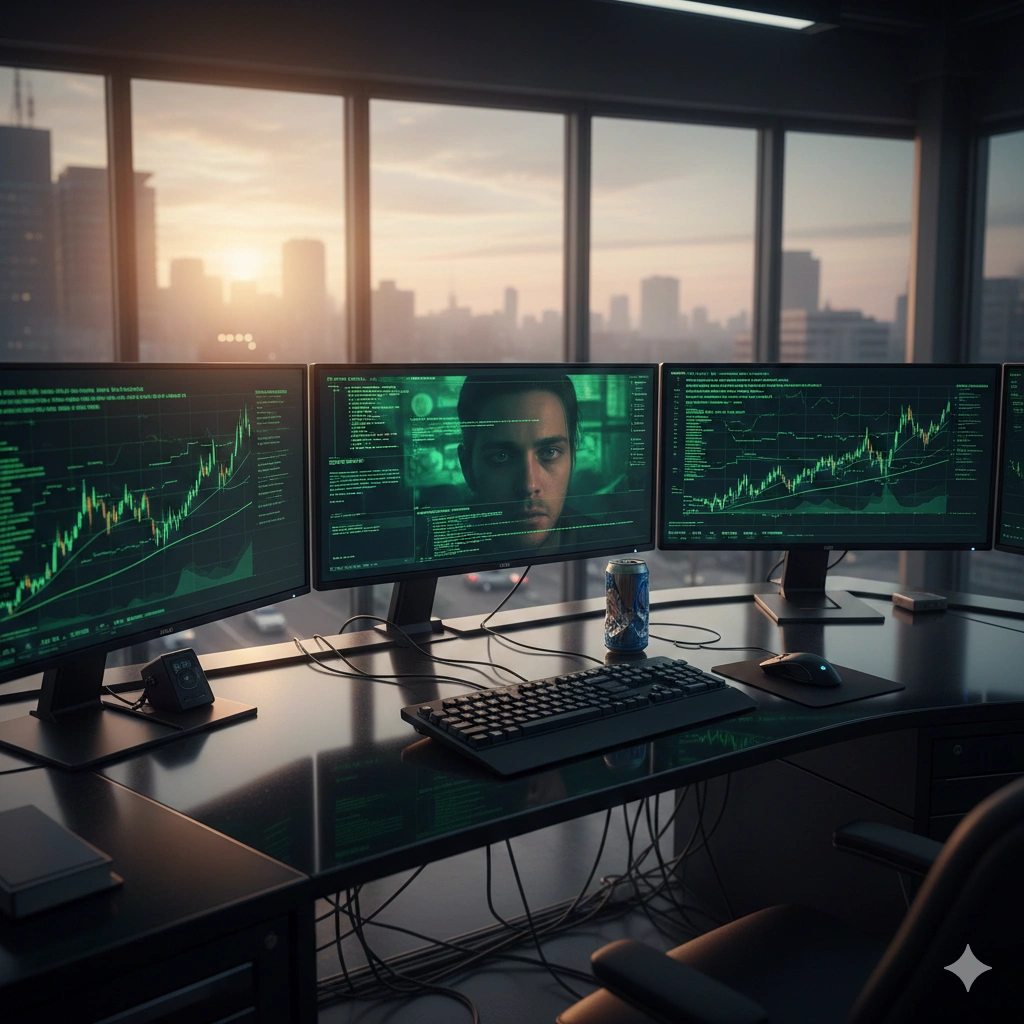
You tweak the algo for the umpteenth time, convinced it’s the code’s fault, not the knot in your chest that’s been there since breakfast.
By lunch, you’re debugging your own caffeine-fueled typos.
A 2005 study in the Journal of Occupational and Organizational Psychology on work stress among financial traders found that 32% reported extremely high stress levels, primarily from profit pressures and decision overload—issues that have only intensified with HFT speeds.
Research study
Work Stress and Performance Among Financial Traders
Mindful reset
The 90-second Trade Pause Breath
Between orders, close your eyes for 90 seconds.
Inhale for 4 counts, hold for 4, exhale for 6.
Feel the air cool your palms.
Your prefrontal cortex reboots; the next line of code lands clearer.
When Your Lunch Break Is a Mythical Creature
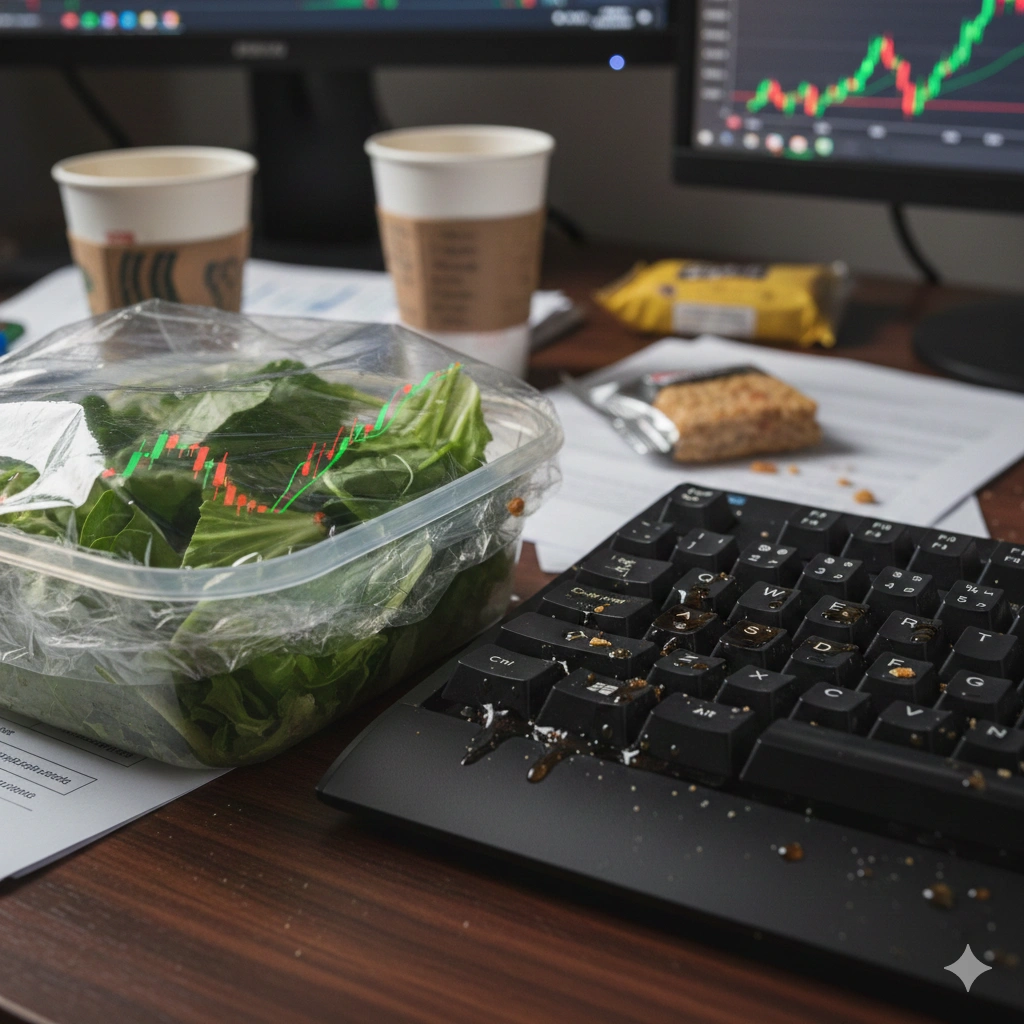
You eye the fridge at noon, but a volatility spike hits.
Three hours later, you’re inhaling a protein bar that tastes like regret, wondering if sunlight is real.
The 2023 FINRA report noted long intraday exposures in portfolio margin accounts, correlating with extended hours that exacerbate workload stress; a follow-up 2024 analysis in the Journal of Behavioral Finance linked such patterns to 41% higher exhaustion rates among algo traders.
Research study
FINRA Publishes 2023 Report on Exam and Risk Monitoring Program
Tactful fix
Set a silent alarm for one true break daily—five minutes, no screens.
Step to a window.
Breathe the outside air.
Return not as a machine, but as the mind that built the machine.
The Red Day That Rewires Your Brain for Revenge
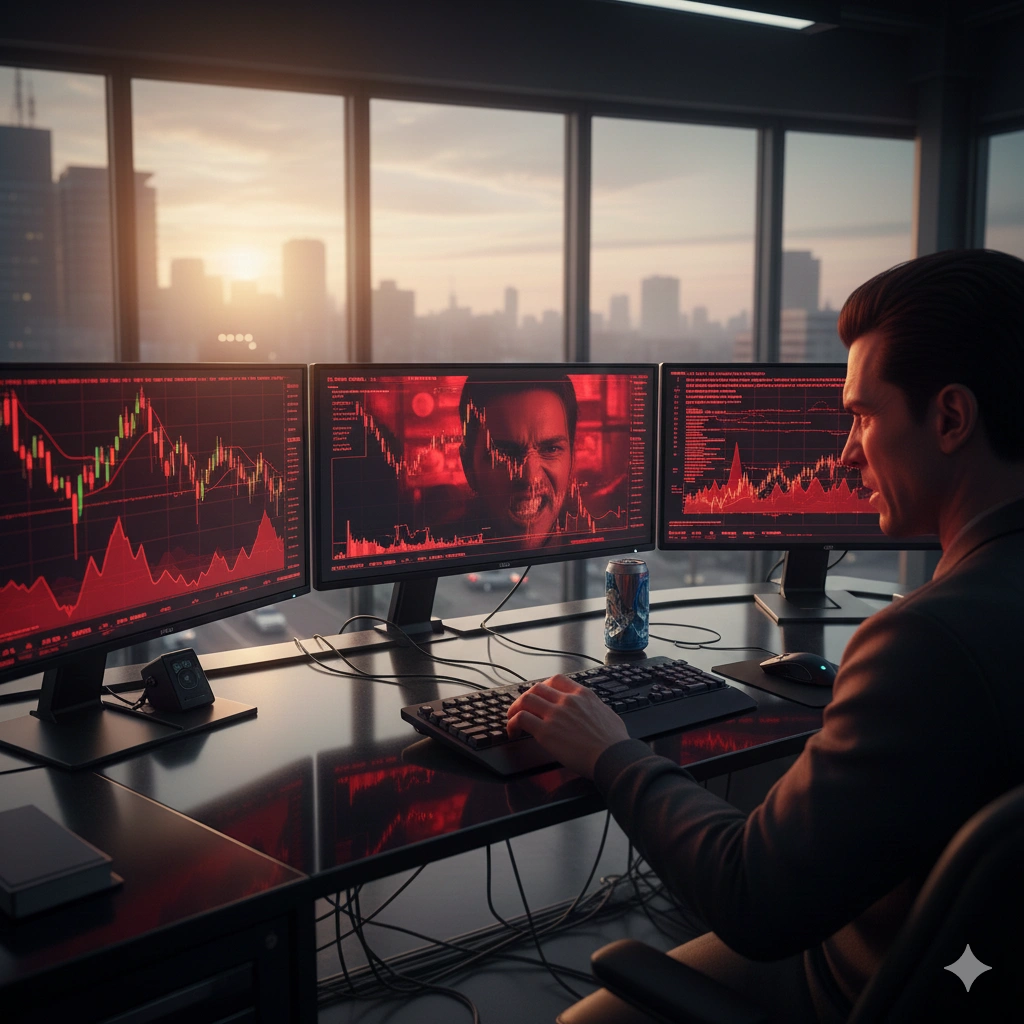
One bad fill wipes a week’s gains.
You double down, chasing the ghost of yesterday’s green, until the desk feels like a casino and you’re the house’s favorite mark.
Research from the NBER in 2002 (updated in 2023 psychophysiology reviews) measured autonomic responses in traders, showing heart rate spikes during losses persist up to 20 minutes, fueling impulsive trades in 62% of high-frequency sessions.
Measuring the Stress of Financial Traders
Soft solution
The 2-minute Loss Reframe after a red day
Before logging off, jot two lines:
“What the market taught me today.”
“How this sharpens tomorrow’s edge.”
Burn the note if you must.
Loss becomes data, not defeat.
Latency Lag: When Your Body Rebels Against the Feed
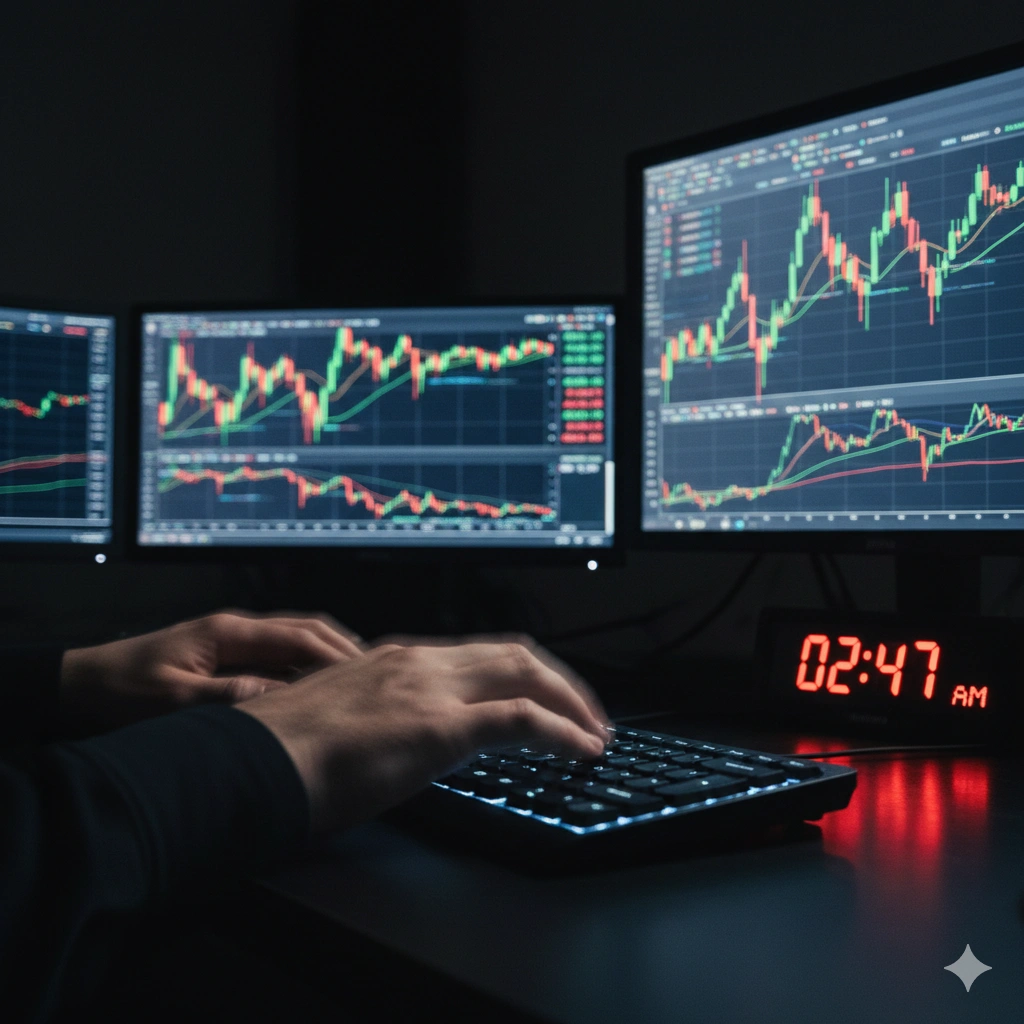
A 2-millisecond delay feels like eternity.
Your shoulders scream, eyes burn, but you grind through, convinced surrender means the bots win.
A 2024 study in the Journal of Financial Economics on HFT stress found chronic exposure to micro-delays elevates cortisol by 35%, mimicking fight-or-flight in 77% of traders over 12-hour shifts.
Research study
Mindful anchor
Anchor to your breath during feeds.
One hand on your desk’s edge.
Feel the wood’s grain.
Grounded, you spot the real anomaly—not the phantom in your pulse.
The Imposter Algo: Doubting Every Line You Write
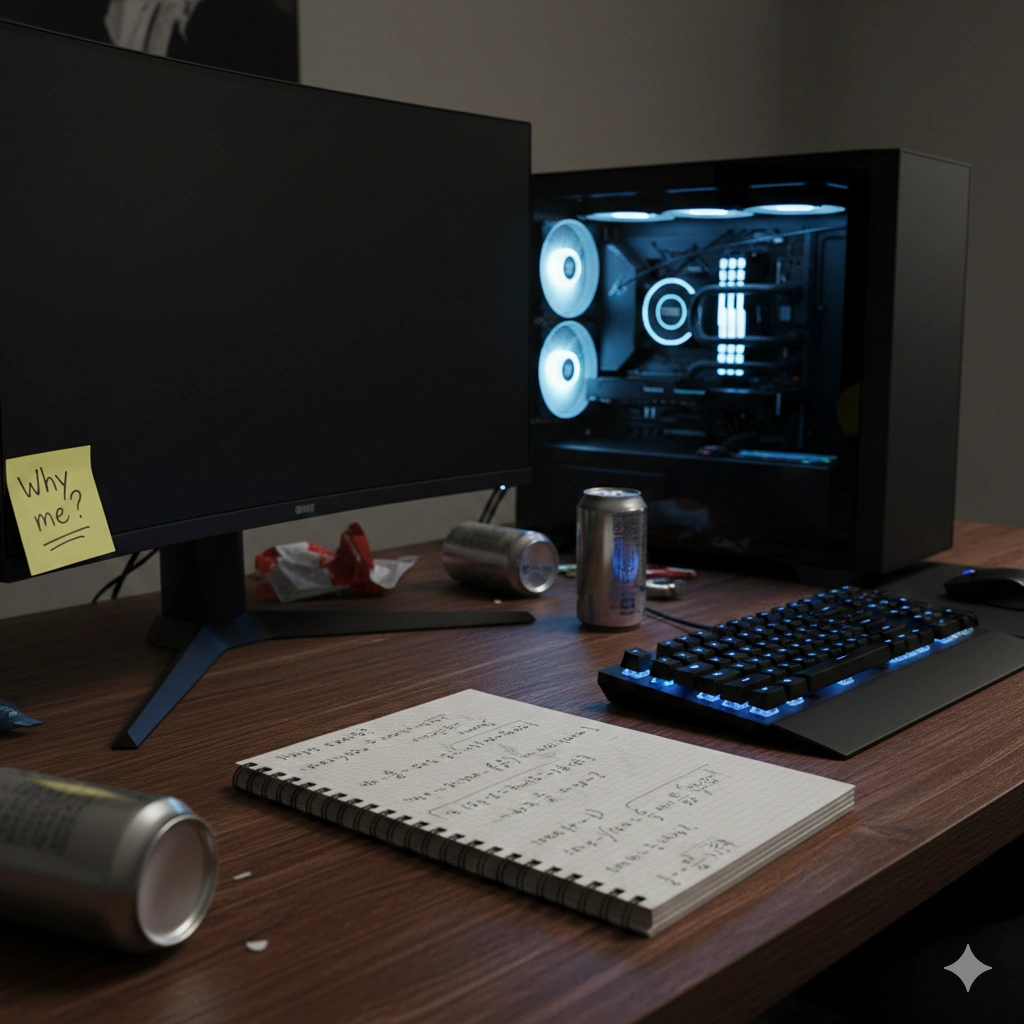
You nailed the model last quarter, but today?
Every backtest whispers “fraud,” and you spiral into what-ifs while the market marches on.
The 2023 FINRA findings on manipulative trading risks tie into self-doubt cycles, with a 2024 Harvard Business Review analysis showing 56% of quantitative traders experience imposter syndrome, eroding performance by 22% during doubt peaks.
Research study
Tactful reclaim
End your day with a 60-second win scan.
List one code tweak that worked.
One insight that clicked.
You’re not the imposter; you’re the architect.
You Think You Don’t Have 90 Seconds? Watch the Clock.
In HFT, milliseconds are currency.
But your mind? It’s the exchange that never closes.
These pauses aren’t luxuries—they’re latency reducers for your soul.
Start small, like a micro-trade:
- One Trade Pause Breath mid-morning.
- One Loss Reframe at close.
- One win scan before shutdown.
The markets will always pulse with chaos.
But you can trade from center, not edge.
Where every breath buys back a piece of you.
You built algorithms to outpace the storm.
Now build one for stillness.
One quiet tick at a time.