9 hours of test, national shutdown — surviving the pressure cooker
Picture this: Your entire country comes to a standstill. Airplanes are grounded. Stock markets open late. Police escort you to the testing center. Your family is praying at temples. Your future—your entire life—rides on a single exam lasting nine excruciating hours.
Welcome to the world of Suneung, South Korea’s College Scholastic Ability Test, where your worth is measured not by who you are, but by how you perform on the third Thursday of November.
And you’re burning out before you’ve even lived.
The Numbers Don’t Lie: A Mental Health Crisis Hidden in Plain Sight
The suicide rate among Korean adolescents stands at approximately seven deaths per 100,000 individuals, with suicide being the leading cause of mortality in this age group. According to a survey conducted in 2023, nearly 43 percent of middle and high school students have contemplated taking their own lives due to academic stress.
Let that sink in. Nearly half of students have thought about ending their lives because of school.
This isn’t just about a tough exam. Tutoring children through the exams at hagwon academies has become a 17.8 trillion won industry ($15.8 billion), creating an educational arms race where families go into debt just to keep up. In 2023, the average amount per month spent on private education per student rose to a record high of ₩434,000 (US$300), with 78.5% of students participating in private education.
Research from the Korea Institute for Health and Social Affairs reveals that more than 90% of 7,000 surveyed students said they were under some form of stress, and a quarter were under high stress.
Research Reference
Korean Adolescent Suicide and Search Volume for “Self-Injury” on Internet Search Engines
Five Daily Struggles Every Suneung Student Knows Too Well
1. “Sleep When You’re Dead” — The 15-Hour Academic Marathon
The Reality: Korean adolescents spend about 15 hours a day on academics, including attending school, completing homework, and attending cram schools or private tutoring after regular school hours.
You wake up at 6 AM. School until 4 PM. Then it’s straight to hagwon until 10 PM. Home by 11. Homework until 2 AM. Repeat. Weekend? What weekend?
The saying goes: “If you sleep three hours each night, you may get into a top ‘SKY university’. If you sleep four hours each night, you may get into another university”.
The Toll: Sleep deprivation doesn’t just make you tired. It weakens your immune system, impairs memory consolidation, increases cortisol levels, and creates a vicious cycle where you study more but retain less.
Mindful Solutions
- The 90-Second “Hagwon Exit Breath”: Before leaving the academy each night, stand in the doorway. Place one hand on your heart. Take three deep breaths, counting to four on the inhale, holding for four, exhaling for six. This simple parasympathetic activation signals your body that it’s safe to begin the transition to rest.
- Micro-sleep meditation (10 minutes): Between classes, find any quiet corner. Close your eyes. Focus solely on the sensation of breathing—the cool air entering your nostrils, the warm air leaving. When thoughts intrude (and they will), simply notice them and return to the breath. Ten minutes of this can provide the restoration of an hour’s sleep.
- Set a firm “sleep boundary” at midnight, three nights per week. Your brain needs REM cycles to consolidate what you’ve learned. Studying past exhaustion creates diminishing returns.
2. “Everyone’s Your Enemy” — The Relative Grading Gladiator Arena
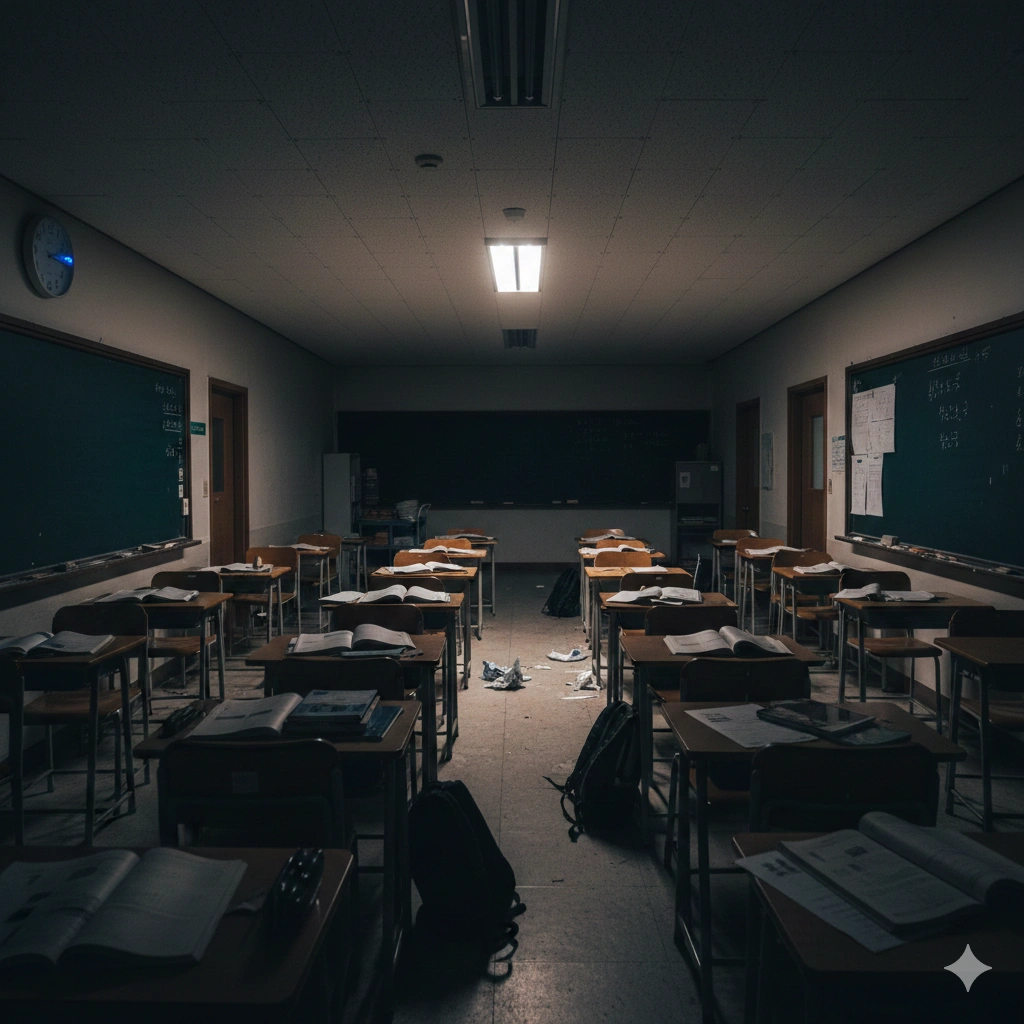
The Reality: Students could answer nearly all exam questions correctly and still receive a B or C depending on how their classmates fare. Many say the grading system conditions South Koreans to be highly competitive with one another and derive self-worth from besting their peers.
“We are taught by our parents or teachers to excel more than others. Like, the classmate sitting right next to you is your enemy in terms of academics”, says one student.
You’re not just competing against the material. You’re competing against your best friend sitting next to you. Their success literally diminishes yours. This zero-sum game turns classrooms into battlegrounds and friendships into strategies.
The Toll: You develop hypervigilance around peers, chronic anxiety, inability to celebrate others’ success, and a deep loneliness even when surrounded by people. Trust becomes a liability.
Mindful Solutions
- 4-Minute “Future Beyond Score” Visualization: Close your eyes. Imagine yourself ten years from now. You’re happy, fulfilled, contributing something meaningful to the world. Notice: your test score isn’t visible in this vision. Your human qualities—kindness, creativity, resilience—are what shine. Breathe into this truth: your worth exists independently of any ranking.
- Compassion practice for competitors: Once daily, silently wish three classmates well: “May you find peace. May you succeed in your own way. May your stress ease.” This isn’t naive—it’s neurologically rewiring your threat response away from others.
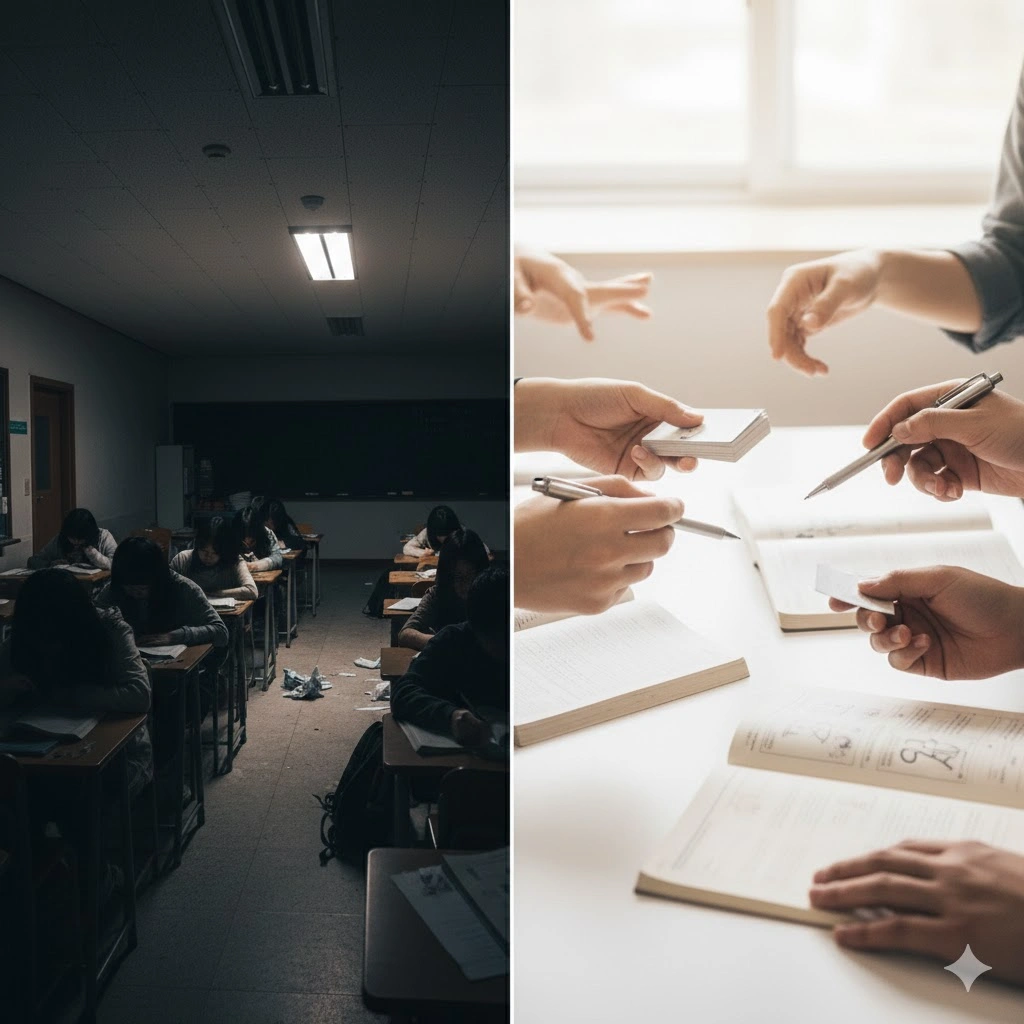
- Create a “collaboration zone”: Find even one study partner where you agree to share insights freely for thirty minutes daily. This small act of generosity combats the isolation.
Research Reference
3. “Who Am I Without My Score?” — The Identity Crisis at 17
The Reality: The Suneung is not merely an academic benchmark; it is a crucible that can determine the trajectory of a life, dictating university admission, career prospects, and even social standing.
Your score isn’t just a number. It becomes your social currency, your family’s pride or shame, your answer to “who are you?” When your entire identity is wrapped up in academic performance, every bad practice test feels like an existential threat.
Many students are expected to put additional effort into preparing for the Suneung exam, which determines one’s competitive advantage in university applications and, ultimately, their future.
The Toll: You lose touch with your authentic interests, values, and personality. You become a performance machine, measuring self-worth solely through external validation. When the exam ends (pass or fail), you’re left asking: “Who am I now?”
Mindful Solutions
- Weekly “non-academic self” journaling: Every Sunday morning, write for fifteen minutes about anything EXCEPT academics: a sunset you noticed, a song that moved you, a memory that made you smile, a question about existence. This preserves your inner world.
- 5-minute “failure integration” practice: Recall a recent academic disappointment. Place your hand on your heart. Say aloud: “This score is information, not my identity. I am learning. I am growing. I am worthy of love regardless of performance.”
- Build one relationship based on non-academic connection—a hobby, shared humor, existential questions. This reminds you that you’re more than your transcript.

Research Reference
Suicide Among Adolescents in South Korea
4. “My Body Keeps Score” — The Physical Rebellion You Can’t Study Through
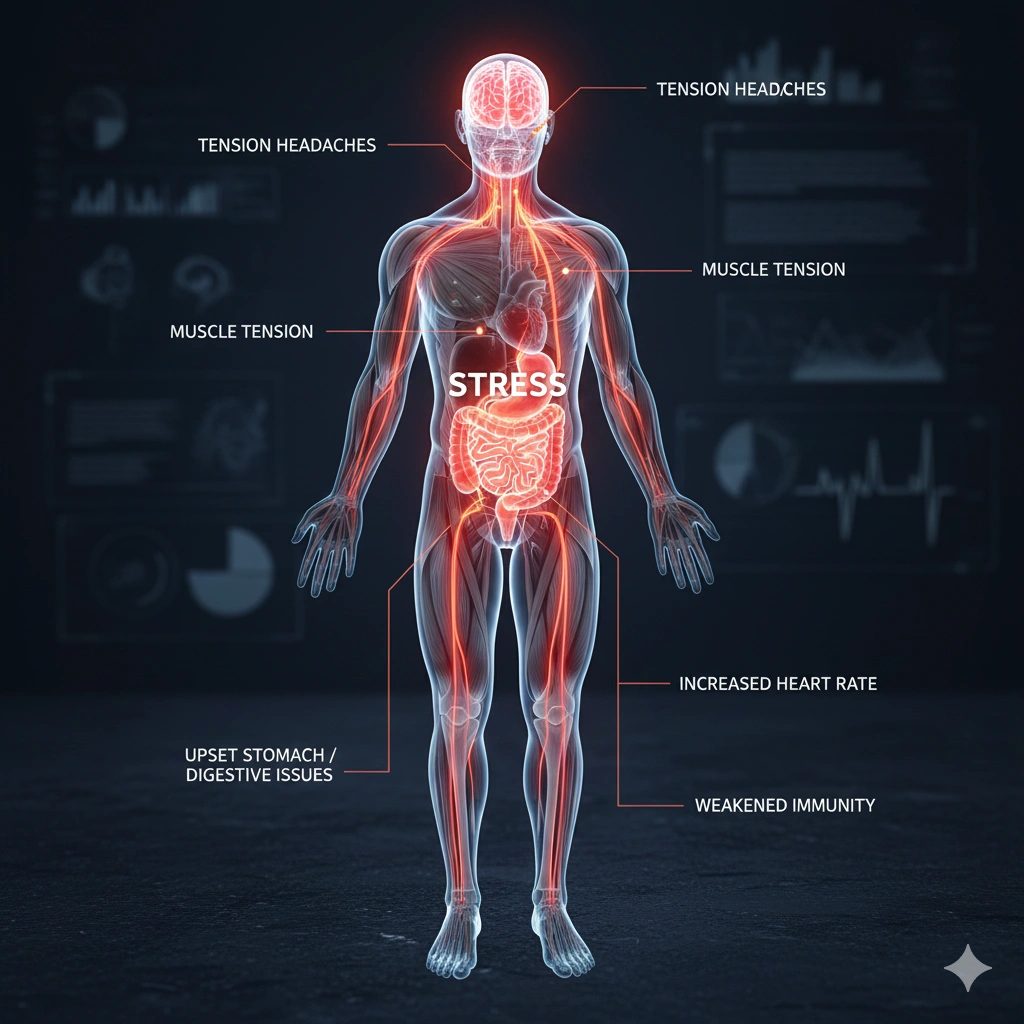
The Reality: The chronic stress of Suneung preparation doesn’t just hurt your mind—it attacks your body. Tension headaches become daily companions. Stomach problems appear before every practice test. Your back aches from hunching over textbooks.
The grueling study schedule in preparation for Suneung often leads to sleep deprivation and burnout among students, which may result in fatigue, weakened immune systems, and difficulty concentrating.
The Toll: Chronic stress triggers inflammation, suppresses immune function, disrupts digestion, and creates muscular tension that becomes habitual. Your body becomes a source of distraction rather than support.
Mindful Solutions
- 2-Minute “body scan reset”: Between study sessions, close your eyes. Start at your toes. Notice any sensation without judgment. Move slowly up through legs, torso, shoulders, face. Where you find tension, breathe into it. Imagine the breath dissolving the tightness. This interrupts chronic tension patterns.
- Walking meditation to/from hagwon: Instead of reviewing notes while walking, feel your feet touching the ground with each step. Notice the rhythm. This grounds you in your physical existence and provides necessary mental rest.
- One meal eaten slowly: Choose one meal per day to eat without phone, books, or distraction. Taste each bite. Chew thoroughly. This activates parasympathetic (“rest and digest”) nervous system.
Research Reference
Prediction of Suicidal Ideation in Children and Adolescents Using Machine Learning
5. “Failure Means Family Shame” — The Invisible Weight of Generational Expectation
The Reality: Parents are deeply invested, viewing their child’s success as a reflection of family honor. Your performance isn’t just about you—it carries the weight of your parents’ sacrifices, your grandparents’ hopes, and your family’s social status.
About 70% of students hide their suicidal behaviors because they believe admitting to having a mental illness is shameful.
The Toll: You can’t be honest about struggles without feeling like you’re betraying your family. The pressure to maintain appearances prevents seeking help. You carry not just your stress, but theirs too.
Mindful Solutions:
- “Gratitude with boundaries” practice: Write down three things you’re grateful to your parents for. Then write one honest thing about how you’re struggling. You don’t need to share it yet—just acknowledging both truths helps integrate the complexity of love and pressure.
- Reframe “honoring parents”: True honor isn’t becoming what they envision, but becoming a whole, healthy person who can eventually give back from a place of strength rather than depletion.
- If safe, have one honest conversation: “I’m working hard, but I need to protect my mental health too. My worth to you doesn’t change with my score.” This is terrifying but necessary.
Research Reference
Study on Awareness of Suicide and Suicide Prevention Among Community Youth
Quick Mindfulness Practices for Suneung Students
1. The 90-Second “Hagwon Exit Breath”
When: Before leaving your academy each night
How:
- Stand in the doorway
- Place one hand on your heart
- Inhale for 4 counts
- Hold for 4 counts
- Exhale for 6 counts
- Repeat 3 times
Why it works: This activates your parasympathetic nervous system, signaling your body that the “threat” (study stress) is ending, making the transition to rest smoother.
2. The 4-Minute “Future Beyond Score” Visualization
When: After a particularly stressful practice test or during moments of identity crisis
How:
- Find a quiet spot, close your eyes
- Imagine yourself 10 years from now
- See yourself happy, fulfilled, contributing meaningfully
- Notice: your test score isn’t visible in this vision
- Focus on your human qualities that shine: kindness, creativity, resilience
- Breathe deeply and remind yourself: “My worth exists beyond any ranking”
Why it works: This practice helps you reconnect with your intrinsic value and long-term perspective, countering the myopic focus on immediate academic performance.
The Wisdom You Need to Hear
You are not a test score. You are not a ranking. You are not your acceptance letter or rejection.
Your brain is still developing. Your identity is still forming. Your life is still unfolding.
The Suneung feels like everything because everyone tells you it is. But talk to adults ten years out—they’ll tell you the exam mattered far less than they thought. What mattered more was who they became while handling the pressure.
You’re being asked to perform at an unsustainable level in a system that prioritizes competition over well-being. That’s not your failure. That’s the system’s failure.
Your job isn’t to be perfect. Your job is to survive this with your humanity intact.
Taking the First Step
If you’re reading this and recognizing yourself in these struggles, you’re already practicing awareness—the first step of mindfulness. Simply noticing “I am stressed” or “I am carrying too much” is profound.
Start with just one practice from this article. Not five. Not all of them. One.
The 90-second breath before leaving hagwon. The ten-minute body scan between study sessions. The honest conversation with one trusted friend.
Small, consistent practices create neural pathways that, over time, become your new normal. You’re not trying to eliminate stress—that’s impossible given your circumstances. You’re learning to hold it differently.
For more mindfulness practices specifically designed for students and professionals under extreme pressure, visit Mindful Engineer where you’ll find resources on:
Resources for Immediate Help
If you’re experiencing suicidal thoughts:
- South Korea Suicide Prevention Hotline: 109
- Korea Mental Health Welfare Center: 1577-0199
- Talk to a trusted teacher, counselor, or adult
Remember: The education ministry created a smartphone app to check students’ social media posts, messages and web searches for words related to suicide, and national guidelines for reporting on suicide in print media were promulgated. Support systems exist, even if they feel invisible right now.
Final Thought: The Question That Changes Everything
Years from now, when you look back at this time, what will you remember?
Will you remember the exact percentile you scored? Or will you remember how you learned to breathe through impossible pressure? How you stayed kind to yourself when the world demanded perfection? How you discovered that your worth wasn’t contingent on performance?
The Suneung will end. Your relationship with yourself continues forever.
Choose wisely which one you cultivate.
Research Sources Cited
- Frontiers in Psychiatry – Korean Adolescent Suicide Study (2023)
- Frontiers in Psychiatry – Stress Types and Adolescent Suicides (2024)
- Ballard Brief – Suicide Among Adolescents in South Korea (2023)
- PMC – Study on Suicide Prevention Awareness (2024)
- ScienceDirect – Prediction of Suicidal Ideation Study (2023)
- World Economic Forum – South Korea Exam Silence (2018)
- Wikipedia – College Scholastic Ability Test
- The Korea Herald – Suneung Killer Questions (2023)
- TIME Magazine – South Korea Hagwon Crackdown (2023)