
Whether it’s a partner, friend, or toxic client—here’s the gentle art of letting go with dignity, clarity, and surprisingly little drama

You know you need to end it.
The relationship no longer serves you. The friendship has grown toxic. The client drains your energy with every interaction. You’ve known for weeks—maybe months—but you’ve been carrying it like a stone in your pocket, waiting for the perfect moment that never comes.
Here’s what nobody tells you about endings: there is no perfect moment. There’s only the moment you choose.
And how you navigate that moment determines whether you move forward free or remain tethered to what was.
The Power of Emotional Bonds: Why Connections Run Deeper Than Logic
Before we talk about ending, we need to understand why beginnings are so powerful.
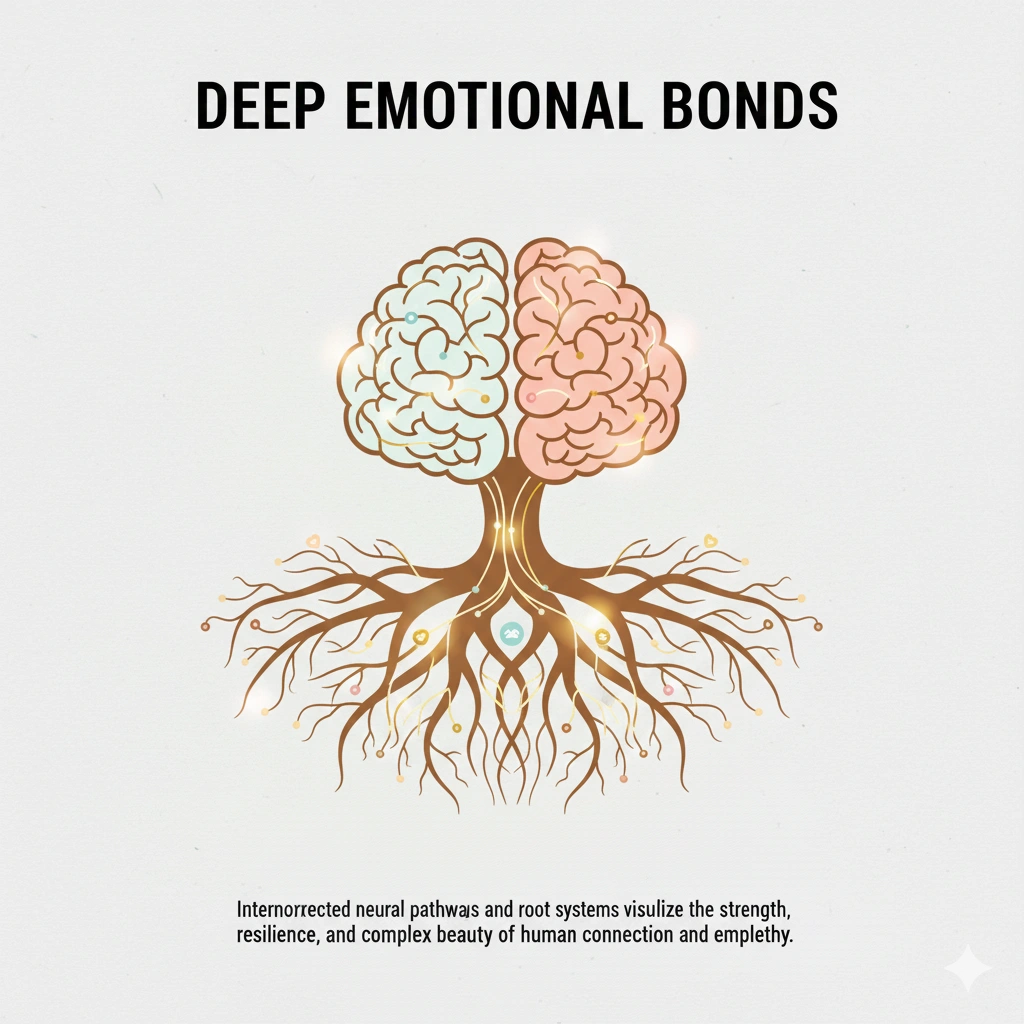
When you form an attachment to someone, your brain literally changes structure. The neural pathways associated with that person become woven into your emotional regulation system. This isn’t poetic—it’s neuroscience.
The reward centers in your brain—specifically the nucleus accumbens and the ventral tegmental area—light up when you think about someone you’re attached to, releasing dopamine and natural opioids in patterns remarkably similar to substance dependence.
You’re not being dramatic when a breakup feels like withdrawal. Your brain is experiencing something analogous to withdrawal.
Think about your first close friend. Your first love. Even your first meaningful work relationship. Each one changed how you saw yourself. Each one gave you a reference point for connection.
Attachment theory demonstrates that our early relational experiences actually build the brain structures we use for relating throughout our lives. Every significant bond becomes part of your internal template for how relationships work, what you deserve, and who you are in relation to others.
This is why ending relationships isn’t just about saying goodbye to another person. It’s about untangling yourself from a neural network that’s been helping you regulate your emotions, define your identity, and navigate the world.
Why Saying Goodbye Feels Impossible: The Neuroscience of Heartbreak

Research shows that social pain—like rejection or loss—activates the same brain regions as physical pain, particularly the dorsal anterior cingulate cortex and anterior insula. Your brain doesn’t distinguish between a broken bone and a broken heart. Pain is pain.
But there’s more happening beneath the surface.
Studies on romantic breakup reveal that the loss can trigger onset of mood disorders, complicated grief symptoms, depression, intrusive thoughts, and even physical symptoms like insomnia and changes in appetite.
I once worked with a designer—let’s call her Maya—who stayed in a failing relationship for two years past its expiration date. “I knew it was over,” she told me. “But every time I thought about ending it, I felt physically sick. Like my body was rejecting the idea.”
That wasn’t weakness. That was her nervous system perceiving the breakup as a threat to her survival. Because on some level, it was.
We’re social animals. Attachment behaviors developed as survival mechanisms—connection meant safety, and separation meant danger. Your ancient brain doesn’t care that you’re a modern human with resources and independence. It still registers relational loss as existential threat.
This is why you procrastinate ending things. Why you rationalize staying. Why you keep hoping things will magically improve.
Your nervous system is trying to protect you from perceived danger by keeping you attached to the familiar, even when the familiar is harmful.
The Need to Move On: Why Staying Costs More Than Leaving

Here’s the uncomfortable truth: the relationship you’re avoiding ending is already over. You’re just still performing it.
Every day you stay in a connection that no longer serves you, you’re:
- Depleting your energy reserves: Maintaining a dying relationship requires constant emotional labor
- Reinforcing neural patterns of settling: Your brain learns that your needs aren’t worth honoring
- Closing doors to new connections: You can’t fully show up for new relationships while still entangled in old ones
- Teaching others how to treat you: Accepting what doesn’t work signals that you’ll tolerate anything
- Living in perpetual low-grade grief: The relationship is dead, but you won’t let yourself mourn it
Social psychologist Arie Kruglanski’s research on the need for closure reveals that when we avoid ending ambiguous situations, we trap ourselves in patterns of rumination and analysis paralysis.
Maya finally ended her relationship after her therapist asked one question: “What would you tell your younger sister if she described this relationship to you?”
She paused. Then she cried. Because she knew exactly what she’d tell her sister: “You deserve better. Leave.”
Sometimes we need to become the wise friend to ourselves.
Practical Steps: The Mindful Breakup Ritual

Ending something mindfully doesn’t mean it won’t hurt. It means you navigate the hurt with intention rather than chaos.
Here’s your step-by-step protocol for any ending—romantic relationships, friendships, professional partnerships, or any connection that’s reached completion.
STEP 1: THE CLARITY SESSION (Before the conversation)
Before you say a word to the other person, you need absolute clarity for yourself.
Set aside 30 minutes. Find a quiet space. Journal these questions:
- What is the real reason this needs to end? (Get past the surface complaints to the core truth)
- What am I afraid will happen if I end this?
- What am I afraid will happen if I don’t?
- What would I tell my closest friend if they described this situation to me?
- What do I need to say to feel complete?
Research on post-breakup writing exercises shows that journaling specifically about positive aspects of endings and personal growth significantly improves emotional outcomes.
The goal isn’t to justify your decision to anyone. It’s to know your own truth clearly enough that you can communicate it without wavering.
STEP 2: THE COMPASSIONATE CONVERSATION (During the ending)
When you’re ready to have the conversation, structure it with these elements:
Own your decision: Use “I” statements. “I’ve realized this relationship no longer works for me” rather than “You never…” This isn’t about assigning blame—it’s about honoring your truth.
Be clear and direct: Ambiguity breeds false hope. Don’t soften the message so much that the other person thinks there’s room for negotiation if there isn’t.
Offer dignity, not justification: You don’t owe an exhaustive explanation. “I need to move on” is a complete sentence. But if you can offer specific, kind feedback without cruelty, do.
Set boundaries for contact: Be clear about what happens next. “I need space and won’t be in contact for at least three months” is kinder than slow-fading.
Allow their reaction: They might cry, get angry, try to negotiate. You can witness it with compassion while staying firm in your decision.
Maya’s conversation lasted twenty minutes. She’d rehearsed her core message: “I care about you, and I’m ending our relationship. This is my final decision, and I need you to respect it.”
Her ex tried to negotiate. She repeated her boundary. He got angry. She stayed calm. Then she left.
“It was the hardest thing I’ve ever done,” she said later. “And the most self-respectful.”
STEP 3: THE CLOSING RITUAL (Immediately after)
Creating a closure ritual provides a tangible way to symbolically release the relationship and signal to your nervous system that this chapter is complete.
Within 24 hours of the ending conversation, create a personal ritual:
Write a completion letter (that you never send): Pour out everything you didn’t say, everything you wish had been different, everything you’re grateful for, everything you’re releasing. Then either burn it safely, bury it, or tear it into pieces and throw it away.
Physical clearing: Remove photos from your phone and social media. Pack away gifts and mementos—don’t throw them away yet, just put them somewhere you won’t encounter them daily.
Body-based release: Go for a long walk. Dance it out. Cry in the shower. Scream into a pillow. Your body is holding the grief—give it a way to move through you.
Symbolic gesture: Light a candle and blow it out, representing the end. Plant something new. Cut your hair. Do something that marks “before” and “after.”
Maya wrote her letter at 2 a.m. the night of the breakup. She sat in her bathtub and cried while reading it aloud to herself. Then she burned it in her sink, watching two years of relationship turn to ash.
“It sounds dramatic,” she said. “But something shifted. I felt… lighter. Like I’d finally put down something heavy.”
STEP 4: THE INTEGRATION PERIOD (The weeks after)
The ending conversation is not the end of the process. It’s the beginning of integration.
For the first 30 days:
Honor the grief: Let yourself be sad. Cry when you need to. Feel the loss. This isn’t weakness—it’s honoring what was real.
Avoid premature replacement: Don’t jump into a new relationship, friendship, or project to avoid feeling the emptiness. Sit with the space.
Notice the stories: Pay attention to the narratives your mind creates. “I’ll never find anyone else.” “I’m unlovable.” “I always choose wrong.” These are fear talking, not truth.
Reconnect with yourself: Do things you stopped doing in the relationship. Rediscover preferences that got muted. Remember who you are outside of that connection.
Seek support strategically: Tell close friends you need support, but set a time limit on breakup processing. “I need to talk about this for 20 minutes, then can we watch something funny?”
Research demonstrates that writing with a redemptive lens—focusing on growth and learning without blame—helps achieve psychological closure more effectively than simply searching for meaning.

Integrating the Practice Into Daily Life
Mindful endings aren’t just for romantic relationships. This practice applies to any connection that’s reached completion:
Friendships: “I’ve noticed we’re growing in different directions, and I want to honor that rather than let the friendship fade into resentment. I’m grateful for what we’ve shared, and I’m choosing to step back.”
Professional relationships: “This working relationship no longer aligns with my values and goals. My last day will be [date]. I’m committed to a professional transition.”
Clients: “After reflection, I’ve realized I’m not the right fit for your needs. I’m referring you to [alternative] who can better serve you.”
Family dynamics: Sometimes you can’t fully end family relationships, but you can end certain patterns. “I’m no longer participating in [specific dynamic]. I care about our relationship, and this boundary is necessary for me.”
The script changes, but the core elements remain: clarity about your truth, compassionate communication, clear boundaries, and respect for both people’s dignity.
Common Mistakes That Keep You Stuck

Mistake 1: Seeking External Closure
Psychological research increasingly shows that waiting for someone else to give you closure keeps you stuck—closure is something you create for yourself, not something others provide.
You won’t get the perfect explanation that makes everything make sense. You won’t get the apology that heals the hurt. You might never understand why they did what they did.
And that’s okay. You don’t need their closure to move forward. You need your own.
Mistake 2: Staying “Friends” Too Soon
The “let’s be friends” conversation is often a way of softening the blow. But immediate friendship after a significant relationship rarely works.
You need time to detach. To rewire your brain. To establish new patterns that don’t involve that person.
Maybe friendship is possible later. Maybe not. But trying to force it immediately just prolongs the entanglement.
Mistake 3: Social Media Surveillance
Checking their profile. Looking at who they’re with. Analyzing their posts for hidden meanings.
This behavior hinders the healing process by keeping your attention focused outward rather than on your own recovery.
Unfollow. Mute. Block if necessary. Your healing is more important than staying updated on their life.
Mistake 4: Rushing to “Get Over It”
There’s no timeline for grief. The research on personality differences shows that some people need more time and structure to process endings than others, and that’s perfectly normal.
Stop comparing your healing to anyone else’s. Stop judging yourself for still feeling sad weeks or months later. You’re not broken. You’re human.
Mistake 5: Making It Mean Something About Your Worth
One relationship ending doesn’t mean you’re unlovable. One friendship fading doesn’t mean you’re unlikeable. One client leaving doesn’t mean you’re incompetent.
It means this particular connection reached its completion point. That’s all.

The Quiet Power of Clean Endings
Two years after her breakup, Maya reached out to tell me she’d met someone new.
“The difference is incredible,” she said. “I’m not bringing all that unprocessed baggage into this relationship. I learned how to end things cleanly, which means I learned how to start things cleanly too.”
That’s the gift of mindful endings: they teach you how to honor yourself. How to communicate clearly. How to hold boundaries with compassion. How to let go without bitterness.
These aren’t just breakup skills. They’re life skills.
Every ending is practice for being fully alive. For knowing what you need. For saying it clearly. For walking away from what doesn’t serve you and toward what might.
Your Permission Slip
If you’re reading this and thinking about a relationship you need to end, consider this your permission slip.
You don’t need their blessing to leave. You don’t need anyone’s permission to honor your truth. You don’t need to wait until the damage is irreparable.
You’re allowed to end things simply because they no longer feel right.
You’re allowed to outgrow people, situations, and versions of yourself.
You’re allowed to choose yourself, even when it disappoints others.
The people who truly love you will understand. The ones who don’t were never your people anyway.
Begin With Clarity
Right now, before you close this tab, take one small action:
Open your journal or notes app and write: “One relationship in my life that needs attention is…”
Don’t judge what comes up. Just notice it. Acknowledge it. Let it be true.
That’s how all clean endings begin—with the quiet admission that something needs to change.
The conversation can wait. The ritual can wait. But the clarity can start now.
You already know what needs to happen. Your body has been telling you for months.
Now it’s time to listen.
Your Mindful Ending Checklist:
□ Clarity session completed (journal work, truth-seeking)
□ Conversation planned (when, where, what you’ll say)
□ Boundaries decided (contact rules, social media plan)
□ Closing ritual prepared (letter, physical clearing, symbolic gesture)
□ Support system notified (who will help you through this)
□ Self-compassion practices identified (how you’ll care for yourself)
□ Timeline acknowledged (giving yourself permission to grieve fully)
Final Truth:
Endings aren’t failures. They’re completions.
Every relationship—even the ones that hurt when they end—teaches you something essential about who you are and what you need.
The art isn’t in never experiencing endings. It’s in navigating them with grace, honesty, and deep respect for the full cycle of connection.
You came. You connected. You grew. Now you’re choosing what comes next.
That’s not cold. That’s conscious.
And consciousness, even when it’s painful, is always the path forward.
Research References:
- Eisenberger, N. I. (2012). “The neural bases of social pain: Evidence for shared representations with physical pain.” Psychosomatic Medicine, 74(2), 126-135. https://sanlab.psych.ucla.edu/wp-content/uploads/sites/31/2016/08/A-87.pdf
- Langeslag, S. J. E., & Sanchez, M. E. (2018). “Down-regulation of love feelings after a romantic break-up: Self-report and electrophysiological data.” Journal of Sex Research, 50(8), 739-747. https://www.jsr.org/index.php/path/article/download/820/502/2987
- Fisher, H. E., et al. (2010). “Reward, addiction, and emotional regulation systems associated with rejection in love.” Journal of Neurophysiology, 104, 51-60.
- Mikulincer, M., & Shaver, P. R. (2012). “An attachment perspective on psychopathology.” World Psychiatry, 11(1), 11-15. https://pmc.ncbi.nlm.nih.gov/articles/PMC4085672/
- Field, T. (2011). “Romantic Breakups, Heartbreak and Bereavement.” International Journal of Behavioral Research & Psychology, 5(2), 217-225. https://scidoc.org/articlepdfs/IJBRP/IJBRP-2332-3000-05-201.pdf
- Graham, L. (2009). “The Neuroscience of Attachment.” https://lindagraham-mft.net/the-neuroscience-of-attachment/
- Hendrickson, N. R., & Štětinová, K. (2016). “The Relationship between Emotional Well-being and a Lack of Closure with Ex-partners.” Undergraduate Psychology Research Methods Journal, 1(18). https://digitalcommons.lindenwood.edu/cgi/viewcontent.cgi?article=1063&context=psych_journals
- Kruglanski, A. W. (1990s). “Need for Closure” research and framework. Referenced in Ramsden, P. (2018). “The psychology of closure – and why some need it more than others.” The Conversation. https://theconversation.com/the-psychology-of-closure-and-why-some-need-it-more-than-others-104159
- Slatcher, R. B., & Pennebaker, J. W. (2006). “How do I love thee? Let me count the words: The social effects of expressive writing.” Psychological Science, 17(8), 660-664.
Kim, J. (2024). “How to Create Your Own Closure.” Psychology Today. https://www.psychologytoday.com/us/blog/the-angry-therapist/202410/creating-your-own-closure-let-go-of-relationship-residue