
Discover how mindful leadership and emotional intelligence transform workplace culture—and why staying silent about discrimination is costing your organization far more than you realize.

Introduction: The Silent Cost of Invisible Walls
You walk into your office on Monday morning. Your partner’s photo sits at home because you’re not sure if it’s safe to display it. Your coworker makes a joke about “those people,” and you freeze, wondering if they mean you. By lunch, you’ve already expended emotional energy that could’ve gone toward your work.
This isn’t just your story. It’s happening in cubicles, boardrooms, and remote home offices worldwide.
The McKinsey & Company 2023 report on LGBTQ+ workers found that 45% of LGBTQ+ employees hide their identity at work. That’s not caution—that’s exhaustion. That’s what discrimination looks like when nobody’s watching.
But here’s what most organizations don’t understand: when your employees are spending their mental bandwidth managing their identity, they’re not innovating. They’re surviving.
Who Are LGBTQ+: Beyond the Acronym
The Impact of LGBTQ Workplace Discrimination on Employee Morale
Before we navigate solutions, let’s clarify what we’re actually talking about.
LGBTQ+ encompasses lesbian (women attracted to women), gay (men attracted to men), bisexual (attracted to multiple genders), transgender (people whose gender identity differs from their sex assigned at birth), and queer or questioning individuals. The “+” includes genderqueer, non-binary, asexual, and other sexual and gender minorities.
Here’s what matters: these aren’t lifestyle choices you can toggle off at 9 AM. They’re fundamental aspects of identity. Asking someone to hide their sexuality is asking them to hide part of their soul. And souls, interestingly, don’t perform well under that kind of pressure.
Discrimination in the Workspace: It’s More Subtle Than You Think
You might imagine discrimination as overtly hostile—slurs, refusals to hire, termination. Sometimes it is.
But discrimination wears a thousand masks. It’s the microaggression: “You don’t look gay.” It’s being passed over for client-facing roles because someone assumes you’ll represent the company poorly. It’s the hiring manager who smiles during your interview but somehow never calls back. It’s the bathroom dilemma or the forced participation in “normal couple” conversations.
A 2022 Harvard Business School study found that LGBTQ+ employees experience discrimination through exclusion, misgendering, and social ostracization—often so subtle that victims question whether it even happened.
The phenomenon has a name: “ambient discrimination.” It’s the background radiation of workplace culture that doesn’t announce itself but accumulates silently, poisoning the environment.
The Hidden Tax: How Discrimination Corrodes Harmony and Performance
Let me ask you this: what happens to your work when you’re anxious?
You second-guess your ideas. You speak less in meetings. You stay late trying to prove your worth. You develop tension headaches by Wednesday.
Now multiply that by every LGBTQ+ employee in an unwelcoming environment.
The Center for American Progress research shows that workplace discrimination increases turnover rates among LGBTQ+ employees by 42%. But here’s what’s more costly than replacement hiring: the performance decline.
When you’re hiding your identity, your cognitive load increases dramatically. You’re managing a false persona. Research from the Journal of Applied Psychology reveals that employees who feel they must conceal their authentic selves show reduced creativity, lower engagement scores, and significantly higher burnout rates.
A single closeted employee isn’t just unhappy—they’re operating at 70% capacity. Scale that across a department, and you’ve got an entire team running on reserve power.
The ripple effects poison team harmony. Resentment builds. Trust erodes. Psychological safety—the foundation of high-performing teams—collapses.
Your Right to Work and Freedom of Sexuality: Non-Negotiable Truths
Let’s establish something firmly: you have the right to work without surrendering your humanity.
In many countries, employment discrimination based on sexual orientation or gender identity remains legal. The United States didn’t secure federal protections until 2020. Australia only achieved national protections in 2014. Many nations still offer zero legal safeguards.
This regulatory landscape is disturbing, but it reveals something important: your freedom isn’t guaranteed. It must be actively built.
Your sexuality—or your lack of it—is not a workplace performance variable. It’s not a professional liability. It doesn’t impact your ability to write code, manage budgets, or lead teams. Yet the assumption persists.
Mindful organizations recognize that protecting your right to authenticity isn’t charity or political correctness. It’s a business imperative. Companies with inclusive practices experience 19% higher innovation rates (according to Boston Consulting Group research) and show 10% higher productivity metrics.
When you’re not burning mental energy on self-protection, you’re free to contribute fully. That’s not woke—that’s strategic.
Mindful Leadership: The Foundation for Transformation

Mindful leadership begins with one practice: getting curious instead of staying comfortable.
As a leader, your role isn’t to approve of everyone’s identity. It’s to create conditions where everyone can show up as themselves without fear.
This looks like:
Listening more than talking. When someone shares their concerns about workplace culture, don’t rush to defend the status quo. Listen to understand, not to respond.
Noticing your assumptions. That woman in engineering who mentioned her girlfriend—have you subconsciously questioned her competence? Notice that impulse without judgment. That’s awareness.
Normalizing authenticity. Reference your own vulnerabilities. Acknowledge employees’ pronouns in your email signature. Make it safe by making it normal.
Amplifying marginalized voices. In meetings, ensure LGBTQ+ employees’ ideas get heard and credited. Combat the pattern where contributions from marginalized groups get dismissed or credited to others.
Mindfulness here means observing workplace dynamics with clear eyes—without the defensive narratives that protect the comfortable.
An anecdote: I coached a director who discovered his team’s only gay employee was declining promotions. When he finally asked why, the employee admitted he feared visibility would invite harassment. The director didn’t apologize; he changed his hiring practices, implemented accountability for respectful behavior, and publicly celebrated the employee’s work. Within months, the employee accepted the promotion. The team’s output increased 23% because one leader became curious instead of defensive.
Mindful Tools to Overcome Differences and Build Bridges
Mindfulness isn’t about agreement. It’s about presence.
1. Perspective-taking meditation. Spend five minutes imagining your workday as an LGBTQ+ employee in your organization. What assumptions would you navigate? What moments would trigger anxiety? This isn’t fluffy—it’s neural reprogramming.
2. Non-violent communication circles. Create spaces where people practice expressing needs without blame. “When pronouns aren’t used correctly, I feel unseen” is more productive than “You’re transphobic.”
3. Identity mapping exercises. We all contain multitudes. Have teams map their identities beyond job titles. This reveals the common ground and normalizes complexity.
4. Belonging audits. Regularly ask: “Do I feel safe being myself here?” Track these metrics. You can’t improve what you don’t measure.
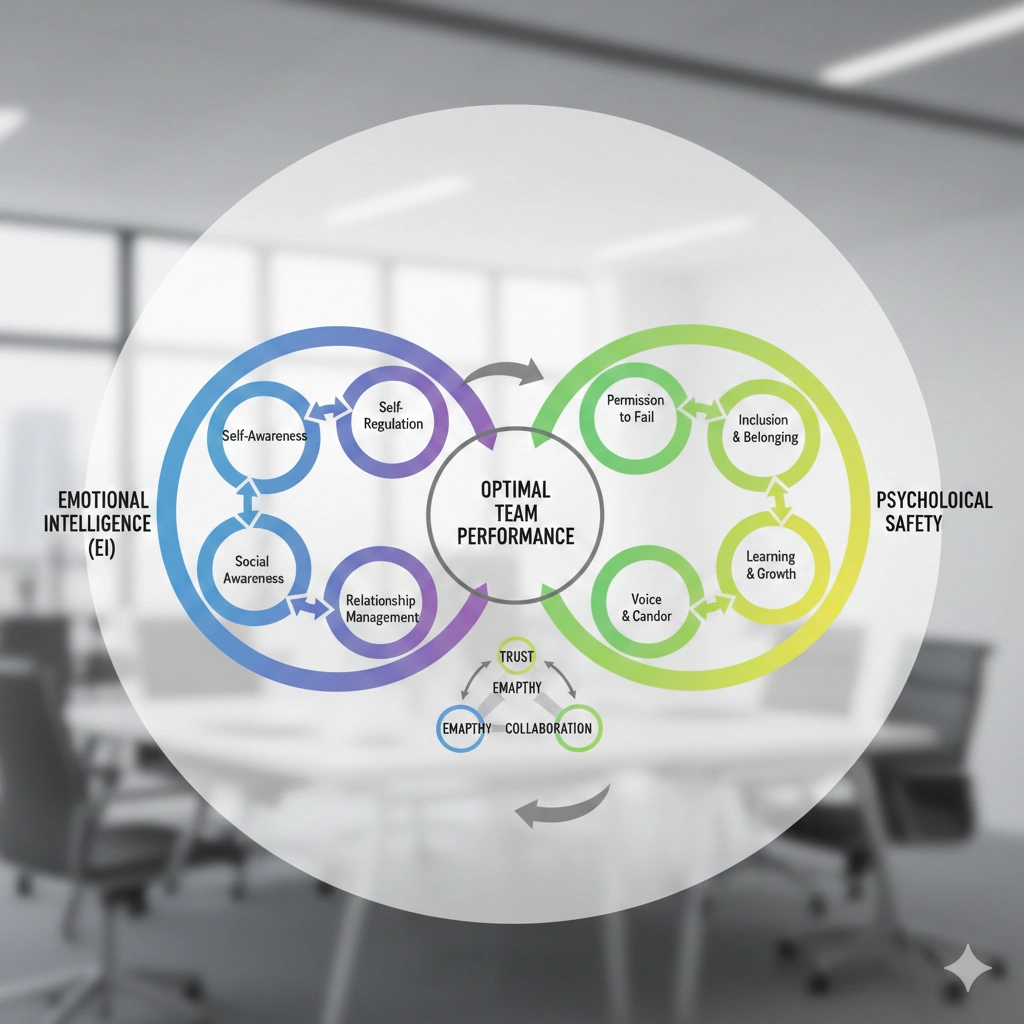
Emotional Intelligence Tools: The Real Differentiator

Emotional intelligence is your superpower here. It’s the capacity to understand, manage, and respond to emotions—yours and others’—with wisdom.
Self-awareness: Do you know your own biases? Your discomfort with different expressions of gender or sexuality? Name them. Bias doesn’t disappear through denial; it disappears through acknowledgment and intentional practice.
Empathy: Move beyond sympathy (feeling for someone) to empathy (feeling with someone). When a coworker shares discrimination they’ve experienced, can you access genuine curiosity about their inner world without centering your own guilt?
Relationship management: High EI means navigating difficult conversations without becoming defensive. When a colleague challenges your language, respond with gratitude. They’re giving you the gift of growth.
Social awareness: Read the room. Notice who goes silent when certain topics emerge. Recognize that marginalized employees are often monitoring the emotional temperature constantly—that’s cognitive labor you can reduce through awareness.
Ethical Frameworks for Creating a Truly Safe Space
Safe spaces don’t happen accidentally. They’re built through deliberate ethical commitments.
The Framework of Dignity: Treat each person as inherently worthy, regardless of sexual orientation or gender identity. This isn’t abstract philosophy—it shapes hiring, promotion, and daily interactions.
Psychological Safety Model (Amy Edmondson): Establish norms where people can speak up without fear of embarrassment or retaliation. This applies particularly to calling out discrimination.
Restorative Justice: When harm occurs, move beyond punishment to repair. If a coworker misgenders someone repeatedly, the goal isn’t firing them—it’s understanding why and facilitating genuine change.
Intersectionality Lens: Recognize that discrimination doesn’t exist in isolation. An LGBTQ+ woman of color experiences a different workplace reality than a white gay man. Build solutions that acknowledge these layered experiences.
Before You Leave: Practical Solutions and Practices
If you’re contemplating exit because of discrimination, pause. Try these strategies first.
Document everything. Keep records of discriminatory comments, exclusions, and microaggressions. Dates, witnesses, exact words. This protects you and provides clarity.
Find your people. Seek out LGBTQ+ employee resource groups (ERGs) or allies. You’re not alone, and collective voices carry more weight than isolated ones.
Name the pattern. Don’t just say “I’m uncomfortable.” Say specifically: “I’ve noticed I’m not invited to client dinners while similarly-positioned colleagues are. I believe this relates to my sexual orientation.” Specificity creates accountability.
Escalate strategically. HR exists for this. They might disappoint you, but documentation + clear communication creates legal and institutional records.
Engage senior allies. Find leaders in your organization who demonstrate commitment to inclusion. Bring them into the conversation not as rescuers, but as co-creators of solutions.
Set a timeline. Give your organization 90 days to show meaningful change. If nothing shifts, you know your answer.
Sometimes leaving is the right call. But make that decision from clarity, not just pain.
Conclusion: The Sanctuary You Deserve Exists Now
You’ve made it this far through an article about discrimination, which means you’re either living it or recognizing it in others. Both take courage.
Here’s the truth nobody tells you: inclusive workplaces don’t just feel morally better. They perform better. They innovate faster. They retain talent. They build loyalty that competitors can’t buy.
But none of that happens unless someone—maybe you—decides that authenticity matters more than comfort.
The sanctuary workplace isn’t some utopian fantasy. It’s built every single day through small decisions: the leader who normalizes pronouns, the coworker who speaks up against a joke, the HR professional who actually investigates complaints, the LGBTQ+ employee who claims space anyway.
You don’t have to choose between your career and your identity. That’s the old paradigm talking.
The new paradigm recognizes what you’ve always known: your full self is your most valuable asset. When you bring it to work, everyone benefits.
The question isn’t whether change is possible. The question is whether you’re ready to stop waiting for permission to show up as yourself.

Research References and Further Reading
- McKinsey & Company (2023). “LGBTQ+ Workers Report: Safety, Inclusion, and Belonging” – Survey of 1,000+ LGBTQ+ employees
- Harvard Business School (2022). “Ambient Discrimination in the Workplace” – Study on subtle discrimination patterns
- Center for American Progress. “The Economic Impact of Workplace Discrimination Against LGBTQ+ Employees”
- Boston Consulting Group. “The Mix That Matters: Innovation Through Diversity” – 1,700-company study
- Journal of Applied Psychology. “Authenticity and Work Performance: The Role of Psychological Safety”
Amy Edmondson. “The Fearless Organization: Creating Psychological Safety in the Workplace” (2018)