
He threatened to 1-star you because the AC was “not cold enough.” Here’s what actually helps.
You pick up the passenger at midnight. Expensive neighborhood. He gets in without saying hello, immediately starts scrolling his phone. Then it starts: “Why is the AC not colder? Can’t you drive faster? I’m late because you took too long to arrive.”
You drove the speed limit. You arrived in three minutes. Your AC is running at maximum capacity—it’s 38°C outside.
He exits without a tip. Thirty seconds later, your phone buzzes. One-star rating. Reason: “Unprofessional driver, uncomfortable ride.”
Tomorrow, your acceptance rate drops. Your access to surge pricing gets restricted. Your algorithm ranking plummets. All because someone wanted their car ten degrees colder than physics allows.
Welcome to the ride-share economy, where your livelihood depends on the mood swings of strangers. According to a 2023 survey, over two-thirds of ride-hailing drivers in the United States have experienced violence or abuse in their line of work, with the most commonly reported form being verbal abuse, experienced by more than half of all drivers. Data from NITI Aayog highlights that India’s gig economy is projected to reach 23.5 million workers, yet most lack basic protections or mental health support.
This isn’t another article celebrating the “entrepreneurial spirit” of gig work. This is about how you survive when passengers treat you like furniture, when algorithms dictate your worth, and when one bad day can cost you everything.
The Five Daily Battles You Fight Behind the Wheel
1. “The Invisible Chauffeur Effect: When Passengers Treat You Like Google Maps with Legs”
Picture this: Your passenger gets in. No greeting. Doesn’t look up from their phone for the entire fifteen-minute ride. Eats food in your car, drops crumbs. Takes a call on speakerphone discussing confidential business deals as if you don’t exist. Exits without acknowledging you’re human.
You’re not just driving them—you’re witnessing their lives while being completely erased from them.
According to research, over two-thirds of ride-hailing drivers have experienced violence or abuse, with more than half reporting verbal abuse. The violence isn’t always physical—often it’s the systematic dehumanization that wears you down day after day.
Research on gig economy workers reveals that lack of community and social recognition creates heightened loneliness and feelings of worthlessness, with ride-share drivers experiencing some of the highest isolation levels among gig workers.
You’ve driven lawyers to court, helped elderly passengers with groceries, listened to teenagers crying about breakups, transported sick people to hospitals. You’ve been witness to humanity’s vulnerability. But to most passengers, you’re less visible than their phone screen.

What Actually Works
The 30-Second “Steering Wheel Tap” Grounding Technique
Between rides, before the next passenger enters, you need to reclaim your humanity. This micro-practice takes just thirty seconds and anchors you back to yourself:
- Both hands on steering wheel (10 o’clock and 2 o’clock position)
- Tap alternately with thumbs (left-right-left-right) while breathing
- Count to ten (one tap per count)
- Say aloud: “I am here. I am human. I matter.”
- Take three deep breaths (inhale 4 counts, exhale 6 counts)
The bilateral tapping engages both brain hemispheres, interrupting the stress response and creating momentary calm. This isn’t about ignoring mistreatment—it’s about not internalizing it.
Reclaim Small Dignities
Create Boundaries
- Polite sign in car: “Please refrain from eating/drinking”
- Dash cam visible (deters abuse, protects you legally)
- Music at low volume—creates auditory boundary
Document Your Humanity
One driver started a private journal called “Moments I Was Seen.” When a passenger said thank you, tipped well, or acknowledged him as a person, he wrote it down. On brutal days, he read it. It reminded him: the problem isn’t him. The problem is a system designed to dehumanize.
End Each Ride with Self-Affirmation
After every single passenger exits—good or bad—say quietly: “That was their energy, not my worth.”
Research Reference
Studies examining psychological impacts of gig work identify social invisibility and lack of recognition as primary contributors to mental health deterioration among ride-share drivers, with effects comparable to workplace isolation in traditional employment. Source: https://pmc.ncbi.nlm.nih.gov/articles/PMC9743407/
2. “The Rating Casino: When Five Stars Mean Survival, Four Stars Mean Penalty”
You completed 247 rides this month. 243 were perfect. Four had issues beyond your control:
- Traffic accident blocked the highway
- Passenger entered wrong pickup address
- App navigation sent you wrong direction
- Someone rated you low because they were having a bad day
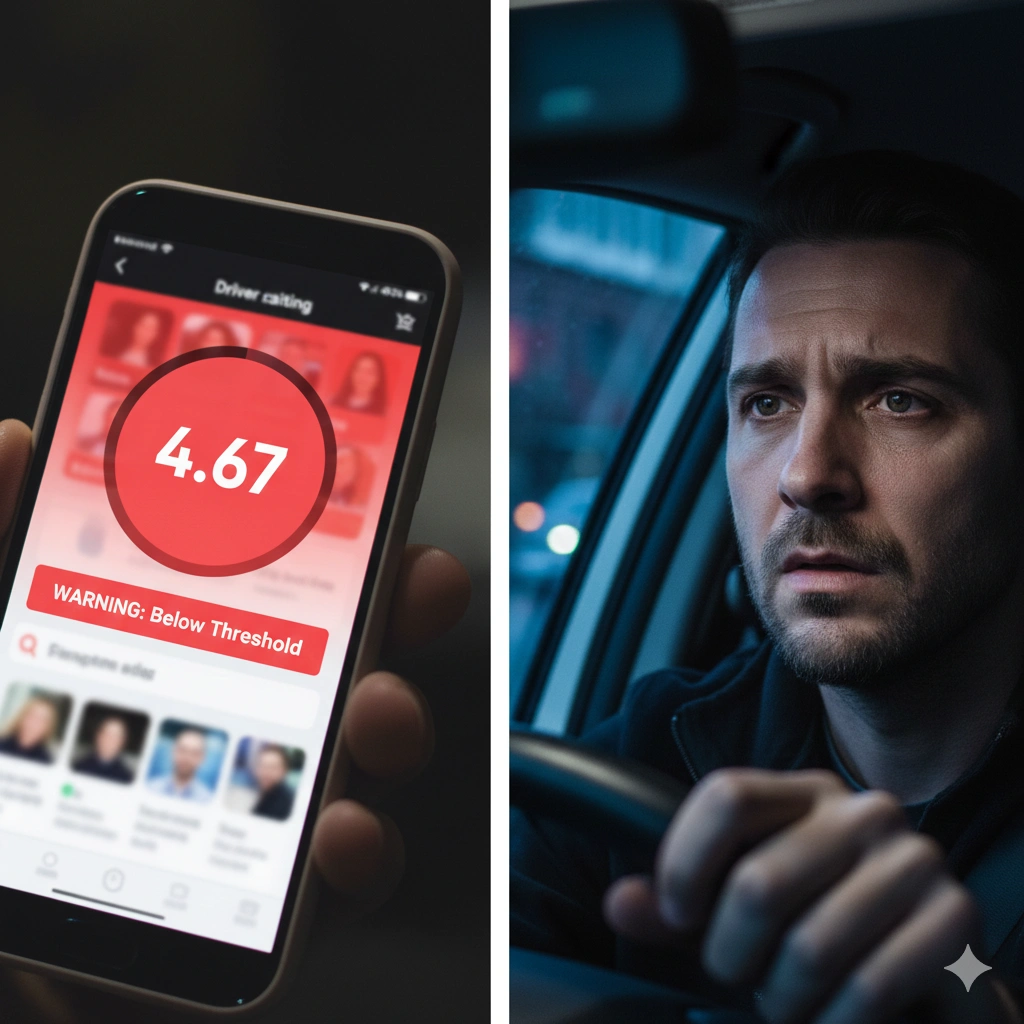
Your rating: 4.67 stars. Below the 4.7 threshold. Result: Reduced surge access, fewer ride requests, algorithm de-prioritization, risk of deactivation.
Federal data shows that while six databases contain information on assaults against ride-share and taxi drivers, underreporting is a major challenge, with many incidents never documented. But rating systems? Those are mercilessly precise, crushing drivers for factors entirely outside their control.
Gig economy research demonstrates that performance surveillance through rating systems creates constant anxiety comparable to clinical levels, with drivers experiencing heightened cortisol and stress responses throughout working hours.
You’ve driven through storms, navigated impossible traffic, maintained perfect safety records. None of it matters if someone decides your “energy was off” or the route the app chose “took too long.”
Your worth—and your ability to earn tomorrow—depends on the subjective whims of people who will never know your name.
What Actually Works
Mental Detachment From Arbitrary Metrics
The Rating Reality Mantra (Before Checking App Daily)
Place your hand over your heart. Say these words aloud:
- “My rating is not my worth”
- “I control my driving, not their perception”
- “Numbers cannot measure my dignity”
Document Everything—Seriously
For problematic rides
- Screenshot pickup/dropoff locations
- Screenshot navigation route with timestamps
- Screenshot passenger messages
- Note any unusual circumstances
Many platforms allow rating disputes. Few drivers use this feature because it’s deliberately opaque and discouraging. But documented evidence sometimes works.
The 3-Minute Post-Drop “Passenger Compassion” Metta Practice
Metta, or loving-kindness meditation, might sound impossible after someone treats you badly. But research shows it’s one of the most effective practices for preventing bitterness and burnout.
After dropping a difficult passenger, before accepting the next ride:
Step 1: Ground yourself (30 seconds)
- Hand on heart
- Three deep breaths
- Feel your feet on the floor
Step 2: Acknowledge your pain (30 seconds)
- “That hurt”
- “That was unfair”
- “I didn’t deserve that treatment”
Step 3: Extend compassion—to yourself first (60 seconds)
- “May I be safe from harm”
- “May I be peaceful despite difficulty”
- “May I remember my worth”
Step 4: Extend compassion—to the passenger (60 seconds) This is the hardest part. You’re not excusing their behavior. You’re freeing yourself from carrying their toxicity:
- “May they find peace in their suffering”
- “May they learn kindness”
- “May their pain not create more pain”
Studies on metta meditation show that regular practice reduces anger, increases emotional resilience, and protects against burnout in high-stress service professions. You’re not doing this for them—you’re doing it so their cruelty doesn’t poison your entire day.
Join Rating Support Networks
Many driver forums and WhatsApp groups help members dispute unfair ratings collectively. Drivers share which passengers frequently rate poorly, which areas have difficult clients, and strategies for appeals.
Research Reference
Research on metta meditation for service workers shows significant reductions in stress, improved emotional regulation, and decreased burnout symptoms, with effects persisting even in high-pressure environments. Source: https://www.ncbi.nlm.nih.gov/pmc/articles/PMC3156028/
3. “The Surge Trap: When You’re Always Chasing Tomorrow’s Promise”
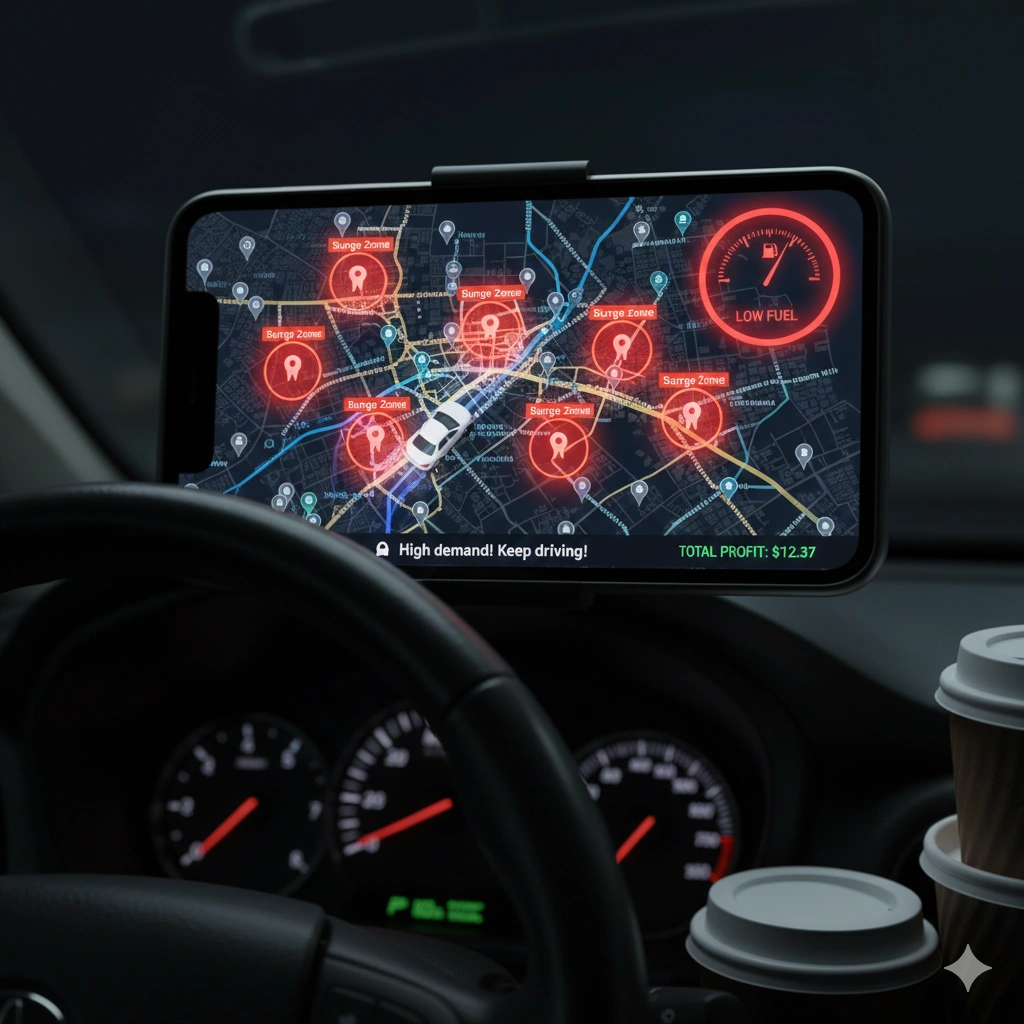
The app shows a surge multiplier in the wealthy neighborhood fifteen kilometers away. If you drive there, you might catch the 2.5x surge. Might. Or it could disappear in five minutes, leaving you with an empty tank and lost opportunity in your current area.
So you chase it. And when you arrive, the surge is gone. But there’s another one across the city. You chase that too.
You’ve become Pavlov’s dog, except the reward is inconsistent and the bells are controlled by an algorithm you’ll never understand.
NITI Aayog data shows that gig workers in India often work twelve to fourteen hours daily yet earn below minimum wage when calculated hourly, with platforms extracting disproportionate commissions while externalizing all risk to workers.
One driver described the surge addiction: “I drove seventy kilometers yesterday chasing surges. I made ₹800 total. My fuel cost ₹600. I worked thirteen hours. I earned ₹15 per hour.”
The promise of big earnings keeps you hooked. The reality is you’re working poverty wages while the platform takes 25-40% commission.
What Actually Works
The Anti-Surge Strategy: Science Over Gamification
Track Your Actual Earnings (Weekly Reality Check)
Create a simple spreadsheet:
- Hours worked (logged in to app)
- Gross earnings
- Minus: Fuel costs
- Minus: Vehicle maintenance
- Minus: Insurance/app fees
- Equals: Net hourly rate
Most drivers who do this discover they’re earning ₹80-150 per hour net—far below what they thought.
Establish Geographic Boundaries
Pick 2-3 zones you know well:
- Reliable passenger density
- Reasonable traffic
- Safe neighborhoods
- Moderate fuel costs to reach
Refuse to chase surges more than 5 kilometers away. Studies show that drivers who stick to familiar zones earn more consistently than those who chase surges, due to reduced fuel costs and better navigation knowledge.
The Time-Block Method
Instead of working “whenever surge happens,” work scheduled blocks:
- Morning block: 7-10 AM (office commutes)
- Evening block: 6-9 PM (return commutes)
- Weekend nights: 9 PM-1 AM (social travel)
Consistent timing creates consistent income. Surge chasing creates chaos.
Diversify Platforms
Register with multiple apps (Uber, Ola, local competitors). When one is slow, switch. Don’t let one algorithm control your livelihood.
Set Daily Earnings Targets
“I need to earn ₹1,200 today.”
Once you hit that, stop. Rest. Go home. Your body and mind need recovery more than they need another ₹200.
Research Reference
Economic analysis of gig worker earnings reveals that surge pricing benefits platforms far more than workers, with drivers earning less per hour when chasing surges due to fuel costs, time lost in transit, and algorithm manipulation. Source: https://www.idinsight.org/publication/economic-lives-of-digital-platform-gig-workers-india/
4. “The Safety Roulette: When Every Ride Could Be Your Last”
It’s 2 AM. The ping comes in. Pickup location: isolated area. Passenger: no profile photo, no ride history, minimal information. You’re exhausted. But you need the money.
You accept.
U.S. government data reported 19 fatal assaults of ride-share and taxi workers in 2019 alone, though underreporting means actual numbers are likely much higher. Research found that 2% of ride-share drivers reported having been shot or stabbed, while many more experienced threats, attempted robberies, and physical violence.
Last month, a fellow driver you knew was attacked. Passenger tried to rob him. He fought back, got injured. The app’s insurance? Didn’t cover it because the assault happened “before the ride officially ended” in the app. He paid his own hospital bills.
Female drivers face additional risks. Documented cases include unwanted advances, groping, stalking after rides end, and persistent harassment. One driver installed a dashcam after a passenger tracked her down using the route history.
There’s no security guard. No panic button that brings immediate help. Just you, your car, and whoever gets in. The platforms call you “partners”—but partners don’t leave you vulnerable to attack with zero protection.

What Actually Works
The Non-Negotiable Safety Protocol
Before Accepting Any Ride
- Check passenger rating (below 4.5? Think twice)
- Check pickup location (isolated area late night? Consider declining)
- Trust your gut (uneasy feeling? That’s your nervous system protecting you)
During Every Ride
- Dashcam visible: Front and interior recording. Deters abuse, provides evidence
- Doors unlocked until passenger enters: Quick exit if needed
- Phone mounted, emergency contacts ready: Family/friend tracking your location
- Verification ritual: “What name is this ride for?” Make them confirm before they enter
High-Risk Situations (Automatic Decline)
- Solo pickups in isolated areas past midnight
- Passengers refusing to verify identity
- Multiple passengers when ride showed solo
- Passenger appears intoxicated to dangerous level
- Any situation triggering strong fear response
Community Safety Networks
Join local driver safety groups. Share information:
- “Passenger [first name only] at [area] made threats—be cautious”
- “Route [X] has recent reports of carjackings”
- “Hospital area—many rides end without payment due to emergency confusion”
The Assertiveness Script
Practice saying these out loud until they feel natural:
- “I need you to verify the name on this ride.”
- “I can’t take multiple passengers—this ride is for one.”
- “I’m ending this ride due to safety concerns.”
- “Exit the vehicle now, or I’m calling emergency services.”
Your safety is not negotiable. No rating, no payment, no surge multiplier is worth your life.
Research Reference
U.S. Government Accountability Office analysis found that federal databases significantly undercount violence against ride-share drivers, with systematic issues in reporting and documentation masking the true scope of assaults, threats, and safety incidents. Source: https://www.gao.gov/products/gao-24-106742
5. “The Burnout Spiral: When Your Body Says Stop But Your Bills Say Drive”
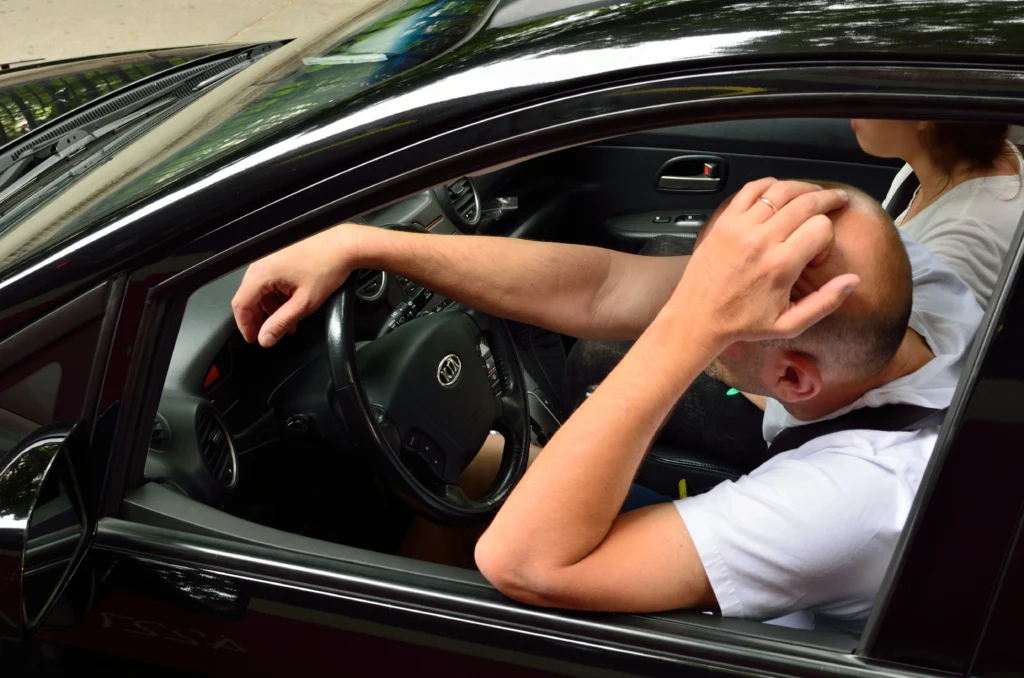
Your back aches constantly. Eight hours in the driver’s seat daily does that. Your right knee throbs—gas pedal repetition. Your eyes burn from screen glare and traffic focus. You haven’t had a full day off in three weeks.
But rent is due. Your child needs medicine. Vehicle maintenance can’t wait. So you drive. And drive. And drive.
Economic studies show that Indian gig workers typically earn ₹15,000-20,000 monthly for fifty-plus hour workweeks, far below minimum wage when calculated hourly, with no sick leave, no health insurance, and no protection from arbitrary deactivation.
Gig work research demonstrates that unpredictability in schedules and income creates chronic stress, leading to poor physical health outcomes including cardiovascular disease, chronic pain, and compromised immune function.
One driver shared: “I worked eleven hours yesterday. My wife asked me to take Sunday off. I can’t. If I don’t drive Sunday, we can’t pay electricity bill Monday.”
There’s no recovery time. No sick days. No vacation. You’re one car breakdown away from financial catastrophe.
Your body is screaming. But the app is silent on that—it just sends another ride request.
What Actually Works
Forced Rest Architecture (Non-Negotiable)
You will not rest unless you build it into your system
The Daily Reset (Three Mandatory Breaks)
10 AM Break (15 minutes)
- Park in shade
- Exit vehicle, stretch legs
- Steering Wheel Tap grounding
- Hydrate (dehydration worsens everything)
2 PM Break (30 minutes)
- Eat proper meal (not snacks while driving)
- Walk 5 minutes (blood circulation)
- Close eyes for 10 minutes
- Phone off (actual rest, not scrolling)
6 PM Break (15 minutes)
- Check in with body: What hurts?
- Stretches: neck, back, legs, wrists
- Decide: Continue or stop for the day?
The Sunday Shutdown
One complete day off weekly. Not “reduced hours”—complete shutdown.
“I can’t afford it,” you’re thinking. You can’t afford NOT to. Burnout leads to accidents, illness, and eventually inability to work at all. Strategic rest protects long-term earnings.
Build Emergency Cushion (Radical Plan)
This sounds impossible but it’s survival:
- Set aside ₹50 per day (₹1,500/month)
- In six months: ₹9,000 emergency fund
- This buys you: one week off when sick/emergency
Start with ₹20/day if ₹50 is impossible. Something is better than nothing.
Community Support Pools
Some driver groups create informal mutual aid:
- 10-20 drivers contribute ₹200-500 monthly
- Fund helps members during: medical emergency, vehicle breakdown, family crisis
- Not charity—community insurance
Physical Health Minimums
- Seat cushion with lumbar support (₹800-1,500, prevents chronic back pain)
- Anti-glare screen protector on phone (reduces eye strain)
- Stretching routine: 5 minutes before starting, 5 minutes midday
- Water bottle always: dehydration causes accidents
Know Your Rights
Research what protections exist in your region. Some areas have begun implementing:
- Minimum per-ride earnings
- Platform commission caps
- Insurance requirements
- Driver associations demanding better conditions
Research Reference
Studies of gig economy workers’ health outcomes reveal significant correlation between unpredictable schedules, long working hours, and chronic health conditions including cardiovascular disease, musculoskeletal disorders, and mental health deterioration. Source: https://www.drishtiias.com/daily-updates/daily-news-editorials/empowering-india-s-gig-workforce
The Truth Nobody Tells You About Ride-Share Work
Here’s what the platforms won’t say: The “flexibility” is a marketing lie. You’re not your own boss—an algorithm is your boss, and it can fire you without explanation.
The “entrepreneurial opportunity” is wage theft dressed up as innovation. When calculated honestly, most drivers earn below minimum wage while platforms extract 25-40% commission and externalize all costs and risks.
The “partnership” is exploitation. Partners don’t leave each other vulnerable to assault. Partners don’t penalize you for circumstances beyond your control. Partners don’t deactivate your account without appeal.
During COVID-19, platforms praised drivers as essential heroes while providing minimal support, inadequate safety equipment, and no hazard pay despite increased risk.
But here’s the other truth: You have more power than the system wants you to believe.
Driver strikes have forced platforms to improve conditions—modestly, but measurably. When Uber and Ola drivers staged coordinated strikes across Indian cities demanding better commission rates and safety protections, some changes followed. Not enough, but something.
Your dignity matters. Your safety matters. Your health matters. The algorithm will tell you they don’t. Passengers will treat you like you don’t. But you know better.
Your Daily Survival Toolkit
Morning Routine (10 minutes)
- 6:00 AM: Hydrate, stretch
- 6:05 AM: 30-second Steering Wheel Tap grounding
- 6:08 AM: Check vehicle (safety first)
- 6:10 AM: Set daily earning target and quit time
During Shifts (Every 2-3 hours)
- Mandatory break (even 10 minutes helps)
- Steering Wheel Tap between difficult passengers
- Hydration check
- Body scan: What hurts? Address it.
After Difficult Passengers
- 3-minute Passenger Compassion metta practice
- Affirmation: “Their energy, not my worth”
- Consider declining next ride if you’re dysregulated
Evening Wind-Down (15 minutes)
- Calculate actual net earnings (know your true wage)
- Physical care: stretches, ice painful areas
- Mental release: metta practice for yourself
- Plan tomorrow: Can you afford any rest?
Weekly Non-Negotiables
- One full day off (survival requirement)
- Review earnings vs hours (reality check)
- Connect with other drivers (you’re not alone)
- Address any persistent pain (prevention cheaper than crisis)
Monthly Check-Ins
- Am I okay? (Mental health)
- Is my body okay? (Physical health)
- Am I earning enough? (Financial health)
- Can I sustain this? (Long-term viability)
When Everything Becomes Too Much
If you’re reading this section, you’re probably at breaking point. The passengers won’t stop being cruel. The rating won’t improve. The body hurts constantly. The money isn’t enough. You’re wondering if it’s worth it.
Listen carefully: Your life has value beyond your star rating. Always.
Mental health resources for gig workers:
India
- KIRAN Helpline: 1800-599-0019 (24/7, free)
- Vandrevala Foundation: +91-9999666555
- iCall Helpline: 9152987821
Immediate Steps When Crisis Hits
1. Pull over safely. Turn off app. Your mental health emergency is more important than the next ride.
2. Call someone who cares. Family, friend, fellow driver. Say: “I’m struggling. I need to talk.”
3. Calculate minimum survival. What’s the absolute minimum needed daily? Can you work half-days for recovery?
4. Explore alternatives. Are there other income sources? Different platforms? Temporary breaks?
5. Contact driver associations: Many cities have driver unions offering support:
- Indian Federation of App-Based Transport Workers (IFAT)
- Telangana Gig and Platform Workers Union
- Local driver WhatsApp groups
Remember
- Platforms will replace you in the algorithm
- Your family cannot replace you in life
- Bad ratings are temporary
- Permanent decisions based on temporary pain last forever
A Letter to You, From Someone Who Sees You
You’re reading this at 11 PM, aren’t you? After a long shift. Body aching. Tomorrow’s earnings uncertain. Still thinking about that passenger who treated you terribly.
I want you to know something: You are remarkable.
You navigate traffic that would terrify most people. You remain professional when passengers are cruel. You work through pain because people depend on you. You keep going when the algorithm fails you, when your body screams to stop, when ratings punish you for things beyond your control.
You are not a rating. You are not an algorithm’s opinion of your worth. You are not disposable.
The system is broken. The pay is unfair. The conditions are exploitative. These are facts.
But you are also a fact. Your resilience. Your dignity. Your refusal to be erased.
Research shows gig work creates extreme stress, isolation, and financial precarity. But research also shows that workers who practice self-compassion, set boundaries, and build community survive—and sometimes thrive.
You deserve
- Passengers who see your humanity
- Ratings that reflect reality, not mood
- Safety protections that actually work
- Earnings that reflect your labor’s value
- Rest without financial terror
Until the system changes—and it must change—take care of yourself with the same dedication you bring to every ride.
Final Reminders: You Matter
Daily Anchors
- 30-second Steering Wheel Tap between passengers
- 3-minute Passenger Compassion metta after difficult rides
- Mandatory breaks every 2-3 hours
- Hydration every hour
- One proper meal daily
Weekly Non-Negotiables
- One complete day off
- Connect with other drivers
- Review actual earnings vs hours
- Address any persistent pain
Monthly Check-Ins:
- Mental health: Am I okay?
- Physical health: Is my body okay?
- Financial health: Am I earning enough?
- Sustainability: Can I continue this?
Remember
- You are more than your rating
- Your work has dignity
- Bad days end
- You are not alone
- Help is available
If today feels impossible, just make it to tomorrow. Then do it again. That’s all you need to do.
One ride. One breath. One day at a time.
You’re going to be okay.
Research References Cited
NITI Aayog (2024): India’s Booming Gig and Platform Economy Report
- URL: https://www.niti.gov.in/sites/default/files/2024-08/Gig-Report.pdf
- Drishti IAS (2024): Empowering India’s Gig Workforce
- URL: https://www.drishtiias.com/daily-updates/daily-news-editorials/empowering-india-s-gig-workforce
- U.S. Government Accountability Office (2024): Ridesharing and Taxi Safety Report
- URL: https://www.gao.gov/products/gao-24-106742
- Statista (2023): Types of Violence Experienced by Ride-Share Drivers United States
- URL: https://www.statista.com/statistics/1421787/types-of-violence-experienced-by-ride-share-drivers-united-states/
- BMC Public Health (2022): Mental health and life satisfaction of gig workers
- URL: https://pmc.ncbi.nlm.nih.gov/articles/PMC9743407/
- IDinsight (2024): Economic Lives of Digital Platform Gig Workers in India
- URL: https://www.idinsight.org/publication/economic-lives-of-digital-platform-gig-workers-india/
- CNN (2022): Uber Safety Report – Sexual Assault Statistics
- URL: https://www.cnn.com/2022/06/30/tech/uber-safety-report
- Helping Survivors (2023): Uber and Lyft Sexual Violence Statistics
- URL: https://helpingsurvivors.org/rideshare-sexual-assault/statistics/
- SAGE Journals (2022): Dependency and Hardship in the Gig Economy Mental Health
- URL: https://journals.sagepub.com/doi/full/10.1177/23780231221082414
- PubMed (2013): Effects of loving-kindness meditation on healthcare providers
- URL: https://www.ncbi.nlm.nih.gov/pmc/articles/PMC3156028/
- Frontiers in Psychology (2022): On-call work and mental health
- URL: https://www.frontiersin.org/journals/psychology/articles/10.3389/fpsyg.2022.1068663/full
- ILO (2023): Expansion of the Gig and Platform Economy in India
- URL: https://www.ilo.org/media/526416/download
- Feminist Majority Foundation (2025): Every Eight Minutes – Sexual Assault in Uber
- URL: https://feminist.org/news/every-eight-minutes-the-crisis-of-sexual-assault-in-uber-rides/
- Abuse Lawsuit (2024): Rideshare Assault Risks and Lawsuits
- URL: https://www.abuselawsuit.com/rideshare-assault/
- SME Futures (2024): India’s Gig Workers Deplorable Plight
- URL: https://smefutures.com/indias-gig-workers-their-deplorable-plight-and-how-it-can-be-remedied/