
You signed up for an adventure. What you got was 24/7 surveillance, sleep deprivation orchestrated for “good television,” and a social media storm you weren’t prepared for.
Behind the Edited Footage
The world sees your fifteen minutes of fame. What they don’t see are the psychological evaluations that missed your vulnerabilities, the producers who manufacture conflict for ratings, or the aftermath when fame evaporates but trauma remains. Reality television generates billions in revenue while contestants navigate mental health crises with minimal support.
Recent BAFTA guidelines require UK productions to implement bullying and harassment policies, yet these measures emerged only after multiple contestant suicides sparked public outcry. The Mental Health Foundation reports that 24% of young adults experience body image anxiety specifically from reality TV, while research demonstrates that surveillance-based shows increase aggressive behavior in viewers—imagine the impact on participants living that reality.
The industry’s duty of care protocols have improved following tragic incidents, but questions persist: are psychological screenings adequate when contestants may hide struggles to secure their spot? Can three post-show therapy sessions address trauma from weeks of manufactured conflict and public exposure? You deserve answers.
Five Daily Realities You Face (That Never Make the Final Edit)
1. “The Producers Need Drama Today” — When Your Mental Health Becomes the Script

You’re exhausted. You miss your family. You’re having a rough day. Perfect—the producers schedule a confrontational task designed to trigger conflict. Sleep deprivation, alcohol, isolation from support systems, and strategic editing transform your vulnerable moments into entertainment. Research confirms that reality shows thrive on manufacturing conflict, yet contestants bear the psychological consequences.
The hidden issue
Informed consent procedures explain potential risks, but you can’t truly comprehend the reality until you’re living it. Mental health professionals working on shows face an impossible challenge: predicting how individuals will respond to sustained stress, public scrutiny, and manipulated social dynamics. Some contestants underreport struggles during screening to avoid jeopardizing their selection, entering high-pressure environments without adequate support.
Research insight
A comprehensive study analyzing Bigg Boss identified how the show’s format—surveillance, competition, and manufactured conflict—creates toxic environments that foster addictive viewing while exacerbating mental health issues among participants and audiences. The research documents behavioral changes in individuals following the show, providing empirical evidence of reality TV’s psychological impact.
Mindful solutions
- Understand your rights: review contracts with legal counsel before signing
- Establish code words with production for genuine distress versus manufactured drama
- Keep a private journal documenting mental health throughout filming (request this as contract provision)
- Demand clarity on mental health support: who’s available, when, and confidentiality parameters
- Practice the “Camera Compassion” meditation (detailed below) when filming becomes overwhelming
For resources on managing high-pressure environments and maintaining boundaries, explore
Mindful Engineer’s Stress & Burnout section.
2. The Social Media Hurricane — When Strangers Decide Your Worth

The show airs. Within hours, you’re trending. Thousands of people you’ve never met have formed opinions about your character, appearance, and choices. Some send love. Others send death threats. You’re simultaneously famous and vilified, praised and bullied. The psychological whiplash is destabilizing, yet you’re expected to engage with fans, maintain sponsorships, and act grateful for the “opportunity.”
The hidden issue
Parasocial relationships create unique mental health challenges. Viewers feel entitled to access your life, opinions, and emotional responses. Negative commentary triggers genuine distress—research shows that online harassment causes symptoms comparable to offline trauma. Meanwhile, positive attention creates pressure to maintain a persona that may not reflect your authentic self.
Research insight
Studies examining reality TV’s influence found that exposure to relational aggression on shows increased viewers’ own aggressive behaviors. If watching creates behavioral shifts, imagine living as the target of millions’ projections, judgments, and parasocial investments in your storyline.
Mindful solutions
- Establish strict social media boundaries: designated times for checking, comment filtering, hired social media managers
- Create separation between your TV persona and authentic identity
- Connect with other reality alumni who understand the experience
- Work with therapists specializing in sudden fame trauma
- Practice the “Stream Off Switch” meditation (adapted below as “Screen Off Switch”)
Learn more about protecting mental health in public-facing roles at
Mindful Engineer’s Life & Reflections.
3. The Identity Crisis — When You Can’t Remember Who You Were Before
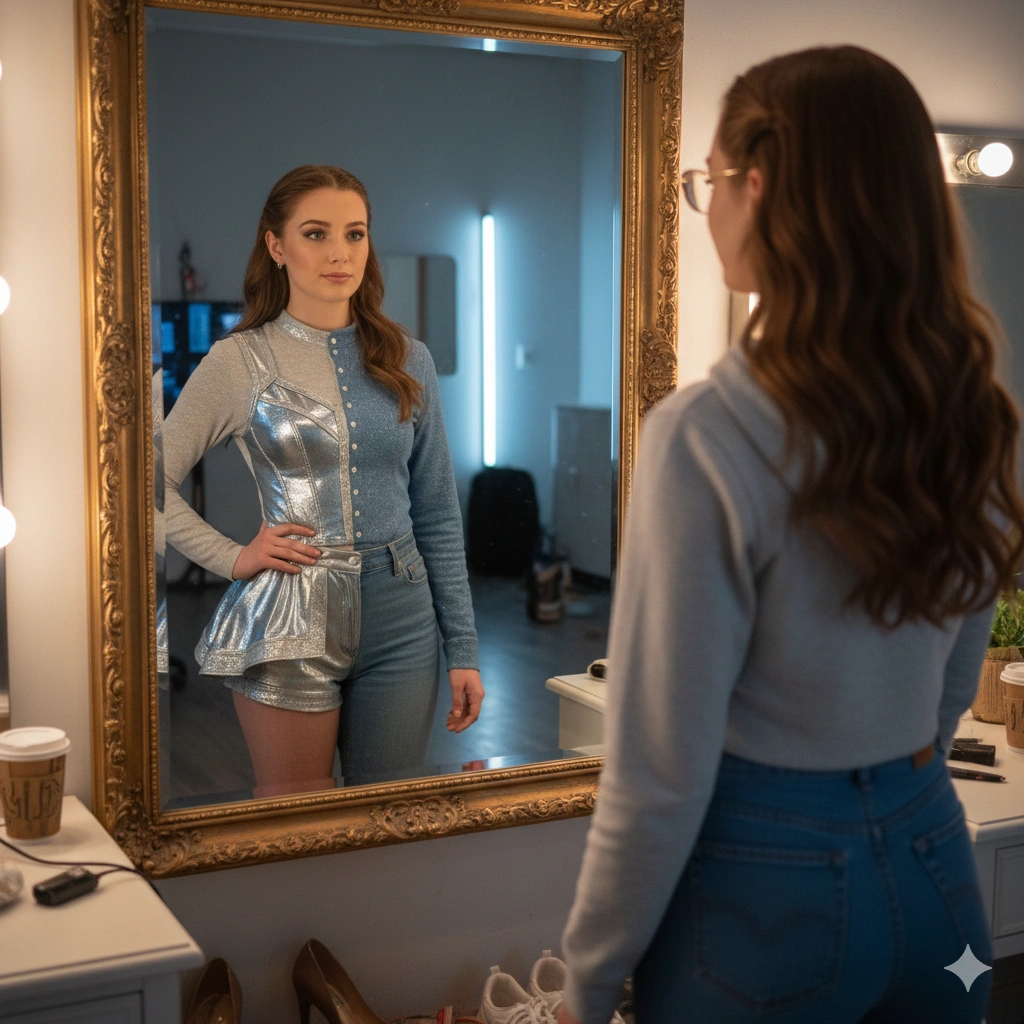
Before the show, you had an identity: student, professional, parent. Post-show, you’re “that person from [show name].” Your pre-existing relationships feel strained. Your career trajectory is disrupted. You catch yourself performing even when cameras aren’t present because you’ve internalized constant surveillance. Contestants describe feeling like they’re the production company’s product rather than autonomous individuals.
The hidden issue
Reality TV’s “cultivation theory” explains how prolonged media exposure shapes perceived social realities. You’re not just affected by how the show portrayed you—you’ve internalized behaviors developed under extreme conditions, making it difficult to distinguish authentic self from survival strategies you adopted for the show.
Research insight
Analysis by the Mental Health Foundation revealed concerning impacts on young viewers’ body image and behavior, but contestants experience these effects exponentially. When your edited self becomes public record, distinguishing between performance and authenticity becomes psychologically complex.
Mindful solutions
- Schedule regular therapy with professionals experienced in identity transitions and trauma
- Reconnect with pre-show relationships and activities that ground your core identity
- Create a timeline documenting who you were before, during, and who you want to become after
- Limit consumption of show episodes and related content—constant re-watching reinforces trauma
- Recognize that the show captured one narrow slice of your existence, not your complete identity
For guidance on rebuilding identity after major life transitions, visit
Mindful Engineer’s Science Behind Calm.
4. The Physical Toll — When Your Body Remembers What Your Mind Tries to Forget

Sleep deprivation. Restricted food access. Alcohol consumption encouraged for drama. Physical challenges designed to push limits. Your body experienced sustained stress, and now you’re dealing with the aftermath: disrupted sleep patterns, digestive issues, anxiety manifesting as physical symptoms. The show ended, but your nervous system remains in survival mode.
The hidden issue
Reality TV conditions create sustained activation of your stress response system. Unlike traditional stressors that have clear endpoints, the show continues airing for weeks or months after filming, meaning your trauma is repeatedly retriggered as audiences consume and comment on your most vulnerable moments.
Research insight
Research examining reality TV formats found that surveillance-based shows create unique psychological distress. Participants described the experience as severe mental stress that continued—and often intensified—when shows aired, as they confronted public reactions to moments they’d tried to process privately.
Mindful solutions
- Work with healthcare providers familiar with PTSD and trauma-related physical symptoms
- Establish consistent sleep schedules and nutrition patterns to regulate your nervous system
- Engage in somatic therapies: yoga, EMDR, body-based trauma processing
- Limit alcohol and substances—they provide temporary relief but worsen anxiety long-term
- Practice body-based grounding techniques like the “Eviction Release” practice (detailed below)
Explore the connection between physical and mental wellbeing at
Mindful Engineer’s Guided Practices.
5. The Career Fallout — When Reality Fame Doesn’t Pay the Bills

You left your job for the show. Producers implied opportunities would follow. Maybe you get some sponsored posts, a few club appearances. But sustainable income? That’s rare. Meanwhile, returning to your previous career feels impossible—employers Google your name and find endless footage of your lowest moments. You’re too famous to be anonymous, not famous enough to be financially secure.
The hidden issue
The pursuit of fame can exacerbate existing mental health issues while failing to provide resources to cope with life changes. Contestants often entered shows hoping to escape difficult financial or professional situations, only to find themselves in more precarious positions with added psychological trauma.
Research insight
Mental health professionals note that many contestants view reality TV as an “easy way out” of current struggles. This indicates existing vulnerabilities that producers should screen for—yet these same vulnerabilities make individuals more likely to experience severe psychological distress during and after filming.
Mindful solutions
- Diversify income immediately: skills training, education, career counseling
- Connect with financial advisors experienced in sudden income changes
- Build backup plans before relying solely on reality TV fame for income
- Be selective about opportunities: some sponsorships reinforce harmful narratives
- Recognize that sustainable success requires developing skills beyond reality TV persona
For strategies on navigating career transitions mindfully, explore
Mindful Engineer’s Focus & Flow resources.
Quick Mindfulness Practices: Your Grounding Toolkit
Practice 1: 3-Minute “Camera Compassion” (180 seconds)
When to use
During filming when stress peaks, or post-show when you’re struggling with how you were portrayed
The practice
- Find privacy (bathroom, confessional room, outdoor space away from cameras if possible). If complete privacy isn’t available, create internal privacy by closing your eyes (0:00-0:15)
- Place both hands over your heart. Feel the warmth and rhythm. This physical touch activates self-soothing neurological pathways (0:15-0:45)
- Breathe slowly: inhale for 4 counts, hold for 2, exhale for 6 counts. Repeat five times. The extended exhale activates your parasympathetic nervous system (0:45-1:30)
- Acknowledge your reality with compassion: “I am in a manufactured environment designed to create stress. My reactions are normal responses to abnormal circumstances. I am still the person I was before this. This experience does not define me.” (1:30-2:15)
- Identify one concrete action you can take right now: requesting to speak with a producer about mental health support, calling the on-site therapist, removing yourself temporarily from a situation, or simply taking five more minutes alone (2:15-2:45)
- Take three final deep breaths. Open your eyes. Return with renewed awareness that you have agency even in constrained circumstances (2:45-3:00)
Why it works
This practice combines physiological regulation (hand-to-heart touch, controlled breathing), cognitive reframing (recognizing manufactured stress), and empowerment (identifying concrete actions). It provides tools for navigating impossible situations while maintaining self-compassion.
Practice 2: 90-Second “Eviction Release” (90 seconds)
When to use
After elimination, when show ends, or any transition where you’re leaving the reality TV environment
The practice
- Stand with feet firmly planted. Feel the ground beneath you—solid, stable, real (0:00-0:15)
- Shake your body vigorously: arms, legs, torso. Literally shake off the experience. Animals do this instinctively after stressful events to discharge trauma energy (0:15-0:35)
- Place your right hand on your left shoulder, left hand on right shoulder, creating a self-hug. Gently tap alternating sides. This bilateral stimulation helps process stress (0:35-0:55)
- Say aloud (or internally if alone): “I am leaving [show environment]. What happened there stays there. I am returning to my real life. I am safe now.” (0:55-1:15)
- Take one deep breath, raising arms overhead on inhale, releasing forcefully with sound (sigh, “ha,” or any vocalization) on exhale. Repeat three times (1:15-1:30)
Why it works
Physical movement combined with bilateral stimulation helps process trauma stored in the body. The shaking literally discharges stress hormones. Verbal affirmation creates psychological separation between the show environment and your life after. This practice provides somatic release when verbal processing feels inadequate.
For additional trauma-informed practices, visit
Mindful Engineer’s complete guided practice library.
The Path Forward: From Exploitation to Empowerment
You didn’t sign up to be traumatized. You signed up for an experience, an opportunity, maybe an adventure. The industry has a responsibility to protect participants, yet enforcement remains inconsistent. BAFTA’s updated guidelines requiring bullying and harassment policies are progress, but they emerged only after preventable tragedies.
Production companies now provide limited therapy sessions, but research shows more than half of participants don’t utilize offered aftercare—sometimes because three sessions feel inadequate for addressing complex trauma, sometimes because the stigma around seeking help persists even after crisis.
Your mental health matters more than ratings, more than producer goals, more than audience entertainment. Organizations like ITV and Channel 4 have implemented comprehensive duty-of-care protocols including pre-filming psychological evaluations, on-set therapists, and post-show support. However, these measures vary wildly between productions, and international shows often lack equivalent protections.
If you’re considering reality TV, know the risks. If you’ve already participated, know you’re not alone in struggling afterward. Former contestants describe anxiety, depression, PTSD symptoms, and identity crises—all normal responses to abnormal circumstances. The shame belongs to systems that profit from your vulnerability, not to you for experiencing predictable psychological consequences.
Your Action Plan: Starting Today
- This week: If post-show, complete the “Eviction Release” practice daily until it feels complete
- This month: Connect with at least one mental health professional experienced in trauma and sudden fame
- This season: Build or rebuild one aspect of your identity completely separate from the show
- Long-term: Advocate for better protections—your experience can inform industry changes that protect future contestants
Remember: the show might have shaped your public image, but it doesn’t define your private reality. You are more than your edited footage. Your worth transcends viewer opinions. Recovery is possible, and you deserve support without shame.
For comprehensive mental health resources and mindful approaches to navigating public life, explore
Mindful Engineer’s complete resource library.
Additional Resources
- Mind (UK Mental Health Charity): Free mental health support and information
- The Film & TV Charity: Industry-specific mental health services
- Samaritans: 24/7 crisis support (116 123)
- Psychology Today: Directory of therapists specializing in trauma, sudden fame, and media-related stress
Research References
- Mental Health Foundation. (2019). The harsh reality of reality TV and mental health. https://www.mentalhealth.org.uk/explore-mental-health/blogs/harsh-reality-reality-tv-and-mental-health
- Dasari, P. (2024). The dark side of reality TV: A case study of “Bigg Boss.” SSRN. https://ssrn.com/abstract=4741757
- Gibson, B., et al. (2013). Just “harmless entertainment”? Effects of surveillance reality TV on physical aggression. Psychology of Popular Media Culture, 2(4), 283-292. https://www.swlondoner.co.uk/entertainment/06052021-research-shows-reality-tv-is-not-harmless-entertainment
- BAFTA Television Committee. (2024). Television awards rules and guidelines 2024. https://www.bafta.org/awards/awards-information/television/
- Smart TMS. (2024). Reality TV and mental health: What it’s really like. https://www.smarttms.co.uk/news/reality-tv-and-mental-health-what-its-really-like
- Women’s Health UK. (2019). Are we failing reality TV contestants’ mental health? https://www.womenshealthmag.com/uk/health/mental-health/a27750385/reality-tv-and-mental-health/