
When the last bell rings and your nerves are fried, try this 4-minute mindful reset: one minute of deep breathing, one minute of body scan, one minute of gratitude, and one minute of gentle stretching
You taught 150 teenagers today and still have 80 papers to grade. Your inbox is overflowing with parent emails. Tomorrow’s lesson plan stares back at you, unfinished. And somewhere between the third behavioral interruption and the fifth standardized test prep session, you felt something inside you crack.
This isn’t just exhaustion. This is burnout knocking at your classroom door.
But here’s what nobody tells you: the antidote doesn’t require a sabbatical, a career change, or even a full hour. Sometimes, reclaiming your peace starts with four intentional minutes.
Let’s explore why you’re reaching your breaking point—and how simple, zen-based practices can pull you back from the edge.
The Reality Check: You’re Not Imagining This
Research from the Yale Center for Emotional Intelligence found that educators described their work experience using three dominant words: frustrated, overwhelmed, and stressed. Meanwhile, nearly six out of ten Australian teachers reported significant stress levels in their work, surpassing the average across participating countries.
Teachers work approximately 53 hours weekly—nine more than comparable professionals—yet earn roughly $18,000 less annually. In the United States, teaching ranks among the top occupations for burnout, with 44% of K-12 educators reporting they frequently feel burned out.
You’re standing on a battlefield where the ammunition is compassion, the casualties are your weekends, and the victory feels perpetually out of reach.
Five Daily Battles You Didn’t Sign Up For (But Fight Anyway)
1. The Paper Avalanche: When Your Desk Becomes a Burial Ground

The Research: Administrative tasks and lesson preparation are consistently reported as significant sources of stress, even though they comprise relatively small portions of total working time. Studies indicate that time spent on marking shows complex relationships with workplace well-being measures.
Mindful Solution:
- The “Three-Touch Rule”: Handle each paper only three times—initial read, feedback, final score. No overthinking.
- Batch Processing Meditation: Set a timer for 45 minutes. Grade with full presence, then take a 10-minute breathing break. Your quality improves, your stress decreases.
- Delegate with Grace: Student peer reviews aren’t shortcuts—they’re pedagogical gold. Let go of the “only I can do this” narrative.
Research Reference: Teacher Workload and Well-being Study
2. Classroom Chaos: When ‘Good Morning’ Becomes ‘Good Luck’
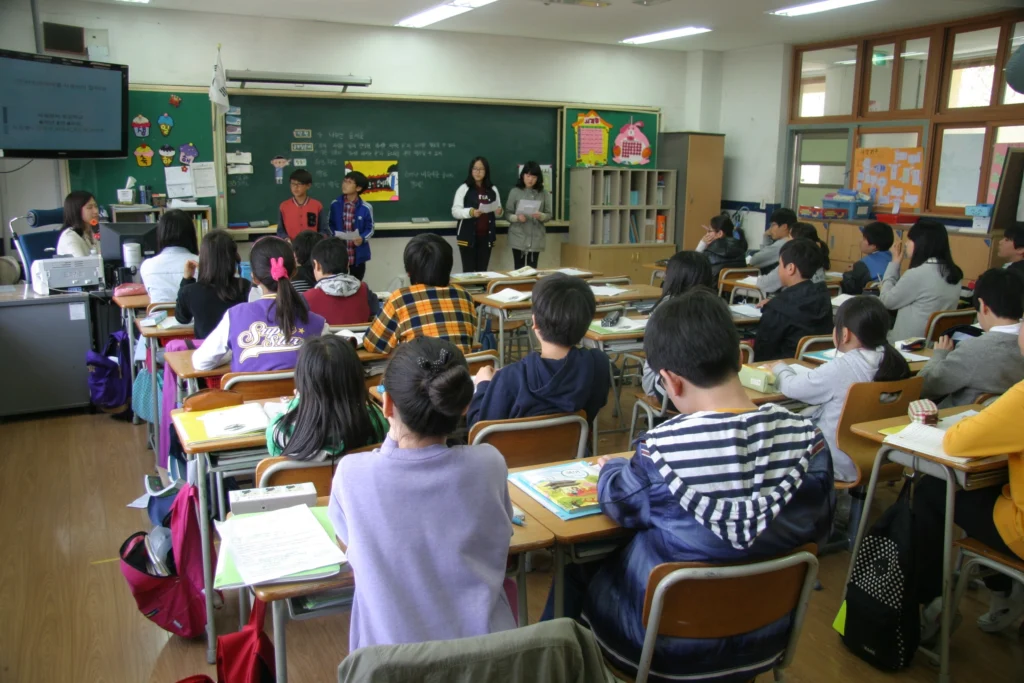
The Research: Maintaining classroom discipline was identified as a stress source by 28% of Australian teachers and 38% across developed nations. Student behavior stress emerged as one of three primary stress categories affecting teacher well-being profiles.
Mindful Solutions:
- The “Bell-to-Bell Presence”: Before students arrive, stand at your door. Take three deep breaths. Greet each student individually. This 3-minute ritual transforms the energy before chaos can take root.
- Reset Rituals: When disruption strikes, pause. Ring a meditation bell or play a 30-second calming sound. Reset the room, reset yourself.
- Compassionate Boundaries: Discipline with detachment. Their behavior isn’t personal, and your peace isn’t negotiable.
Research Reference: TALIS 2018 Stress Analysis
3. The Expectation Olympics: Performing Miracles on a Photocopier Budget
The Research: International evidence indicates that accountability systems create modest but measurable increases in teacher stress about performance expectations. Teachers report that adapting instruction to diverse learning needs creates stress for more than one-third of educators.
Mindful Solutions:
- The “Good Enough” Philosophy: Perfectionism is burnout’s best friend. Done is better than perfect. Your students need your presence more than your perfection.
- Micro-Wins Tracking: Each day, write down three small victories. You redirected a struggling student. You explained a concept clearly. You showed up. These matter.
- Boundary Setting Meditation: Visualize your professional boundaries as a peaceful garden wall. What stays in the garden? What stays outside? Practice saying “no” as a complete sentence.
Research Reference: School Accountability and Teacher Stress Study
4. The Emotional Labor Tax: Carrying 150 Hearts That Aren’t Your Own

The Research: Research demonstrates that the quality of teacher-student relationships significantly influences teachers’ sense of accomplishment and emotional exhaustion levels. During periods of heightened stress, burnout symptoms become particularly pronounced among educators.
Mindful Solutions:
- Compassionate Detachment: You can care without carrying. Visualize releasing their struggles at the end of each day—not abandoning them, but acknowledging you cannot fix everything.
- Sacred Transition: Create a physical ritual for leaving school. Change your shoes. Listen to a specific song. Take a different route home. Mark the boundary between teacher-you and human-you.
- Gratitude Anchor: Before you leave each day, identify one student you’re grateful for. Feel that appreciation for two full minutes. This rewires your brain away from burnout.
Research Reference: Teacher-Student Relationships and Burnout
5. The Never-Ending Treadmill: When Sunday Night Feels Like Monday Morning

The Research: Over half of K-12 teachers report difficulty achieving work-life balance. Female teachers report significantly higher rates of frequent stress and burnout compared to their male counterparts.
Mindful Solutions:
- The Sunday Sunset Rule: No school work after sunset on Sundays. Period. Protect this boundary like you’d protect your students.
- Morning Mindfulness Routine: Wake 15 minutes earlier. Stretch, breathe, set an intention. This isn’t lost time—it’s borrowed peace that repays itself all day.
- Weekly Check-In: Every Friday, ask yourself: “What drained me? What filled me?” Adjust accordingly. You’re allowed to evolve your approach.
Research Reference: 2024 State of American Teacher Survey – RAND Corporation
Your Two Essential 4-Minute Rituals (That Actually Work)
Ritual 1: The “Bell-to-Bell Presence” Breathing (3 minutes)
Stand at your classroom door before students arrive.
- Minute 1: Place both feet firmly on the ground. Feel the floor beneath you. You are here. You are solid.
- Minute 2: Breathe in for four counts. Hold for four. Exhale for six. Repeat four times. This activates your parasympathetic nervous system—your body’s natural calm button.
- Minute 3: Set your intention. “I am present. I am enough. I teach with compassion.” Greet each student with genuine eye contact.
This transforms your threshold from a stress trigger into a sacred pause.
Ritual 2: The “One Student” Gratitude Practice (2 minutes)
Before you leave for the day, think of one student.
- 30 seconds: Visualize their face.
- 60 seconds: Recall one specific moment with them—a question they asked, a smile they shared, a breakthrough they made.
- 30 seconds: Feel genuine gratitude for having witnessed their growth.
Research from Yale’s emotional intelligence work demonstrates that emotion regulation strategies help educators navigate uncertainty and maintain well-being. This two-minute practice rewires your brain away from deficit thinking (what went wrong) toward abundance thinking (what went right).
The Bigger Picture: Systems Need Fixing, But You Need Breathing Room Now
Let’s be clear: you shouldn’t need these hacks. You deserve smaller class sizes, adequate preparation time, competitive pay, and systemic support. Education systems worldwide are recognizing that teacher well-being directly impacts teaching quality and student outcomes.
Advocacy matters. Policy changes matter. But while you’re fighting for systemic change, you also need tools to survive Tuesday morning.
These practices aren’t about accepting broken systems. They’re about reclaiming your humanity within them.
The Truth About Burnout You Already Know
You became a teacher because you believed in transformation. You still do—you just forgot you’re allowed to transform too.
Burnout isn’t weakness. It’s what happens when you give everything and receive too little in return. But here’s the paradox: the more you fill your own cup, the more you have to pour out.
That 4-minute ritual? It’s not indulgent. It’s essential. It’s the difference between surviving and thriving, between counting down to summer and rediscovering why you walked into that first classroom.
Your Tomorrow Starts Tonight
Tonight, before you sleep, set two alarms.
The first, 15 minutes before you need to wake up. This is your mindfulness buffer.
The second, for your usual time. This is your reminder that you don’t have to do this perfectly—you just have to do it.
Tomorrow, stand at that classroom door. Breathe. Remember: you are not just a teacher. You are a human being who teaches. And that human being deserves four minutes of peace.
The bell will ring. The papers will wait. The chaos will come.
But you? You’ll be ready.
Because you chose presence over perfection. Because you chose breath over burnout. Because you chose you.
Final Note: Resources That Actually Help
- Yale Center for Emotional Intelligence: Free course on managing emotions during stress – Managing Emotions in Times of Uncertainty & Stress
- RULER Approach: Evidence-based emotional intelligence framework for educators – rulerapproach.org
- Teachers’ Well-Being Framework: OECD TALIS research insights – OECD Education Today
Remember: The papers will get graded. The lessons will get planned. But if you don’t protect your peace, none of it matters.