
Do you sometimes feel blocked of creativity or intimacy?
Svadhishtana Chakra : A guide to root of creative energy within us.
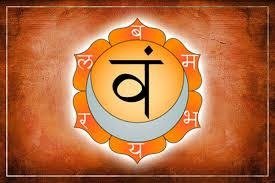
Where the Orange Lotus First Bloomed
Long before the word “chakra” became a yoga-studio cliché, tantric adepts in the hidden valleys of medieval India whispered a secret name:
Svādhiṣṭhāna, “the place where the Self takes delight in its own dwelling.”
Sva = your truest self.
Adhiṣṭhāna = the sweet throne you finally sit on when you stop running from pleasure.
The first written heartbeat of this center appears more than a thousand years ago inside the Kubjikāmata Tantra, a wild, fierce scripture of the Kaula path where goddesses drink wine and lovers become divinities. There, in verses drenched in moonlight and menstrual metaphors, Svādhiṣṭhāna is born as a six-petalled vermilion lotus floating just above the intimacy, rocking gently on inner waters.
Where It Lives in You Right Now
Drop your attention two inches below your navel, that soft hollow where a butterfly would land if you stood naked in warm rain. That is the palace door.
Beneath your skin it kisses the sacrum (the sacred bone the ancients named after the gods). It cradles ovaries, womb, prostate, bladder; everything that wants to flow, create, or make love. Along the invisible silver thread of Sushumna, it is the second lamp on the ladder: Muladhara’s red earth below, Manipura’s yellow fire above.
Symbol and its meaning
The Svadhishthana chakra consists of 6 petaled lotus of orange colour symbolizing-
- बं — Baṃ- Inertia or heaviness of emotion
- भं — Bhaṃ- Transformation of emotional turbulence
- मं — Maṃ- Nurturing energy
- यं — Yaṃ- Movement, flow, harmony
- रं — Raṃ- Transformation of desire into creative drive
- लं — Laṃ- Steadiness and stability of emotions
The six petals of the Svādhiṣṭhāna Chakra symbolize six deep subconscious tendencies (vṛttis) that influence emotions, desire, pleasure, and relationships.
They represent the emotional challenges stored in the sacral chakra that must be purified for creativity, sensuality, and emotional flow to awaken.
Sacred geometry and colour
The sacred geometry of Svadhisthana is a six-petalled vermilion lotus and at the centre lies the golden bīja mantra वं (vaṁ), symbolizing the overcoming of the six mental afflictions. Encircling a white crescent moon (the symbol of the water element and the waxing-waning lunar mind), the downward-facing crescent rests within a circle, representing the receptive, flowing, feminine energy of creation and the subconscious waters.
Yellow colour- Svadhisthana’s traditional colour is a glowing vermilion-orange, the hue of ripe fruit, flowing blood, and sunset on water. It represents joyful, creative desire and intimacy transformed from raw instinct into conscious, life-giving pleasure.
The Gods residing in Svadhisthana

Vishnu: The Preserver of Life-Waters
Lord Vishnu, deep blue like infinite sky reflected in the ocean, reclines upon the serpent Ananta floating on the primordial waters of Svadhisthana. With conch, discus, mace, and lotus in his four hands, he is the calm guardian of fluidity and preservation.
His presence teaches that true creativity and pleasure arise only when life is sustained without fear—when desire is held gently, neither suppressed nor allowed to flood. Vishnu ensures the sacred waters of emotion flow without drowning the soul.
Rākini: The Alchemist of Desire
Rākini, the fierce dark-blue goddess of Svadhisthana, sits enthroned with radiant yet terrifying beauty, her multiple arms wielding sword, shield, arrow, and skull while granting boons with blood-dripping hands.
She drinks the raw red blood of impure passion and transforms it into the golden nectar of creativity and joy. Rākini is the sacred feminine force that turns lust into art, fantasy into vision, and emotional chaos into the flowing river of authentic feeling—she is the wild shakti of conscious pleasure.
Svadhisthana Chakra Benefits When Active: The Power of Fluid Joy
Physical Benefits

When Svadhisthana flows freely, the body rediscovers its natural pleasure and adaptability:
- Healthy reproductive organs and balanced hormones
- Strong, flexible hips, pelvis, and lower abdomen
- Smooth menstrual cycles (in women) and potent creative energy (in men)
- Supple lower back and fluid movement in dance or lovemaking
- Healthy kidneys, bladder, and lymphatic circulation
- Heightened sensory enjoyment: food tastes better, touch feels richer, music moves you deeply
Psychological and Emotional Benefits
An awakened sacral chakra manifests as effortless emotional fluidity and creativity:
- Natural joy and playfulness: Life feels worth savoring
- Healthy intimacy: Desire without guilt or attachment
- Authentic emotional expression: You feel fully without drowning in feelings
- Abundant creativity: Ideas and art pour out effortlessly
- Adaptability: You flow with change instead of resisting it
- Deep intimacy: The ability to connect sensually and emotionally without losing yourself
- Pleasure without addiction: Enjoying life’s sweetness while staying free
A Clinical Observation
Dr. Anjali Mehta, a Mumbai-based gynecologist and certified yoga therapist, notes: “In my clinic I see many women with PCOS, irregular cycles, chronic pelvic pain, or low libido. When they begin simple Svadhisthana-focused practices (hip-opening asanas, creative expression, and emotional awareness work), we consistently observe normalized menstrual cycles, reduced inflammatory markers, and significantly lower scores on intimacy distress scales within 8–12 weeks. The body literally starts to enjoy being in a female form again once the sacral center feels safe to feel pleasure.”
Blocked Svadhisthana Chakra Symptoms: When Pleasure Turns to Pain
Physical Signs of Imbalance

A blocked or underactive Svadhisthana often shows up in the fluid systems of the body:
- Lower abdominal or pelvic pain, tightness, or chronic tension
- Menstrual irregularities, severe PMS, PCOS, or endometriosis flare-ups
- Low libido or painful intercourse
- Urinary tract infections, kidney issues, or lower back stiffness
- Stiff, locked hips and sacrum (feels like the pelvis has “forgotten how to move”)
- Fluid retention, swollen lower body, or poor lymphatic drainage
- Addictions or cravings (sugar, alcohol, intimacy, emotional eating) used to fill the void of real pleasure
Psychological and Emotional Symptoms
The emotional signature is unmistakable:
- Emotional numbness or repression—“I don’t feel anything anymore”
- Guilt or shame around intimacy and desire
- Creative block: ideas dry up, art feels forced or impossible
- Mood swings or suppressed tears that explode inappropriately
- Fear of intimacy or, conversely, enmeshed/clingy relationships
- Boredom with life; nothing feels fun or worth savoring
- Jealousy, possessiveness, or dramatic emotional reactions
- Difficulty experiencing joy without immediately needing “more”
The Two Extremes of Svadhisthana
A blocked or imbalanced Svadhisthana chakra can swing between two opposite poles, both rooted in the same fear of true feeling and authentic pleasure:
Deficient (Underactive): Emotional numbness, frigidity, rigid hips, creative drought, guilt/shame around desire, aversion to touch, boredom with life, inability to taste or enjoy anything deeply, repressed tears, “I feel dead inside.”
Excessive (Overactive): Emotional overwhelm, constant mood swings, intimacy addiction or promiscuity, obsessive fantasies, jealousy and drama in relationships, compulsive pleasure-seeking (food, shopping, substances), inappropriate emotional outbursts, boundary-less merging with others.
Both extremes are attempts to avoid the vulnerable middle ground where real intimacy, joy, and creativity actually live.
Svadhisthana Around the World: Same Fire, Different Names

- Tibetan Vajrayana
The Secret Bliss Center Deep in the lower belly sits what Tibetan lamas call the “Secret Chakra.” This is the furnace of tummo (inner fire), where raw intimacy energy is transmuted into white-hot bliss that shoots up the central channel. Desire isn’t suppressed; it’s ridden like a wild horse straight into enlightenment. One moment you’re burning with lust, the next moment you’re melting into radiant emptiness. Same chakra, zero guilt.
- Chinese Taoism
The Lower Dantian, Cauldron of Original Essence Ask any Tai Chi or Qigong master where your real power lives and they’ll press three fingers below your navel: “Here. This is where Jing (intimat essence) and Qi are stored and refined.” It’s the ocean of energy that keeps you juicy, creative, and emotionally supple. When this cauldron is full, you move like water; when it leaks, life turns dry and brittle.
- Japanese Shingon Buddhism – Suishō, the Jeweled Water Wheel
In Shingon mikkyō, the water-element wheel at the lower abdomen is visualized as a luminous moon-disk floating in darkness. Meditators chant to it while feeling sensual currents rise and dissolve into pure light. It’s the same crescent-moon symbolism you see in Hindu yantras, just wrapped in silk robes and incense smoke. - Kabbalah
Yesod, the Holy Phallus of the Tree of Life On the Tree of Life, Yesod is the shimmering sphere of the moon and genitals. It’s where dreams, fantasies, and intimacy currents gather before spilling into the physical world. Jewish mystics knew: if Yesod is blocked, creativity and intimacy die; if it flows clean, the entire Tree lights up. Sound familiar?
- Ancient Egypt
The Womb of Hathor & the Nile Within Picture golden Hathor with her cow horns cradling the moon disk, or Khonsu traveling the night sky. Egyptian priests understood the lower belly as the inner Nile: when it floods at the right time, crops grow, babies are conceived, art explodes. When it dries up, the kingdom starves. Pleasure and fertility were never sins; they were sacred rhythms of the cosmos itself.
Modern and Ancient
Ancient tantric sages mapped the orange lotus and declared: “Here lives rasa, the juice of life. Without it, the soul withers.”
Twenty-first-century neurologists and gynecologists now say the same thing in different words: “When the sacral nervous system feels safe to feel pleasure, hormones balance, inflammation drops, creativity returns, and the entire organism remembers it’s allowed to be alive.”
The language has changed, the diagnosis has not. Svadhisthana never needed permission from modernity; it was simply waiting for science to catch up and confirm what the body already knew: joy is medicine, and the pelvis is its pharmacy.
Ancient wisdom and modern evidence shake hands right here, in the warm glow below your navel.