
A complete guide to understanding and activating your foundation energy center
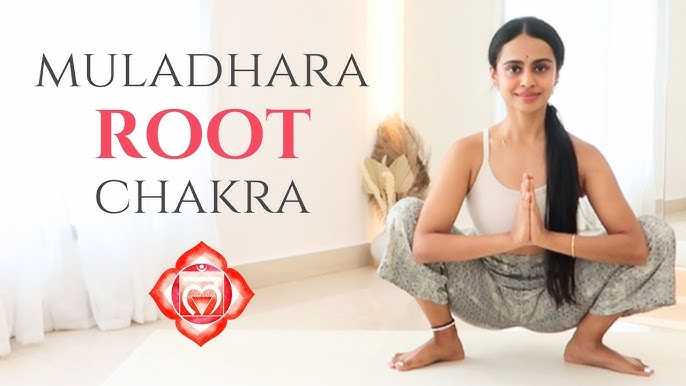
Origin of Muladhara Chakra (Root chakra)
The Muladhara chakra, or root chakra, sits at the foundation of this system. The Sanskrit breaks down beautifully: mula (root) + adhara (support, base). Everything builds from here.
The earliest detailed description of Muladhara appears in the 10th-century text Goraksha Shataka, but references to a “root energy center” date back over 3,000 years to the Vedic period.
Muladhara Chakra Description: Anatomy of Grounding
Location and Physical Correlations
The root chakra sits at the base of the spine, near the perineum (the area between the genitals and anus). In anatomical terms, it corresponds to the pelvic floor, the coccygeal plexus, and relates to the adrenal glands in the endocrine system.
When you sit in meditation, this is the point where your body meets the earth. That contact isn’t coincidental to its function.
The Four Petals and Their Meaning
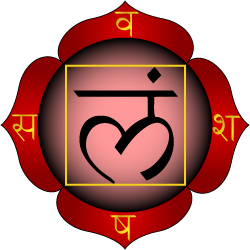
Picture a lotus flower with four deep crimson petals. Each petal is inscribed with a Sanskrit letter:
- वं (vam) – relating to desire
- शं (śam) – relating to pleasure
- षं (ṣam) – relating to control
- सं (sam) – relating to innocence
These four petals represent the four original psychic functions in yogic psychology. They also symbolize the four directions—establishing your place in physical space—and the four mind states: waking, dreaming, deep sleep, and pure consciousness.
Sacred Geometry and Color
At the center of the four petals sits a yellow square, representing the earth element (prithvi). Inside this square, a downward-pointing red triangle symbolizes the creative force, the yoni or divine feminine. At the very center rests a lingam (vertical pillar of light) around which the serpent Kundalini coils three and a half times, sleeping until awakened.
The color is deep, smoky red—like clay earth, dried blood, or the last light of sunset. This isn’t the bright red of the heart; it’s the red of roots, of earth, of the foundational life force.
Root Chakra Color Meaning: Red represents vitality, physical energy, survival instinct, and connection to the material world. It’s the slowest vibrational frequency in the chakra system, the densest form of energy.
A Story from the Mat
My yoga teacher, Lakshmi, once told us about a student who came to her complaining that she “couldn’t visualize” the root chakra during meditation. “I can see all the other ones,” the student insisted, “but this one stays dark.”
Lakshmi smiled. “That’s because you’re trying to see it from above, looking down. The root chakra doesn’t want to be observed. It wants to be felt. Sit on the earth. Feel the weight of your bones. Stop looking and start sensing.”
Two weeks later, the student reported: “I finally got it. It’s not something you see. It’s something you are.”
The Gods Residing in Muladhara: Divine Symbolism
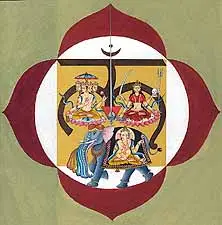
Ganesha: The Remover of Obstacles
Lord Ganesha, the elephant-headed deity, serves as guardian of the root chakra. His large, grounded form embodies the earthiness of this center. In Hindu tradition, Ganesha is invoked at the beginning of any journey or endeavor—you must clear the foundation before building upward.
His presence here teaches us that spiritual work begins with removing material obstacles: unresolved survival fears, basic needs unmet, the mental clutter that prevents us from simply being here now.
Dakini: The Sacred Feminine Force
The goddess Dakini resides here as fierce protector. She holds the keys to physical existence, governing our deepest survival instincts. In her hands, she carries the weapons of discrimination and protection. Her red or pink body symbolizes the life force itself.
Dakini represents shakti (power) in its most primal form—the force that says “I exist, I have the right to exist, I will protect my existence.”
Nandi and the Seed Mantra
The sacred bull Nandi often appears associated with Muladhara, representing patience, service, and the strength to carry burdens. The seed mantra (bija mantra) for this chakra is LAM (pronounced “lum”), which creates a vibration that resonates with the earth element.
Root Chakra Benefits When Active: The Power of Grounding
Physical Benefits

When your Muladhara functions optimally, the body becomes a comfortable home rather than a house you’re anxious to leave. Observable benefits include:
- Strong immunity: The body’s defense systems operate efficiently
- Sustained energy: Not nervous energy, but deep reserves of stamina
- Healthy digestion and elimination: The colon functions properly
- Lower back strength: The spine’s foundation remains stable
- Vitality in legs and feet: Feeling rooted, literally and figuratively
- Restful sleep: The nervous system knows it’s safe to rest
Psychological and Emotional Benefits
An activated root chakra manifests as:
- Unshakable calm: Presence even during chaos
- Healthy boundaries: Knowing where you end and others begin
- Financial stability: Not from abundance necessarily, but from groundedness with resources
- Follow-through: The ability to commit and complete
- Trust in life: A fundamental sense of safety in existence
- Patience: The capacity to be still without seeking constant stimulation
A Clinical Observation
Dr. Ramesh Patel, a psychiatrist who integrates yogic practices into his work, shared this observation: “I’ve worked with hundreds of anxiety patients. The ones who develop a consistent grounding practice—whether they call it root chakra work, somatic therapy, or just ‘earthing’—show measurably lower cortisol levels and report better sleep within six weeks. The body needs to know it’s safe before the mind can truly relax.”
Blocked Root Chakra Symptoms: When the Foundation Crumbles
Physical Signs of Imbalance

A blocked or underactive Muladhara chakra manifests physically as:
- Chronic lower back pain
- Leg and foot problems (weakness, poor circulation, restless legs)
- Constipation or elimination issues
- Chronic fatigue that doesn’t respond to rest
- Immune system problems (frequent illness or autoimmune conditions)
- Adrenal fatigue
- Weight issues at the extremes (severe under or overweight)
Psychological and Emotional Symptoms
The mental-emotional signs are often more noticeable:
- Free-floating anxiety: A sense that something’s wrong without clear cause
- Inability to be present: Constantly future-tripping or past-dwelling
- Scattered thinking: The monkey mind in overdrive
- Difficulty with routine: Can’t establish or maintain basic structure
- Financial instability: Not from lack of money, but inability to manage resources
- Spaciness: Feeling disconnected from your body and life
- Excessive fear: Particularly around survival needs (money, safety, health)
The Two Extremes
Interestingly, a blocked root chakra can manifest in opposite ways:
Deficient (Underactive): Spacey, ungrounded, difficulty with practical matters, underweight, fearful, can’t commit, financially unstable
Excessive (Overactive): Materialistic, greedy, resistant to change, overweight, hoarding tendencies, rigid, stuck in survival mode even when safe
Both stem from the same root problem: the foundation isn’t holding, so the system compensates with extremes.
Root Chakra in Other Religions and Cultures: Universal Grounding
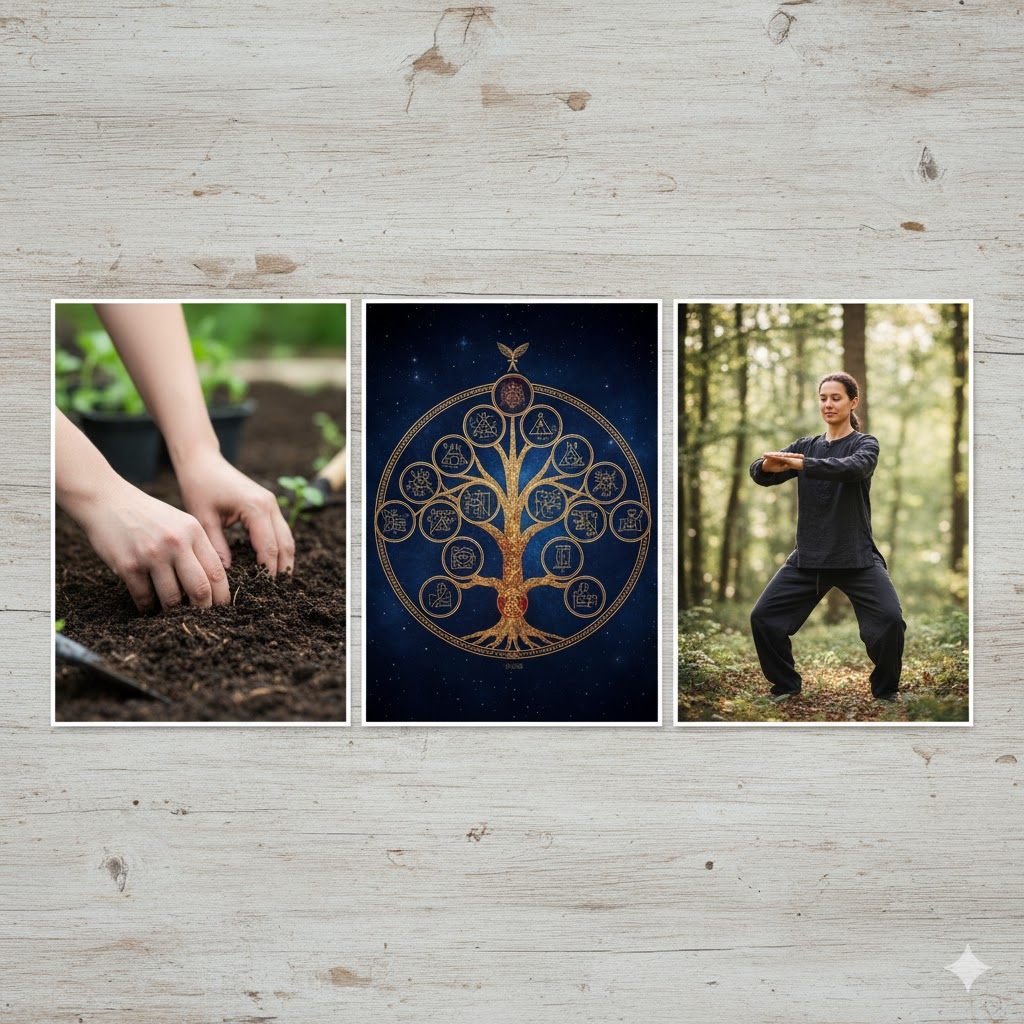
The concept of a root energy center appears across cultures, suggesting a universal human experience of foundational consciousness.
Traditional Chinese Medicine: Jing and the Kidney Meridian
In Chinese medicine, the Kidney meridian governs the area corresponding to Muladhara. The Kidneys store jing—essence or fundamental life force, including ancestral energy inherited from parents.
The practice of zhan zhuang (standing meditation) specifically aims to sink energy to the lower dantian (energy center below the navel), creating a rooted foundation. The TCM approach reaches the same conclusion through different language: stability at the base allows energy to flow freely above.
Kabbalah: Malkuth, The Kingdom
In Jewish mysticism, the Tree of Life’s lowest sphere is Malkuth (the Kingdom)—representing physical manifestation, the material world where divine energy takes form. Like Muladhara, it’s where spirit meets matter, and spiritual work requires honoring this foundation rather than transcending it prematurely.
Indigenous Earth Connection
Cultures worldwide practice earth-based spirituality that recognizes grounding as essential to wellbeing:
- Native American traditions: Many ceremonies involve sitting directly on earth, and the concept of being “in good relation” with the land parallels the root chakra’s function
- Aboriginal Australian “Country”: The intimate relationship with specific land as spiritual practice
- African traditional religions: Connection to ancestors literally through the earth where they’re buried
These aren’t primitive beliefs but sophisticated understandings of how human consciousness requires material anchoring.
Christian Contemplative Practice: Stabilitas
The Benedictine vow of stabilitas—stability of place—requires monks to commit to one location and community. This seemingly simple vow addresses the root chakra’s function: you must be somewhere before you can be anywhere, grounded before you can rise.
Modern Psychology: Maslow and Trauma Theory
Abraham Maslow’s hierarchy of needs places physiological safety at the base—you cannot self-actualize when survival needs remain unmet. Modern trauma therapy, particularly somatic approaches, has discovered what yogis knew: unresolved survival stress lodges in the body’s base, and healing requires establishing safety first before addressing “higher” concerns.
Peter Levine’s Somatic Experiencing and Bessel van der Kolk’s trauma work both emphasize “resourcing”—establishing a felt sense of safety and presence—as foundational to healing. They’ve essentially rediscovered the root chakra through Western scientific methodology.