
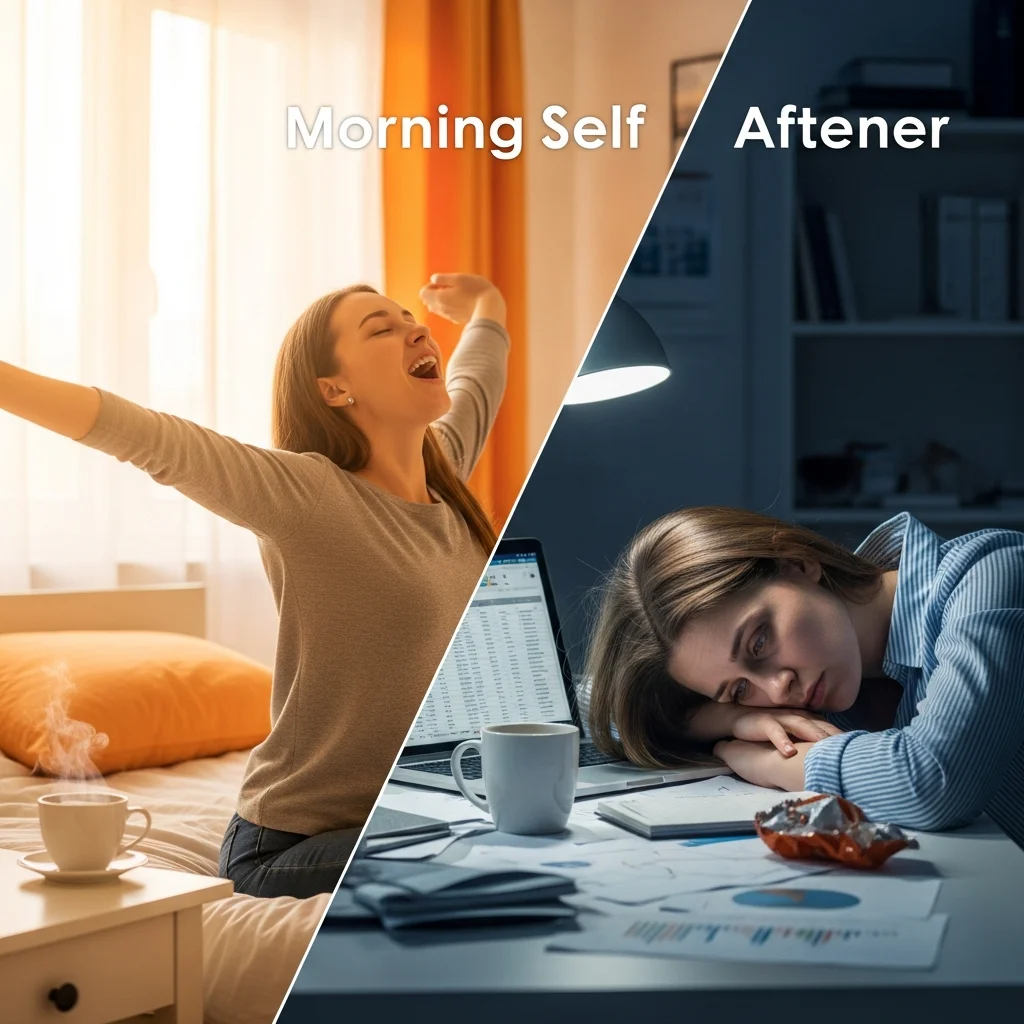
It’s 3 PM, and suddenly your brain feels like it’s wrapped in cotton. The afternoon slump hits hard—that familiar fog where every task feels mountainous and you start questioning whether you’re even cut out for this work. You’re not alone in this daily energy crash, and it’s not just about needing more caffeine.
This post-lunch mental haze is your mind’s way of waving a white flag. You’ve been making decisions, solving problems, and pushing through tasks all morning without giving your brain the reset it desperately needs.
Let’s break down exactly what’s happening during your afternoon energy dip and how to climb out of the procrastination-burnout spiral that keeps you stuck scrolling instead of moving forward.
Recognize the Pattern: Decoding Your Brain’s SOS Signal
That afternoon slump isn’t just about blood sugar or circadian rhythms—though those play a role. Your brain has been running on what psychologists call decision fatigue since the moment you woke up.
From choosing what to wear to prioritizing emails to navigating office conversations, you’ve been burning through your mental reserves. By mid-afternoon, your prefrontal cortex—the part responsible for focus and decision-making—is essentially running on fumes.
What the Afternoon Fog Really Means
When you hit that 3 PM wall, several things are happening simultaneously. Your blood glucose levels naturally dip, your core body temperature drops slightly, and your attention spans shorten. But more importantly, your brain’s executive function is depleted.
This is why simple tasks suddenly feel overwhelming. Responding to that email seems impossible. Starting the presentation you’ve been putting off feels like climbing Everest. Your brain isn’t broken—it’s protecting itself from overload.
“The afternoon slump isn’t a personal failing; it’s your nervous system asking for what it needs to function optimally.”
Instead of pushing through with sheer willpower or berating yourself for lacking motivation, recognize this pattern as valuable data. Your energy naturally ebbs and flows throughout the day, and fighting against this rhythm often makes the crash worse.
Stop the Spiral: Breaking the Self-Doubt Cycle

When the afternoon energy crash hits, self-doubt usually follows close behind. You start questioning your capabilities, comparing yourself to others who seem more productive, or diving into busy work that feels productive but doesn’t move the needle.
The key is catching yourself in this spiral before it gains momentum. Pause and name what’s actually happening instead of letting your inner critic take the wheel.
The Awareness Pause
Next time you feel that familiar fog rolling in, try this simple practice: Stop what you’re doing and say out loud, “I’m feeling overwhelmed and my brain needs a break.” Or “I’m avoiding this task because it feels too big right now.”
This isn’t about positive thinking or motivational self-talk. It’s about accurate assessment. When you name what you’re experiencing without judgment, you shift from reactive mode to responsive mode.
Most people either push harder (leading to burnout) or completely check out (hello, social media rabbit hole). Both responses ignore what your brain is actually communicating. You’re not lazy or broken—you’re human, and humans have natural energy cycles.
Research from Stanford shows that people who practice this kind of emotional labeling during stressful moments show decreased activity in the amygdala (fear center) and increased activity in the prefrontal cortex (thinking brain). Simply naming your experience helps regulate your nervous system.
Reset Your Energy: Beyond Coffee and Motivation Videos
Your first instinct during an afternoon slump might be reaching for more caffeine or watching productivity videos on YouTube. While these might provide a temporary boost, they often backfire by adding more stimulation when your brain needs restoration.
Instead, focus on what neuroscientists call active recovery—activities that restore your mental resources rather than depleting them further.
The 2-Minute Reset Protocol
Step outside for exactly two minutes. Don’t check your phone, don’t think about your to-do list. Just breathe and let your eyes focus on something more than 20 feet away. This simple practice helps reset your nervous system and provides the kind of mental break that actually restores focus.
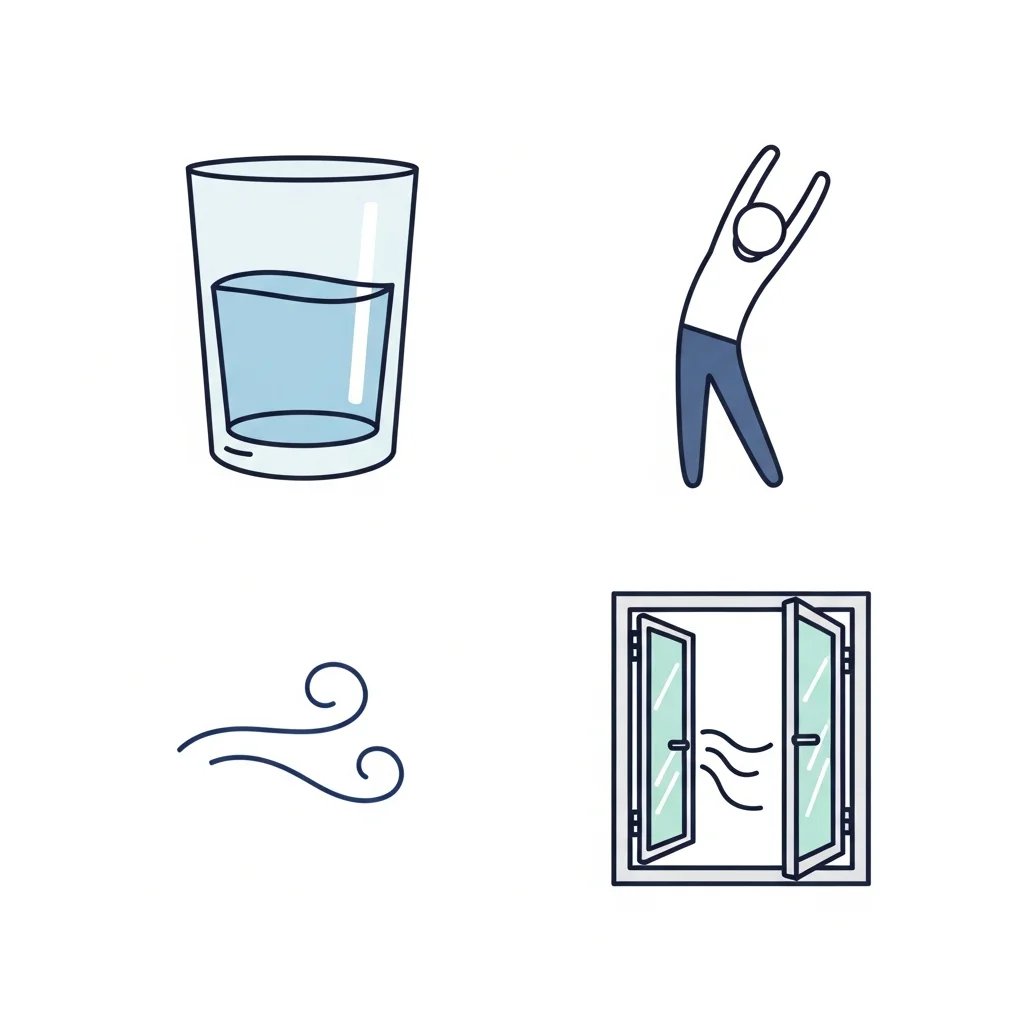
If you can’t go outside, try these desk-based alternatives: Do five shoulder rolls, drink a full glass of water slowly, or practice the 4-7-8 breathing technique (inhale for 4, hold for 7, exhale for 8). The key is giving your brain something different to focus on for a few minutes.
Why Movement Beats Caffeine
While that third cup of coffee might seem appealing, movement is more effective for combating the afternoon slump. Even light stretching increases blood flow to the brain and helps clear mental fog more effectively than caffeine, which can actually increase anxiety and make focus harder.
Try these micro-movements at your desk: ankle circles, neck stretches, or simply standing up and sitting down five times. Your brain needs oxygen and circulation, not more stimulation.
Choose One Thing: The Power of Strategic Smallness
Once you’ve reset your energy, resist the urge to tackle your entire to-do list. This is where most people sabotage their afternoon recovery by overwhelming themselves again.
Instead, practice what I call strategic smallness. Pick the smallest possible next step that will make you feel capable and productive again. Not the most urgent thing, not the biggest project—the one thing that will give you a sense of forward momentum.
How to Identify Your “One Thing”
Look at your current tasks and ask: “What’s the smallest step I could take that would matter?” Maybe it’s responding to one email, outlining the first section of that presentation, or organizing one folder on your desktop.
The goal isn’t to finish everything—it’s to rebuild your sense of agency and competence. When you complete something, even something small, your brain gets a hit of dopamine that can carry you through the rest of the afternoon more effectively than any amount of coffee or willpower.
This approach works because it honors where you are instead of demanding where you think you should be. You’re not trying to power through the afternoon slump—you’re working with your natural energy patterns to maintain steady progress.
“Productivity isn’t about doing everything perfectly; it’s about doing what matters consistently, even when you don’t feel like it.”
Remember: the person who does one meaningful thing during their afternoon slump is infinitely more productive than the person who spends two hours battling procrastination and self-doubt. Small, consistent actions compound over time into significant results.
Key Takeaways
- The afternoon slump is decision fatigue, not personal weakness—your brain needs restoration, not more stimulation
- Practice naming your experience without judgment when self-doubt hits: “I’m overwhelmed” or “I’m avoiding something difficult”
- Reset with 2 minutes outside, water, or light movement instead of reaching for more caffeine or motivation content
- Choose strategic smallness: pick the tiniest meaningful next step to rebuild momentum and competence
- Work with your natural energy patterns instead of fighting against them for more sustainable productivity
What’s Your One Thing for Today?
The next time you feel that familiar 3 PM fog rolling in, remember: you have a choice. You can spiral into busy work and self-doubt, or you can pause, reset, and choose one small step forward.
What’s the smallest meaningful action you could take right now? Pick that one thing, do it, and notice how different it feels to work with your brain instead of against it. Your afternoon self will thank you.